Journal of South China University of Technology(Natural Science Edition) ›› 2026, Vol. 54 ›› Issue (2): 25-37.doi: 10.12141/j.issn.1000-565X.250172
• Computer Science & Technology • Previous Articles Next Articles
Transmission Tower Bolt Looseness Detection Based on Improved YOLOv5s
WANG Dehong1,2( ), ZHANG Zixuan1
- 1.School of Civil Engineering and Architecture,Northeast Electric Power University,Jilin 132012,Jilin,China
2.Key Lab of Electric Power Infrastructure Safety Assessment and Disaster Prevention of Jilin Province,Northeast Electric Power University,Jilin 132012,Jilin,China
-
Received:2025-06-09Online:2026-02-25Published:2025-08-01 -
Supported by:the Youth Science and Technology Innovation Talent (Team) Cultivation Project of Jilin Province Science and Technology Development Plan(20250601091RC);Jilin Province“Changbai Mountain Talent Program”Project(202441208)

CLC Number:
Cite this article
WANG Dehong, ZHANG Zixuan. Transmission Tower Bolt Looseness Detection Based on Improved YOLOv5s[J]. Journal of South China University of Technology(Natural Science Edition), 2026, 54(2): 25-37.
share this article
Fig.1
Structure of YOLOv5s network"
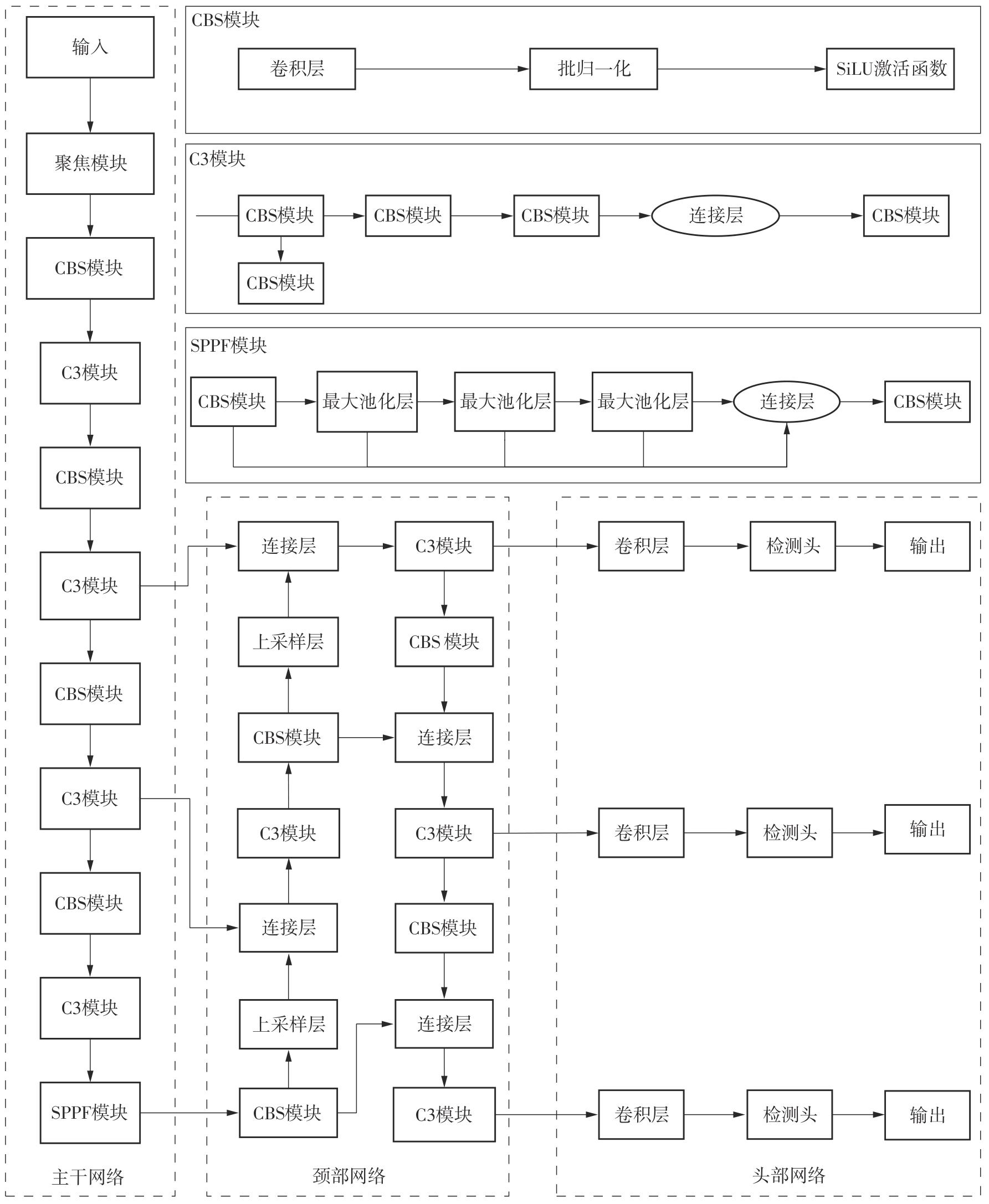
Fig.2
Structure of CCSGS-YOLO network"
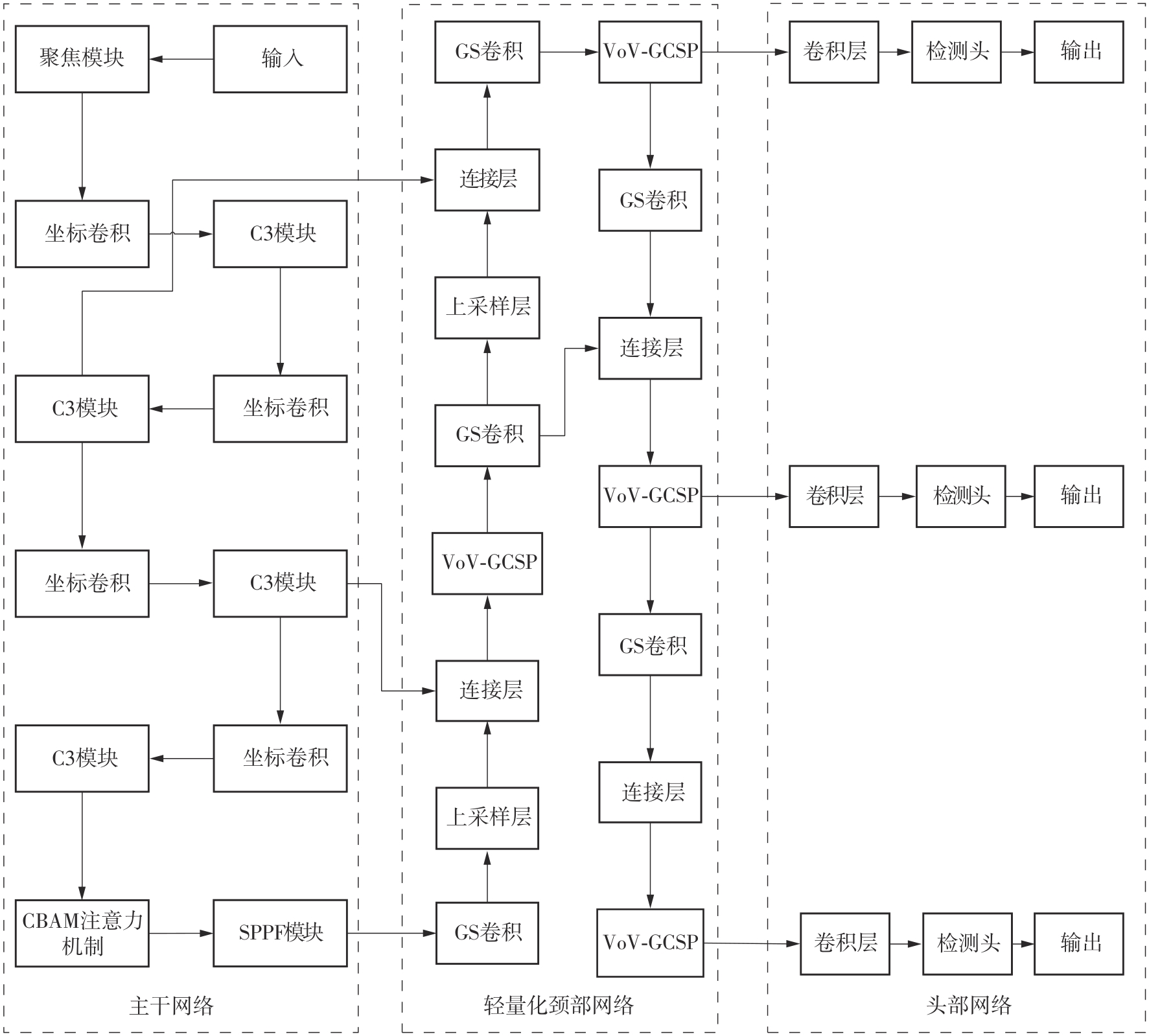
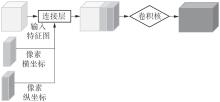
Fig.3
Structure of coordinate convolution"
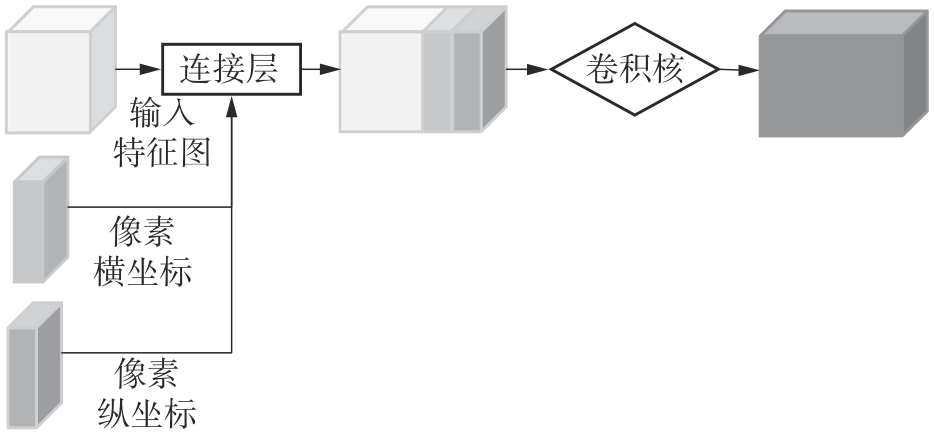
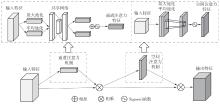
Fig.4
Structure of CBAM attention mechanism"
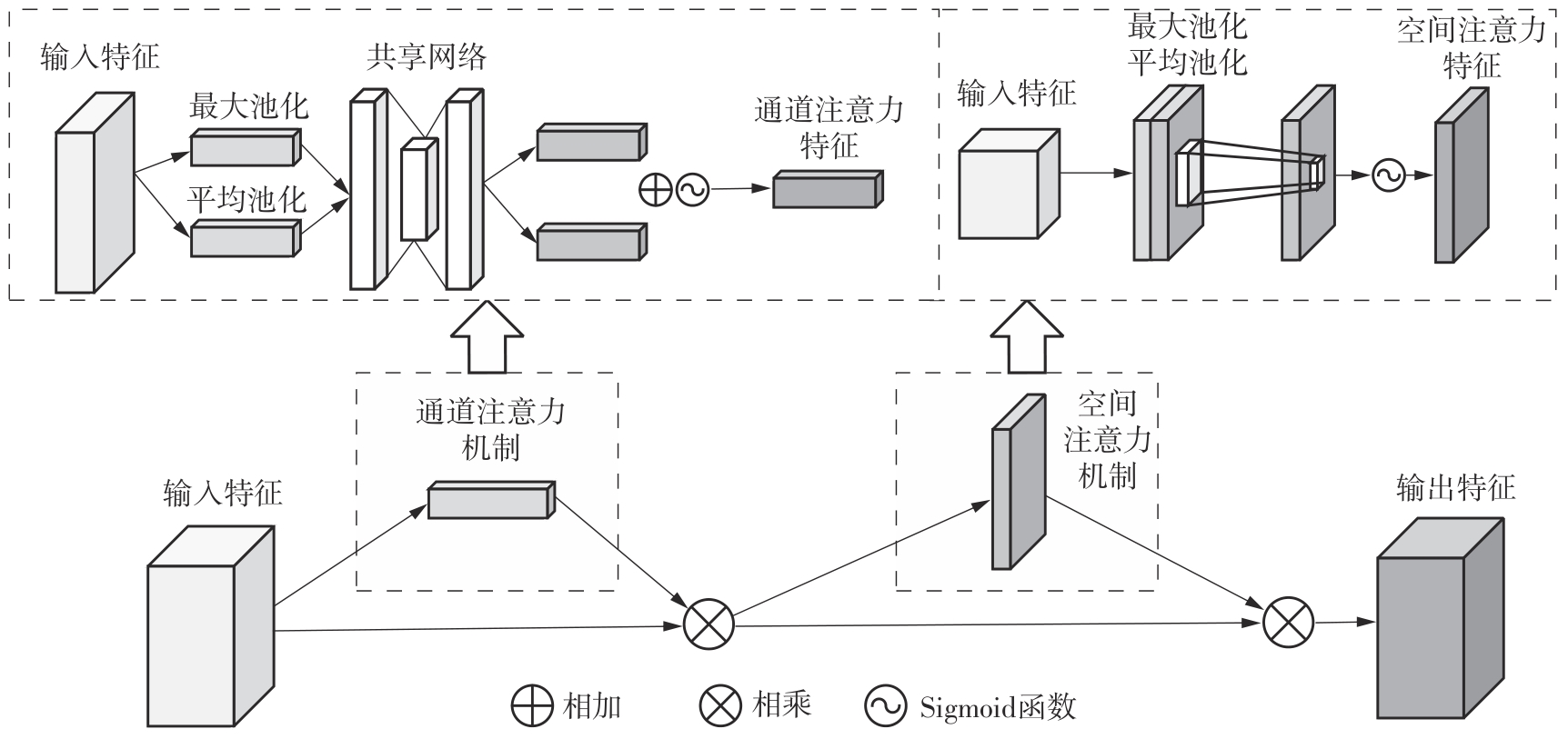
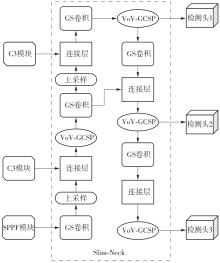
Fig.5
Structure of Slim-Neck"
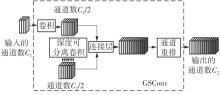
Fig.6
Structure of GSConv"
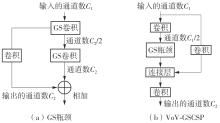
Fig. 7
Structures of GS bottleneck and VoV-GSCSP"
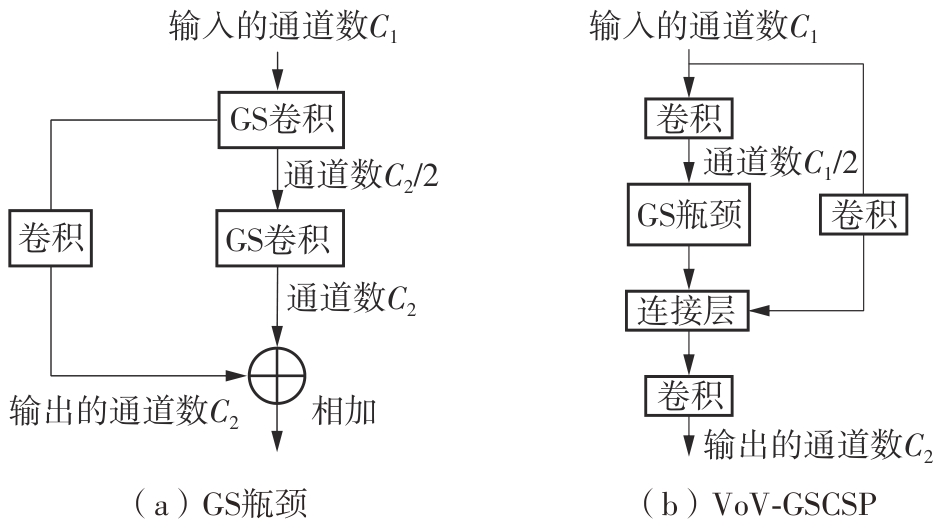
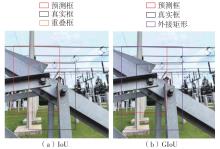
Fig.8
Schematic diagrams of IoU and GIoU"
Fig.9
Detection effect of NMS algorithm and Soft-NMS algorithm"
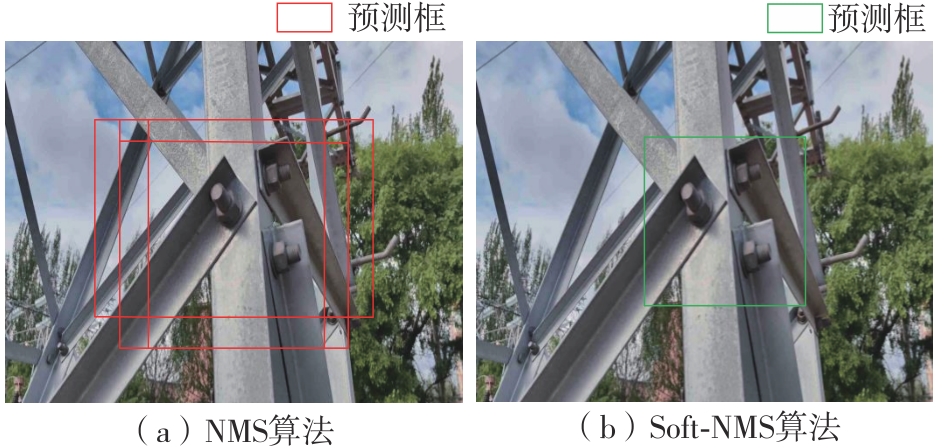
Fig.10
Example of data augmentation"
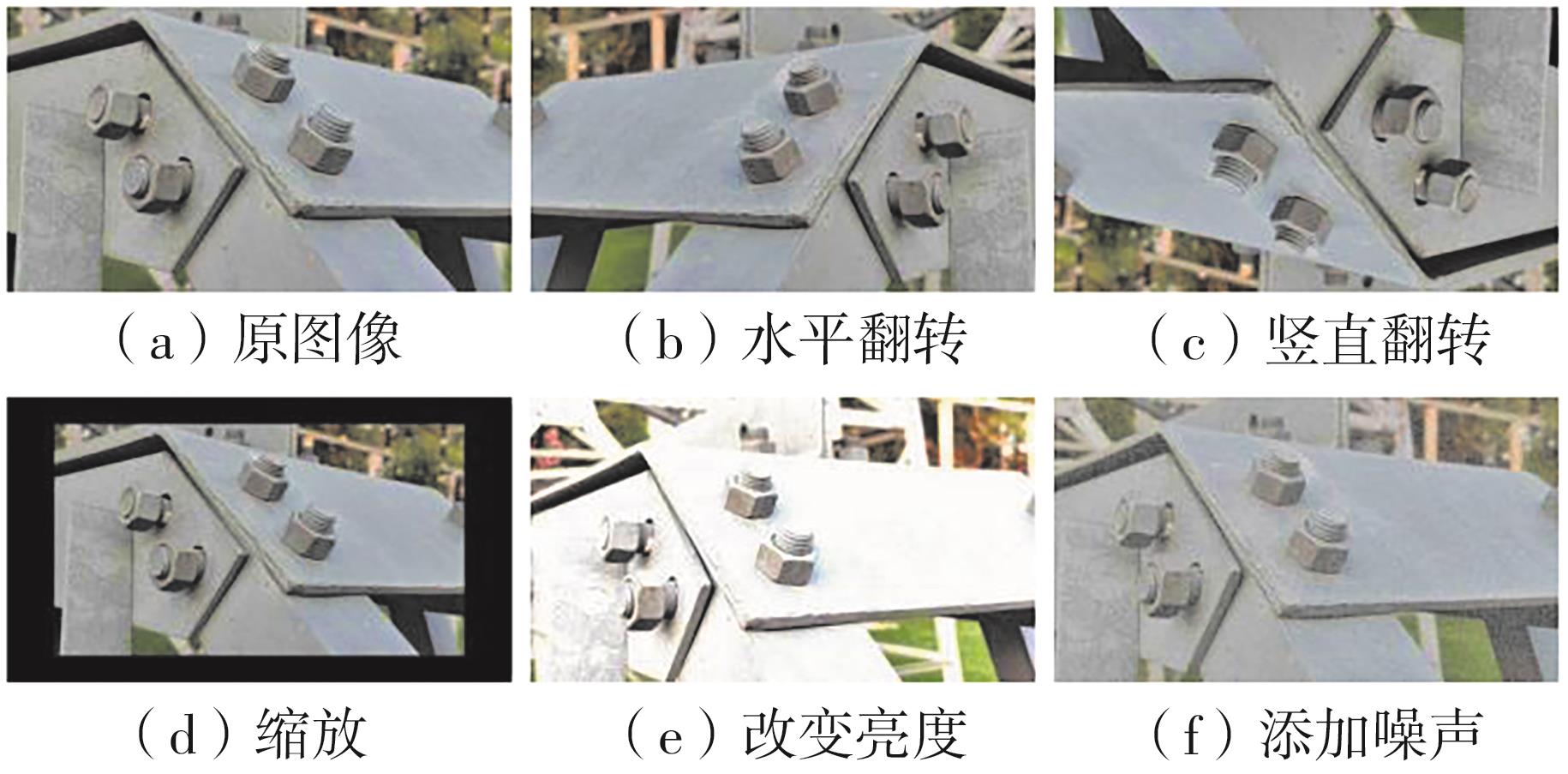

Fig.11
Labeling examples of bolt tight and loose states"
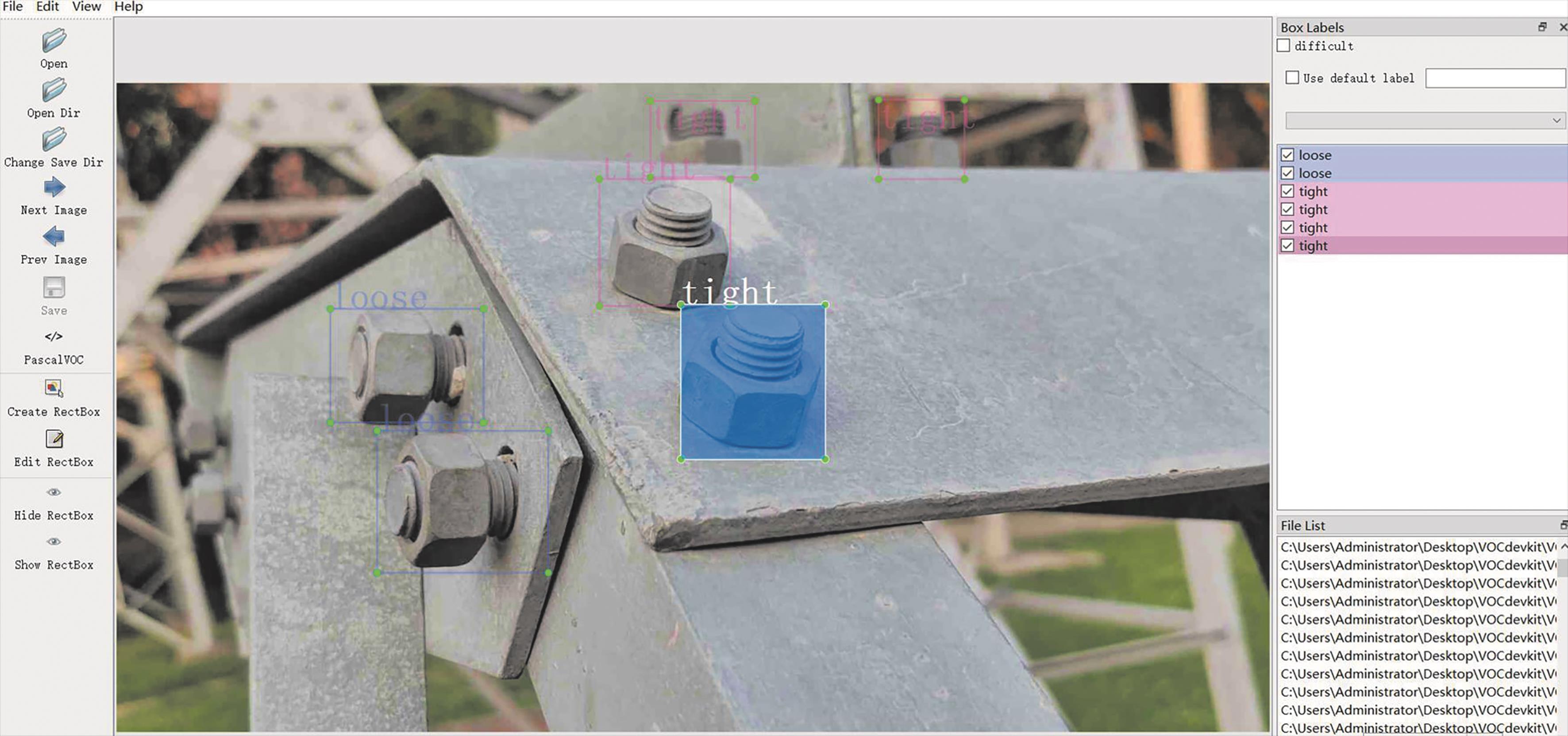
Fig.12
Loss function curves of two models"
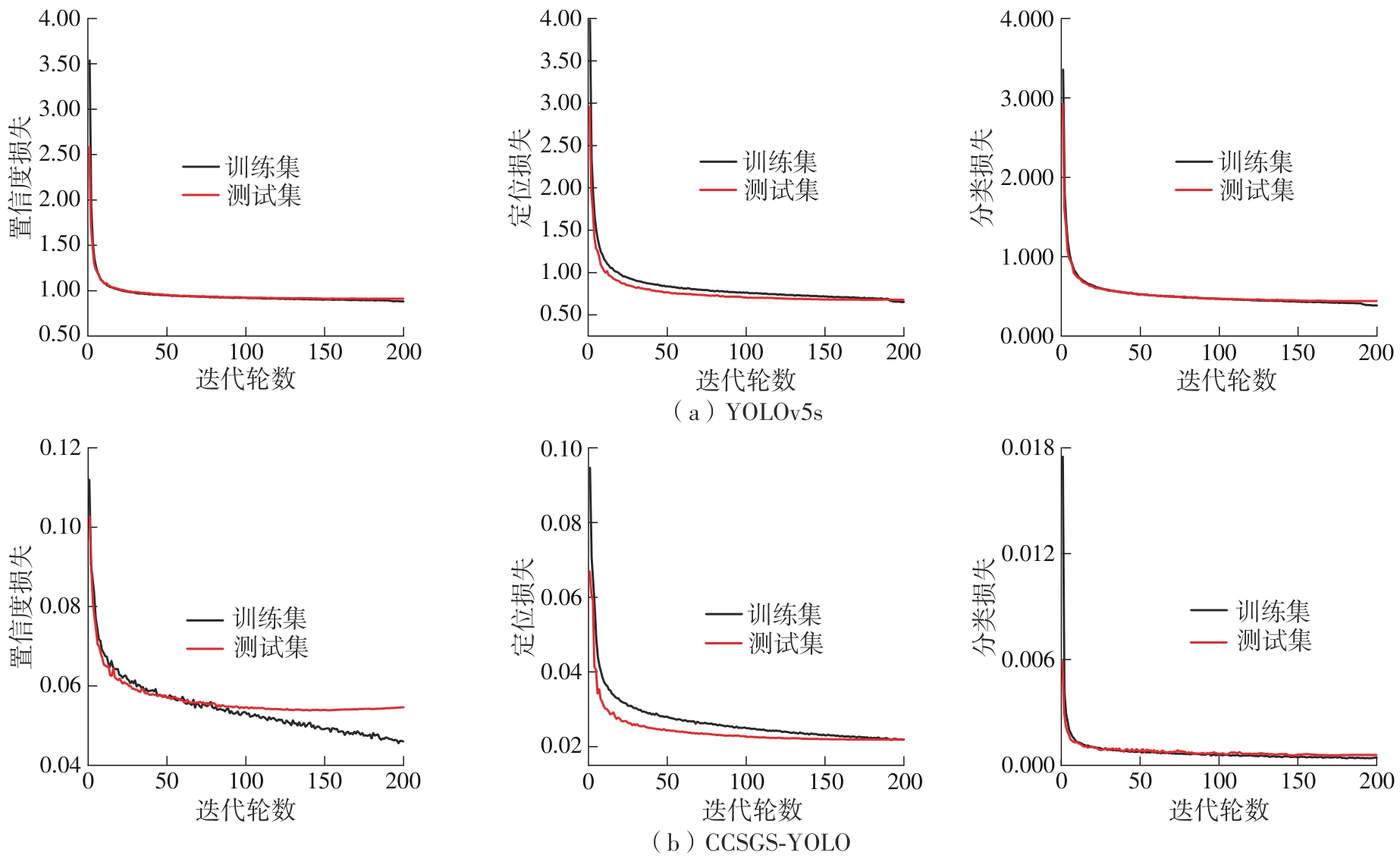

Table 2
Results of ablation experiment"
| CoordConv | CBAM | Slim-Neck | GIoU+Soft-NMS | P/% | R/% | mAP@0.5/% | 参数量/106 | 浮点运算次数/109 |
|---|---|---|---|---|---|---|---|---|
| × | × | × | × | 90.1 | 86.4 | 93.9 | 7.02 | 16.0 |
| √ | × | × | × | 90.5 | 87.5 | 94.3 | 7.02 | 16.0 |
| × | √ | × | × | 92.5 | 89.0 | 95.0 | 7.03 | 16.1 |
| × | × | √ | × | 92.3 | 87.7 | 94.6 | 4.23 | 13.1 |
| × | × | × | √ | 91.3 | 88.7 | 94.7 | 7.02 | 16.0 |
| √ | √ | √ | √ | 91.7 | 89.4 | 95.3 | 4.24 | 13.2 |
Fig.13
Training curves of P, R and mAP@0.5"
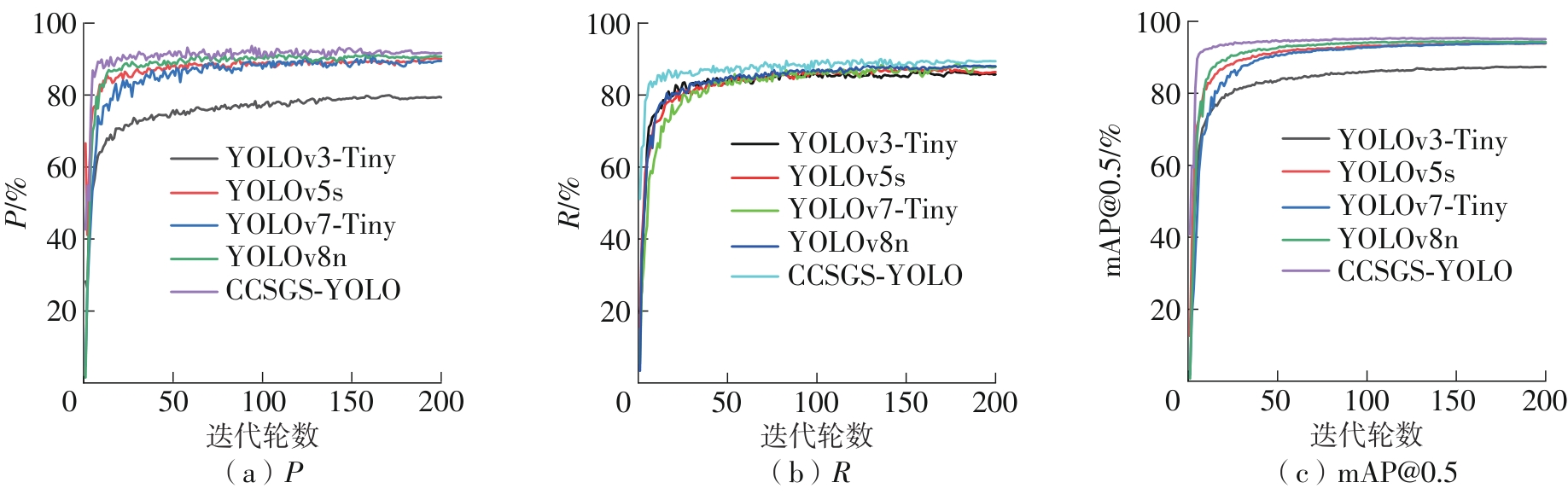
Table 3
Experimental results of different models"
| 模型 | P/% | R/% | mAP@0.5/% | F1/% | 检测速度/(f‧s-1) |
|---|---|---|---|---|---|
| YOLOv3-Tiny | 85.7 | 79.3 | 87.3 | 82.0 | 65.6 |
| YOLOv5s | 90.1 | 86.4 | 93.9 | 89.0 | 67.0 |
| YOLOv7-Tiny | 89.4 | 87.8 | 94.0 | 89.0 | 69.4 |
| YOLOv8n | 90.7 | 88.0 | 94.3 | 88.0 | 72.2 |
| CCSGS-YOLO | 91.7 | 89.4 | 95.3 | 90.0 | 74.8 |
Fig.14
Detection effect of YOLOv5s and CCSGS-YOLO models in different scenes"
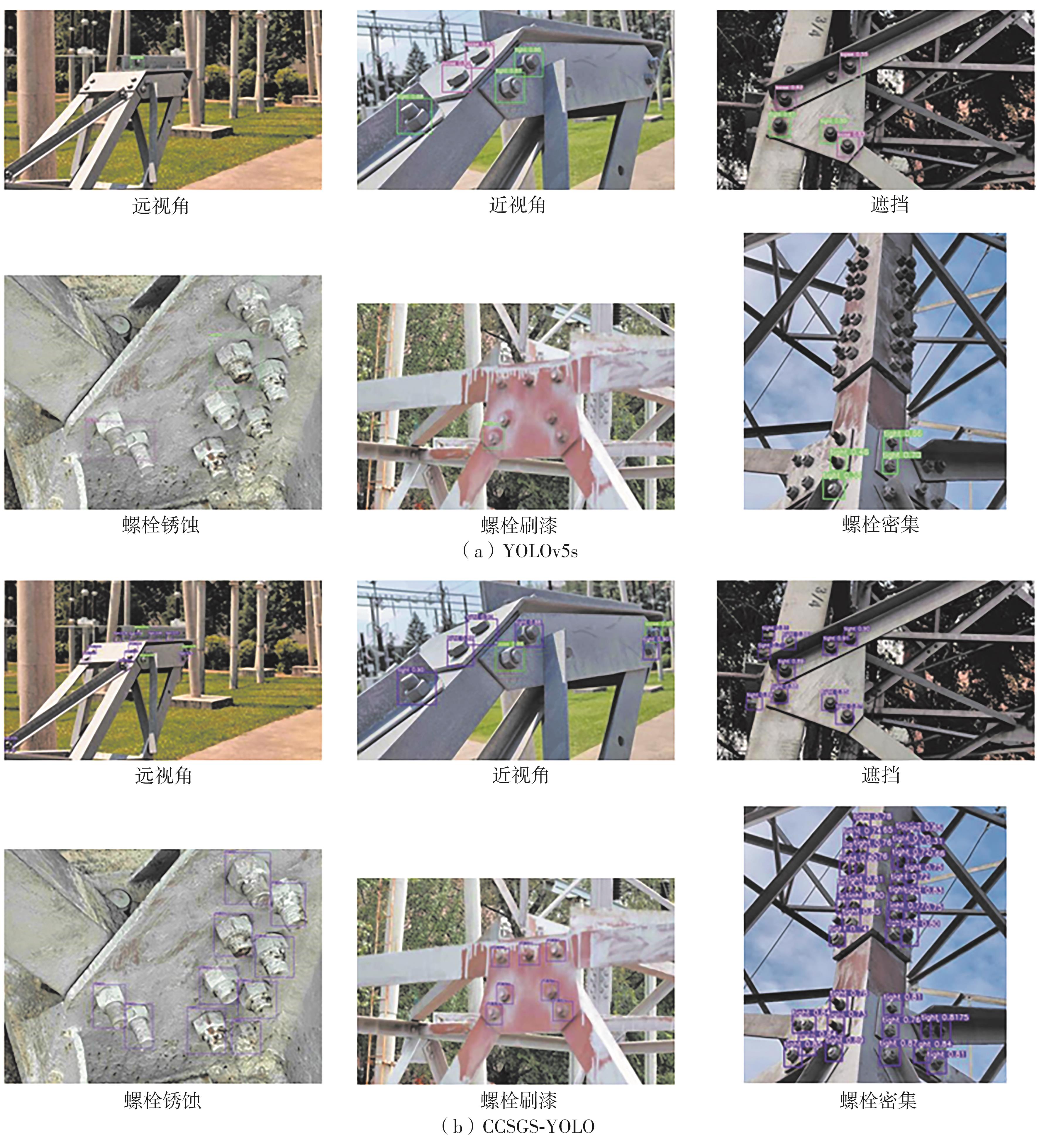

Fig.15
Main interface and function interfaces of the system"
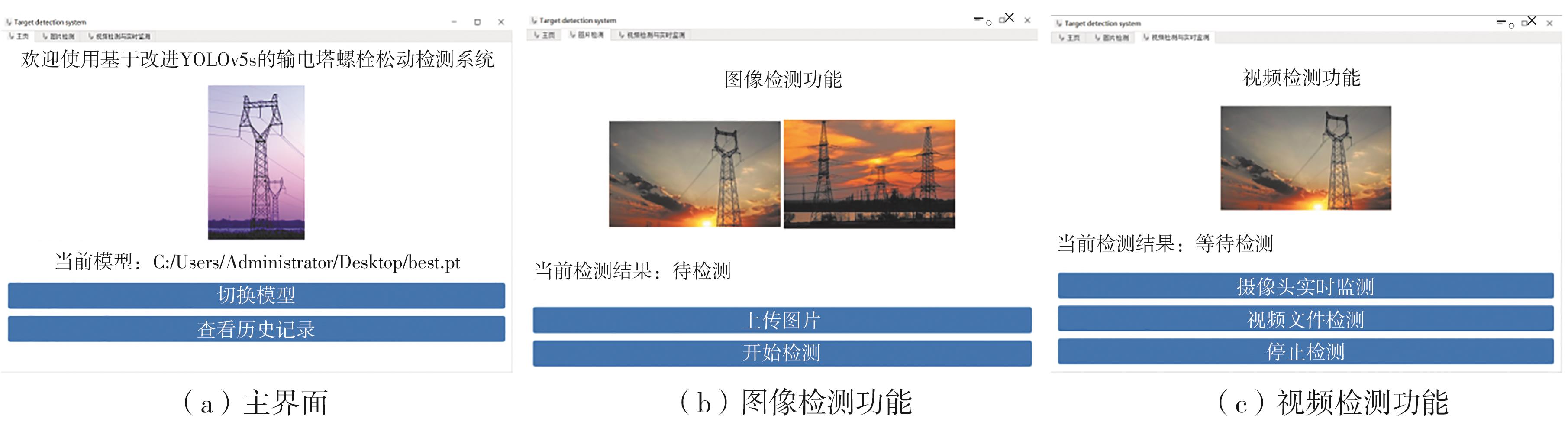
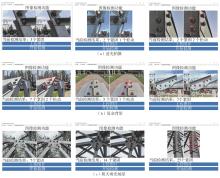
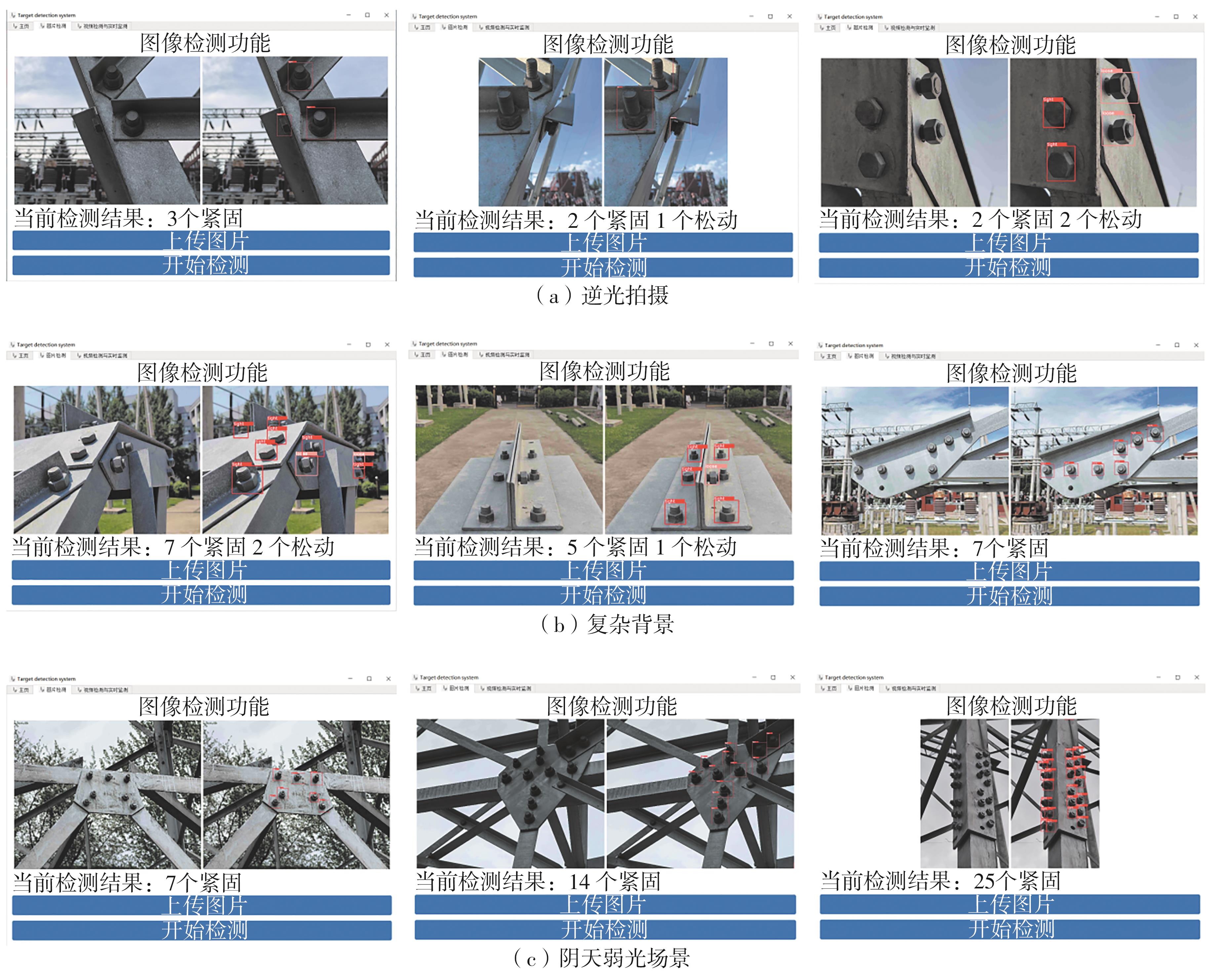
Fig.16
On-site detection effect of CCSGS-YOLO model in different environments"
| [1] | WANG D, HOU S, RUAN Y,et al .Research on the slip model of main member bar connection of transmission tower using bolts[J].International Journal of Steel Structures,2025,25(1):68-79. |
| [2] | 杨风利 .考虑螺栓连接滑移影响的输电铁塔塔身结构分析[J].工程力学,2018,35():193-199. |
| YANG Feng-li .Structural analysis on a typical transmission tower body section with bolt slippage effects[J].Engineering Mechanics,2018,35():193-199. | |
| [3] | 李嘉祥,张超,程金鹏,等 .输电塔螺栓搭接节点滞回性能试验研究[J].振动与冲击,2023,42(22):10-18,120. |
| LI Jiaxiang, ZHANG Chao, CHENG Jinpeng,et al .Experimental study on the hysteresis performance of bolted lap joints of a transmission tower[J].Journal of Vibration and Shock,2023,42(22):10-18,120. | |
| [4] | HUO L, CHEN D, LIANG Y,et al .Impedance based bolt pre-load monitoring using piezoceramic smart washer[J].Smart Materials and Structures,2017,26(5):057004/1-7. |
| [5] | WU G, XU C, DU F,et al .A modified time reversal method for guided wave detection of bolt loosening in simulated thermal protection system panels[J].Complexity,2018,2018:8210817/1-12. |
| [6] | ZHOU L, CHEN S X, NI Y Q,et al .EMI-GCN:a hybrid model for real-time monitoring of multiple bolt looseness using electromechanical impedance and graph convolutional networks[J].Smart Materials and Structures,2021,30(3):035032/1-20. |
| [7] | ZHANG Y, ZHAO X, SUN X,et al .Bolt loosening detection based on audio classification[J].Advances in Structural Engineering,2019,22(13):2882-2891. |
| [8] | WANG X, YUE Q, LIU X .Bolted lap joint loosening monitoring and damage identification based on acoustic emission and machine learning[J].Mechanical Systems and Signal Processing,2024,220:111690/1-15. |
| [9] | JIANG Z, ZHU Z, ZHUO D .Identification of bolt loosening damage of steel truss structure based on MFCC-WPES and optimized random forest[J].Applied Sciences,2024,14(15):6626/1-18. |
| [10] | WANG F, SONG G .A novel percussion-based method for multi-bolt looseness detection using one-dimensional memory augmented convolutional long short-term memory networks[J].Mechanical Systems and Signal Processing,2021,161:107955/1-12. |
| [11] | WANG S, ZHOU Y, KONG Q .A force-adaptive percussion method for bolt looseness assessment[J].Journal of Civil Structural Health Monitoring,2024,14(4):831-841. |
| [12] | 张姝,王昊天,董骁翀,等 .基于深度学习的输电线路螺栓检测技术[J].电网技术,2021,45(7):2821-2828. |
| ZHANG Shu, WANG Haotian, DONG Xiaochong,et al .Bolt detection technology of transmission lines based on deep learning[J].Power System Technology,2021,45(7):2821-2828. | |
| [13] | SUN Y, LI M, DONG R,et al .Vision-based detection of bolt loosening using YOLOv5[J].Sensors,2022,22(14):5184/1-16. |
| [14] | PENG L, WANG K, ZHOU H,et al .YOLOv7-CWFD for real time detection of bolt defects on transmission lines[J].Scientific Reports,2025,15(1):1635/1-17. |
| [15] | HUA G, ZHANG H, HUANG C,et al .An enhanced YOLOv8‐based bolt detection algorithm for transmission line[J].IET Generation,Transmission & Distribution,2024,18(24):4065-4077. |
| [16] | CHEN Z, WANG L, LI B,et al .An improved faster R-CNN transmission line bolt defect detection method[C]∥ Proceedings of 2022 World Automation Congress.San Antonio:IEEE,2022:82-85. |
| [17] | WU T, SHANG K, DAI W,et al .High-resolution cross-scale transformer:a deep learning model for bolt loosening detection based on monocular vision measurement[J].Engineering Applications of Artificial Intelligence,2024,133:108574/1-15. |
| [18] | ZHANG Y, SUN X, LOH K J,et al .Autonomous bolt loosening detection using deep learning[J].Structural Health Monitoring,2020,19(1):105-122. |
| [19] | ZHANG Y, YUEN K V .Bolt damage identification based on orientation-aware center point estimation network[J].Structural Health Monitoring,2022,21(2):438-450. |
| [20] | 邢岩,郭思豪,张振,等 .基于CGT-YOLO的小目标交通标志识别算法[J].华南理工大学学报(自然科学版),2025-11-25,doi:10.12141/j.issn.1000-565X.250092 . |
| XING Yan, GUO Sihao, ZHANG Zhen,et al .Small traffic sign recognition algorithm based on CGT-YOLO[J].Journal of South China University of Technology(Natural Science Edition),2025-11-25,doi:10.12141/j.issn.1000-565X.250092 . | |
| [21] | LIU R, LEHMAN J, MOLINO P,et al .An intriguing failing of convolutional neural networks and the CoordConv solution[C]∥ Proceedings of the 32nd International Conference on Neural Information Processing Systems.Red Hook:ACM,2018:9628-9639. |
| [22] | WOO S, PARK J, LEE J Y,et al .CBAM: convolutional block attention module[C]∥ Proceedings of the 15th European Conference on Computer Vision.Munich:Springer,2018:3-19. |
| [23] | LI H, LI J, WEI H,et al .Slim-neck by GSConv:a lightweight-design for real-time detector architectures[J].Journal of Real-Time Image Processing,2024,21(3):62/1-13. |
| [24] | YU J, JIANG Y, WANG Z,et al .UnitBox:an advanced object detection network[C]∥ Proceedings of the 24th ACM International Conference on Multimedia.New York:ACM,2016:516-520. |
| [25] | REZATOFIGHI H, TSOI N, GWAK J Y,et al .Generalized intersection over union:a metric and a loss for bounding box regression[C]∥ Proceedings of 2019 IEEE/CVF Conference on Computer Vision and Pattern Recognition.Long Beach:IEEE,2019:658-666. |
| [26] | BODLA N, SINGH B, CHELLAPPA R,et al .Soft-NMS:improving object detection with one line of code[C]∥ Proceedings of 2017 IEEE International Conference on Computer Vision.Venice:IEEE,2017:5562-5570. |
| [27] | EVERINGHAM M, GOOL L, WILLIAMS I K C,et al .The Pascal visual object classes (VOC) challenge[J].International Journal of Computer Vision,2010,88(2):303-338. |
| [1] | LI Anran, PAN Yuyan, XU Zhenlin, et al. Research on Predictive Motion Planning for Intelligent Connected Vehicles based on Transformer [J]. Journal of South China University of Technology(Natural Science Edition), 2026, 54(3): 52-64. |
| [2] | LING Fei, GU Xuerong. Prediction of Target Inhibitor Activity by Integrating Machine Learning and Metaheuristic Algorithms [J]. Journal of South China University of Technology(Natural Science Edition), 2026, 54(2): 91-101. |
| [3] | YANG Junmei, ZHANG Bangcheng, YANG Lu, ZENG Delu. A Single-Channel Speech Separation Model Based on Time-Domain Comprehensive Attention Mechanism [J]. Journal of South China University of Technology(Natural Science Edition), 2026, 54(1): 70-82. |
| [4] | CHEN Cheng, WANG Miao, WANG Xinyao, GAO Zhiming, ZHOU Xuan, YAN Junwei. Multi-Working Condition Energy Consumption Anomaly Detection Method for Office Building Lighting Sockets Based on LSTM-AE [J]. Journal of South China University of Technology(Natural Science Edition), 2025, 53(9): 117-126. |
| [5] | YUE Yongheng, ZHAO Zhihao. Lane Line Detection Algorithm Based on Deep Learning [J]. Journal of South China University of Technology(Natural Science Edition), 2025, 53(9): 22-30. |
| [6] | ZUO Bin, DONG Tianhang, ZHANG Zehui, WANG Huajun, HUO Weiwei, GONG Wenfeng, CHENG Junsheng. Proton Exchange Membrane Fuel Cell Fault Prediction Method Based on Deep Learning [J]. Journal of South China University of Technology(Natural Science Edition), 2025, 53(7): 21-30. |
| [7] | HU Guanghua, DAI Zhigang, WANG Qinghui. Machining Feature Recognition Method of B-Rep Model Based on Graph Neural Network [J]. Journal of South China University of Technology(Natural Science Edition), 2025, 53(5): 20-31. |
| [8] | HU Xizhi, CUI Bofei, WANG Qin, LIU Hong. Visual SLAM Algorithm Based on Memory Parking Scene [J]. Journal of South China University of Technology(Natural Science Edition), 2024, 52(6): 1-11. |
| [9] | LIU Hao, YUAN Hui, CHEN Chen, GAO Wei. Point Cloud Geometry Coding Framework Based on Sampling [J]. Journal of South China University of Technology(Natural Science Edition), 2024, 52(6): 148-156. |
| [10] | YANG Chunling, LIANG Ziwen. Feature-Domain Proximal High-Dimensional Gradient Descent Network for Image Compressed Sensing [J]. Journal of South China University of Technology(Natural Science Edition), 2024, 52(3): 119-130. |
| [11] | ZHENG Juanyi, DONG Jiahao, ZHANG Qingjue, et al. Reconfigurable Intelligence Surface Channel Estimation Algorithm Based on RDN [J]. Journal of South China University of Technology(Natural Science Edition), 2024, 52(3): 102-111. |
| [12] | ZHOU Lang, FAN Kun, QU Hua, et al. Forest Fire Recognition by Improved EfficientNet-E Model Based on ECA Attention Mechanism [J]. Journal of South China University of Technology(Natural Science Edition), 2024, 52(2): 42-49. |
| [13] | CHEN Qiong, FENG Yuan, LI Zhiqun, YANG Yong. Semantic-Visual Consistency Constraint Network for Zero-Shot Image Semantic Segmentation [J]. Journal of South China University of Technology(Natural Science Edition), 2024, 52(10): 41-50. |
| [14] | LIU Weipeng, LI Xu, REN Ziwen, QI Yedong. Algorithm for Multiscale Residual Deformable Lung CT Image Registration [J]. Journal of South China University of Technology(Natural Science Edition), 2024, 52(10): 135-145. |
| [15] | HU Guanghua, TU Qianxi. Surface Defect Detection Method for Industrial Products Based on Photometric Stereo and Dual Stream Feature Fusion Network [J]. Journal of South China University of Technology(Natural Science Edition), 2024, 52(10): 112-123. |
| Viewed | ||||||
|
Full text |
|
|||||
|
Abstract |
|
|||||