Journal of South China University of Technology(Natural Science Edition) ›› 2025, Vol. 53 ›› Issue (10): 131-144.doi: 10.12141/j.issn.1000-565X.240228
• Mechanical Transmission System • Previous Articles Next Articles
History, Present Situation and Prospect of Research on Leg Configuration of Humanoid Robot
DING Hongyu1,2, SHI Zhaoyao3, ZHANG Pan3, FU Chunjiang4
- 1.School of Mechanical and Energy Engineering,Guangdong Ocean University,Yangjiang 529500,Guangdong,China
2.Shenzhen Institute of Guangdong Ocean University,Shenzhen 518116,Guangdong,China
3.Beijing Engineering Research Center of Precision Measurement Technology and Instruments,Beijing University of Technology,Beijing 100124,China
4.Humanoid Innovation Center,UBTECH Robotics,Inc. ,Shenzhen 518052,Guangdong,China
-
Received:2024-05-09Online:2025-10-25Published:2025-05-30 -
Contact:石照耀(1964—),男,教授,博士生导师,主要从事精密测试技术和仪器、齿轮工程与精密减速器研究。 E-mail:hyding2004@163.com;shizhaoyao@bjut.edu.cn -
About author:丁宏钰(1979 —),男,高级工程师,硕士生导师,主要从事精密减速器、机器人关节、机器人构型研究。E-mail:hyding2004@163.com -
Supported by:the National Natural Science Foundation of China(52375048)

CLC Number:
Cite this article
DING Hongyu, SHI Zhaoyao, ZHANG Pan, FU Chunjiang. History, Present Situation and Prospect of Research on Leg Configuration of Humanoid Robot[J]. Journal of South China University of Technology(Natural Science Edition), 2025, 53(10): 131-144.
share this article
Fig.1
Simplification of human leg joints"
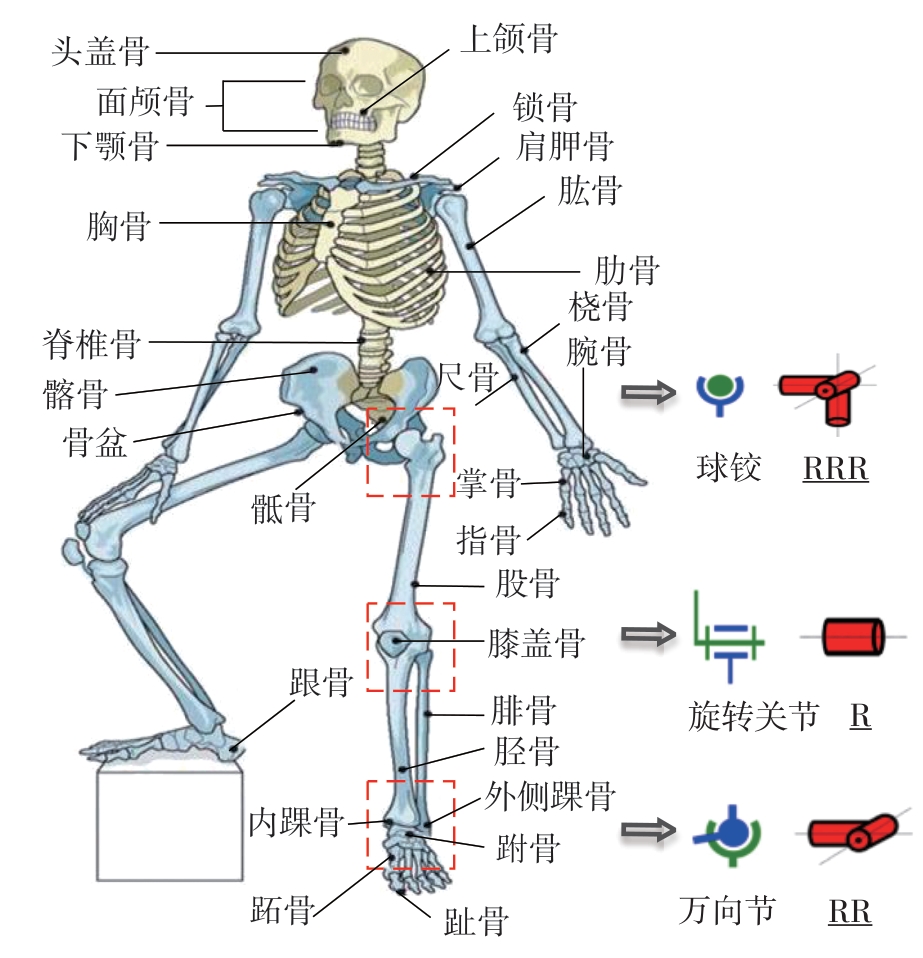
Fig.2
Hill’s muscle force model"
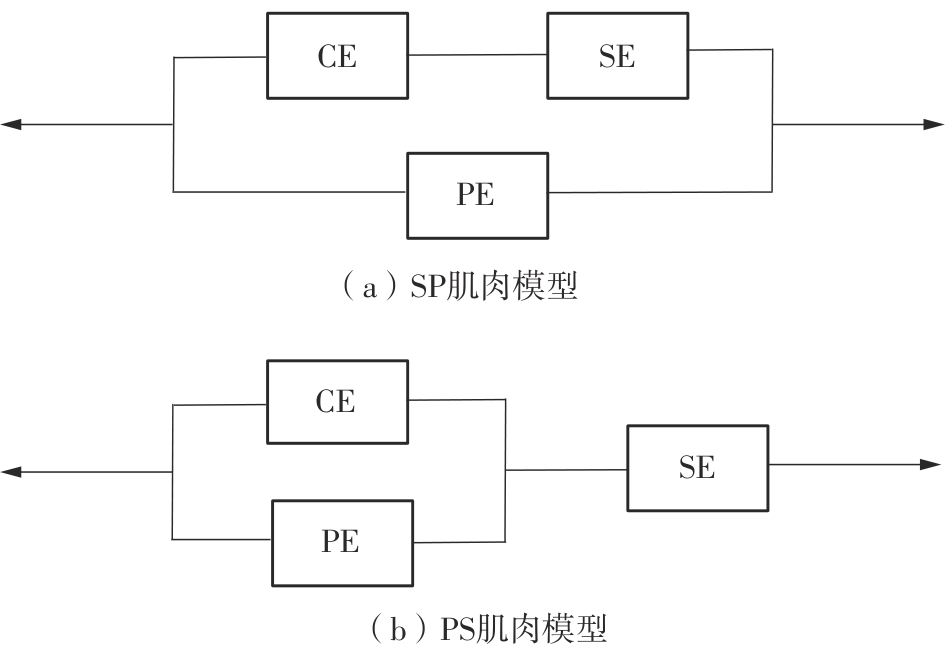
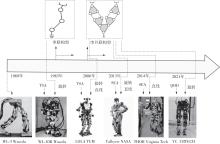
Fig.3
History of humanoid robot leg configuration"
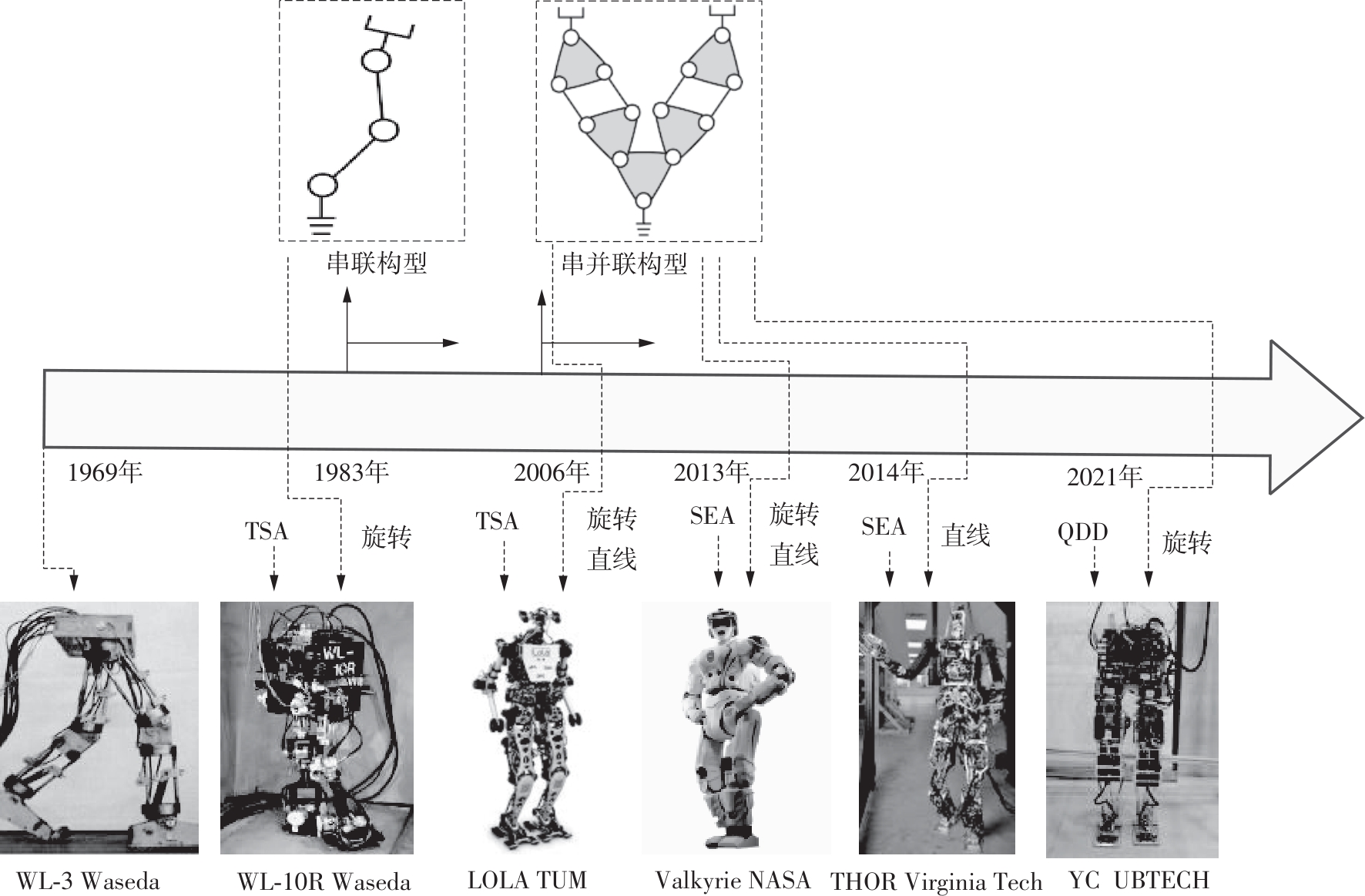
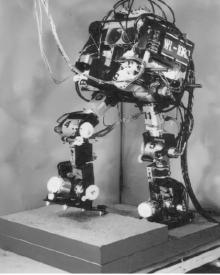
Fig.4
Humanoid of WL-10RD[12]"
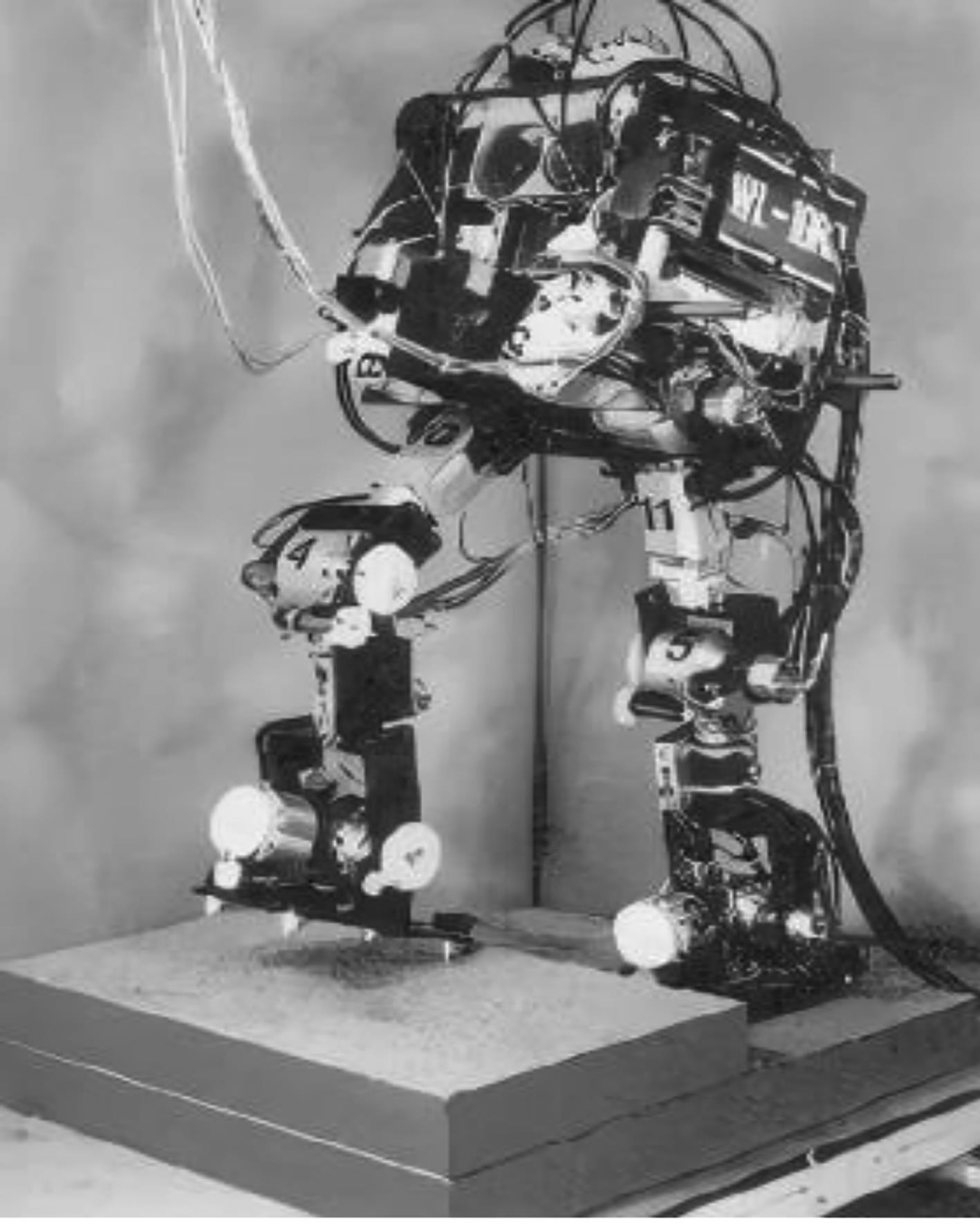
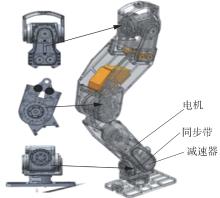
Fig.5
Leg structure of HUBO robot[21]"
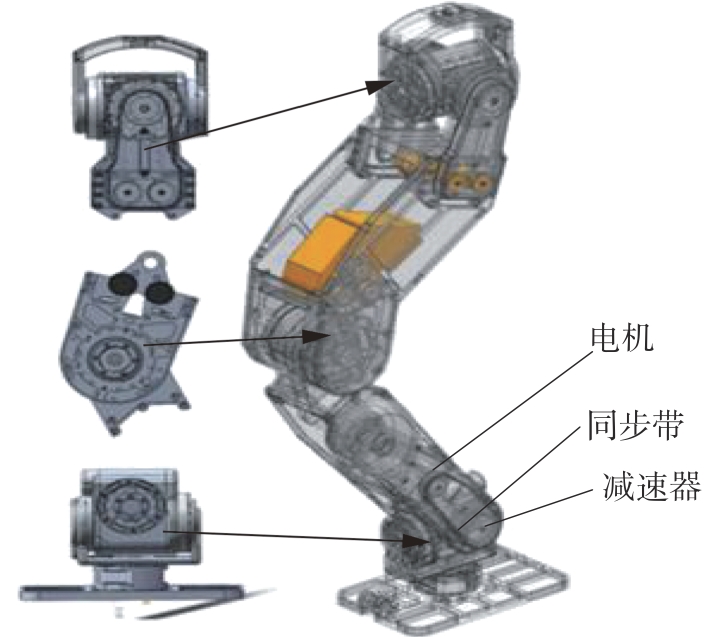
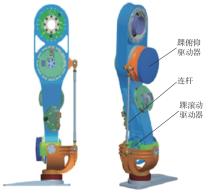
Fig.6
Leg of TORO robot[22]"
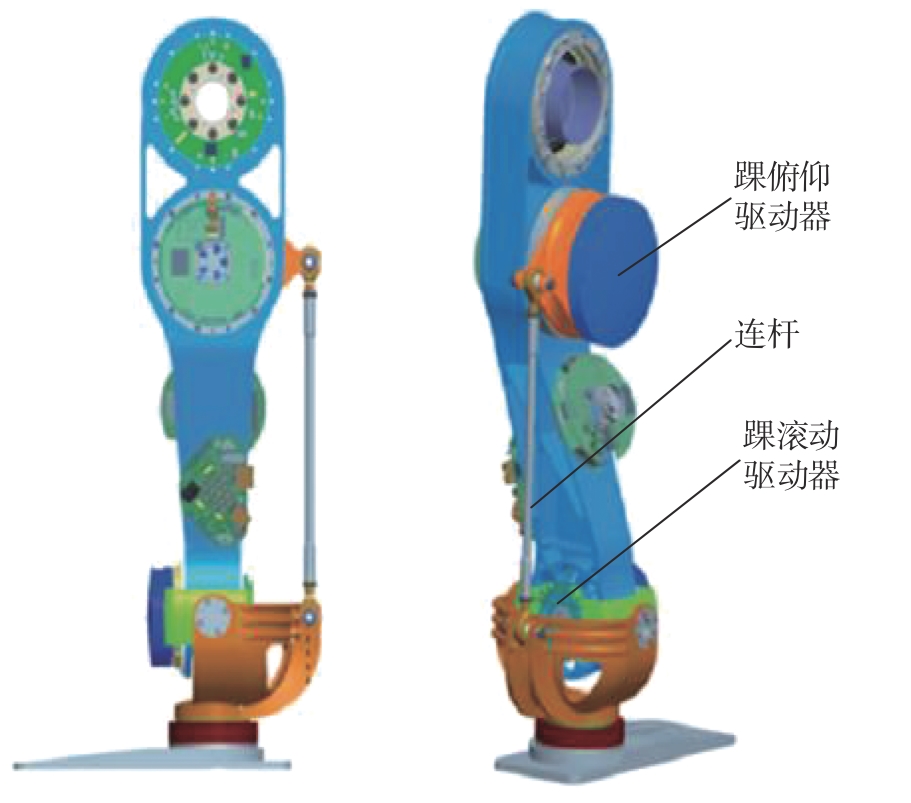
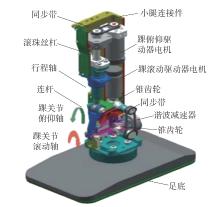
Fig.7
Shank structure of HRP-4 robot[26]"
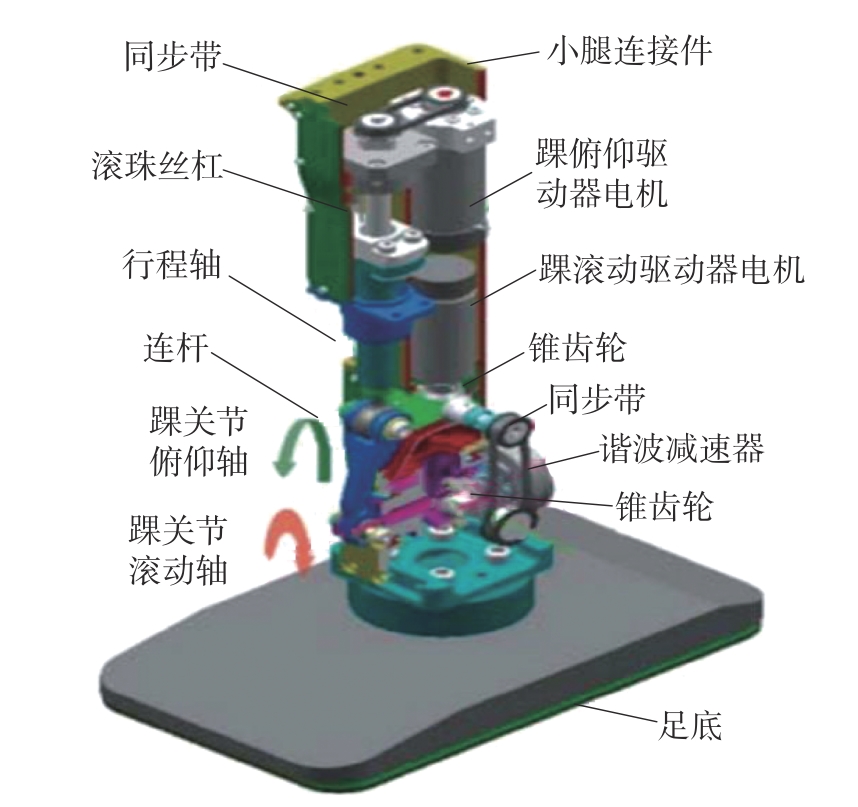
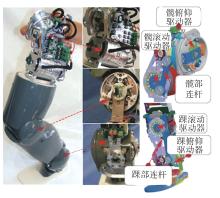
Fig.8
Leg structure of COMAN robot[30]"
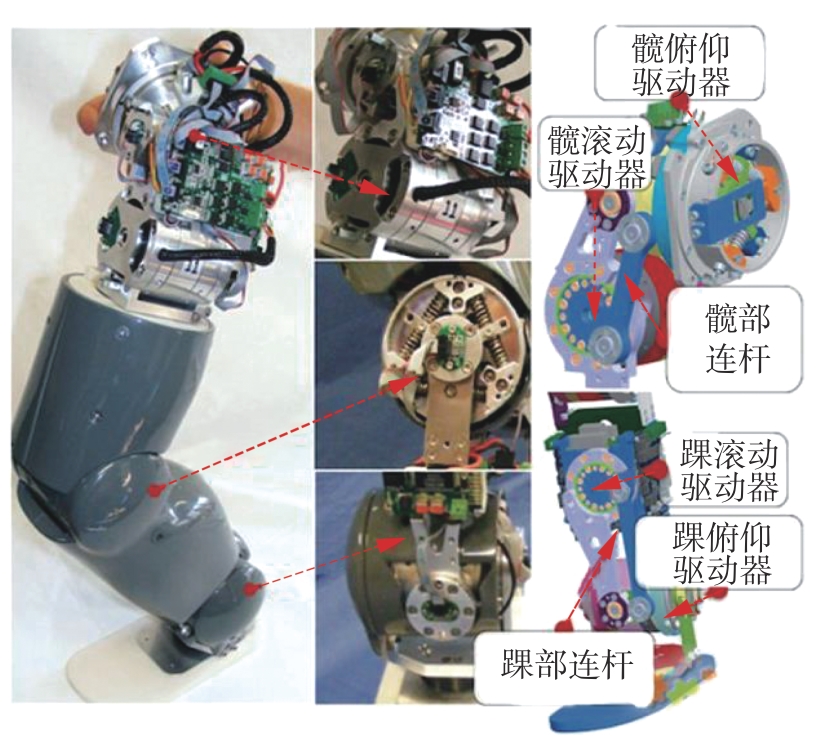
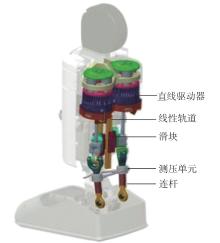
Fig.9
Ankle mechanism of Valkyrie robot[36]"
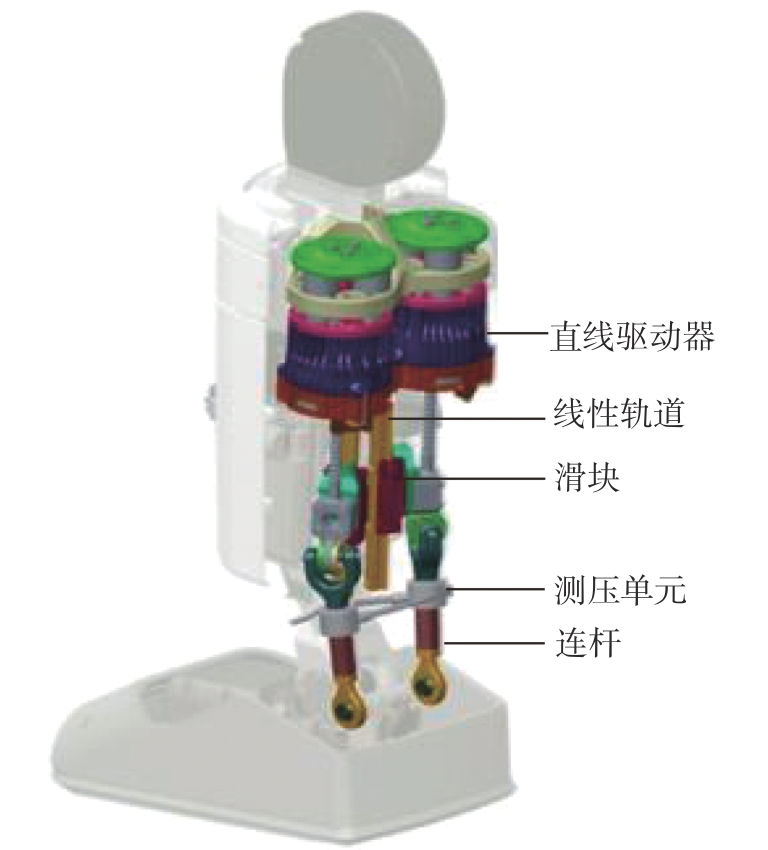
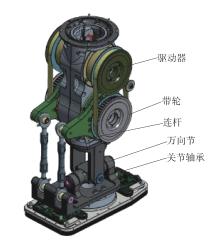
Fig.10
Ankle mechanism of CogIMon robot[37]"
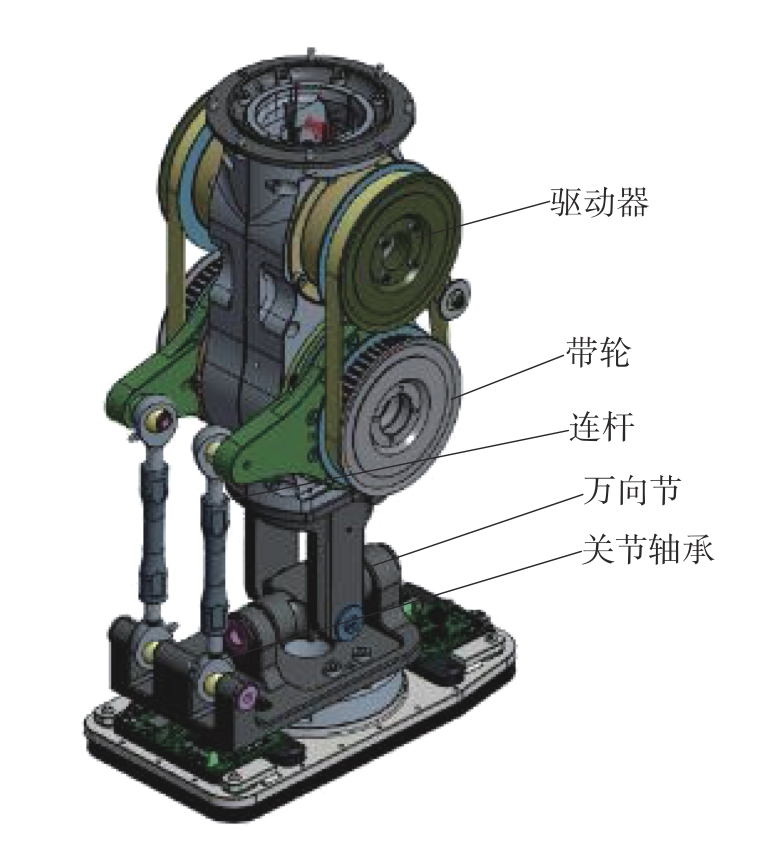
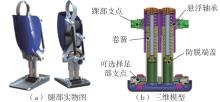
Fig.11
Ankle mechanism of DURUS robot[38]"
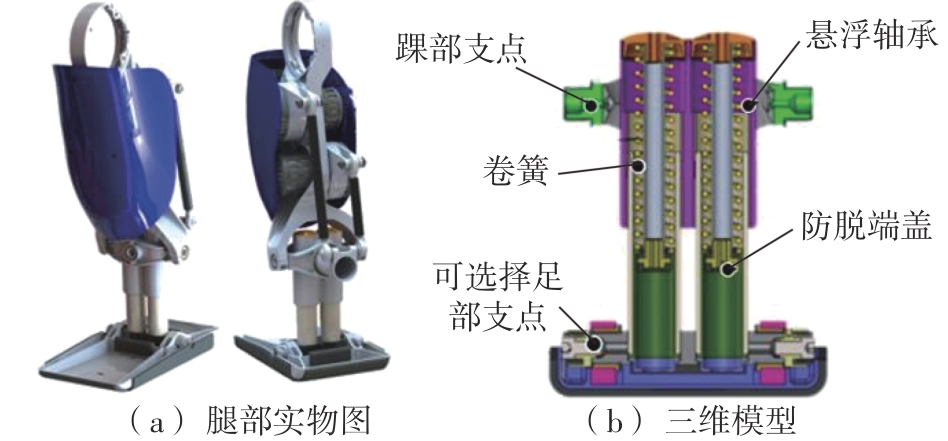
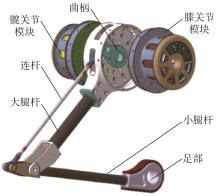
Fig.12
Leg configuration of jumping robot[44]"
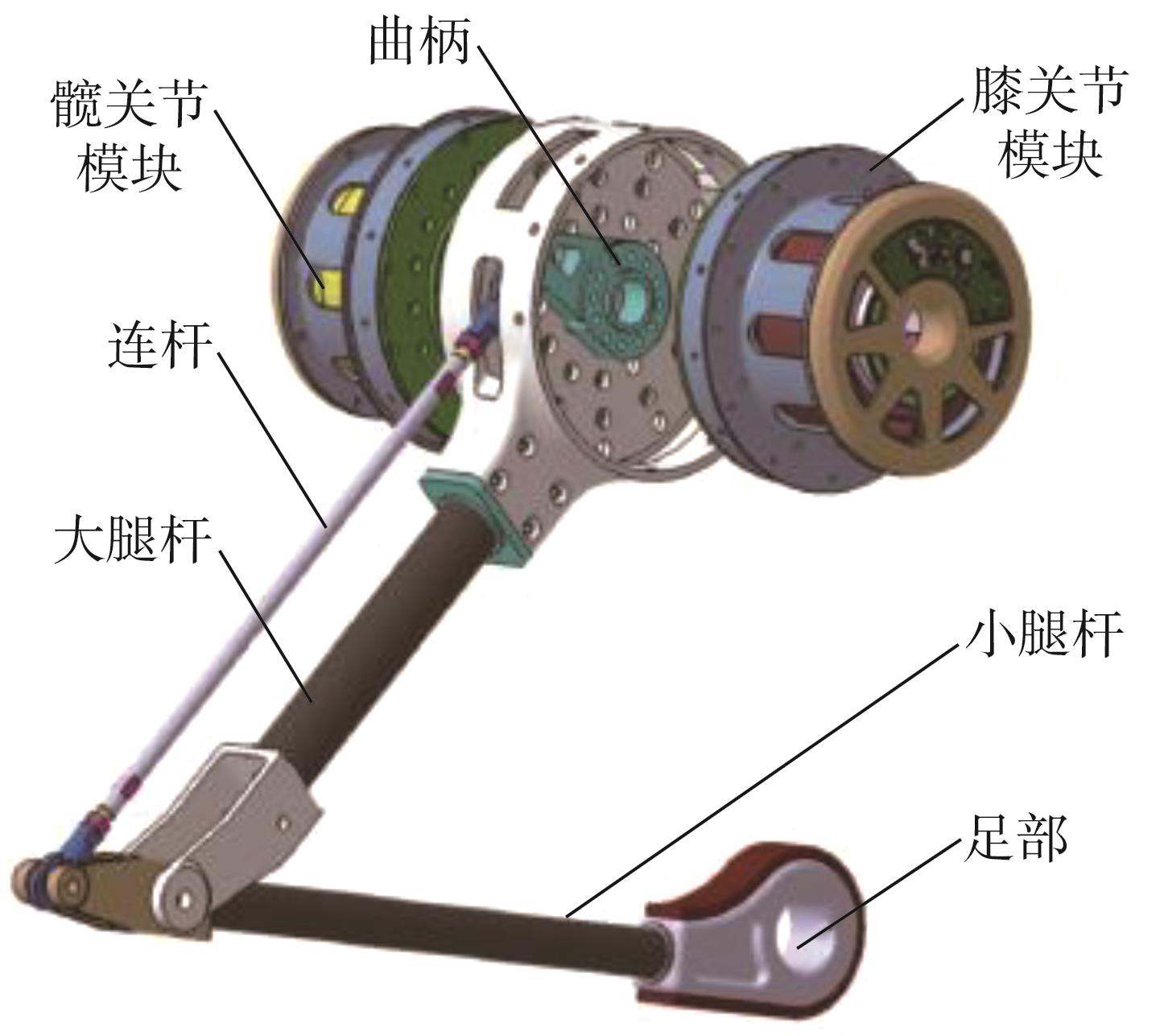
Fig.13
Leg configuration of WALK-MAN robot[46]"
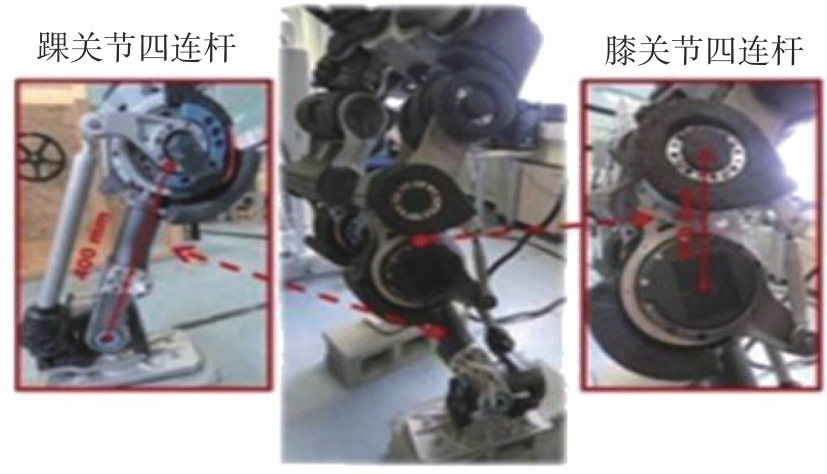
Fig.14
Leg structure of ASIMO robot[48]"
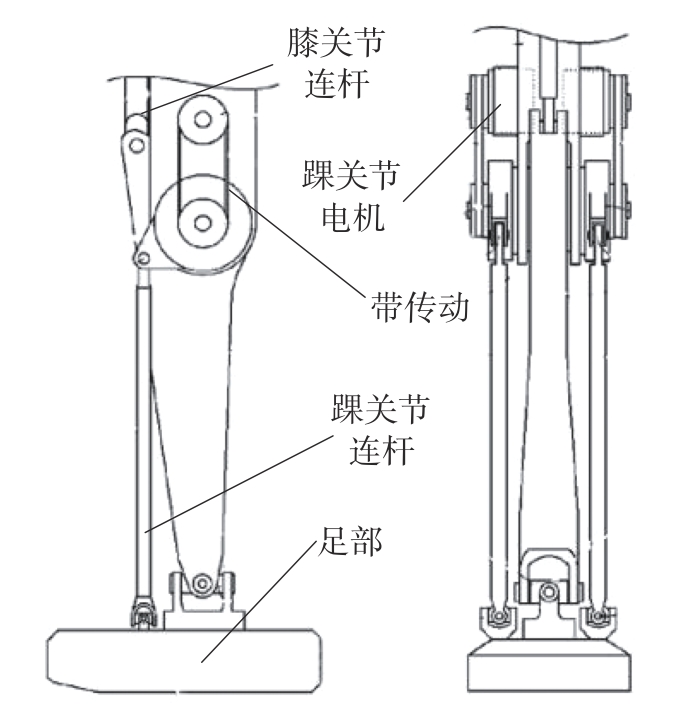
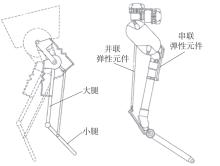
Fig.15
Leg structure of Digit robot[50]"
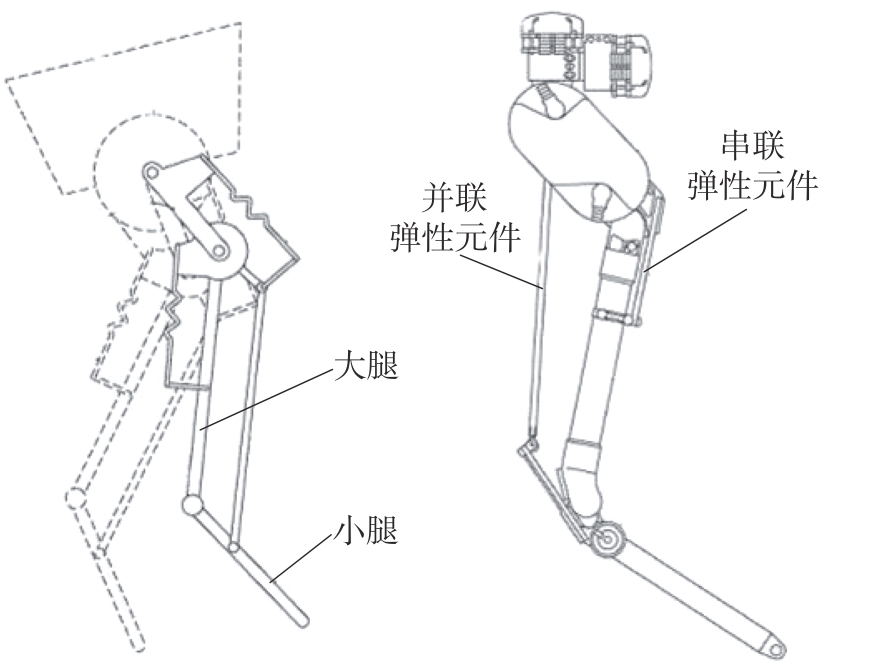
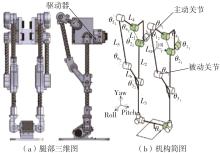
Fig.16
Leg structure of Disney robot[52]"
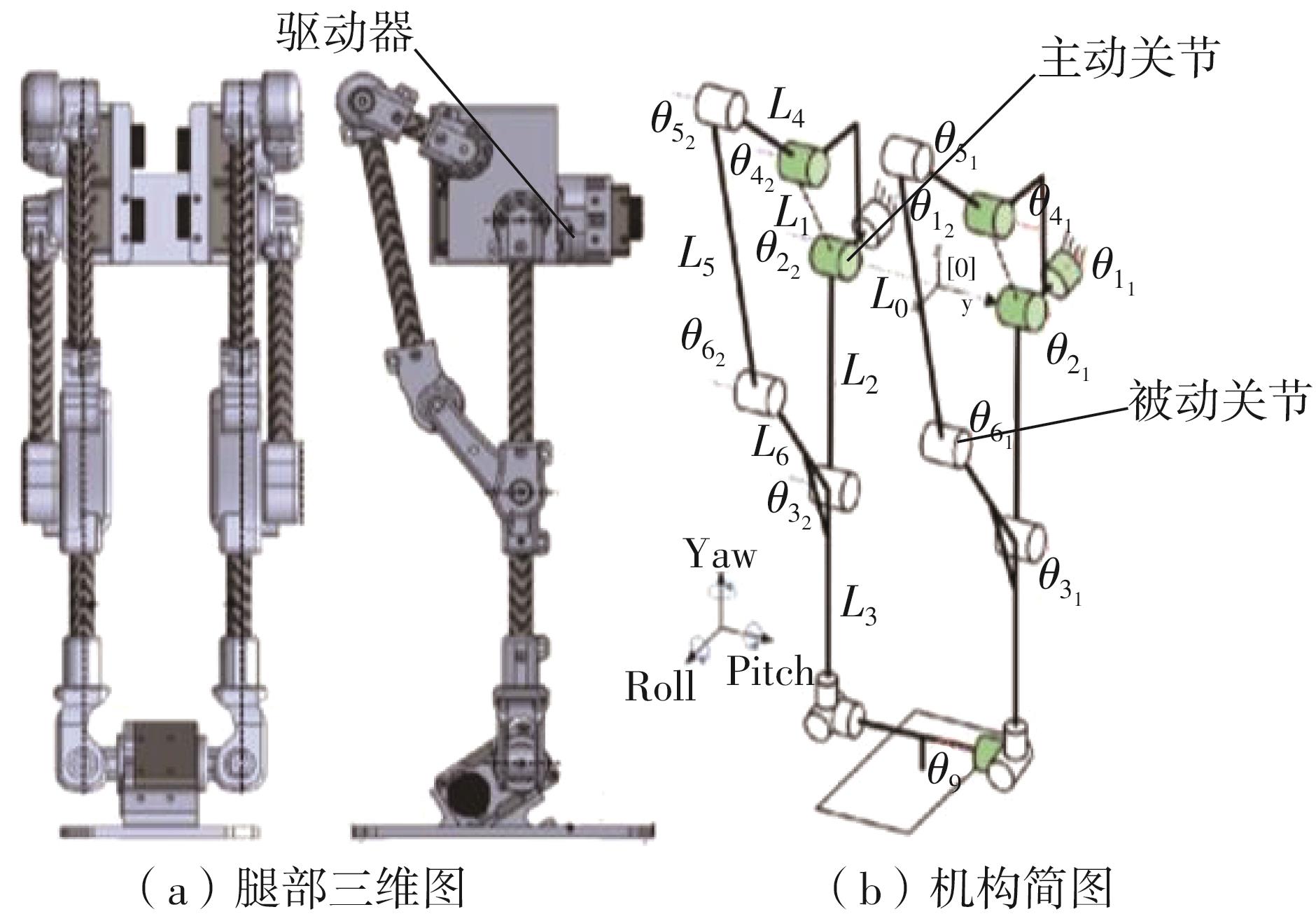
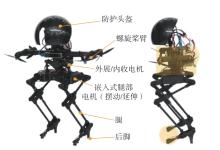
Fig.17
Leg configuration of LEO robot[53]"
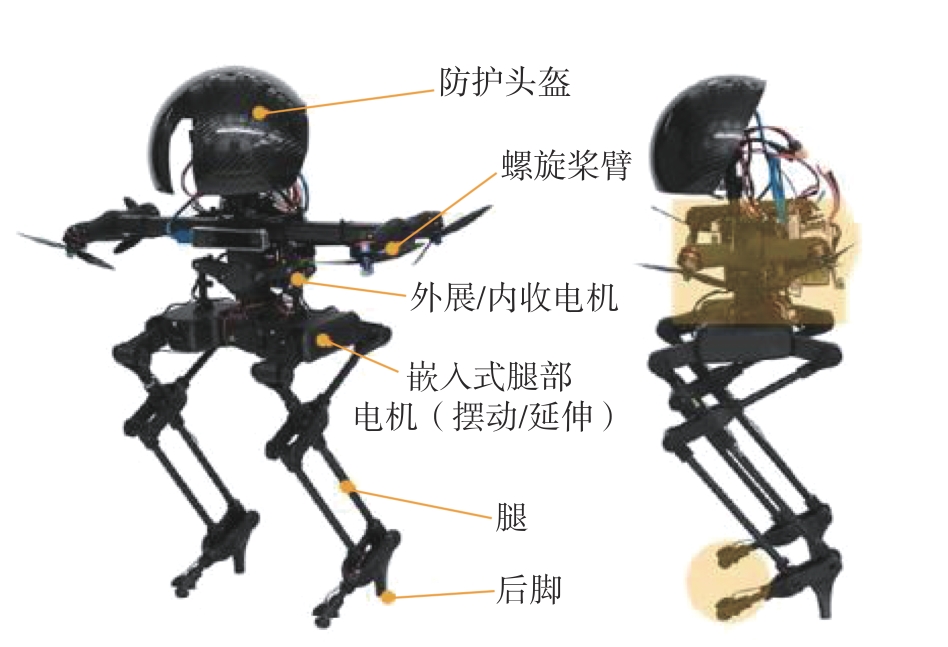
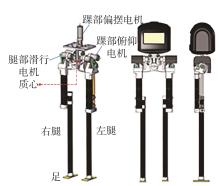
Fig.18
Leg configuration of L03 robot[54]"
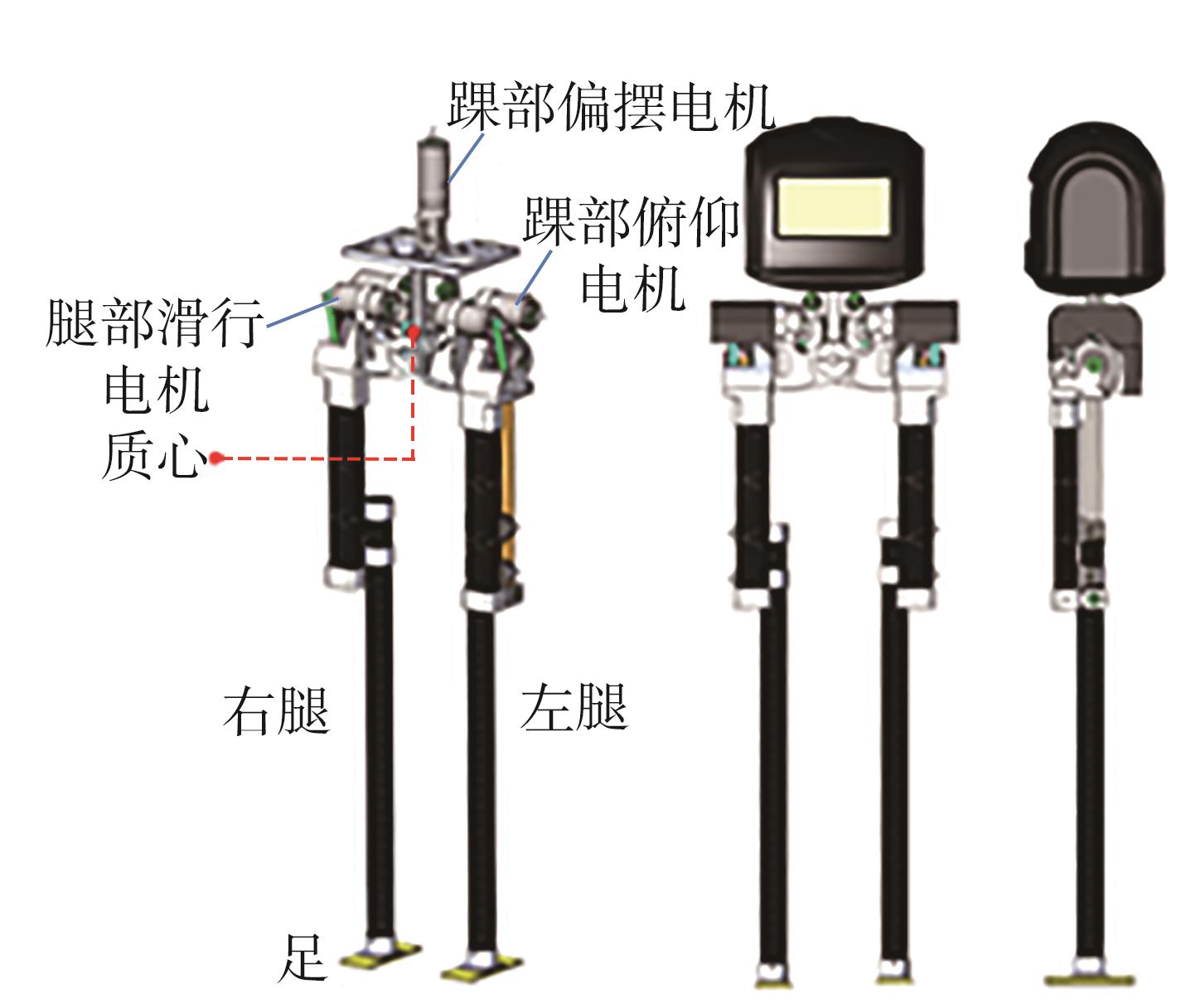
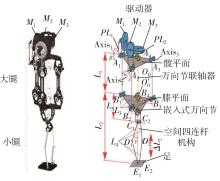
Fig.19
Leg structure of OmniLeg robot[55]"
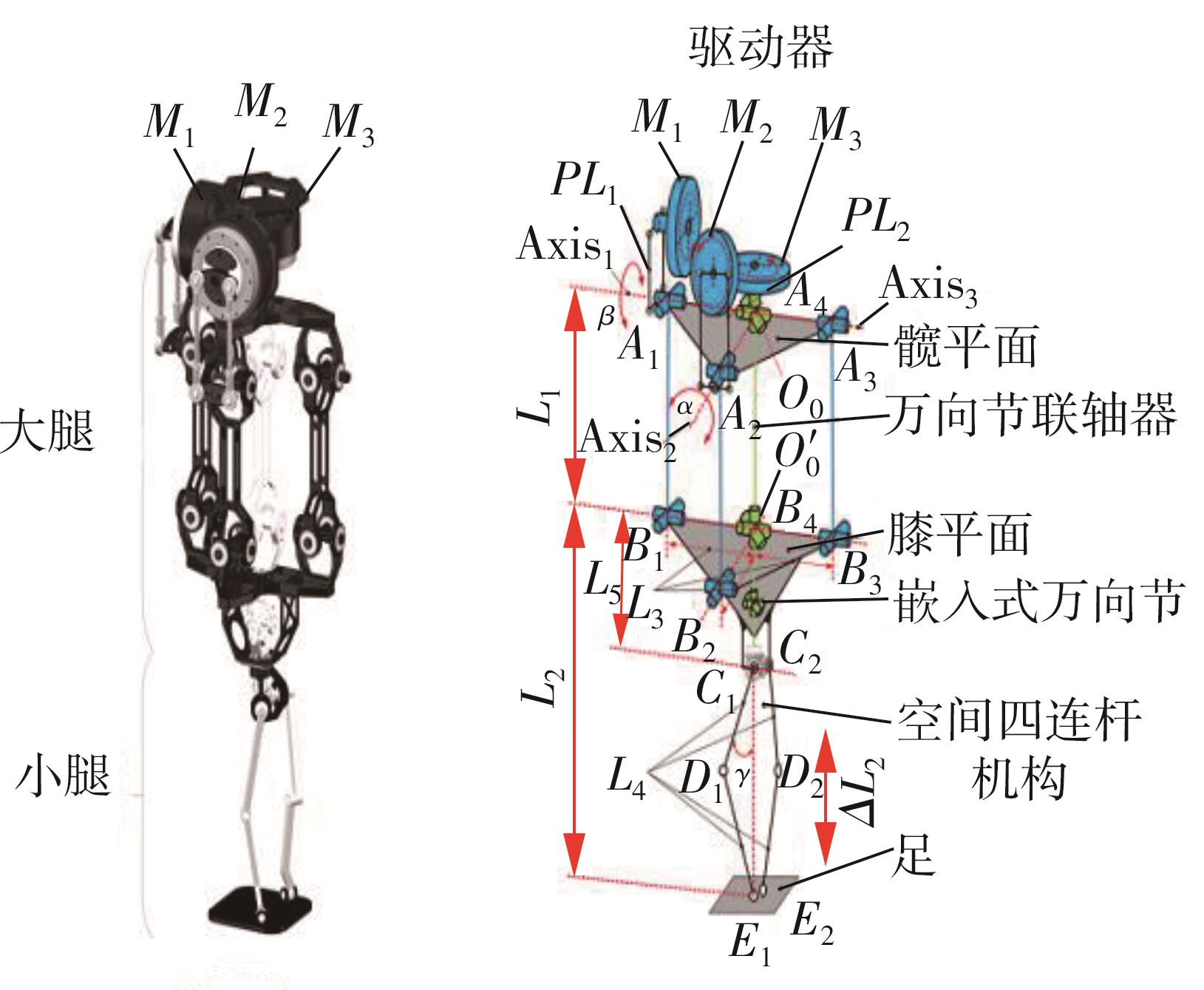
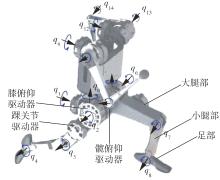
Fig.20
Structure of HIT humanoid robot[56]"
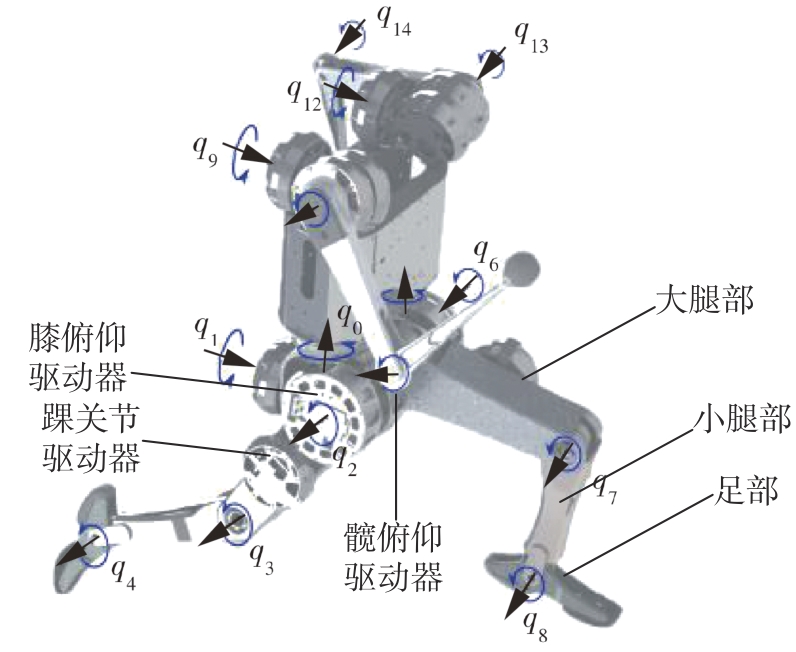
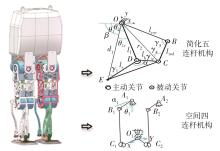
Fig.21
Leg structure of YC robot[58]"
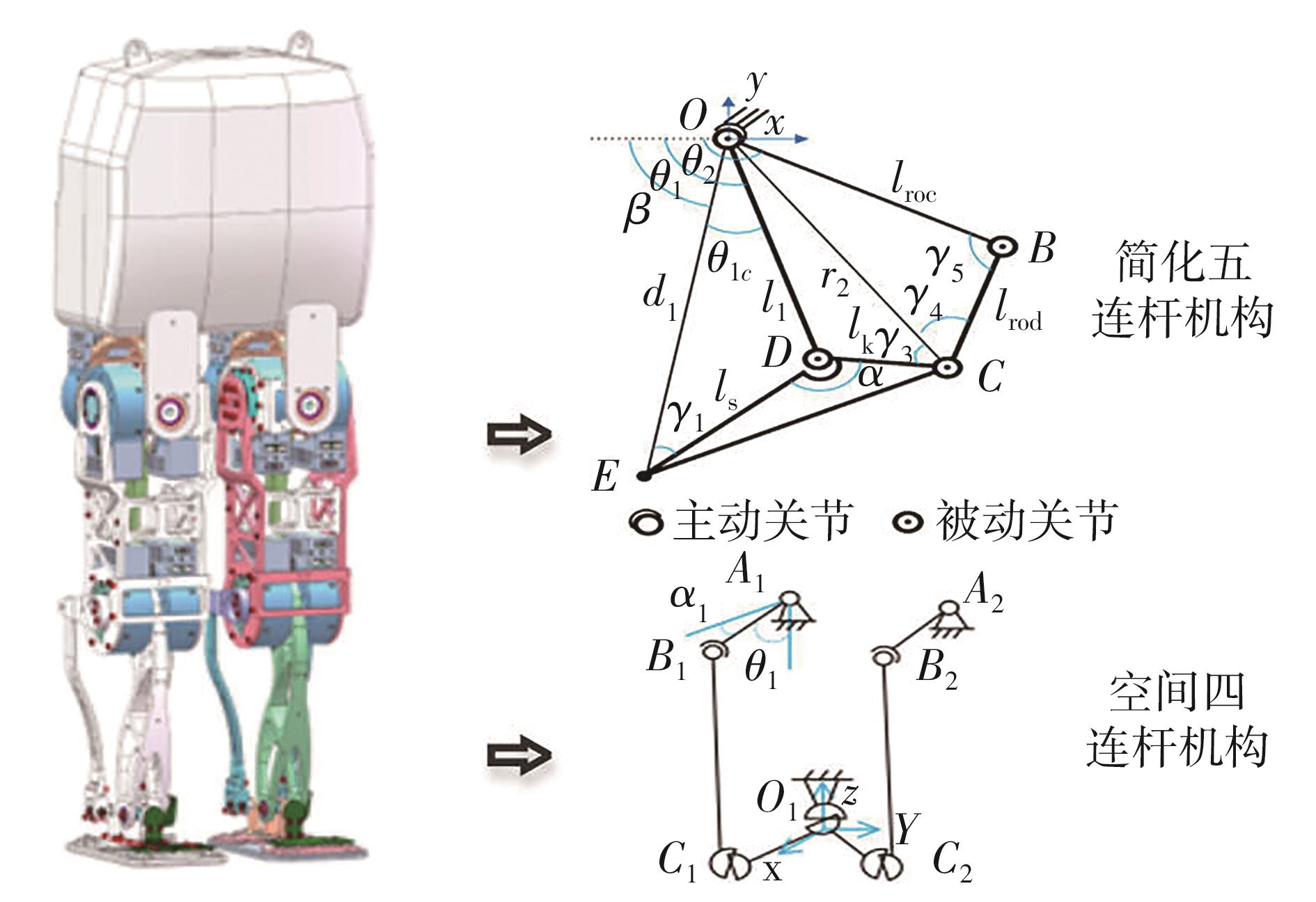
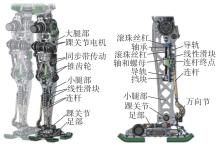
Fig.22
Leg configuration of LOLA robot[59]"
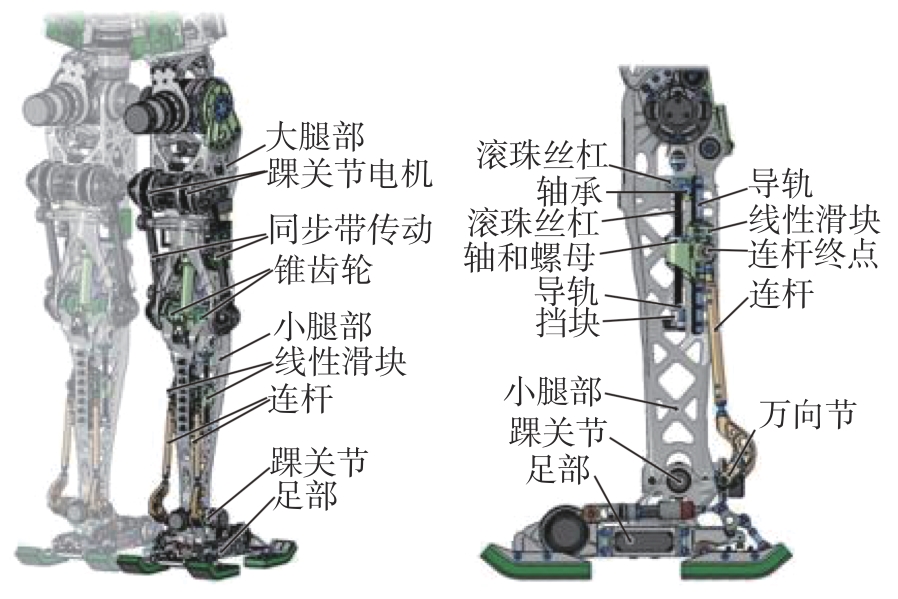
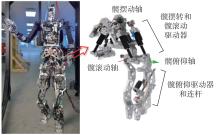
Fig.23
Leg structure of THOR robot[10]"
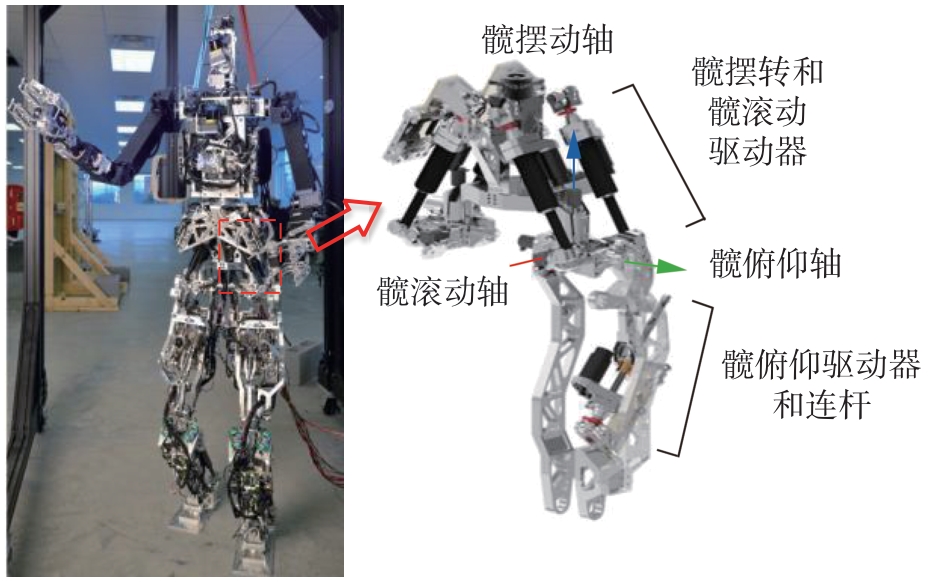
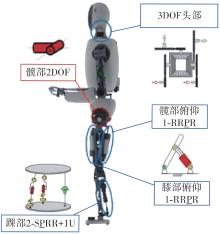
Fig.24
Leg configuration of RH5 robot[62]"
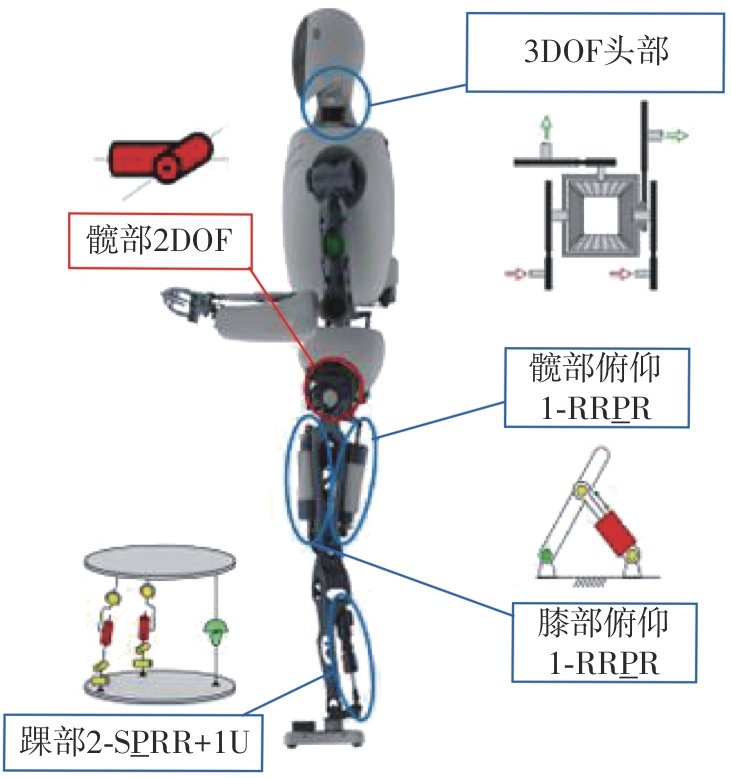
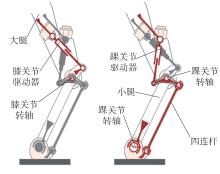
Fig.25
Leg configuration of BHR-T robot[63]"
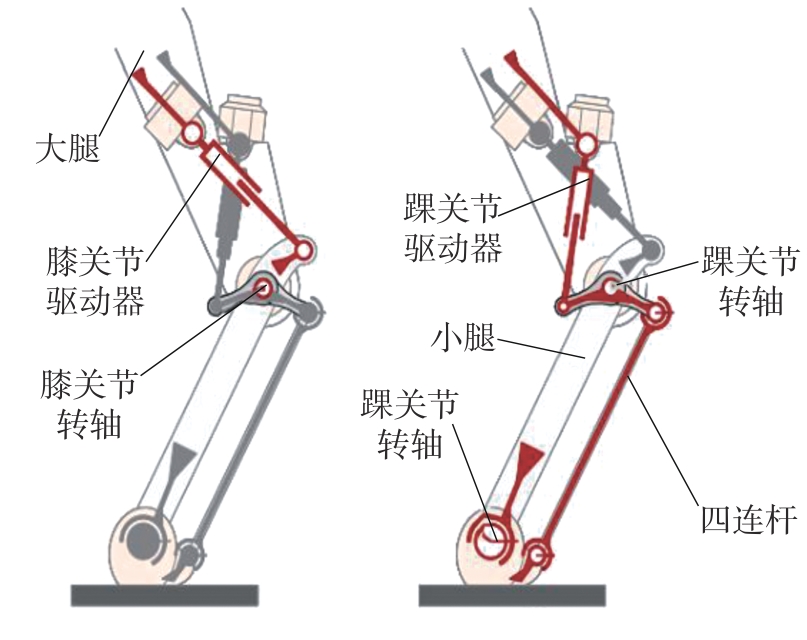
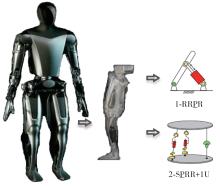
Fig.26
Leg configuration of Optimus robot[64]"
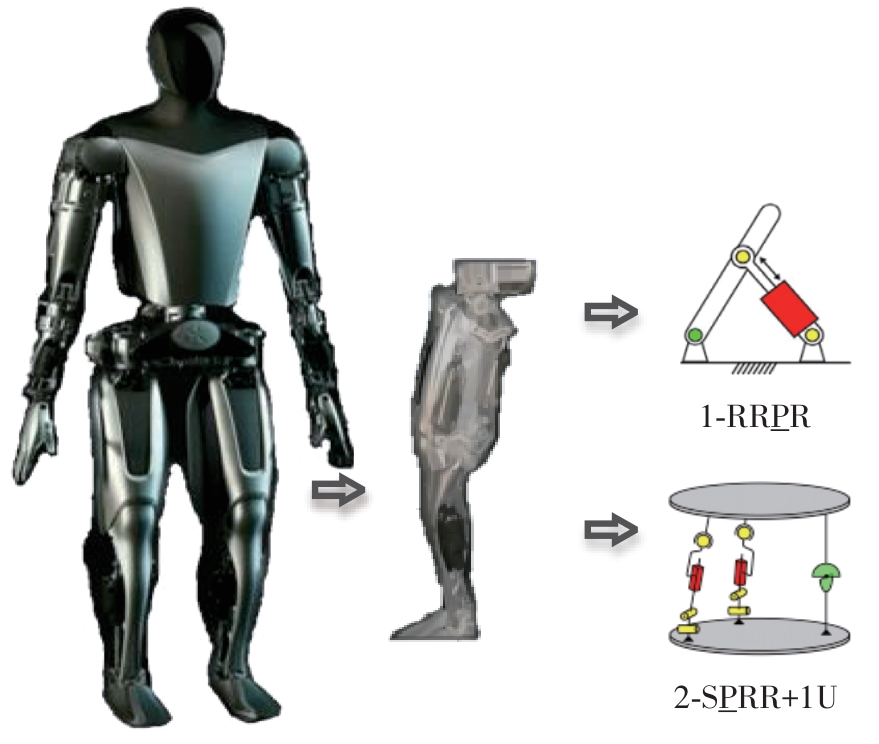
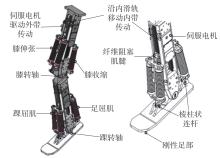
Fig.27
Leg configuration of JEG robot[65]"

Table 1
Comparison of leg configuration performance"
构型 类型 | 刚性 | 质量 分布 | 转动惯量 | 运动学 求解 |
|---|---|---|---|---|
| 串联 | 较差 | 质心低 | 膝部和髋部转动惯量大 | 简单 |
| 并联 | 好 | 质心高 | 髋部和膝部转动惯量小 | 复杂 |
| 串并联 | 好 | 质心高 | 髋部和膝部转动惯量小 | 复杂 |
Table 2
Parallel mechanism of a typical robot leg"
| 机器人名称(时间) | 腿部使用并联机构自由度数量 | 腿部应用并联机构自由度数量 | ||
|---|---|---|---|---|
| 髋部 | 膝部 | 踝部 | ||
| LOLA[ | 0 | 1 | 2 | 3 |
| Valkyrie[ | 0 | 0 | 2 | 2 |
| TORO[ | 0 | 0 | 2 | 2 |
| THOR[ | 3 | 1 | 2 | 6 |
| TALOS[ | 0 | 0 | 2 | 2 |
| RH5[ | 1 | 1 | 2 | 4 |
| Disney Robot[ | 3 | 1 | 1 | 6 |
| YC[ | 1 | 1 | 2 | 4 |
| MIT Humanoid[ | 1 | 1 | 2 | 4 |
| Optimus[ | 2 | 1 | 2 | 5 |
| BHR-T[ | 0 | 1 | 2 | 3 |
Table 3
Mechanism of humanoid robot leg"
| 部位名称 | 机构/代号 | |||
|---|---|---|---|---|
| 髋部 | 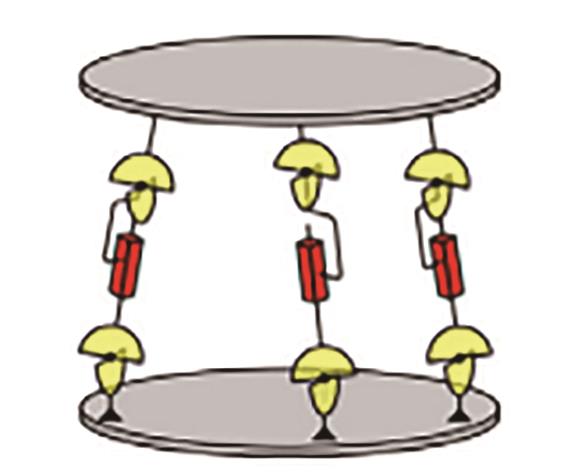 |  | 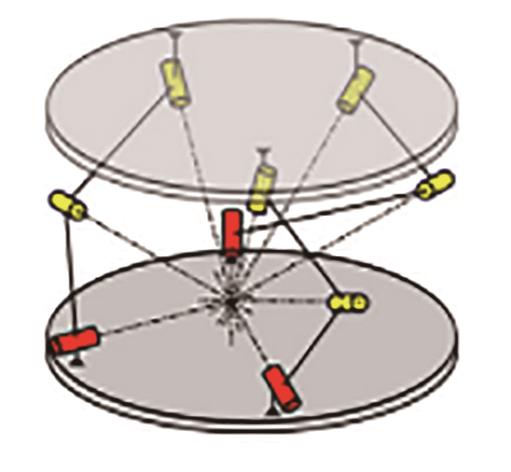 | 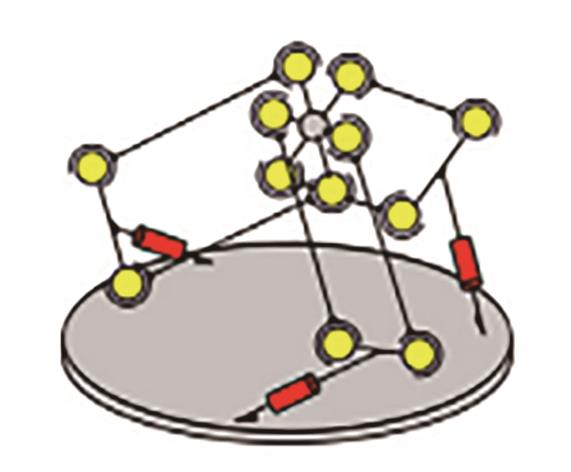 |
| 3-U | 3- | 3- | 3- | |
| 膝部 | 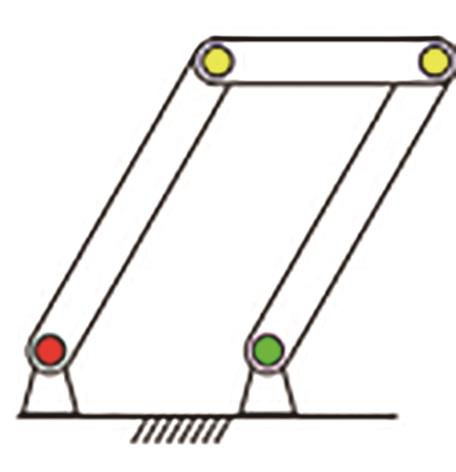 | 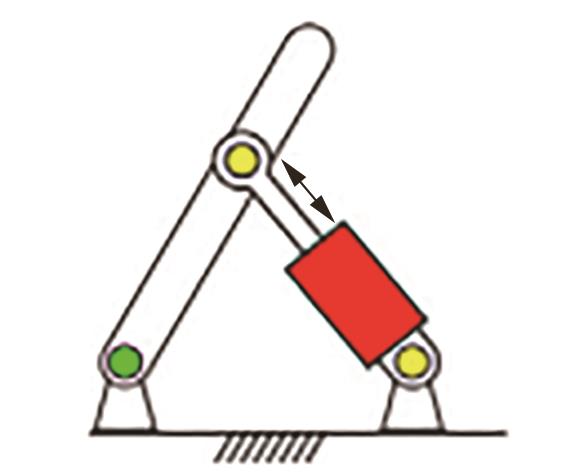 | ||
| 1- | 1-RR | |||
| 踝部 | 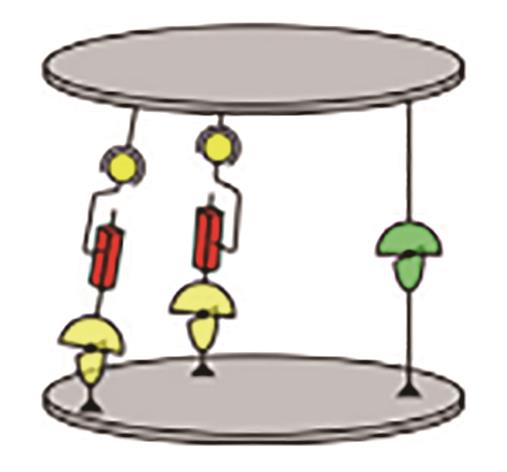 | 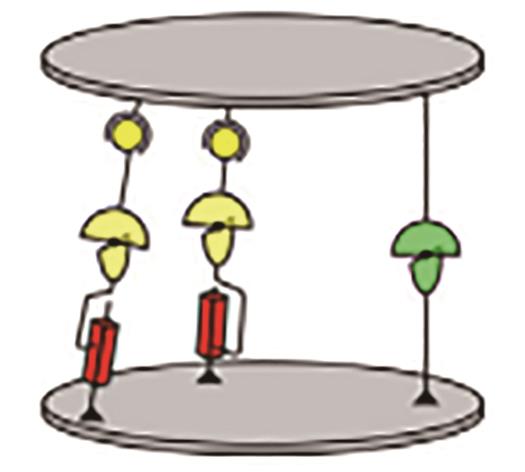 | 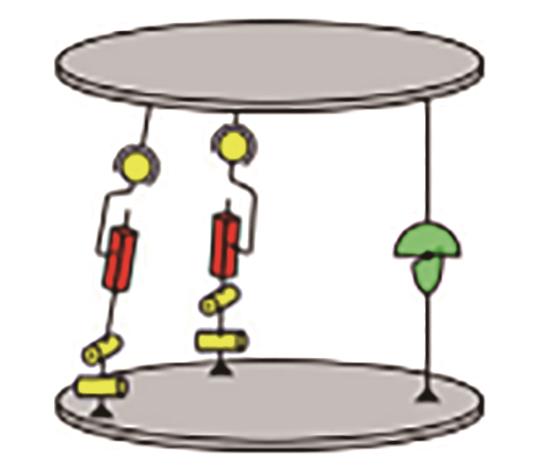 | 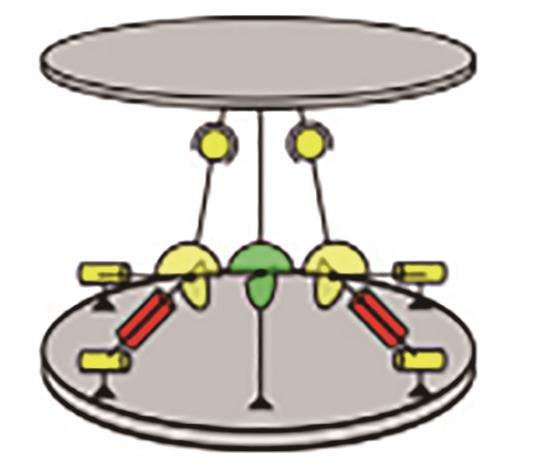 |
| 2-S | 2- | 2-S | 2-SU[1-RR | |
| [1] | 陈子琏,曾园山,张惠君 .人体结构学[M].北京:科学出版社,2001. |
| [2] | 刘方 .人体解剖学[M].3版.北京:人民卫生出版社,1998. |
| [3] | 周玉林,高峰 .仿人机器人构型[J].机械工程学报,2006,42(11):66-74. |
| ZHOU Yulin, GAO Feng .Configuration of humanoid robot[J].Chinese Journal of Mechanical Engineering,2006,42(11):66-74. | |
| [4] | KUMAR S, WÖHRLE H, FERNÁNDEZ J G,et al .A survey on modularity and distributivity in series-parallel hybrid robots[J].Mechatronics,2020,68:102367/1-17. |
| [5] | 郭志攀 .小型双足机器人设计及运动规划研究[D].哈尔滨:哈尔滨工业大学,2007. |
| [6] | HILL A V .The heat of shortening and the dynamic constants of muscle[J].Proceedings of the Royal Society B:Biological Sciences,1938,126(843):136-195. |
| [7] | 丁宏钰,石照耀,岳会军,等 .国内外双足人形机器人驱动器研究综述[J].哈尔滨工程大学学报,2021,42(7):936-945. |
| DING Hongyu, SHI Zhaoyao, YUE Huijun,et al .A review on biped humanoid robot actuator in China and overseas[J].Journal of Harbin Engineering University,2021,42(7):936-945. | |
| [8] | LIM H O, TAKANISHI A .Biped walking robots created at Waseda University:WL and WABIAN family[J].Philosophical Transactions Mathematical Physical & Engineering Sciences,2007,365(1850):49-64. |
| [9] | LOHMEIER S .Design and realization of a humanoid robot for fast and autonomous bipedal locomotion[D].Munich:Technical University of Munich,2010. |
| [10] | LEE B, KNABE C, OREKHOV V,et al .Design of a human-like range of motion hip joint for humanoid robots[C]∥ Proceedings of ASME 2014 International Design Engineering Technical Conferences and Compu-ters and Information in Engineering Conference.New York,ASME Press,2014:1-8. |
| [11] | 丁宏钰,汪文广,黄亮,等 .关节铰接结构、机器人腿部结构及机器人:CN215789962U[P].2022-02-11. |
| [12] | TAKANISHI,A,ISHIDA,M,YAMAZAKI,Y,et al .The realization of dynamic walking by the biped walking robot WL-10RD[J].Journal of the Robotics Society of Japan,1985,3(4):325-336. |
| [13] | LI Q H, TAKANISHI A, KATO I .Learning control of compensative trunk motion for biped walking robot based on ZMP stability criterion[C]∥ Proceedings of the IEEE/RSJ International Conference on Intelligent Robots and Systems. Piscataway:IEEE Press,1992:597-599. |
| [14] | ISHIDA T, KUROKI Y, YAMAGUCHI J .Mechanical system of a small biped entertainment robot[C]∥ Proceedings of Intelligent Robots and Systems.Piscata-way:IEEE Press,2003:297-302. |
| [15] | IRIBE M, FUKUSHIMA T, YAMAGUCHI J,et al .Development of a new actuator for a small biped entertainment robot which has suitable functions for humanoid robots[C]∥ Proceedings of Conference of the IEEE Industrial Electronics Society.Piscataway:IEEE Press,2004:2762-2767. |
| [16] | ISHIDA T, TAKANISHI A .A robot actuator deve-lopment weith high backdrivability[C]∥ Proceedings of Conference on Robotics,Automation and Mechatro-nics.Piscataway:IEEE Press,2006:1-6. |
| [17] | KUROKI Y .A small biped entertainment robot creating attractive applications[C]∥ Proceedings of International Conference on Robotics and Automation.Piscataway:IEEE Press,2006:13-20. |
| [18] | IRIBE M, FUKUSHIMA T, YAMAGUCHI J,et al .Development of a new actuator for a small biped entertainment robot which has suitable functions for humanoid robots[C]∥ Proceedings of the 30th annual Confe-rence of the IEEE Industrial Electronics Society.Piscata-way:IEEE Press,2005:2762-2767. |
| [19] | PARK I, KIM J,OH J,et al .Online biped walking pattern generation for humanoid robot KHR-3(KAIST Humanoid Robot-3:HUBO)[C]∥ Proceedings of the 2006 6th IEEE-RAS International Conference on Humanoid Robots.Piscataway:IEEE Press,2006:398- 403. |
| [20] | PARK I W, KIM J Y, LEE J,et al .Mechanical design of the humanoid robot platform,HUBO[J].Advanced Robotics,2007,21(11):1305-1322. |
| [21] | JUNG T,LIM J,BAE H,et al .Development of the humanoid disaster response platform DRC-HUBO+[J].IEEE Transactions on Robotics,2018,34(1):1-17. |
| [22] | OTT C, BAUMGARTNER C, MAYR J,et al .Deve-lopment of a biped robot with torque controlled joints[C]∥ Proceedings of International Conference on Humanoid Robots.Los Alamitos:IEEE Computer Society Press,2010:167-173. |
| [23] | ENGLSBERGER J, WERNER A,OTT C,et al .Overview of the torque-controlled humanoid robot TORO[C]∥ Proceedings of International Conference on Humanoid Robots.Los Alamitos:IEEE Computer Society Press,2014:916-923. |
| [24] | HENZE B, ROA M A,OTT C .Passivity-based whole-body balancing for torque-controlled humanoid robots in multi-contact scenarios[J].The International Journal of Robotics Research,2014,35(12):1522-1543. |
| [25] | HENZE B, DIETRICH A, ROA M A,et al .Multi-contact balancing of humanoid robots in confined spaces:utilizing knee contacts[C]∥ Proceedings of IEEE/RSJ International Conference on Intelligent Robots and Systems. Vancouver:IEEE Press,2017:697-704. |
| [26] | KANEKO K, KANEHIRO F, MORISAWA M,et al .Humanoid robot HRP-4-humanoid robotics platform with lightweight and slim body[C]∥ Proceedings of 2011 IEEE/RSJ International Conference on Intelligent Robots and Systems.San Francisco:IEEE Press,2011:4400-4407. |
| [27] | COLASANTO L, TSAGARAKIS N G, CALDWELL D G .A compact model for the compliant humanoid robot COMAN[C]∥ Proceedings of the Fourth IEEE RAS/EMBS International Conference on Biomedical Robotics & Biomechatronics.Roma:IEEE Computer Society Press,2012:688-694. |
| [28] | DALLALI H, KORMUSHEV P, LI Z,et al .On global optimization of walking gaits for the compliant humanoid robot COMAN using reinforcement learning[J].Cybernetics and Information Technologies,2012,12(3):39-52. |
| [29] | LI Z, VANDERBORGHT B, TSAGARAKIS N G,et al.Stabilization for the compliant humanoid robot COMAN exploiting intrinsic and controlled compliance[C]∥ Proceedings of 2012 IEEE International Conference on Robotics and Automation.Saint Paul:IEEE Press,2012:2000-2006. |
| [30] | VO-GIA L, KASHIRI N, NEGRELLO F,et al .Development of a 7DOF soft manipulator arm for the compliant humanoid robot COMAN[C]∥ Proceedings of 2014 IEEE International Conference on Robotics and Biomimetics.Bali:IEEE Press,2014:1106-1111. |
| [31] | SHAREEF Z, STEIL J .Trajectory optimization of compliant humanoid (COMAN) robot arm using path parameter based dynamic programming[C]∥ Proceedings of International Conference on Humanoid Robots.Cancun:IEEE Press,2017:705-710. |
| [32] | LEE J, DALLALI H, TSAGARAKIS N,et al .Robust and model-free link position tracking control for humanoid COMAN with multiple compliant joints[C]∥ Proceedings of 13th IEEE-RAS International Conference on Humanoid Robots.Atlanta:IEEE Press,2013:1-7. |
| [33] | ZHENG Y, LIN M C, MANOCHA D,et al .A walking pattern generator for biped robots on uneven terrains[C]∥ Proceedings of 2010 IEEE/RSJ International Conference on Intelligent Robots & Systems.Taipei:IEEE Press,2010:4483-4488. |
| [34] | 梶田秀司 .仿人机器人[M].北京:清华大学出版社,2007. |
| [35] | DING H Y, SHI Z, HU Y,et al .Lightweight design optimization for legs of bipedal humanoid robot[J].Structural and Multidisciplinary Optimization,2021,64:2749-2762. |
| [36] | RADFORD N A, STRAWSER P, HAMBUCHEN K,et al .Valkyrie:NASA’s first bipedal humanoid robot[J].Journal of Field Robotics,2015,32(3):379-419. |
| [37] | ZHOU C, NIKOS T .On the comprehensive kinema-tics analysis of a humanoid parallel ankle mechanism[J].Journal of Mechanisms and Robotics,2018,10(5):1-15. |
| [38] | REHER J, COUSINEAU E A, HEREID A,et al .Realizing dynamic and efficient bipedal locomotion on the humanoid robot DURUS[C]∥ Proceedings of 2016 IEEE International Conference on Robotics and Automation (ICRA). Stockholm: IEEE,2016:1794-1801. |
| [39] | 俞志伟,王立权 .双足机器人并联踝关节优化设计[J].机械工程学报,2009,45(11):52-57. |
| YU Zhiwei, WANG Liquan .Optimal design for biped robot parallel ankle joint for[J].Journal of Mechanical Engineering,2009,45(11):52-57. | |
| [40] | STASSE O, FLAYOLS T, BUDHIRAJA R,et al .TALOS:a new humanoid research platform targeted for industrial applications[C]∥ Proceedings of 2017 IEEE-RAS 17th International Conference on Humanoid Robotics (Humanoids).Birmingham:IEEE Press,2017:689-695. |
| [41] | RAMUZAT N, BUONDONNO G, BORIA S,et al .Comparison of position and torque whole body control schemes on the humanoid robot TALOS[C]∥ Proceedings of International Conference on Advanced Robotics.Ljubljana:IEEE Press,2021:785-792. |
| [42] | BONNET V, MIRABEL J, DANEY D,et al .Practical whole-body elasto-geometric calibration of a humanoid robot:application to the TALOS robot[J].Robo-tics and Autonomous Systems,2023,164:104365/1-12. |
| [43] | 陈子明,尹涛,潘泓,等 .一种三自由度并联踝关节康复机构[J].机械工程学报,2020,56(21):70-77. |
| CHEN Ziming, YIN Tao, PAN Hong,et al .3-DOF parallel ankle joint rehabilitation mechanism[J].Journal of Mechanical Engineering,2020,56(21):70-77. | |
| [44] | 单开正,于海涛,韩亮亮,等 .近似直驱双足机器人跳跃运动非线性优化及试验验证[J].机械工程学报,2021,57(13):153-162,171. |
| SHAN Kaizheng, YU Haitao, HAN Liangliang,et al .Nonlinear optimization and experimental validation of a quasi-direct-drive bipedel robot’s jumping motion[J].Journal of Mechanical Engineering,2021,57(13):153-162,171. | |
| [45] | NEGRELLO F, GARABINI M, GATELANO M G .et al.A modular compliant actuator for emerging high performance and fall-resilient humanoids[C]∥ Proceedings of 2015 IEEE-RAS 15th International Conference on Humanoid Robots (Humanoids).Seoul:IEEE Press,2015:414-420. |
| [46] | NEGRELLO F, GARABINI M, CATALANO M G,et al .WALK-MAN humanoid lower body design optimization for enhanced physical performance[C]∥ Proceedings of 2016 IEEE International Conference on Robotics & Automation. Stockholm:IEEE Press,2016:1817-1824. |
| [47] | TSAGARAKIS G N, CALDWELL D G, NEGRELLO F,et al .WALK-MAN:a high-performance humanoid platform for realistic environments[J].Journal of Field Robotics,2017,43(4):1-35. |
| [48] | ISHIKAWA T, MIYAZAKI S, YAMAMOTO T .Legged mobile robot and swing structure:Japan,JP2011224772A[P].2011-11-10. |
| [49] | ISHIKAWA T, MIYAZAKI S, YAMAMOTO T .Legged mobile robot and swing structure:Japan,JP5602057B2[P].2014-08-29. |
| [50] | HURST J, JONES M S . ABATE A M .Leg configuration for spring-mass legged locomotion:US10189519B2[P].2019-01-29. |
| [51] | GIM K G, KIM J, YAMANE K .Design of a serial-parallel hybrid leg for a humanoid robot[C]∥ Proceedings of 2018 IEEE International Conference on Robotics and Automation.Brisbane:IEEE Press,2018:6076-6081. |
| [52] | GIM K G, KIM J, YAMANE K .Design and fabrication of a bipedal robot using serial-parallel hybrid leg mechanism[C]∥ Proceedings of International Conference on Intelligent Robots and Systems.Piscataway:IEEE Press,2018:5095-5110. |
| [53] | KIM K, SPIELER P, LUPU E S,et al .A bipedal walking robot that can fly,slackline,and skateboard [J].Science Robotics,2021,6(59):1-14. |
| [54] | TANG J, ZHU Y, GAN W,et al .Design,control,and validation of a symmetrical hip and straight-legged vertically-compliant bipedal robot[J].Biomimetics,2023,8(4):340/1-22. |
| [55] | XU Y Z, LUO Z R, BAI X J,et al .Design and experiments of a human-leg-inspired omnidirectional robotic leg[J].Journal of Bionic Engineering,2023,20(6):2570-2589. |
| [56] | CHIGNOLI M, KIM D, STANGER-JONES E,et al .The MIT humanoid robot:design,motion planning,and control for acrobatic behaviors[C]∥ Proceedings of International conference on humanoid robots.Piscata-way:IEEE Press,2021:1-8. |
| [57] | 石照耀,丁宏钰,汪文广,等 .双足机器人腿部新构型设计与试验研究[J].机械工程学报,2023,59(1):103-112. |
| SHI Zhaoyao, DING Hongyu, WANG Wenguang,et al .Design and experimental research on the novel leg configuration of bipedal robot[J].Journal of Mechanical Engineering,2023,59(1):103-112. | |
| [58] | 丁宏钰 .双足机器人腿部及其驱动器的设计理论与关键技术研究[D].北京:北京工业大学,2022. |
| [59] | LOHMEIER S, BUSCHMANN T, SCHWIENBACHER M,et al .Leg design for a humanoid walking robot [C]∥ Proceedings of 6th IEEE-RAS International Conference on Humanoid Robots. Piscataway:IEEE Press,2006:536-541. |
| [60] | LOHMEIER S, BUSCHMANN T, ULBRICH H,et al .Modular joint design for performance enhanced humanoid robot LOLA[C]∥ Proceedings of the 2006 IEEE International Conference on Robotics and Automation.Piscataway:IEEE Press,2006:88-93. |
| [61] | BUSCHMANN T, LOHMEIER S, ULBRICH H .Humanoid robot LOLA:design and walking control[J].Journal of Physiology-Paris,2009,103(3):141-148. |
| [62] | ESSER J, KUMAR S, PETERS H,et al .Design,analysis and control of the series-parallel hybrid RH5 humanoid robot[C]∥ Proceedings of 2020 IEEE-RAS 20th International Conference on Humanoid Robots (Humanoids).Munich:IEEE Press,2021:400-407. |
| [63] | DONG C, CHEN X C, YU Z G,et al .Swift running robot leg:mechanism design and motion-guided optimization[J].IEEE/ASME Transactions on Mechatronics,2024,29(3):1702-1713. |
| [64] | Inc Tesla .Tesla Bot[EB/OL].(2023-12-12)[2024-05-09].. |
| [65] | LOIS L, JAMES B, JOSH P,et al .A compliant robotic leg based on fibre jamming[J].Transactions on Robotics,2024,40:4578-4597. |
| [66] | HU Y S, Wu X Y, DING H Y,et al .Study of series-parallel mechanism used in legs of biped robot[C]∥Proceedings of 2021 7th International Conference on Control,Automation and Robotics.Piscataway:IEEE Press,2021:97-102. |
| [67] | LI Z Y, CHEN X, PENG X B,et al .Reinforcement learning for robust parameterized locomotion control of bipedal robots[C]∥ Proceedings of IEEE International Conference on Robotics and Automation.Piscataway:IEEE Press, 2021:2811-2817. |
| [68] | RADOSAVOVIC I, XIAO T, ZHANG B,et al .Real-world humanoid locomotion with reinforcement learning.Science robotics,2024,89(9):1-32. |
| [1] | ZHANG Rui, GE Yuhan. College Students’ Travel Mode Choice Behavior Considering Peer Effect [J]. Journal of South China University of Technology(Natural Science Edition), 2026, 54(3): 114-126. |
| [2] | YUE Yongheng, LEI Wenpeng. Foggy Road Environment Perception Algorithm Based on an Improved CycleGAN and YOLOv8 [J]. Journal of South China University of Technology(Natural Science Edition), 2025, 53(2): 48-57. |
| [3] | ZHANG Xuchong, YANG Jun. Research on Autonomous Grasping of a Humanoid Robot Based on Vision [J]. Journal of South China University of Technology(Natural Science Edition), 2024, 52(7): 53-61. |
| [4] | WU Haowei, HUANG Fengjiao, YAN Lian, et al. Legitimate Eavesdropping Scheme for Suspicious Relay Communication Networks [J]. Journal of South China University of Technology(Natural Science Edition), 2022, 50(10): 70-79. |
| [5] | ZHOU Junjie, ZHANG Lingyu, YU Yang, et al. Research on Teleoperation and End Force Feedback System of Soft Actuator [J]. Journal of South China University of Technology(Natural Science Edition), 2022, 50(10): 132-139. |
| [6] | MA Guangying, WANG Guangming, LIU Runchen, et al. Structure Design and Kinematics Analysis on the Serial-Parallel Leg of Quadruped Robots [J]. Journal of South China University of Technology (Natural Science Edition), 2021, 49(1): 103-112. |
| [7] | FU Tao, YIN Zhihong, REN Yan, et al. Force Characteristics of Active Dynamic Vibration Absorber Based on Magnetic Actuator [J]. Journal of South China University of Technology (Natural Science Edition), 2020, 48(1): 10-18. |
| [8] | ZHAO Jing WANG Yan CHEN Yuqing. Fast-Response Anthropomorphic Motion Control Algorithm Without Overshoot of Humanoid Manipulator Based on Prescribed Performance Function [J]. Journal of South China University of Technology(Natural Science Edition), 2019, 47(10): 42-50. |
| [9] | MA Yingying LU Siyuan. A Decision Making Model of College Students' Red Light Behavior Based On The Theory Of Planned Behavior [J]. Journal of South China University of Technology (Natural Science Edition), 2018, 46(9): 73-81. |
| [10] |
FENG Ying FENG Junjie Subhash Rakheja JIANG Hui.
Modeling Approach Based on Rate-Dependent Hysteresis for Piezoelectric Actuating Mechanism with Load
[J]. Journal of South China University of Technology(Natural Science Edition), 2018, 46(8): 57-63.
|
| [11] |
FENG Ying FENG Junjie Subhash Rakheja JIANG Hui .
Modeling Approach Based on Rate-Dependent Hysteresis for Piezoelectric Actuating Mechanism with Load
|
| [12] | BI Sheng LIU Hao-xi MIN Hua-qing DONG Min HUANG Xin-long. Falling Detection and Control of Humanoid Robots Based on Multi-Sensor Information Fusion [J]. Journal of South China University of Technology (Natural Science Edition), 2017, 45(1): 95-101. |
| [13] | CHEN Jie LI Yu-qi LIU Qing-fei HE Shan ZHAN Zhong-qiang. Investigation into Deformation of Electroactive Actuators [J]. Journal of South China University of Technology (Natural Science Edition), 2016, 44(8): 13-17,25. |
| [14] | GAO Chang-hong CONG Da-cheng YANG Zhi-dong QU Zhi-yong. Internal Force-Coupling Dynamic Suppression Strategy for Redundantly-Actuated Hydraulic Shaking Table [J]. Journal of South China University of Technology (Natural Science Edition), 2016, 44(1): 93-99. |
| [15] | Wu Hai- kang Zhong Zai- min Yu Zhuo- ping Wang Xin- jian. Design of a Novel Electric Clutch Actuator for Hybrid Vehicles [J]. Journal of South China University of Technology (Natural Science Edition), 2014, 42(9): 114-121. |
| Viewed | ||||||
|
Full text |
|
|||||
|
Abstract |
|
|||||