华南理工大学学报(自然科学版) ›› 2026, Vol. 54 ›› Issue (3): 91-103.doi: 10.12141/j.issn.1000-565X.250244

• 智慧交通系统 • 上一篇    下一篇

基于电池-车辆匹配的寒区城市电动公交调度优化

胡宝雨, 张禹衡   

  1. 东北林业大学 土木与交通学院,黑龙江 哈尔滨 150040
  • 收稿日期:2025-07-22 出版日期:2026-03-25 发布日期:2025-10-31
  • 作者简介:胡宝雨(1987—),男,副教授,博士生导师,主要从事公共交通规划与运营研究。E-mail: hubaoyu@nefu.edu.cn
  • 基金资助:
    黑龙江省自然科学基金项目(YQ2022E003);中国博士后科学基金项目(2023M740558);黑龙江省博士后基金项目(LBH-Z23045)

Electric Bus Scheduling Optimization in Cold-Region Cities Based on Battery-Vehicle Matching

HU Baoyu, ZHANG Yuheng   

  1. College of Civil Engineering and Transportation,Northeast Forestry University,Harbin 150040,Heilongjiang,China
  • Received:2025-07-22 Online:2026-03-25 Published:2025-10-31
  • About author:胡宝雨(1987—),男,副教授,博士生导师,主要从事公共交通规划与运营研究。E-mail: hubaoyu@nefu.edu.cn
  • Supported by:
    the Natural Science Foundation of Heilongjiang Province(YQ2022E003);the China Postdoctoral Science Foundation(2023M740558);the Heilongjiang Postdoctoral Fund(LBH-Z23045)

摘要:

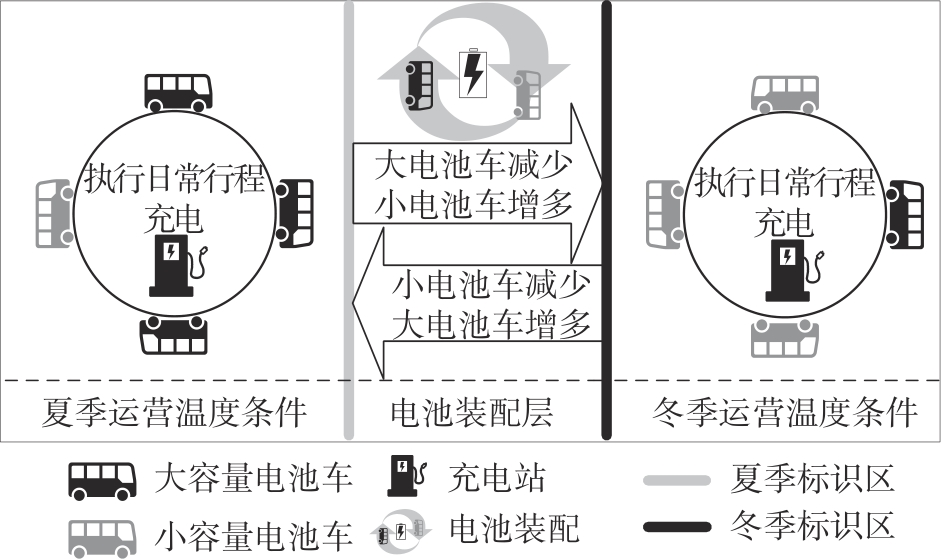
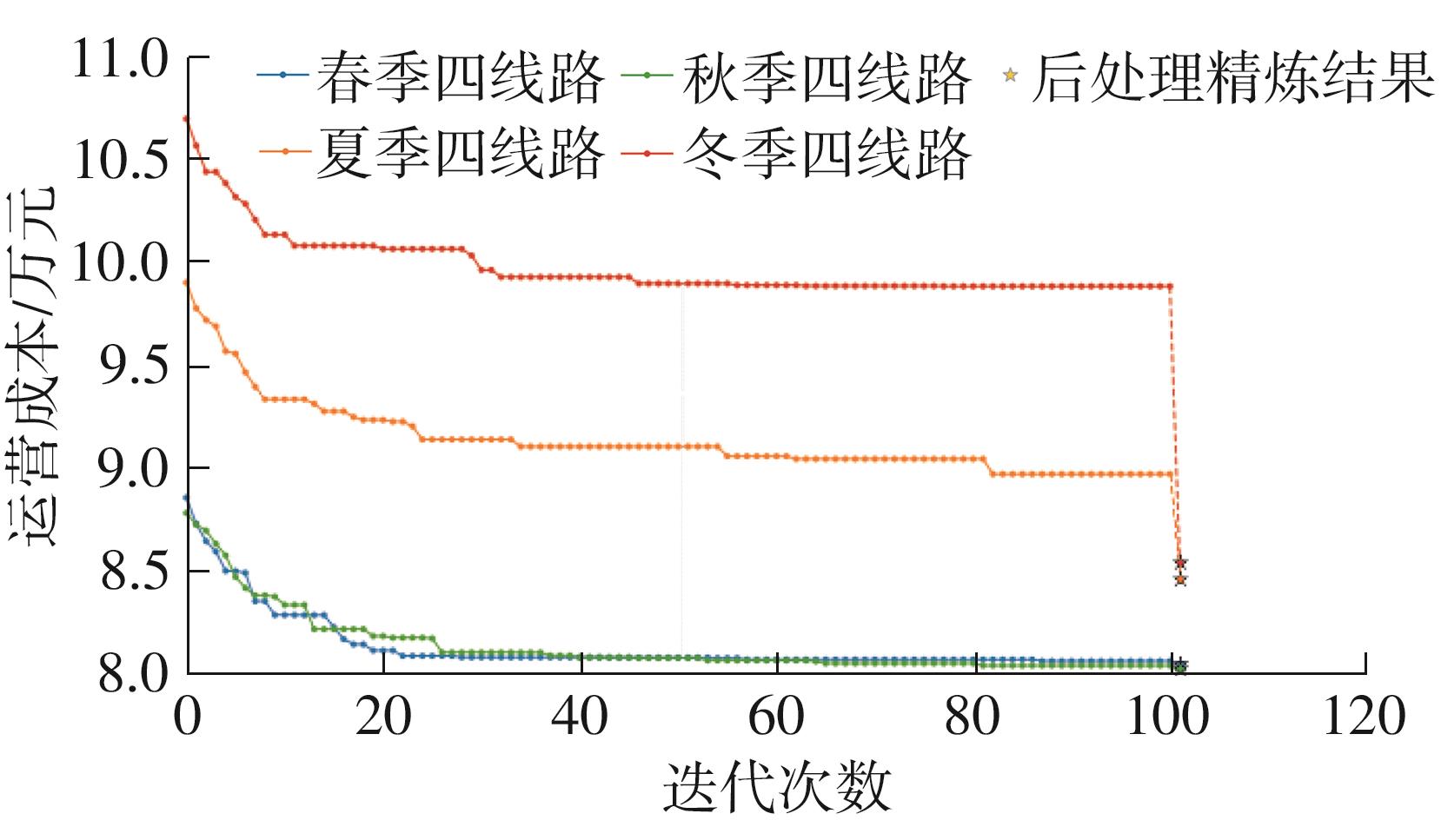
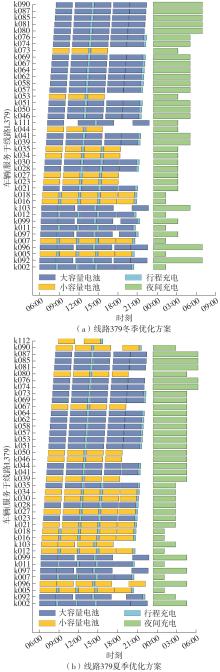
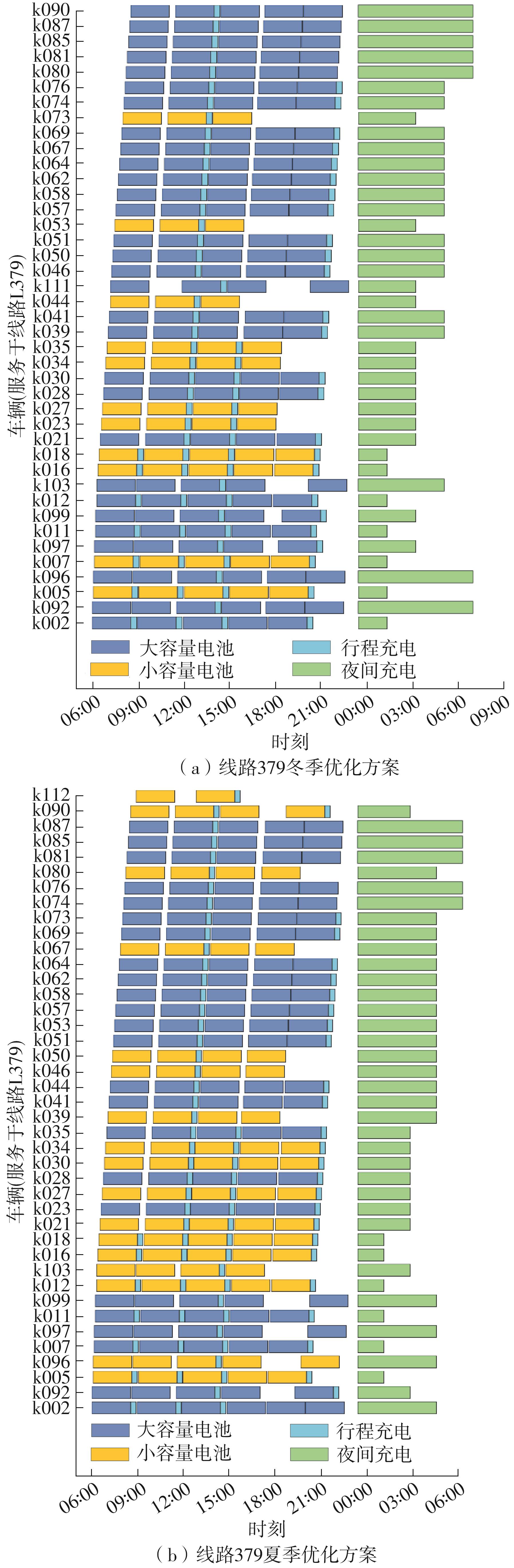
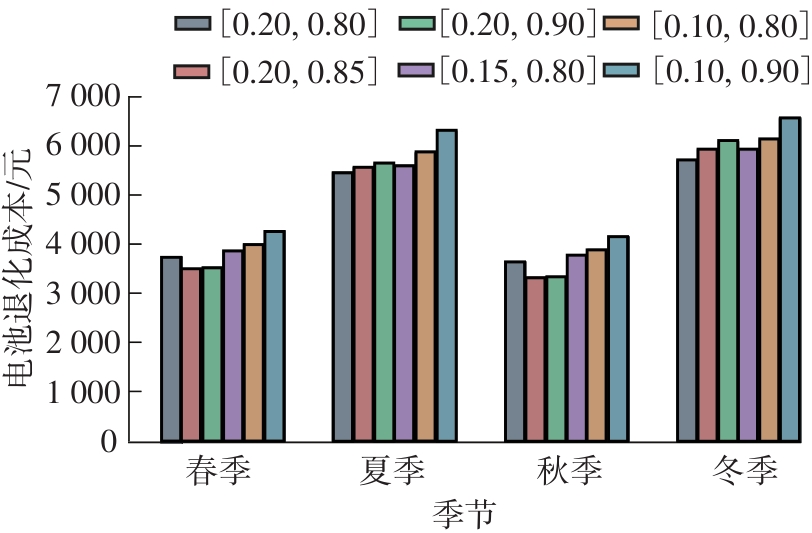
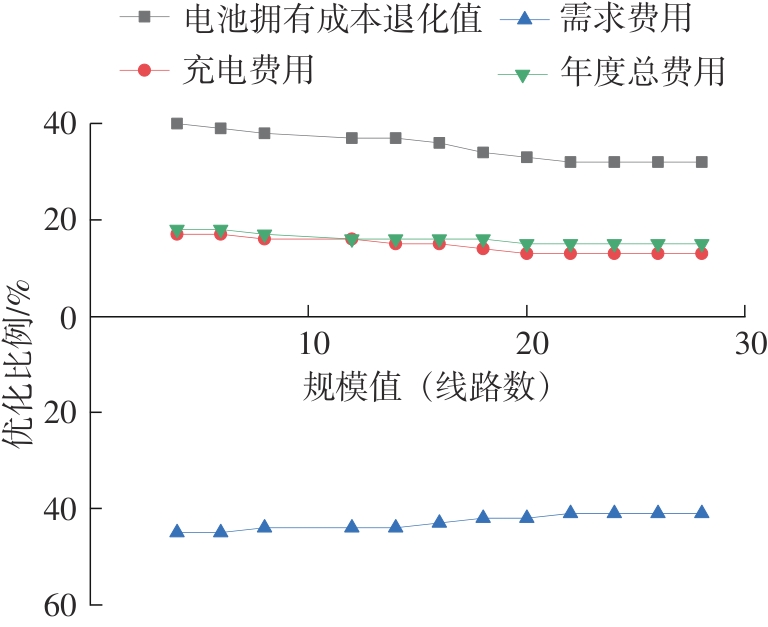
针对寒区电动公交在极端温差下出现的电池额外寿命衰减和续航里程变化大等问题,提出“电池-车辆匹配”集成调度策略。该策略根据季节温度与线路负载需求,为车队装配不同容量的电池来进行车辆调度,帮助公交运营商制定更优的运营方案。模型方面,以运营商成本最小化为目标建立混合整数规划模型,综合计算车辆电池购置费用、日均维护成本和考虑分时电价与需求费率的充电费用,量化了电池的循环退化和日历退化损耗,整合出一个综合的电池寿命退化函数放入成本计算中。算法方面,针对该NP-hard模型的求解,设计了一种混合遗传算法(HGA),其结合了后处理精炼策略,提升算法的求解效率。围绕哈尔滨实际公交路线进行研究,结果表明,优化后的年均摊总成本降低17.8%,所需车队规模减少16.4%,维护成本节约16.8%。比较明显的是,双电池配置使电池拥有成本的年均退化值降低39.7%,有效延长了电池资产的实际使用寿命。最终的敏感性分析显示,在春秋季等温度适宜季节适当放宽电池荷电状态上限,可以减少循环次数,从而更好地延缓电池老化。最后补充说明了模型在更大规模场景下的适用性。该研究为寒冷地区电动公交的可持续运营提供了理论模型与优化工具,对运营商制定季节性运营策略具有重要作用。

关键词: 电动公交, 车辆调度, 遗传算法, 电池退化, 混合电池配置

Abstract:

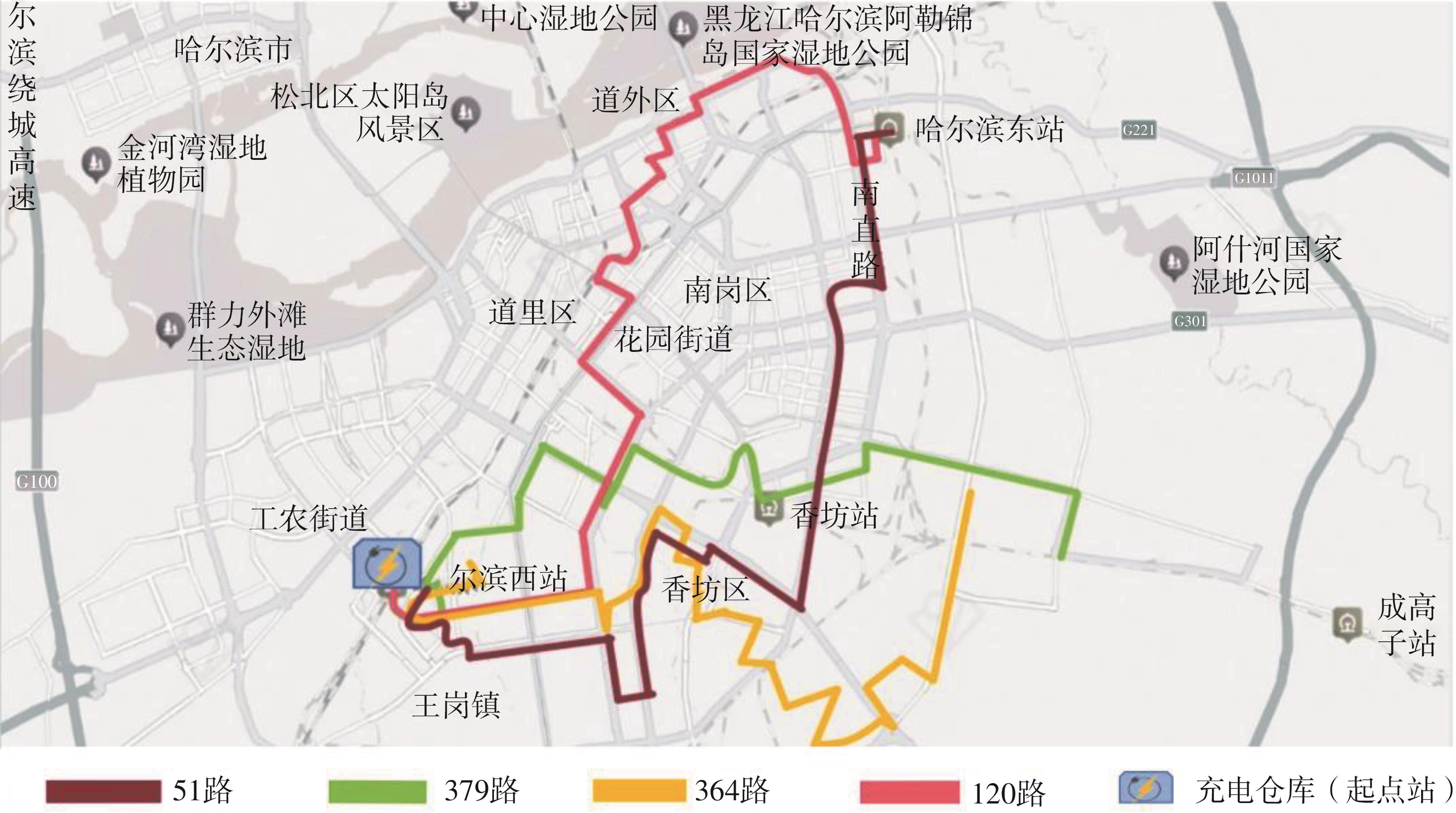
To address the challenges such as accelerated battery lifespan degradation and significant fluctuations in driving range caused by extreme temperature variations in cold-region electric buses, this study proposes an integrated scheduling strategy based on “battery-vehicle matching”. This strategy involves equipping buses with batteries of different capacities according to seasonal temperatures and route load demands, enabling public transport operators to formulate more efficient operational plans. In terms of modeling, a mixed-integer programming model is established with the objective of minimizing operator cost. The model comprehensively calculates vehicle battery procurement expenses, daily maintenance costs, and charging expenses that consider time-of-use electricity pricing and demand charges. It quantifies both cyclic and calendar degradation of batteries and integrates them into a comprehensive battery lifespan degradation function incorporated into the overall cost calculation. For algorithm design, a hybrid genetic algorithm ( HGA ) incorporating a post-processing refinement strategy is developed to efficiently solve this NP-hard model. A case study based on actual bus routes in Harbin demonstrates that the optimized strategy reduces the annualized total cost by 17.8%, decreases the required fleet size by 16.4%, and lowers maintenance costs by 16.8%. It is obvious that the dual battery configuration reduces the annualized degradation cost of battery ownership cost by 39.7 %, effectively extending the actual service life of battery assets. Sensitivity analysis shows that appropriately relaxing the state-of-charge (SOC) upper limit during moderate-temperature seasons (e.g., spring and autumn) can reduce cycling frequency, thereby better mitigating battery aging. Finally, the applicability of the model to larger-scale scenarios is discussed. This study provides a theoretical model and optimization tool for the sustainable operation of electric buses in cold regions, and plays an important role in formulating seasonal operation strategies for operators.

Key words: electric bus, vehicle scheduling, genetic algorithm, battery degradation, hybrid battery configuration

中图分类号: