华南理工大学学报(自然科学版) ›› 2025, Vol. 53 ›› Issue (12): 126-139.doi: 10.12141/j.issn.1000-565X.250068

• 结构安全 • 上一篇    下一篇

先简支后连续T梁翼缘湿接缝的施工过程预应力效应监测与仿真分析

沈磊1, 余志平2, 黄方圆2, 徐晨1, 万鹏2   

  1. 1.同济大学 土木工程学院,上海 200092
    2.抚州市东临环城高速公路有限公司,江西 抚州 344000
  • 收稿日期:2025-03-13 出版日期:2025-12-25 发布日期:2025-07-04
  • 通信作者: 徐晨(1982—),男,副教授,博士生导师,主要从事钢与组合结构桥梁以及功能复合材料的开发与应用研究。 E-mail:xuchenprc@tongji.edu.cn
  • 作者简介:沈磊(2002—),男,博士生,主要从事钢与组合结构桥梁等研究。E-mail: 2410468@tongji.edu.cn
  • 基金资助:
    国家自然科学基金项目(52478197);江西省交通运输厅科技项目(2024ZG026);上海市自然科学基金项目(24ZR1471100)

Monitoring and Simulation Analysis of Prestressing Effect During Construction of Wet Joints of Simply-Supported-to-Continuous T-Beam Bridge

SHEN Lei1, YU Zhiping2, HUANG Fangyuan2, XU Chen1, WAN Peng2   

  1. 1.School of Civil Engineering,Tongji University,Shanghai 200092,China
    2.Fuzhou Donglin Ring City Expressway Co. ,Ltd. ,Fuzhou 344000,Jiangxi,China
  • Received:2025-03-13 Online:2025-12-25 Published:2025-07-04
  • Contact: 徐晨(1982—),男,副教授,博士生导师,主要从事钢与组合结构桥梁以及功能复合材料的开发与应用研究。 E-mail:xuchenprc@tongji.edu.cn
  • About author:沈磊(2002—),男,博士生,主要从事钢与组合结构桥梁等研究。E-mail: 2410468@tongji.edu.cn
  • Supported by:
    the National Natural Science Foundation of China(52478197);the Science and Technology Project of Jiangxi Provincial Department of Transportation(2024ZG026);the Shanghai Municipal Natural Science Foundation(24ZR1471100)

摘要:

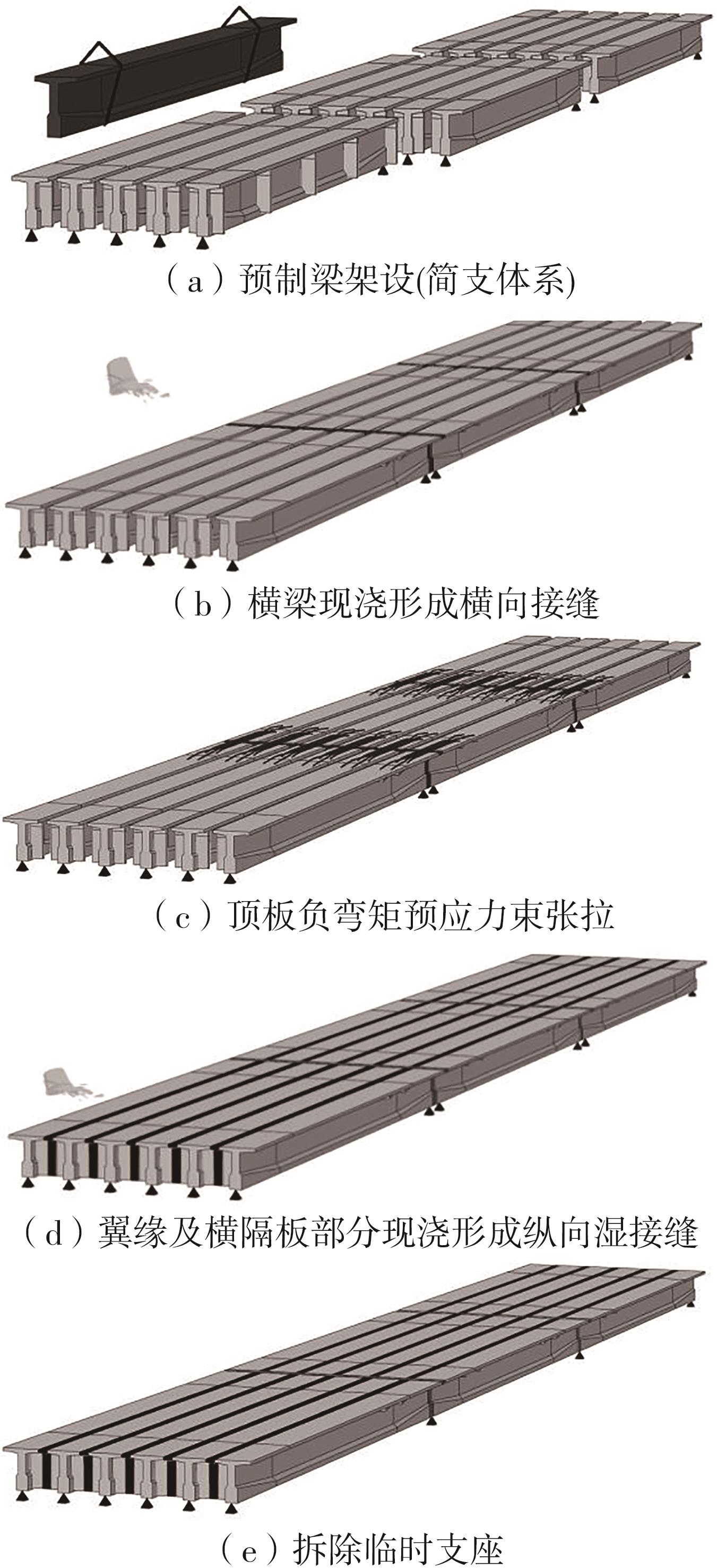
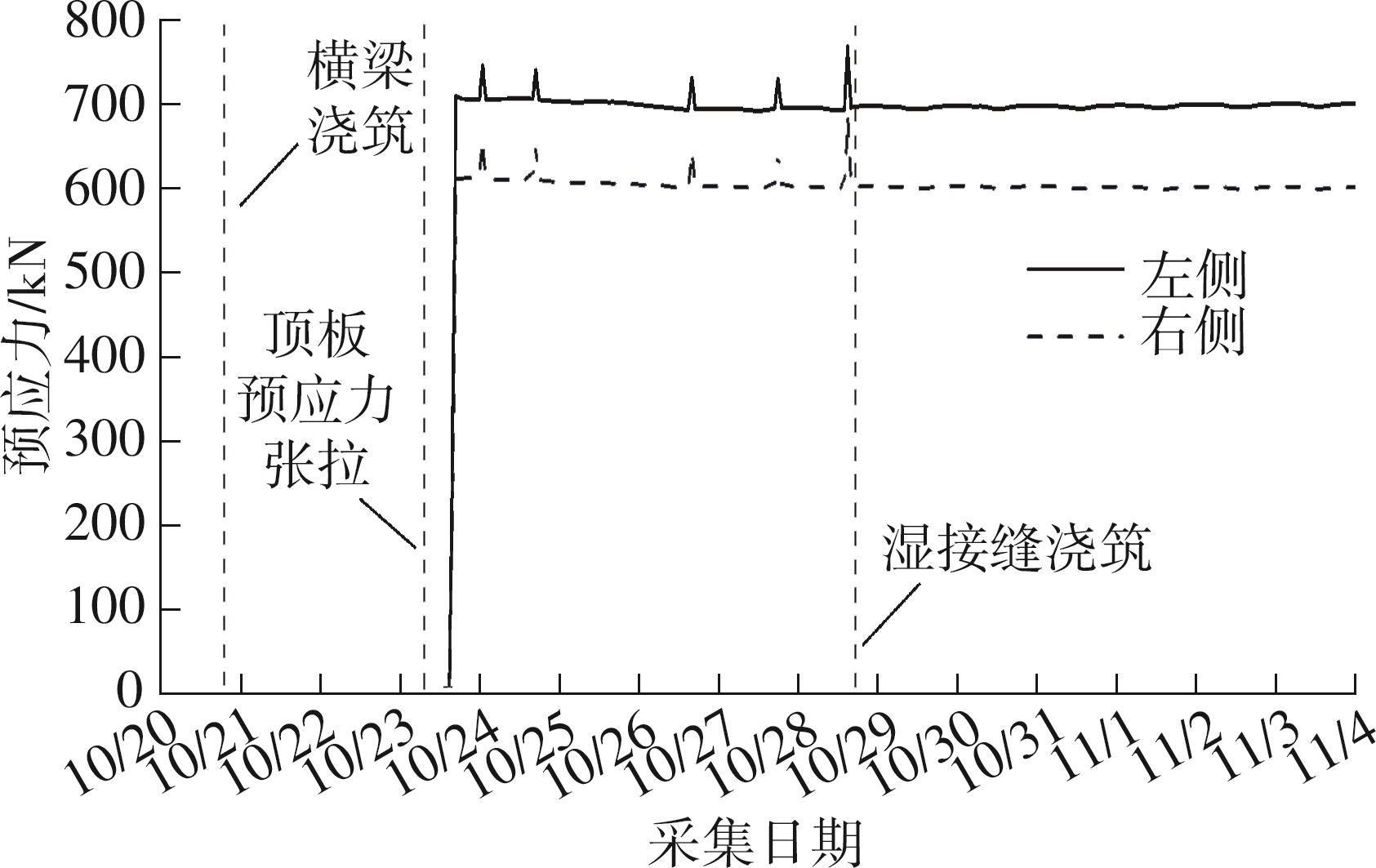
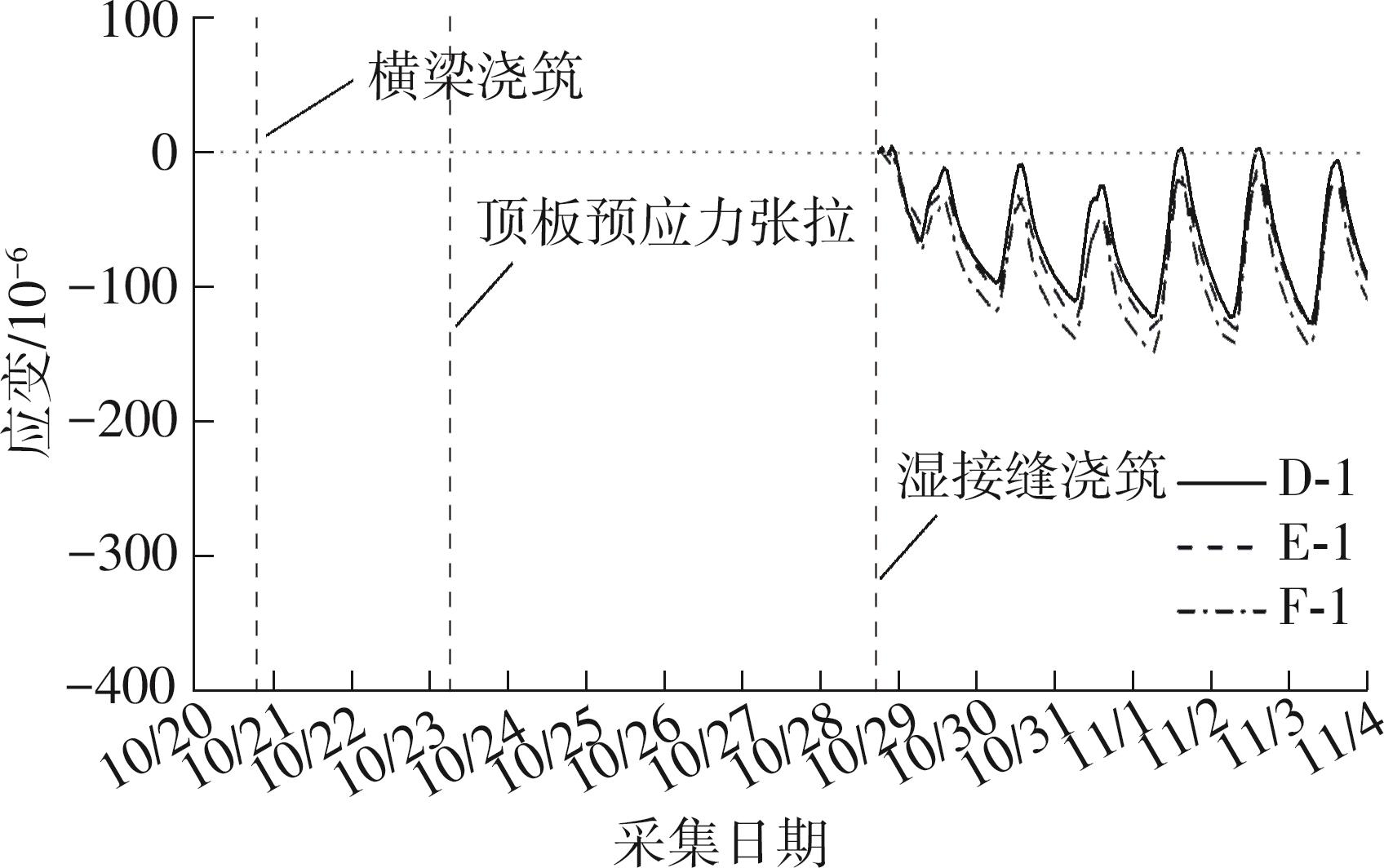
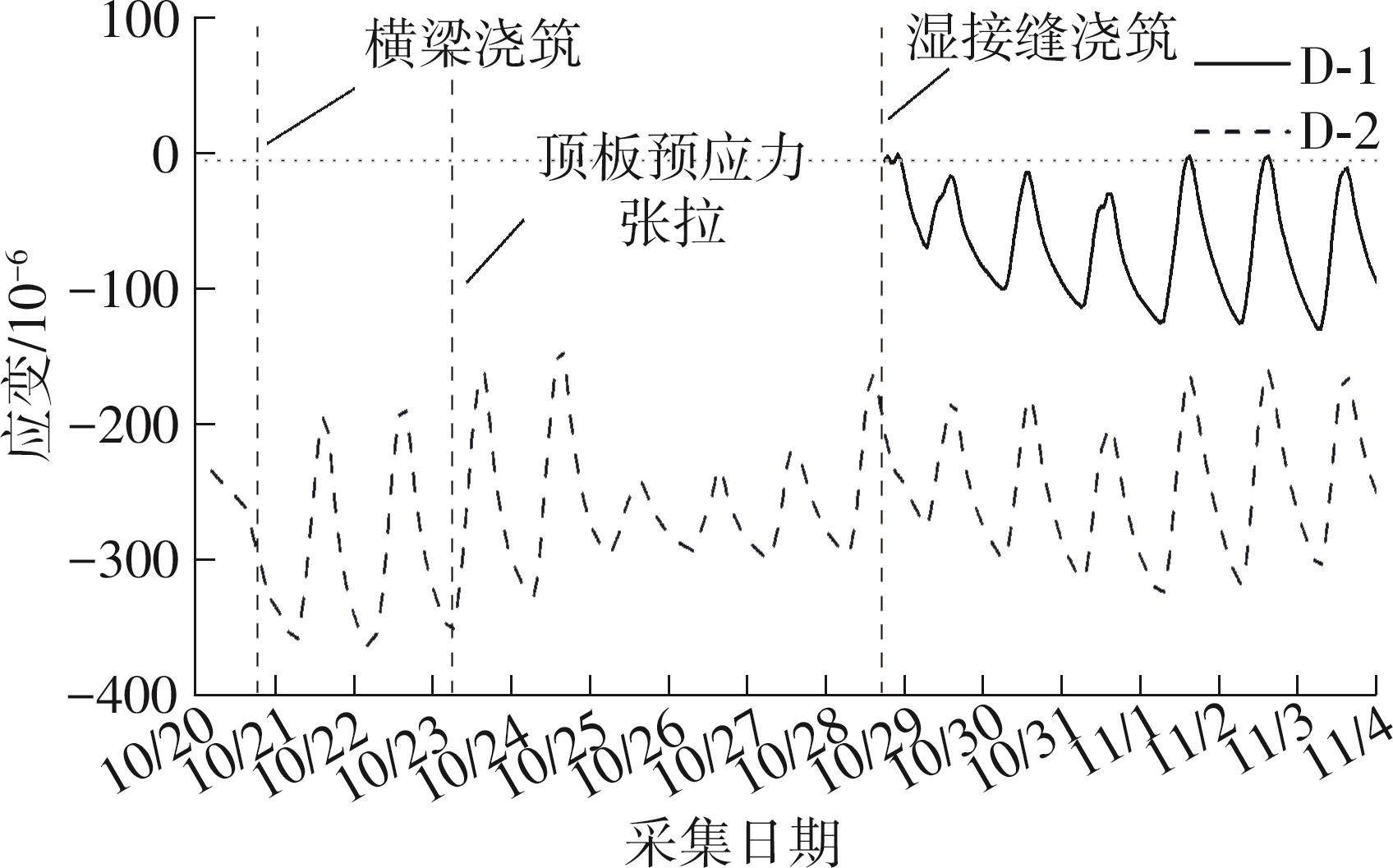
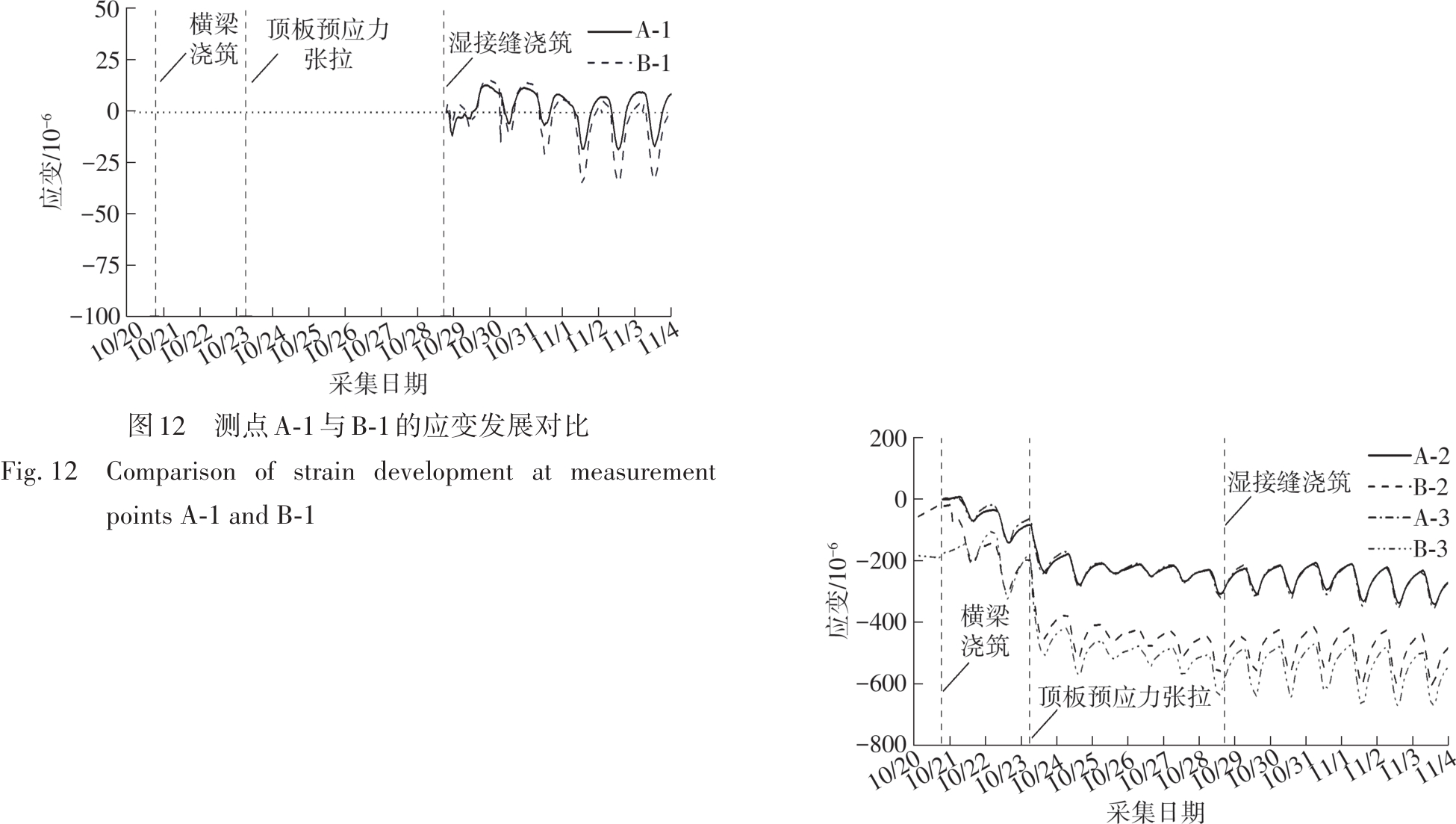
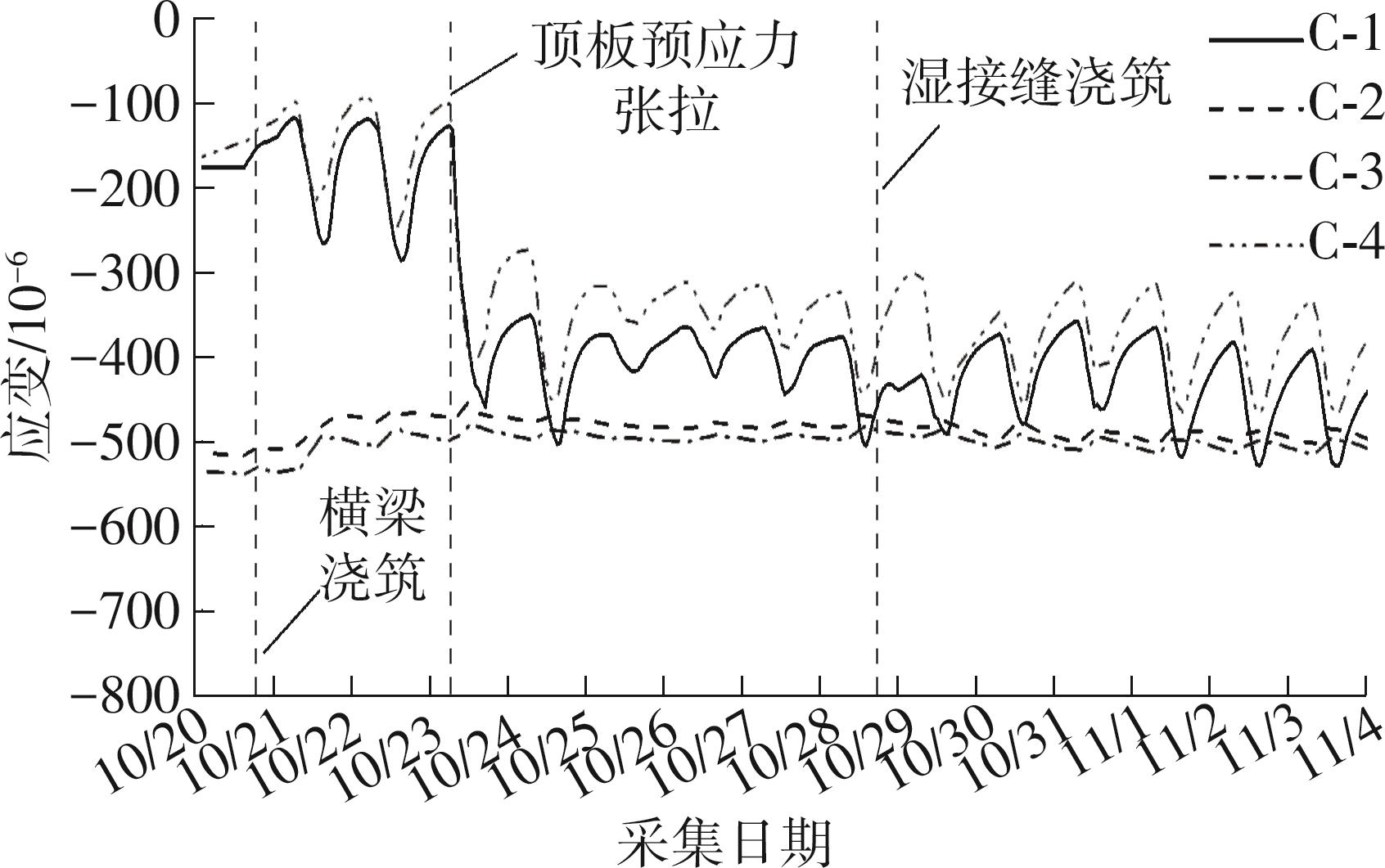
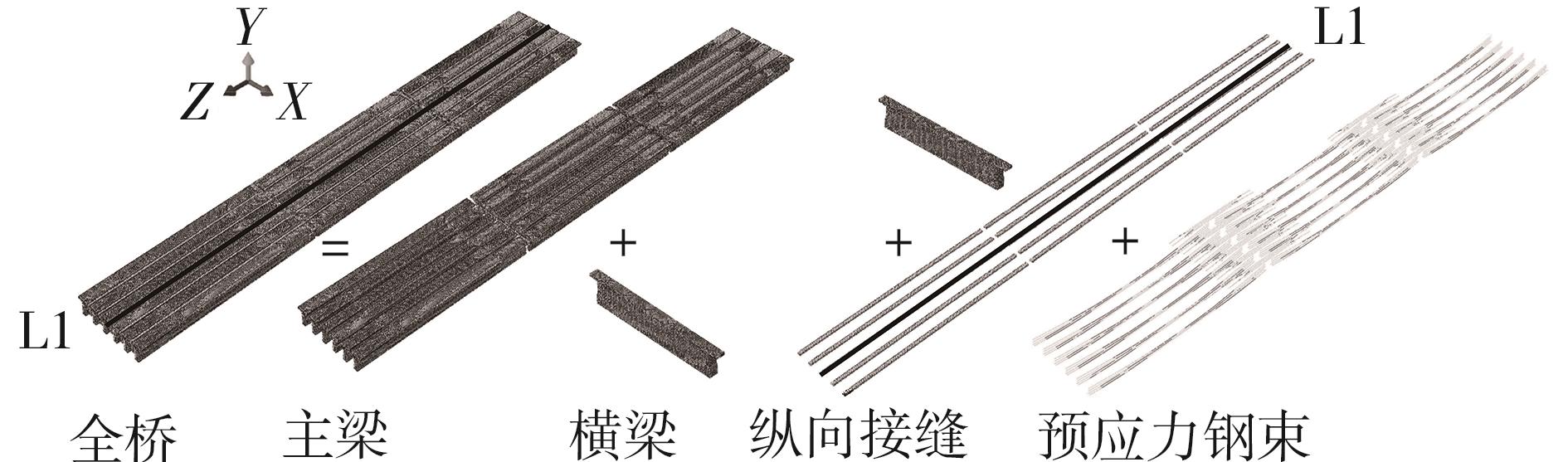
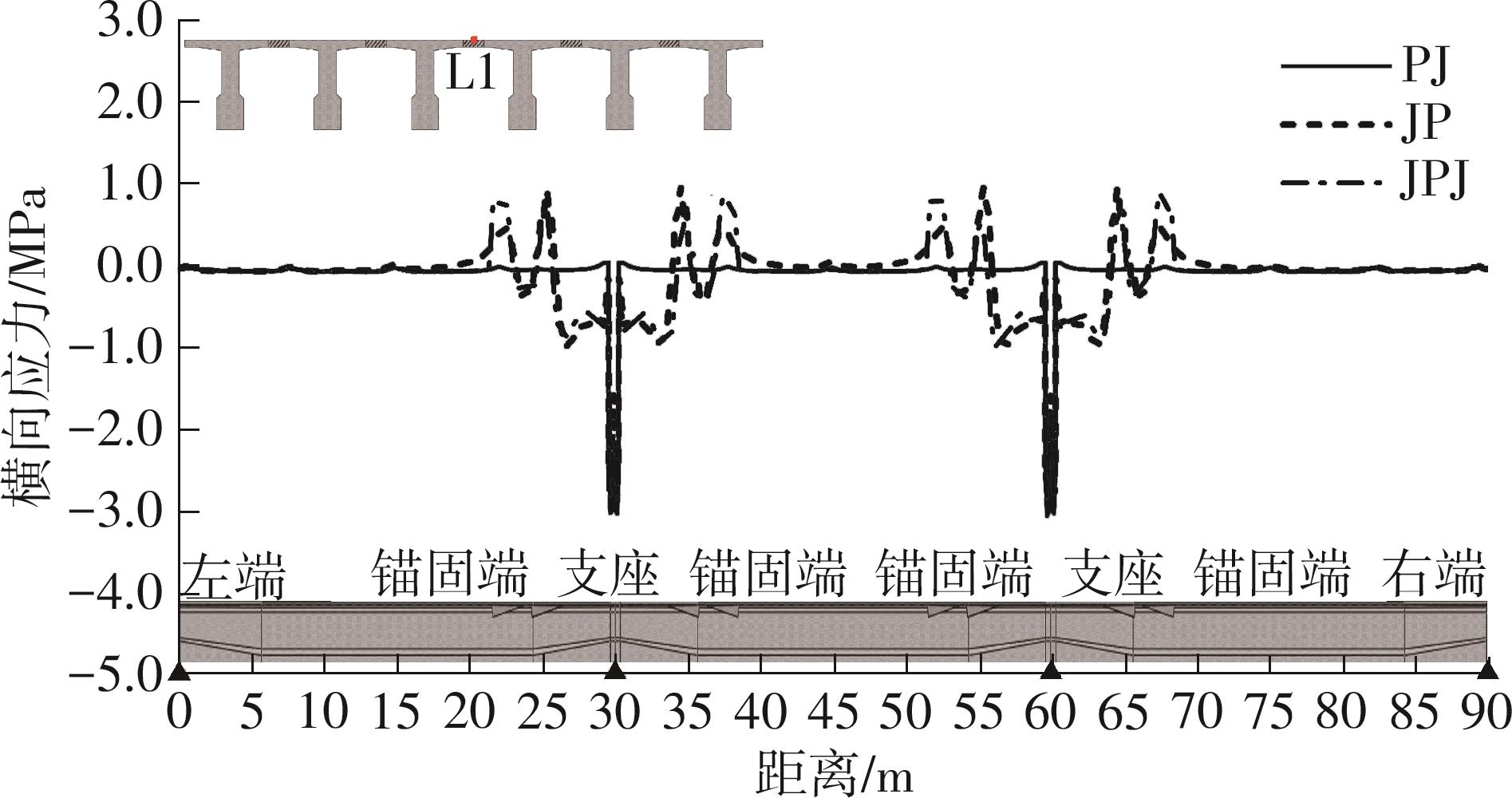
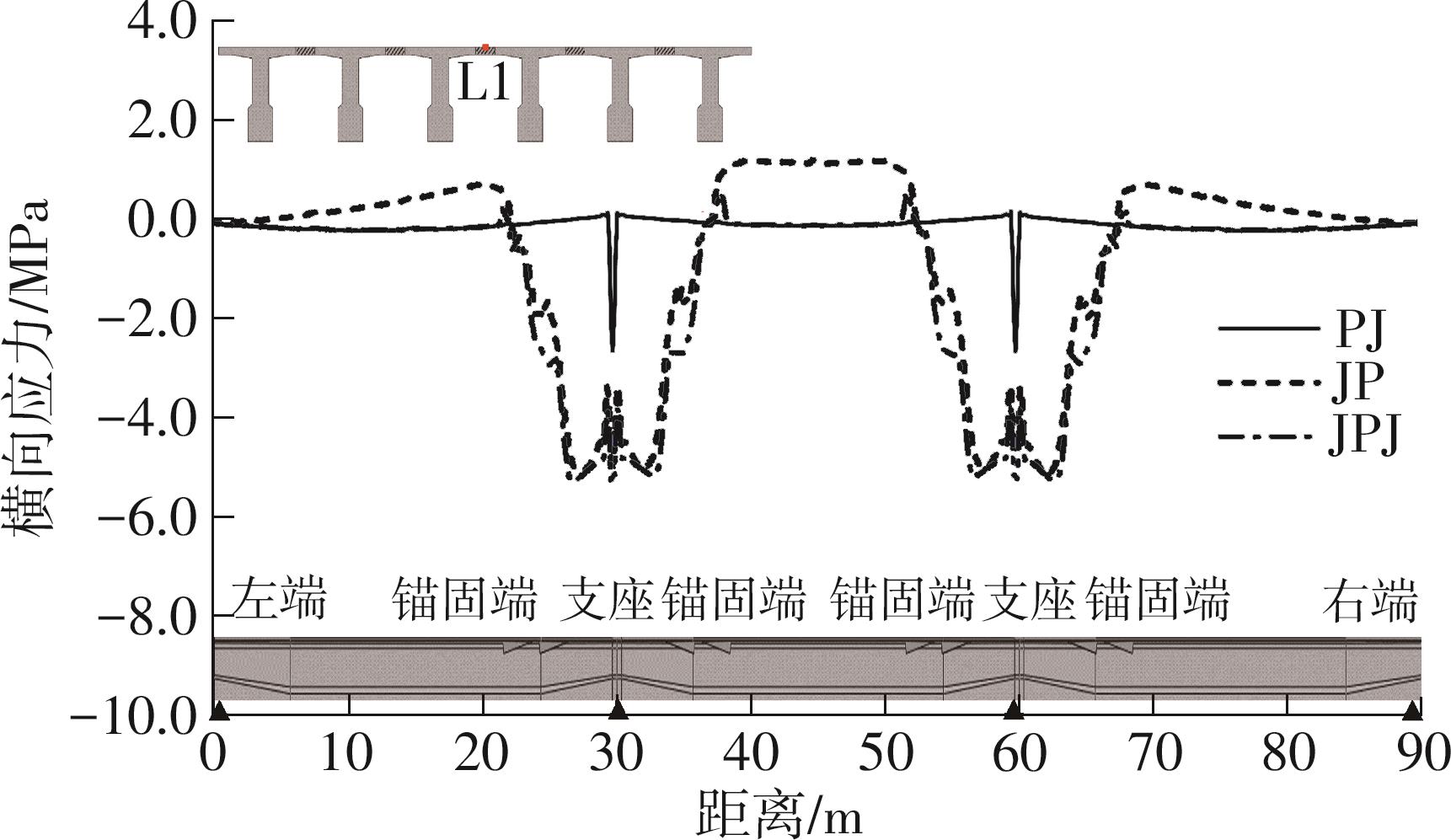
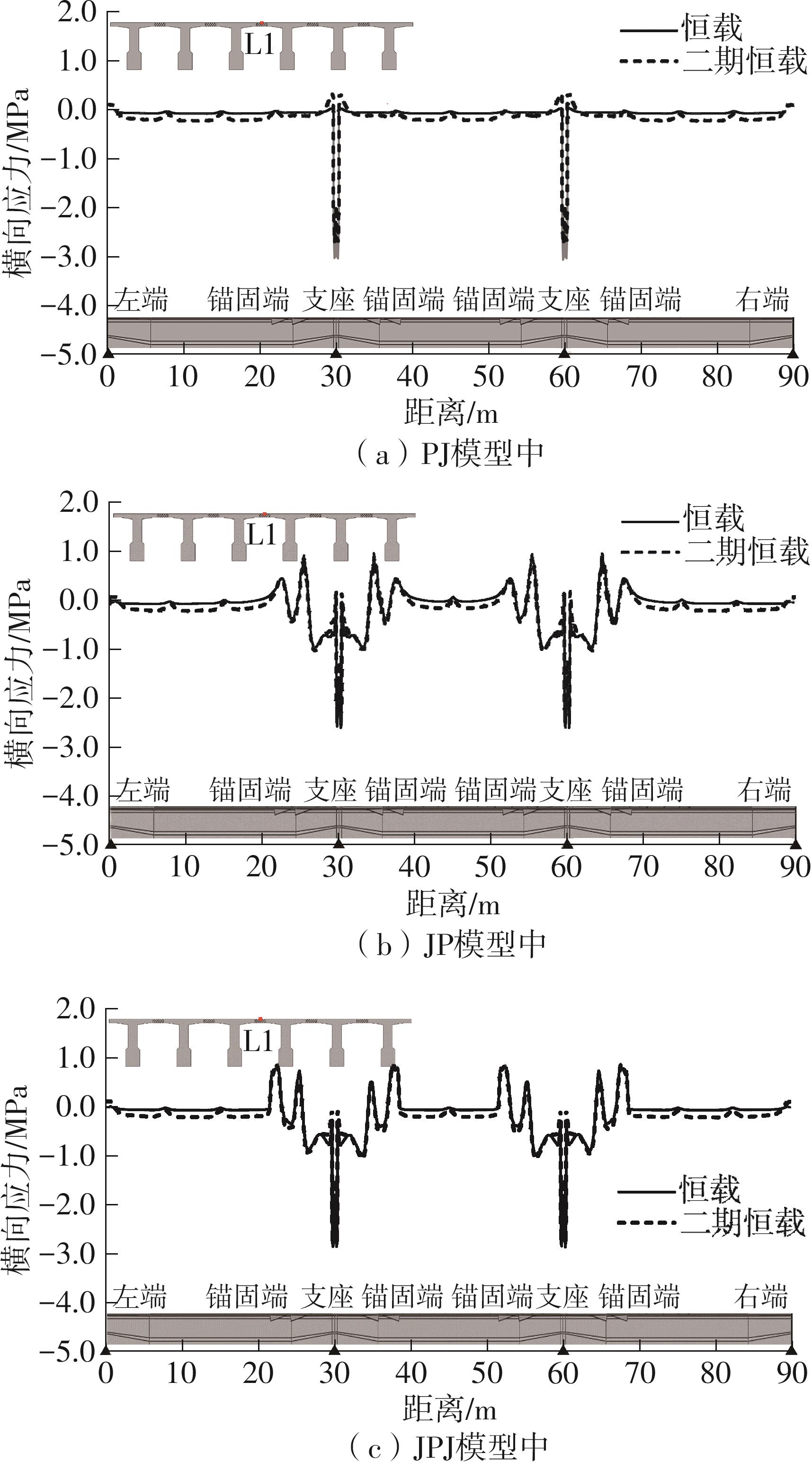
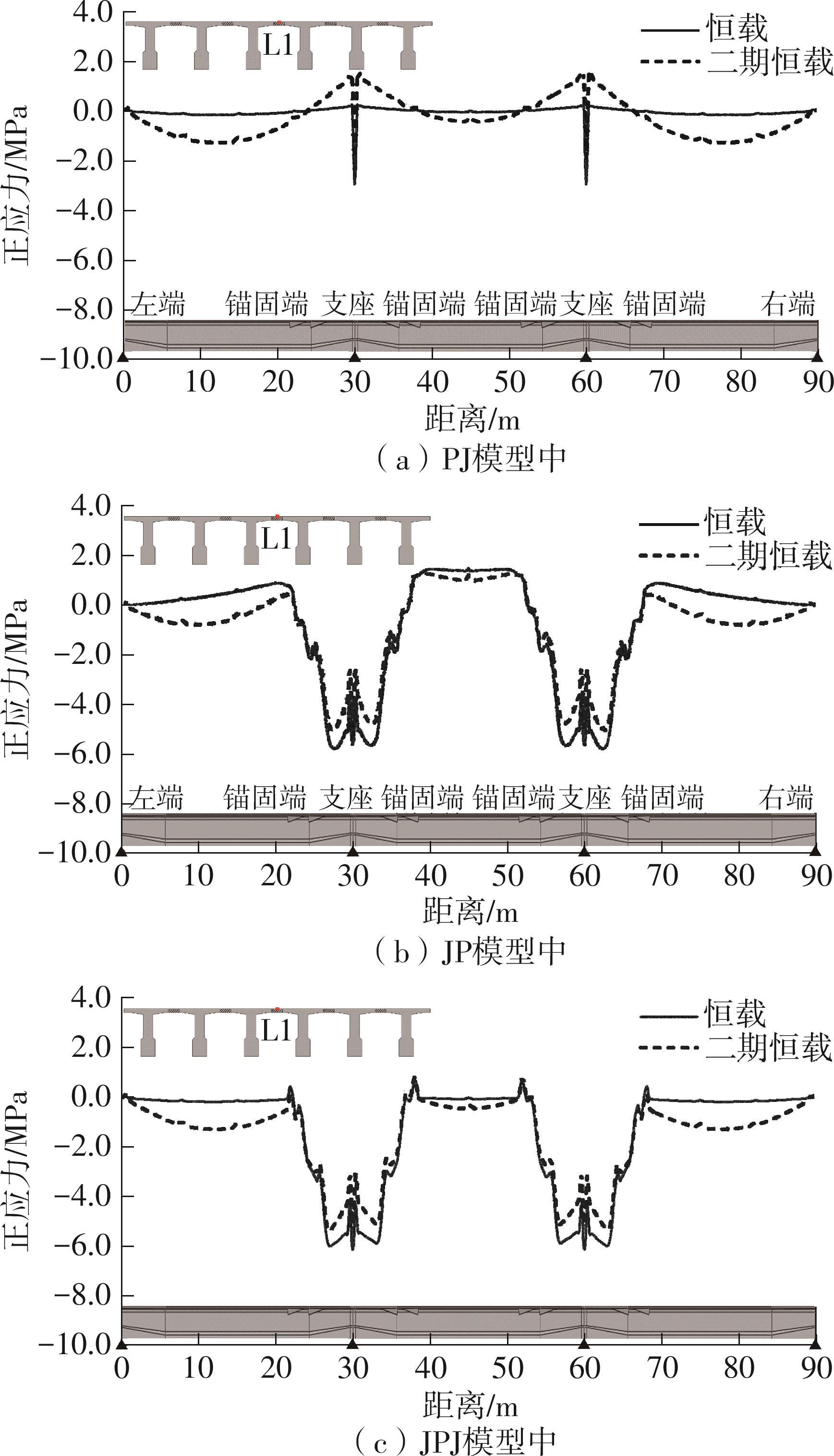
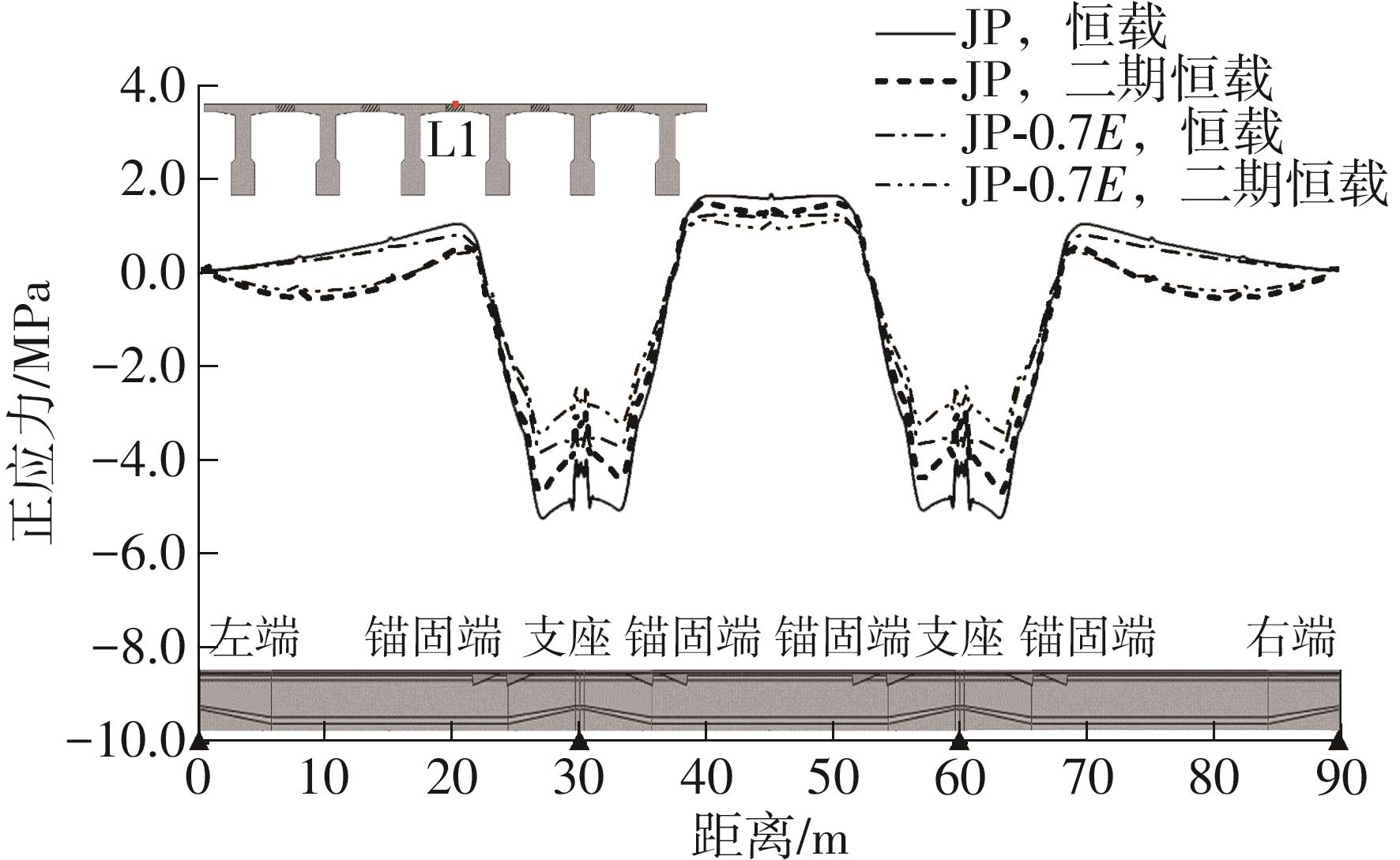
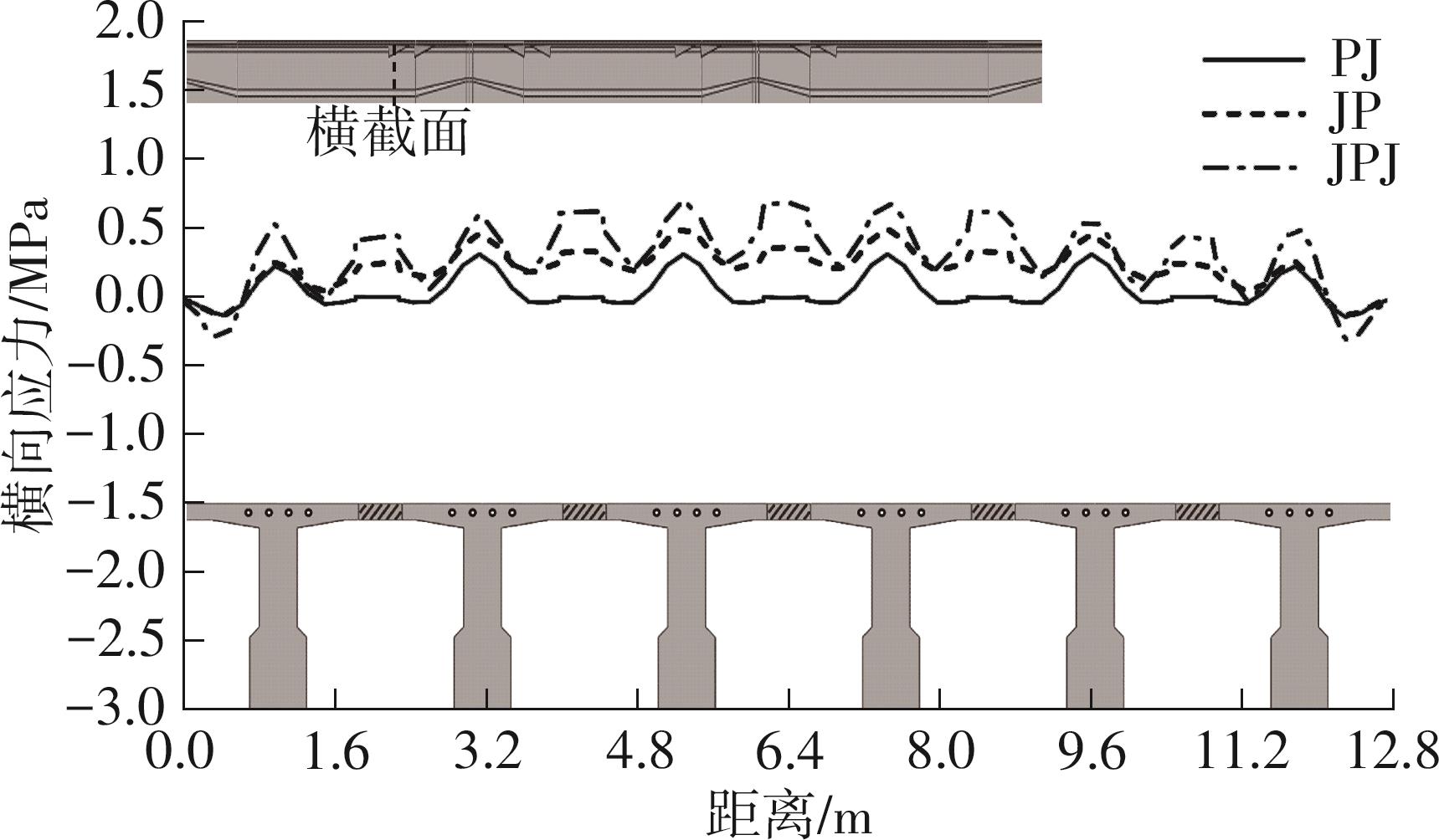
以某在建先简支后连续T梁桥为背景,探究负弯矩区预应力张拉对翼缘板湿接缝受力性能的影响。通过施工过程监测与参数化数值模拟,分析了湿接缝的应力分布规律。为方便施工,背景工程先张拉预应力束、后浇筑纵向湿接缝。参数化分析在原有施工顺序(第1种)的基础上额外考虑了先浇湿接缝后张预应力(第2种)以及负弯矩区部分先浇湿接缝再张预应力最后浇剩余湿接缝(第3种)两种工况。监测表明:施工中预应力张拉水平差异超10%,但湿接缝因后浇而未受到显著影响;湿接缝浇筑完成后其横向基本受压,纵向仅在横梁处呈低水平受拉(拉应变最大值为15 × 10-6);监测显示预应力张拉未直接增加湿接缝的开裂风险。参数化分析表明:3种施工顺序下湿接缝都有一定的应力富余度,恒载作用下最大主拉应力依次为0.3、1.5和0.9 MPa;前两种在二期恒载后拉应力持续显著;第3种,即分阶段浇筑湿接缝在二期恒载后拉应力依然较低,但施工过程较为复杂。以上结果可为同类结构施工过程的受力分析及过程优化提供支撑。

关键词: T梁桥, 湿接缝, 预应力张拉, 过程监测, 施工顺序, 有限元

Abstract:

This study investigates the effect of prestress tensioning in the negative moment region on the mechanical behavior of flange plate wet joints, using an under-construction simply-supported-to-continuous T-beam bridge as a case study. Through construction process monitoring and parametric numerical simulations, the stress distribution patterns in the wet joints were analyzed. For construction convenience, the referenced project adopted the sequence of tensioning prestressing tendons first, followed by casting longitudinal wet joints. The parametric analysis considered two additional scenarios beyond the original construction sequence (Method 1): casting wet joints before tensioning prestress (Method 2), and partially casting wet joints in the negative moment region before tensioning prestress, followed by casting the remaining wet joints (Method 3). Monitoring results showed that while the actual prestress tensioning levels varied by over 10% during construction, the wet joints remained largely unaffected due to post-tension casting. After completion of wet joint casting, transverse stresses were predominantly compressive, with longitudinal tensile stresses only observed near transverse beams at low levels (maximum value: 15 × 10-6). Monitoring data indicated that prestress tensioning did not directly increase the cracking risk of wet joints. Parametric analysis demonstrated that all three construction methods provided certain stress margins for wet joints, with maximum principal tensile stresses under permanent loads measuring 0.3, 1.5 and 0.9 MPa respectively. The first two methods showed continuous significant tensile stress development after superimposed dead load application, while the third method (staged casting of wet joints) maintained low tensile stresses even after superimposed dead load, though it involved more complex construction procedures. These findings provide valuable references for mechanical analysis and process optimization in similar structural construction projects.

Key words: T-beam bridge, wet joint, prestressing tensioning, process monitoring, construction sequence, finite element

中图分类号: