华南理工大学学报(自然科学版) ›› 2025, Vol. 53 ›› Issue (7): 93-103.doi: 10.12141/j.issn.1000-565X.240263

• 交通安全 • 上一篇    下一篇

山区高速公路货车事故影响因素分析

温惠英1, 马肇良1, 赵胜1, 巫立明2, 黄坤火1   

  1. 1.华南理工大学 土木与交通学院,广东 广州 510640
    2.广东联合电子服务股份有限公司,广东 广州 510075
  • 收稿日期:2024-05-28 出版日期:2025-07-25 发布日期:2025-01-17
  • 通信作者: 黄坤火(2000—),男,博士生,主要从事道路交通安全研究。 E-mail:202311081989@scut.edu.cn
  • 作者简介:温惠英(1965—),女,教授,博士生导师,主要从事交通规划、交通安全研究。E-mail: hywen@scut.edu.cn
  • 基金资助:
    国家自然科学基金项目(52372329)

Analysis of Factors Affecting Truck Accidents on Mountainous Freeways

WEN Huiying1, MA Zhaoliang1, ZHAO Sheng1, WU Liming2, HUANG Kunhuo1   

  1. 1.School of Civil Engineering and Transportation,South China University of Technology,Guangzhou 510640,Guangdong,China
    2.Guangdong E-Serve United Co. ,Ltd,Guangzhou 510075,Guangdong,China
  • Received:2024-05-28 Online:2025-07-25 Published:2025-01-17
  • Contact: 黄坤火(2000—),男,博士生,主要从事道路交通安全研究。 E-mail:202311081989@scut.edu.cn
  • About author:温惠英(1965—),女,教授,博士生导师,主要从事交通规划、交通安全研究。E-mail: hywen@scut.edu.cn
  • Supported by:
    the National Natural Science Foundation of China(52372329)

摘要:

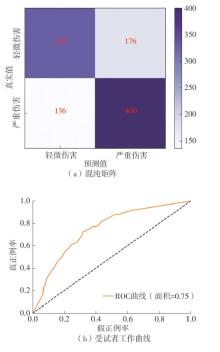
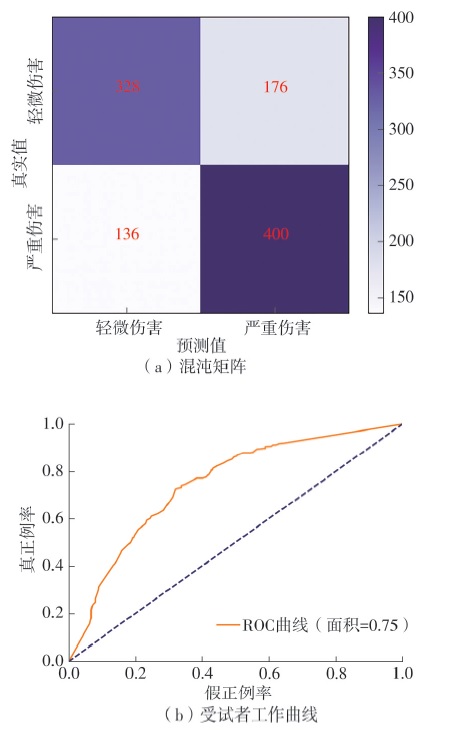
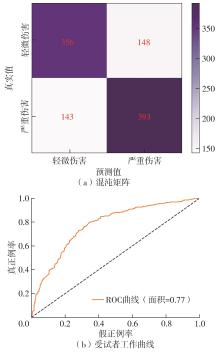
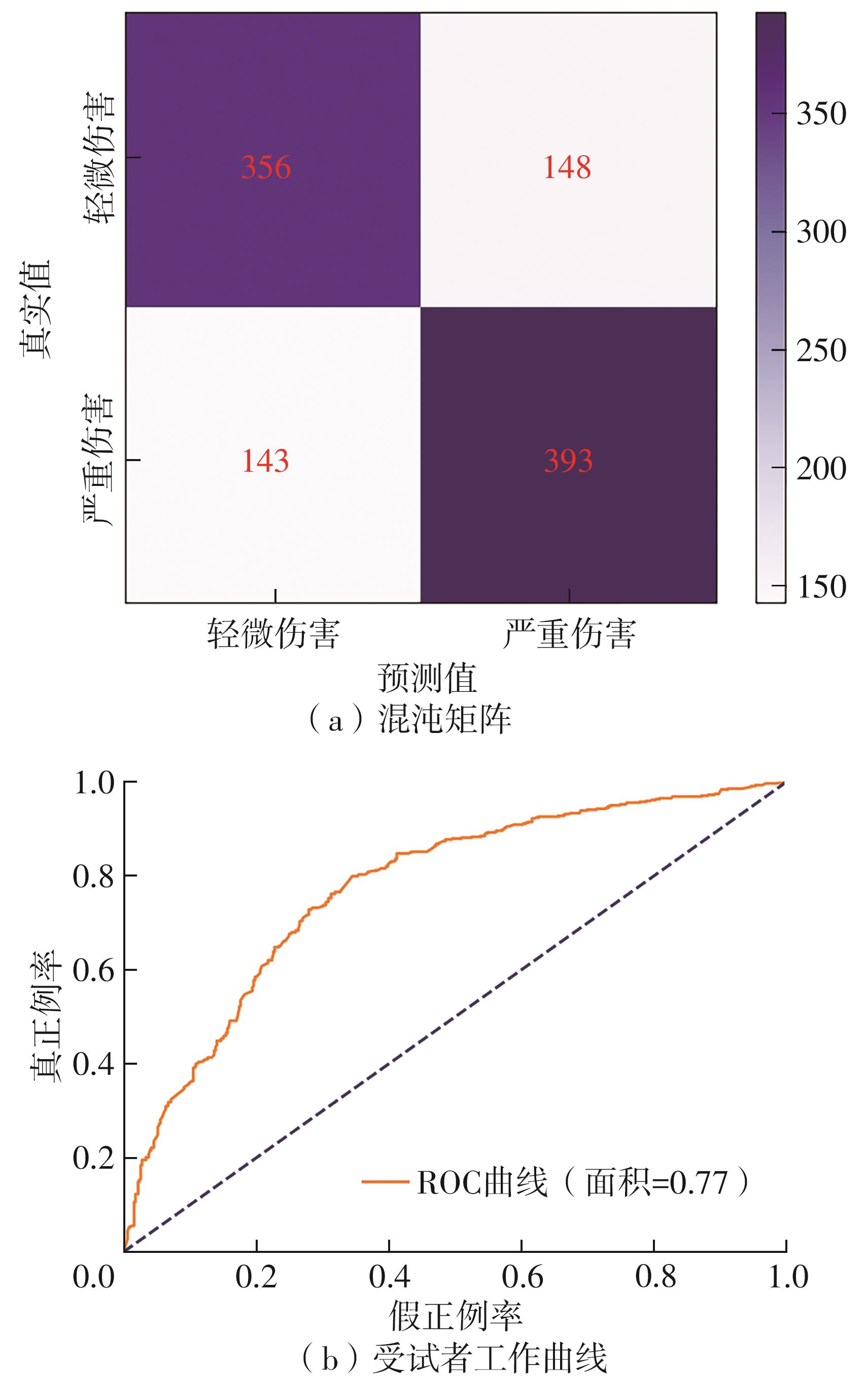
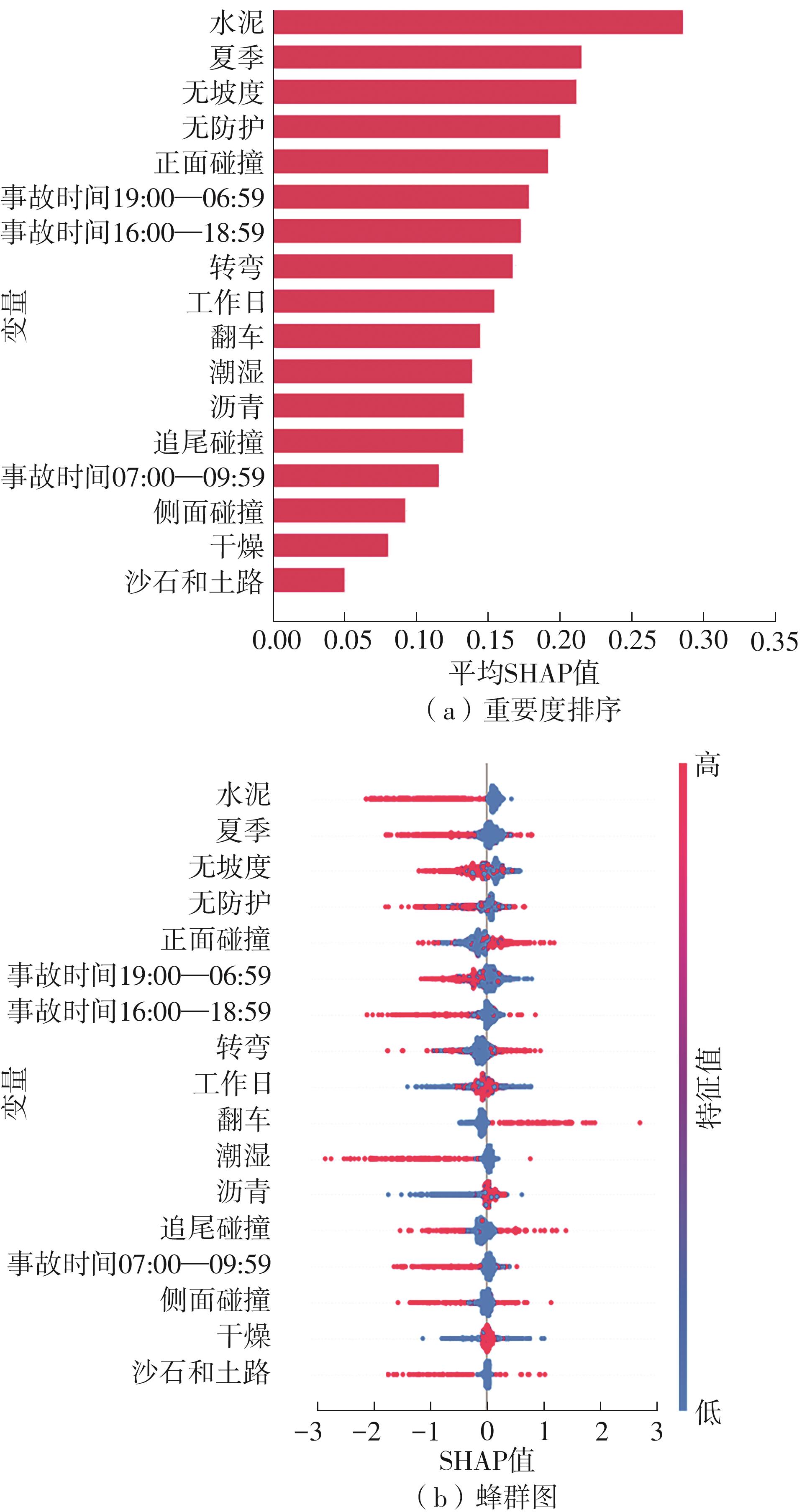
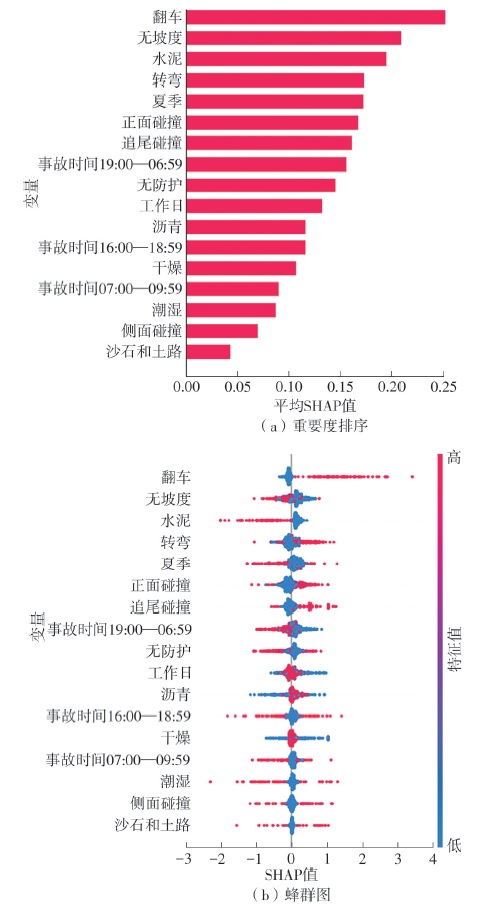
山区高速公路由于地形复杂、气候多变、道路条件受限,使得货车事故的发生具有更高的风险。为了深入探究山区高速公路货车事故严重程度的影响因素,并为交通事故的主动预防和精准防控提供科学依据,基于机器学习方法,构建不同分类模型对事故严重程度进行预测与分析。选择碰撞类型、车辆类型、路面结构、平面线形、纵断面线形、路侧防护措施、路表面状况、季节和事故时间等34个特征因素作为输入变量,以事故严重程度(轻微伤害/严重伤害)作为二分类输出变量,构建决策树(DT)模型、随机森林(RF)模型和支持向量机(SVM)模型等3种机器学习模型。为了评估模型的分类性能,采用准确率、精准率、召回率和F1分值等指标对模型进行对比分析。此外,为了深入剖析各模型的决策机制并识别关键影响因素,引入SHapley Additive exPlanations(SHAP)方法,对模型的预测结果进行解释性分析,以量化各输入变量对事故严重程度的贡献度。研究结果表明:RF模型的分类性能优于DT模型和SVM模型,在准确率、精准率、召回率及F1分值方面均具有较优表现。SHAP分析进一步揭示了影响山区高速公路货车事故严重程度的关键因素,包括 翻车、无坡度、水泥路面、转弯、正面碰撞、事故时间(19:00—06:59)以及路侧无防护措施等因素。

关键词: 交通安全, 山区高速公路, 事故严重程度, 货车事故, 机器学习

Abstract:

Mountainous freeways pose a higher risk for truck accidents due to their complex terrain, variable weather conditions, and constrained road infrastructure. To investigate the factors influencing the severity of truck accidents on mountainous highways and provide a scientific basis for proactive accident prevention and precise traffic safety management, this study employs machine learning methods to construct and analyze classification models for predicting accident severity. A total of 34 features, including collision type, vehicle type, pavement structure, horizontal alignment, vertical alignment, roadside protection measures, road surface conditions, season, and accident time, were selected as input variables. Accident severity, categorized into minor injury and severe injury, was used as the binary output variable. Three machine learning models were developed: Decision Tree (DT), Random Forest (RF), and Support Vector Machine (SVM). To evaluate the classification performance of these models, accuracy, precision, recall, and F1-score were used as assessment metrics. Furthermore, to gain deeper insights into the decision-making mechanisms of each model and identify key influencing factors, the study applied the SHapley Additive exPlanations (SHAP) method to interpret the model predictions and quantify the contribution of each input variable to accident severity. The results indicate that the RF model outperforms the DT and SVM models, demonstrating superior performance in terms of accuracy, precision, recall, and F1-score. SHAP analysis further identifies critical factors influencing the severity of truck accidents on mountainous highways, including rollover, absence of gradient, cement pavement, curves, frontal collisions, accident time (19:00—06:59), and lack of roadside protective measures.

Key words: traffic safety, mountainous freeways, accident severity, truck accidents, machine learning

中图分类号: