Not found 2022 Mechanical Engineering

    Default Latest Most Read
    Please wait a minute...
    For Selected: Toggle Thumbnails
    Design and Analysis for Actively Modified Gear with Zero Amplitude of Loaded Transmission Error
    JIANG Jinke FANG Zongde
    Journal of South China University of Technology(Natural Science Edition)    2022, 50 (9): 99-108.   DOI: 10.12141/j.issn.1000-565X.210751
    Abstract1114)   HTML10)    PDF(pc) (4409KB)(273)       Save

    To eliminate stiffness excitation, this paper proposed an approach of design and analysis for actively modified gears with zero amplitude of loaded transmission error (ALTE). Firstly, the maximum bearing deformation of mesh cycle was obtained based on tooth contact analysis and loaded tooth contact analysis (LTCA) for predesign modified gears. Secondly, taking bearing deformations of meshing period being equal to the maximum value as the known condition, a novel equation for LTCA was developed, then compensating tooth gaps from pitch error (additional modifications) were determined by solving the equation in reverse. Thirdly, the compensating gaps characterized by equal values along instantaneous contact line of tooth were constrained according to the meshing positions, and was added to the predesigned modified pinion to produce novel modified gears with zero ALTE. The method integrated geometric analysis and mechanical analysis of tooth, and it can accurately and quickly obtain any modified gears with zero ALTE. The results show that shape and size determined by the compensating gaps surface are related to the locations of tooth, the predesign modification and load. On the one hand, when the differences of predesigned modification is small, the rule of compensation modification curve is basically opposite to the ALTE of predesigned tooth modification, that is, the larger the bearing deformation is, the smaller the compensation gaps is.Then the overall compensation modification is also small due to only compensating the bearing deformation differences actually. On the other hand, when the differences of the predesigned modification is large, the overall compensation modification is also large due to compensating the differences of both bearing deformation and predesigned modification at the meshing position. Besides, the tooth contact pattern is not changed with the compensation modification and ALTE are reduced on wider loads for gears with zero ALTE based on preset topology modification. Appropriate locations and predesign modifications make the additional modification well integrate into the predesigned and modified surface, so as to obtain the machinable modified pinion with zeros ALTE. It provides a theoretical reference for design and analysis of tooth with vibration reduction and high performances.

    Table and Figures | Reference | Related Articles | Metrics | Comments0
    On the Mechanism of Multi-process Compound Spinning for Thin-walled Deep Cup Shaped Parts
    XU Xiao, ZHANG Chuanyang, XIAO Gangfeng, et al
    Journal of South China University of Technology(Natural Science Edition)    2022, 50 (9): 109-115.   DOI: 10.12141/j.issn.1000-565X.210804
    Abstract783)   HTML6)    PDF(pc) (2059KB)(188)       Save

    To solve the problems of long forming process, low efficiency, and difficult quality control in the traditional machining methods for thin-walled deep cup-shaped parts, a deep drawing-flow multi-process compound spinning method, which can realize the precise preparation of such parts with high efficiency, was proposed in this paper. Based on software Abaqus, a finite element model of Compound Spinning for the deep cup-shaped part of SPHC steel was established. It was used to study the strain and stress distribution and the flow of the material in the compound spinning process of deep cup shaped parts, and reveal the forming mechanism of compound spinning. Combining with the compound spinning forming experiments, the correctness of the finite element model was verified. The results show that the multi-process compound spinning process can obtain the thin-walled deep cup-shaped parts with good forming quality in single spinning process. According to the deformation of materials, multi process compound spinning can be divided into drawing spinning stage, flow spinning initial stage and compound spinning stable stage. In the initial stage of flow spinning, the maximum equivalent strain rises sharply with the progress of spinning. In the stable spinning stage, the maximum equivalent strain appears in the formed region, and its deformation state is axial and tangential tension and radial compression, while the transition region is axial tension, radial and tangential compression. In the initial stage of flow spinning, the axial flow of the material in the die area to the mouth increases with the increase of the axial offset between the rollers for deep drawing and flow spinning. In the stable stage of compound spinning, the outer area of the blank in contact with the roller for deep drawing spinning is subject to three-dimensional compressive stress, while the inner area is subject to three-dimensional tensile stress, and the contact area between the blank and the roller for flow spinning is subject to three-dimensional compressive stress. To ensure the spinning forming quality, the axial offset between the roller for spinning drawing and the roller for flow spinning should be greater than 5.3 mm.

    Table and Figures | Reference | Related Articles | Metrics | Comments0
    Transmission Performance Analysis and Optimization Design of Grasping Module of Steel Arch Looping Mechanism
    HE Yuanfu, XIA Yimin, LI Shenyuan, et al
    Journal of South China University of Technology(Natural Science Edition)    2022, 50 (8): 82-91.   DOI: 10.12141/j.issn.1000-565X.210534
    Abstract818)   HTML2)    PDF(pc) (2011KB)(59)       Save

    At present, the installation of steel arch during the construction of tunnel boring machine (TBM) is completed by manual operation, and the working environment is very harsh, thus leads to the problems of low support efficiency, high labor intensity and high construction risk. Therefore, the authors and their team had designed a steel arch rapid-looping installation mechanism to replace manual operation. As the core part of the looping installation mechanism that directly contacts with the steel arch, the grasping module demands sufficient transmission performance to meet the requirements of clamping operation. Based on the screw theory, the paper established a kinema-tics model of the grasping module, and deduced the virtual coefficient between the input screw and the output screw. Then, the transmission performance of the grasping module was obtained and its transmission index was proposed. On this basis, the size parameter optimization model of grasping module was established. According to the actual grasping requirements of the steel arch looping parts, the optimization results of each size parameter were obtained as follows: the initial included angle between the jaw and the connecting rod is α = 88°, the initial position of the guide rod is lFJ = 170 mm, and the movement range of the guide rod is 0 ~ 63 mm. Using ADAMS software to analyze the posture change process of the grasping module from clamping to opening, it comes to the conclusion that, the distance between the ends of the jaws gradually increases from 50.0 mm to 234.6 mm, which meets the requirements of grasping space; the output torque increases first and then decreases. When the jaw is fully opened, the minimum torque is 21.23 N·m, which meets the output torque demand. Finally, the steel arch looping installation experiment shows that, the difference between the measured values and the calculated model is only 4.5 mm, which proves the correctness of the model; the whole looping installation time of the steel arch is 8.6 min. As compared with the traditional manual operation, the operation efficiency of the steel arch looping mechanism is improved by 20% ~ 70%.

    Table and Figures | Reference | Related Articles | Metrics | Comments0
    Deep Learning-Based Prediction of Contact Force in the Process of Shoveling Up Glass Subtrate
    HOU Liwei, WANG Hengsheng, ZOU Haoran
    Journal of South China University of Technology(Natural Science Edition)    2022, 50 (8): 71-81.   DOI: 10.12141/j.issn.1000-565X.210698
    Abstract725)   HTML4)    PDF(pc) (2111KB)(89)       Save

    In view of the problem of insufficient characterization ability and poor versatility of action force modeling methods in existing robot contact operation tasks, this paper studied on the modeling methods of complex contact dynamics by taking the actual production process of glass substrate shoveling as an example. Considering the fact that the forces during the glass substrate shoveling are affected by the contact dynamics of multiple interfaces, exhibiting the multimodal, nonlinear, and non-stationarity properties, this paper proposed a method for the prediction of the contact force by integrating physical prior knowledge in different forms in the design and training process of deep learning models. According to the stress characteristics of the glass substrate’s shoveling up process, a deep learning model structure combining multi-scale convolutional kernel, attention mechanism and long and short-term memory network was proposed; the kinetic parameter randomization method and the contact force compensation measures based on material mechanics and fracture mechanics were proposed to make the simulation training data more robust to reflect the real contact situation; based on the mean square error loss function, the additional loss function was introduced for network training for the unreasonable physical “penetration” behavior. The experimental results show that the proposed model can accurately predict the horizontal and vertical forces with the root mean square error of 0.286 in the single-step prediction, and the multi-step prediction results are also good enough to meet the application requirements. The prediction performance of the model is superior to the existing mainstream models. The ablation experiment shows that the excellent prediction performance of the model proposed is the result of the joint contribution of the local feature extraction module, the attention mechanism module and the temporal feature extraction module. At the same time, the improved loss function improves the stability of the model training. Our method can be used in similar applications for the prediction of robotic contact force with the environment.

    Table and Figures | Reference | Related Articles | Metrics | Comments0
    Large Eddy Simulation Flow Field Analysis and Visualization Test Verification of Hydraulic Torque Converter Under Braking Condition
    CHAI Bosen, WANG Guangyi, ZHU Guoren, et al
    Journal of South China University of Technology(Natural Science Edition)    2022, 50 (3): 95-105.   DOI: 10.12141/j.issn.1000-565X.210232
    Abstract2337)      PDF(pc) (13328KB)(84)       Save
    In order to accurately reveal the spatio-temporal evolution mechanism of the flow field of the hydraulic torque converter, five different Large Eddy Simulation models (SL, WALE, WMLES, WMLES S-Omega, KET) were used to simulate the three-dimensional flow field of hydraulic torque converter under braking conditions based on computational fluid dynamics theory. It identified and extracted the unsteady multiscale three-dimensional vortex structure inside the turbine, and then analyzed the characteristics of spatiotemporal multiscale vortex evolution and its influence laws on the evolution of flow field structure. Based on Particle Image Velocimetry (PIV) technology, dynamic real-time calibration method was used to measure the flow field inside the turbine of hydraulic torque converter. Based on the velocity and vorticity information extracted from the post processing, the simulation results of large eddy simulation were compared and the simulation applicability of five subgrid-scale turbulence models was analyzed. The results show that under braking conditions, the multiscale eddy simulation results of SL and WMLES models for the main flow area of the turbine channel are similar, the flow velocity ranges from 0.32m/s to 0.85m/s and the vorticity ranges from 250.77s-1 to 792.95s-1; for the turbine blade pressure surface near the wall high velocity area, the simulation results of WMLES model meet the PIV test results, the flow velocity ranges from 3.7m/s to 4.4m/s, while WMLES S-omega model is better for the simulation of vorticity field is better and the vorticity is 526.47s-1. From the perspective of three-dimensional vortex simulation, WMLES and WMLES S-omega models have more abundant numerical simulation results of three-dimensional vortex near the suction surface of blades, and they are more accurate in capturing small-scale vortex structures near the wall of blades. The KET model simulation results reproduce the obvious vortex shedding phenomenon at the turbine blade outlet, while other models are not accurate enough to identify the structure of three-dimensional vortex. The research results can provide theoretical guidance for high precision numerical simulation of hydraulic torque converter.
    Related Articles | Metrics | Comments0
    Study on Residual Stress Control of Damaged Aircraft Component Based on Non-uniform Overlap Ratio Laser Shock Peening
    ZHANG Junhao, CHENG Xiuquan, XIA Qinxiang, et al
    Journal of South China University of Technology(Natural Science Edition)    2022, 50 (3): 73-79.   DOI: 10.12141/j.issn.1000-565X.210309
    Abstract1854)      PDF(pc) (1949KB)(296)       Save
    Based on the fitting relationship between residual compressive stress and overlap ratio, the laser spot path was designed under non-uniform overlap ratio. A laser shock peening finite element (FE) model for laser shock peening damaged 7075 aluminum alloy component was established based on ABAQUS software. The non-uniform overlap ratio laser shock peening simulation was realized and the distribution of residual stress was obtained. The results show that the non-uniform overlap ratio laser shock peening can keep the surface of the specimen in a state of uniform stress after grinding or under tensile load. By increasing the overlap ratio to control residual stress, the surface of the repaired component can be kept in a state of uniform compressive stress under tensile load, so as to inhibit the initiation and propagation of fatigue cracks. The experimental results are consistent with the simulation results, which verifies the reliability of the model.
    Related Articles | Metrics | Comments0
    Modal Analysis and Structure Optimization of Scissor Deployable Element Under Vibration Conditions
    WU Shangsheng, CHEN Zhe, ZHOU Yunqi
    Journal of South China University of Technology(Natural Science Edition)    2022, 50 (3): 119-126.   DOI: 10.12141/j.issn.1000-565X.210409
    Abstract721)      PDF(pc) (2642KB)(101)       Save
    In order to study the response characteristics of the scissor-type deployable element under vibration conditions, the study used the ship rust removal device as the vibration source and firstly established the mechanical model of the scissor-type deployable element. And the reliability of the element members under extreme conditions was studied. Then it used numerical modal analysis method and dynamic stress test analysis method under random vibration to study the random excitation problem and response of the scissor expandable unit under vibration conditions. It proposed a method to eliminate the second-order transverse bending vibration and excitation resonance of the scissor expandable unit and carried out dynamic stress simulation for each structural optimization scheme. The results show that the second-order modal vibration (306.15Hz) of the scissor-type deployable unit and the random excitation resonance generated by rust removal are the main reasons for the vibration fatigue of the scissor-type deployable unit. The dynamic stress level of the unit can be reduced most significantly by increasing the thickness of the upper worktable from 10mm to 14mm, reducing the rigidity of the worktable from 20GPa to 19.5GPa, and adding a connecting shaft between the two connecting rods. The research results can provide a theoretical basis for the stable and reliable operation of the scissor deployable unit in engineering applications.
    Related Articles | Metrics | Comments0
    Die Electrode Scheduling Problem Solution Based on Genetic Algorithm
    XIA Qinxiang, LI Kai, MA Jun, et al
    Journal of South China University of Technology(Natural Science Edition)    2022, 50 (3): 80-87.   DOI: 10.12141/j.issn.1000-565X.210284
    Abstract655)      PDF(pc) (803KB)(393)       Save
    In view of the scheduling problem of die electrode in CNC and EDM stages, a mathematical model with batch processing and correlation characteristics was established. To minimize the tardiness of die parts, the solving process of die electrode scheduling problem was divided into two stages: batch processing and batch scheduling. In the first stage, the batch processing problem was solved according to the principle of correlation, and the correlation priority batch algorithm was designed. In the second stage, the batch scheduling problem was solved by genetic algorithm, and a strategy based on animal breeding was proposed to improve the traditional genetic algorithm. The die electrode scheduling program was developed based on MATLAB software to realize the above two stages of solving process, and the test was carried out under 24 kinds of simulation examples. The results show that, the designed die electrode scheduling algorithm is effective for solving the batch processing and batch scheduling problem of die electrode; the proposed strategy of breeding can significantly improve the quality of traditional genetic algorithm solution; and the tardiness of die parts in the examples can be reduced by 16.71% at most.
    Related Articles | Metrics | Comments0
    Multiphysics Coupling Simulation of ECM Temperature Based on Different Turbulence Models
    CHEN Yuanlong, LIN Hua, CHEN Peixuan, et al
    Journal of South China University of Technology(Natural Science Edition)    2022, 50 (3): 88-94,126.   DOI: 10.12141/j.issn.1000-565X.210219
    Abstract2169)      PDF(pc) (925KB)(155)       Save
    In view of the difficulties in the prediction and measurement of machining gap temperature distribution in the process of electrochemical machining (ECM), this paper established and analyzed a temperature multiphy-sics coupling model for profile ECM. The turbulence models of SA, k-ε, k-ω, SST and low-Reynolds-number k-ω were used to calculate the flow field distribution, and the temperature distribution was obtained by coupling electrical field, flow field and temperature field. The simulated value was compared with the experimental value. Results show that the near-wall region flow field solution accuracy of the low-Reynolds-number wall treatment is higher than that of the wall-function and the temperature in the ECM gap can reach a quasi-stable state in a relatively short time. The calculated temperature values based on SST and low-Reynolds-number k-ω models are very close to each other, and the simulated temperature values of the model coupled with the bubble rate are closer to the experimental values.
    Related Articles | Metrics | Comments0
    Modeling Simulation and Characteristics Analysis of Pump Control System of Concrete Pump Truck
    HUANG Minghui, WANG Zhaozhuo, PAN Qing, et al
    Journal of South China University of Technology(Natural Science Edition)    2022, 50 (3): 106-118.   DOI: 10.12141/j.issn.1000-565X.210330
    Abstract2683)      PDF(pc) (6201KB)(155)       Save
    This study carried out digital modeling, simulation and verification analysis on the piston pump which is the key hydraulic component of concrete pump truck system. Based on the analysis of its motion law and working principle, it took the swash plate axial piston pump with conical cylinder blocks as the research object, and characterized the kinematic characteristics and flow characteristics of the piston with the method of space geometry and established a variable pump plunger model with AMESim simulation software. Based on the analysis of constant power control, constant pressure compensator control and electro-hydraulic proportional control variable displacement principle of variable pump, etc., this study established a power-pressure-electro-hydraulic proportional compound controlled variable pump AMESim simulation digital model including sub-models such as the pump body piston model, valve plate model, sliding shoe model, variable mechanism model, etc. The outlet flow characteristics, pressure displacement characteristics, current displacement characteristics and transient response characteristics of the plunger pump were studied through the coordinated control of control of the swash plate inclination angle, motor speed, system load and control current. The research results show that the simulation characteristic curve obtained by using the established hydraulic pump digital model is in good agreement with the test results, and the maximum relative errors of the pressure displacement characteristic and current displacement characteristic prediction are 6.31% and 7.73%, respectively. Thus it verifies the accuracy of the model and provides model supports for digital twins and performance optimization upgrades of construction machinery.
    Related Articles | Metrics | Comments0
    Analysis of the Powertrain Mount Systems of Electric Vehicles by Considering the Correlation of Probabilistic Parameters
    LÜ​ Hui, ZHAO Jiawei, MAO Haikuan, et al
    Journal of South China University of Technology(Natural Science Edition)    2022, 50 (3): 65-72.   DOI: 10.12141/j.issn.1000-565X.210445
    Abstract2434)      PDF(pc) (1047KB)(278)       Save
    Aiming at the complex situation where the parameters of powertrain mounting system (PMS) of electric vehicle are both uncertain and correlated, this paper investigated the inherent characteristics of electric vehicle PMS considering the correlation of probabilistic parameters. Firstly, the correlation matrix and probabilistic parameters were employed to describe the correlation and uncertainty of PMS parameters. Then, the Monte-Carlo method (MCM) was developed to calculate the PMS inherent characteristics with correlated probabilistic parametersbased on Monte-Carlo sampling. Then, an efficient method for calculating the statistical moments of PMS inherent characteristics was put forward based on sparse grid numerical integration (SGNI). Finally, the effectiveness of the proposed approach was demonstrated by the numerical example of an electric vehicle PMS. The analysis results show that, the SGNI method has good accuracy and efficiency in solving statistical moments and bounds of PMS natural frequencies and decoupling ratios, compared with MCM. The correlation of probabilistic parameters has a great influence on the upper and lower bounds of decoupling ratios. More reasonable analysis results can be obtained by taking the correlation of the probabilistic parameters into consideration. 
    Related Articles | Metrics | Comments0
    Study on Cutting Forces and Machining Performance in Turning Stainless Steel with Variable-Length Restricted Contact Tool
    PANG Xueqin, DENG Wenjun, LI Songqing
    Journal of South China University of Technology(Natural Science Edition)    2022, 50 (8): 49-61.   DOI: 10.12141/j.issn.1000-565X.210741
    Abstract633)   HTML27)    PDF(pc) (8231KB)(185)       Save

    As a typical difficult-to-machine material, AISI 316L austenitic stainless steel has the problems of low machining efficiency and large thermo-mechanical load during machining. The present methods to improve the machining performance of stainless steel such as adopting lubrication, designing tool surface structure, etc., all exist obvious defects. For example, the extensive use of cutting fluid is detrimental to the environment and human health, and tool wear will be aggravated if the tool surface structure is designed unreasonably. Given that the existing methods fail to well deal with the problems like large thermo-mechanical load during machining austenitic stainless steel, a new restricted contact tool with variable contact length was designed aiming at machining AISI 316L auste-nitic stainless steel. Compared with traditional restricted contact tools, the new tool is superior in reducing cutting force and friction coefficient. This paper first developed a semi-analytical model for turning to predict cutting forces for inconstant restricted contact length based on the non-equidistant shear zone model and the principles of unified cutting mechanics. Then, the conventional and variable-length restricted contact pattern (rectangular and trapezoidal restricted contact pattern) was fabricated on the rake surface of uncoated cemented carbide by the W-EDM and micro-EDM process. Subsequently, extensive experiments were performed to validate the proposed model. Results show that the cutting forces predicted by the proposed semi-analytical model are in good agreement with the experimental values. As compared with conventional restricted contact tools, the developed restricted contact tool can significantly reduce cutting forces. Furthermore, the influences of conventional and developed restricted contact tools on cutting performance were compared and analyzed under dry machining conditions. The restricted contact tool developed in this paper can effectively decrease the cutting temperature and tool wear. This study can provide a basis for designing the cutting tools in machining difficult-to-cut materials.

    Reference | Related Articles | Metrics | Comments0
    Experimental Study on Friction and Wear and Efficiency of Water Hydraulic Axial Piston Pump with Biomimetic Non-smooth Surface Slipper Pair
    LIANG Yingna, GAO Jianxin, GAO Dianrong
    Journal of South China University of Technology(Natural Science Edition)    2022, 50 (6): 145-154.   DOI: 10.12141/j.issn.1000-565X.210484
    Abstract3041)      PDF(pc) (52434KB)(868)       Save
    In this paper, a certain type water hydraulic axial piston pump was taken as a prototype, and the original smooth surface swash plate was replaced with a biomimetic non-smooth surface one. The flow-pressure, volumetric efficiency-pressure and mechanical efficiency-pressure of the test pump at three different pressures of 7 MPa, 10 MPa, and 12 MPa were tested, and the worn surface of the swash plate was observed using laser confocal microscope and scanning electron microscope. The results show that the slipper pair with non-smooth surface can produce hydrodynamic lubrication effect and have chip holding capacity due to pits. Self-lubrication can be realized during the friction process, achieving the effect of reducing drag and wear. With the increase of working pressure, friction marks in the half-circle high pressure area of the non-smooth surface swash plate are gradually obvious, grooves on the worn surface become wider and deeper, and adhesion wear and oxidation wear are aggravated. That is the friction and wear are aggravated. The volumetric efficiency, mechanical efficiency and total efficiency of the non-smooth surface slipper pair test pump are increased by 0.2%-0.6%, 0.1%-1.7% and 0.1%-2.3% respectively, compared with those of the smooth surface slipper pair test pump.
    Related Articles | Metrics | Comments0
    A Robot Grasping Policy Based on Viewpoint Selection Experience Enhancement Algorithm
    WANG Gao, CHEN Xiaohong, LIU Ning, et al
    Journal of South China University of Technology(Natural Science Edition)    2022, 50 (9): 126-137.   DOI: 10.12141/j.issn.1000-565X.210769
    Abstract10461)   HTML30)    PDF(pc) (3882KB)(1601)       Save

    To solve the problem of the low success rate of robot vision grasping using fixed environment camera in the scene of cluttered and stacked objects, an eye-hand follow-up camera viewpoint selection policy based on deep reinforcement learning is proposed to improve the accuracy and speed of vision-based grasping. Firstly, a Markov decision process model is constructed for robot active vision-based grasping task, then the problem of viewpoint selection is transformed into a problem of solving the viewpoint value function. A deconvolution network with encoder-decoder structure is used to approximate the viewpoint action value function, and the reinforcement learning is carried out based on the deep Q-network framework. Then, to resolve the problem of sparse reward existing in reinforcement learning, a novel viewpoint experience enhancement algorithm is proposed. The different enhancement methods between the successful and failed grasping process are designed respectively. And the reward region can be expanded from a single point to a circular region for improving the convergence speed of the approximation network. The preliminary experiment is deployed on the simulation platform, and the robot model and the grasping environment are simultaneously built in the simulation platform to implement the offline reinforcement learning. In the process, the proposed viewpoint experience enhancement algorithm can effectively improve the sample utilization rate and speed up the convergence of training. Based on the proposed viewpoint experience enhancement algorithm, the viewpoint action value function approximation network can converge within 2 h. To obtain the results from the verification with application, the proposed viewpoint selection policy is applied to the real-world scenes with robot for grasping experiments. The result shows that the viewpoint optimization based on this policy can effectively promote the accuracy and speed of robot grasping. Compared with the general grasping methods, the proposed viewpoint selection policy needs only one viewpoint selection in real-world robot grasping to find the focus region with high grasping success rate. And the method can also promote the processing efficiency of the best viewpoint selection. The grasping success rate in cluttered scenes is increased by 22.8% against the single-view method, and the mean picks per hour can reach 294 units. As whole, it shows that the proposed policy has the capacity of industrial application.

    Table and Figures | Reference | Related Articles | Metrics | Comments0
    Multi-objective Energy Management Strategy of HEV Based on Improved Dynamic Programming Method
    ZHAO Kegang, HE Kunyang, LI Jie, et al
    Journal of South China University of Technology(Natural Science Edition)    2022, 50 (9): 138-148.   DOI: 10.12141/j.issn.1000-565X.210771
    Abstract2069)   HTML13)    PDF(pc) (2355KB)(803)       Save

    Hybrid electric vehicle Energy Management Strategy (EMS) optimization is a multi-objective and multi-stage decision-making problem that needs to comprehensively optimize several performance indicators of hybrid electric vehicles. The traditional multi-objective optimization algorithm faces challenges such as low efficiency and difficult to guarantee convergence when dealing with these problems. Combined with the idea of non-dominated sorting algorithm, this paper extended the traditional Dynamic Programming (DP) to the field of multi-objective optimization, and proposed Non-dominated Sorting Dynamic Programming (NSDP). When using this algorithm, the driving condition was divided into several stages firstly. In each stage, the cumulative target value vector generated by the hybrid electric vehicle in different control strategies was obtained, and the current non dominated solution set and the corresponding control strategy were obtained through the non dominated sorting algorithm. Then, the non dominated solution set of each stage was used for reverse iteration in turn, until the leading edge of the non dominated solution set and the corresponding energy management control strategy of the whole driving cycle were obtained. In the simulation experiment, Weighting Dynamic Programming (WDP) and Non-dominated Sorting Dynamic Programming were applied to solve the optimization problem of multi-objective energy management strategy for power split hybrid electric vehicles and series parallel hybrid electric vehicles under constant acceleration conditions. The results show that NSDP not only can effectively complete the solution and ensure convergence, but also has significant advantages in homogeneity of solution set and solving efficiency. Furthermore, NSDP was used to solve the energy management optimization problem of series parallel hybrid electric vehicles running in Worldwide Harmonized Light Duty Vehicle Test Cycle (WLTC). The non dominated solution set can be used to analyze the working characteristics of vehicles and provides a reliable reference for the formulation of actual energy management strategy.

    Table and Figures | Reference | Related Articles | Metrics | Comments0
    A Force-Sensorless Dragging Teaching Method Based on Disturbance Kalman Filter for Robot
    ZHANG Tie, XU Jinsheng, ZOU Yanbiao
    Journal of South China University of Technology(Natural Science Edition)    2022, 50 (9): 116-125.   DOI: 10.12141/j.issn.1000-565X.210781
    Abstract2576)   HTML20)    PDF(pc) (3056KB)(1069)       Save

    The dragging teaching method is easy to operate and has high teaching efficiency, which is more in line with modern flexible production. To realize the dragging teaching of industrial robots, it is necessary to accurately measure the external force and control the motion caused by the external force. In order to measure the external force exerted by the operator without torque sensor, an external force observer based on disturbance Kalman filter was designed. The observer takes the external joint torque as the disturbance term, and introduces generalized momentum to establish the state space equation of the robot system, and then uses the Kalman filter algorithm to obtain the optimal observed value of the external torque. Among them, in order to improve the estimation accuracy, the robot dynamic model was established by combining the rigid-body dynamic model and a deep neural network, which not only avoids modeling the complex friction torque but also compensates for the unmodeled factors through the deep neural network. Besides, in order to realize the leading control of the robot in the process of dragging teaching, the dynamic response relationship between the teaching motion and the external torque is equivalent to a mass damping system. An admittance control method with adaptive damping was proposed to convert the observed external torque into the desired joint angle of the teaching motion, and adaptively adjust the system damping parameters according to the change trend of the external torque to improve the teaching effect of the robot. The experiment results show that the proposed dynamic model has a lower mean square root error in the prediction torque, which can reduce the error by no less than 20%. The proposed control scheme can realize the dragging teaching without torque sensors on the six-degree-of-freedom industrial robot, and the adaptive damping method can reduce the torque required to rotate the joint by about 19%, which is more conducive to the start and stop of the teaching motion.

    Table and Figures | Reference | Related Articles | Metrics | Comments0
    Normal Contact Stiffness Model of Fine Particle Shot Peening Gear
    MO Haijun, ZHAO Hang, CHENG Yu, et al
    Journal of South China University of Technology(Natural Science Edition)    2022, 50 (9): 90-98.   DOI: 10.12141/j.issn.1000-565X.210803
    Abstract820)   HTML11)    PDF(pc) (2408KB)(461)       Save

    Fine particle shot peening is one of the key technologies for high-performance gear manufacturing. In the study of gear dynamics and gear precision manufacturing, one of the important research topics is accurately analyzing the influence of fine particle shot peening on the normal contact stiffness of gear. In this paper, the changes of micro morphology of gear teeth surface before and after the fine particle shot peening were compared and analyzed through characterizing the micro morphology of the fine particle shot peened gear surface. Based on the fractal theory, the normal contact stiffness model of the fine particle shot peened gear was established considering the elastic-elastoplastic-plastic deformation of a single asperity and asperity interaction. It conducted a simulation analysis on the variation law of the normal contact stiffness along with the normal load, the fractal dimension D, the fractal rough amplitude G and the parameter of material property. The influence of fine particle shot peening on the normal contact stiffness of the gear was analyzed by extracting the fractal parameters of fine particle shot peened gear surface with the power spectral density function method. The results show that fine particle shot peening leads to randomly distributed micron or even nanoscale pits on the gear surface, and the decrease of surface roughness. Also, the gear surface roughness increases with the increase of fine particle shot peening strength. The normal contact stiffness increases with the increase of normal load, material yield strength, and fractal dimension D, and decreases with the increase of fractal roughness amplitude G. Fine particle shot peening can change the gear normal contact stiffness by changing the micro morphology of gear surface, and then change the fractal dimension D and fractal roughness amplitude G. Compared with the gear without fine particle shot peening, the normal contact stiffness of fine particle shot peened gears is improved. With the increase of shot peening strength, the normal contact stiffness of gears decreases. The research results provide a theoretical basis for gear dynamics research and high-performance gear manufacturing.
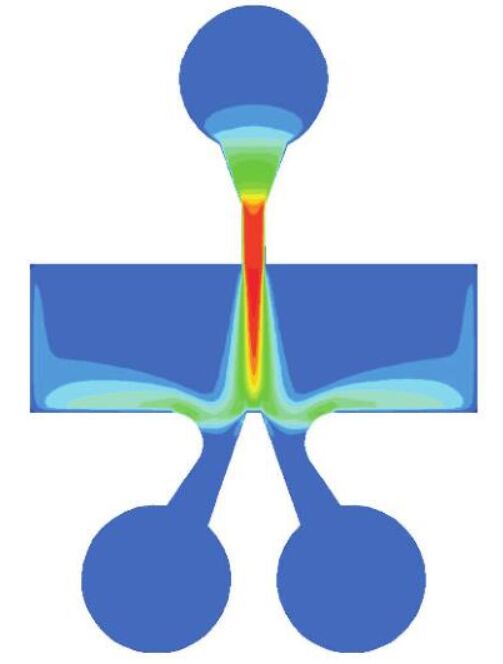
    Table and Figures | Reference | Related Articles | Metrics | Comments0
    Multi-Cylinder Synchronization Control Strategy with State Constraint Based on Disturbance Observer
    WANG Yunfei, ZHAO Jiyun, MAN Jiaxiang, et al
    Journal of South China University of Technology(Natural Science Edition)    2022, 50 (2): 93-101,136.   DOI: 10.12141/j.issn.1000-565X.210165
    Abstract2364)      PDF(pc) (7839KB)(93)       Save
    Proposed in this paper is a state-constrained synchronous control strategy based on disturbance observer for the multi-cylinder synchronous pulling process of hydraulic support group. First, The relationship among multiple cylinders is analyzed. Next, based on the theory of equal control, a disturbance observer is designed for each subsystem to estimate and compensate the uncertainties and external disturbances of the system. Then, the maximum errors of the systems position and velocity are limited by using the barrier Lyapunov theory, and the dynamic surface theory is introduced to avoid differential explosion in backstepping design and simplify the design of the controller. Moreover, ZY3200/08/18D electro-hydraulic control hydraulic support is used as a model to carry out simu-lation analysis in Simulink, and, finally, a simulation test platform is built for verification. Simulation and experiment results show that the proposed control strategy is of higher trajectory tracking accuracy and synchronization accuracy.

    Related Articles | Metrics | Comments0
    Analysis of Energy Saving of Distributed-Drive Articulated Vehicle Based on Electro-Hydraulic Hybrid Steering System
    SHEN Yanhua, NIU Tianwei, LIU Zixiang
    Journal of South China University of Technology(Natural Science Edition)    2022, 50 (2): 84-92.   DOI: 10.12141/j.issn.1000-565X.210188
    Abstract2489)      PDF(pc) (2738KB)(93)       Save
    This paper proposes a rigid differential steering of articulated vehicle by taking advantage of hub motor characteristic of distributed-drive articulated vehicle, and constructs an electro-hydraulic hybrid steering mode with hydraulic steering as the main and with differential steering as the auxiliary. The differential steering dynamic model of articulated vehicle is established to reveal the relationship between cornering resistance and differential torque, and, by taking the differential torque acting on the front body of articulated vehicle as an example, the torque distribution method of each wheel torque is investigated and used to formulate the control strategy of hybrid steering system. Moreover, the articulated vehicle is simulated along the single lane changing path, and the energy consumptions are evaluated and compared for the hydraulic steering system and the motor with and without differential steering. Simulation results show that the electro-hydraulic hybrid steering mode can realize the effective energy saving of articulated vehicle under different load and speed conditions.
    Related Articles | Metrics | Comments0
    Analysis of Factors Affecting Synchronization Process of Multi-Cone Friction Pair
    WANG Yanzhong, DOU Delong, ZHANG Zhen, et al
    Journal of South China University of Technology(Natural Science Edition)    2022, 50 (2): 58-66,83.   DOI: 10.12141/j.issn.1000-565X.210119
    Abstract1345)      PDF(pc) (3255KB)(247)       Save
    Based on the lubrication mechanics and the friction principle of asperity, a mathematical model describing the synchronization process of multi-cone friction pair is established and numerically solved. Then, the change laws of the relative speed of the driving and driven plates, the thickness of the oil film, the bearing capacity of the oil film, the bearing capacity of the micro peak, the viscous shear torque, the rough friction torque, etc., with the synchronization time during the synchronization process, are analyzed. Moreover, the effects of such factors as the cone angle, the number of friction cones, the surface roughness, the initial relative speed and the loading pressure on the synchronization process are investigated based on the established mathematical model. The results show that (1) the multi-cone friction pair has an obvious wedge-shaped self-energizing effect and can provide large cone contact pressure with small axial loading force| (2) the synchronous torque can be increased and the synchronization time can be shortened by reducing the cone angle and by increasing the number of friction cones, the surface roughness and the axial loading force| and (3) the synchronization time is roughly linear to the initial relative speed.
    Related Articles | Metrics | Comments0
    Fluid-Solid Coupling Analysis of Spherical Storage Tank Under Wind Load
    HUANG Si, ZHANG Guoran, TANG Zirui, et al
    Journal of South China University of Technology(Natural Science Edition)    2022, 50 (2): 67-75.   DOI: 10.12141/j.issn.1000-565X.210193
    Abstract1868)      PDF(pc) (7072KB)(66)       Save
    By taking the propane spherical storage tank of a petrochemical enterprise as the research object, this paper fully takes into consideration the geometric integrity of the tank and the unevenness of wind load distribution at the ANSYS Workbench platform to conduct a fluid-solid coupling analysis. Firstly, a three-dimension numerical simulation of the external air flow field of the tank is performed to obtain the flow field distribution of the surrounding flow. Then, the calculation results of the flow filed are loaded on the outer surface of the tank to perform a structural static analysis. The results indicate that (1) when the wind flows around the spherical storage tank, the velocity first increases and then decreases, forming several vortexes on the leeward side of the spherical shell and the pillar, and the position of flow separation is delayed as the wind speed increases; (2) the wind forms a positive pressure zone on the windward side of the spherical storage tank and a negative pressure zone on the non-windward side; (3) the wind pressure on the windward side of the spherical shell symmetrically distributes in concentric circles, and gradually decreases from the center to the edge; and (4) the stress of the spherical storage tank under wind load is significantly larger than that under the design conditions. According to the results of stress linearization analysis and strength check, there comes to the conclusion that the spherical storage tank meets the standard requirements well. 

    Related Articles | Metrics | Comments0
News
 
Featured Article
Most Read
Most Download
Most Cited