Journal of South China University of Technology(Natural Science Edition) ›› 2026, Vol. 54 ›› Issue (2): 52-61.doi: 10.12141/j.issn.1000-565X.250179
• Computer Science & Technology • Previous Articles Next Articles
Recommendation Algorithm Based on Social Diffusion and Adaptive Negative Sampling
CAI Xiaodong, LI Ting, SU Yifeng
- School of Information and Communication,Guilin University of Electronic Technology,Guilin 541004,Guangxi,China
-
Received:2025-06-17Online:2026-02-25Published:2025-09-26 -
About author:蔡晓东(1971—),男,博士,研究员,主要从事数据挖掘研究。E-mail: caixiaodong@guet.edu.cn -
Supported by:the National Natural Science Foundation of China(62177012)

CLC Number:
Cite this article
CAI Xiaodong, LI Ting, SU Yifeng. Recommendation Algorithm Based on Social Diffusion and Adaptive Negative Sampling[J]. Journal of South China University of Technology(Natural Science Edition), 2026, 54(2): 52-61.
share this article
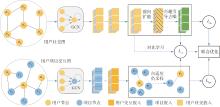
Fig.1
SARec frame diagram"
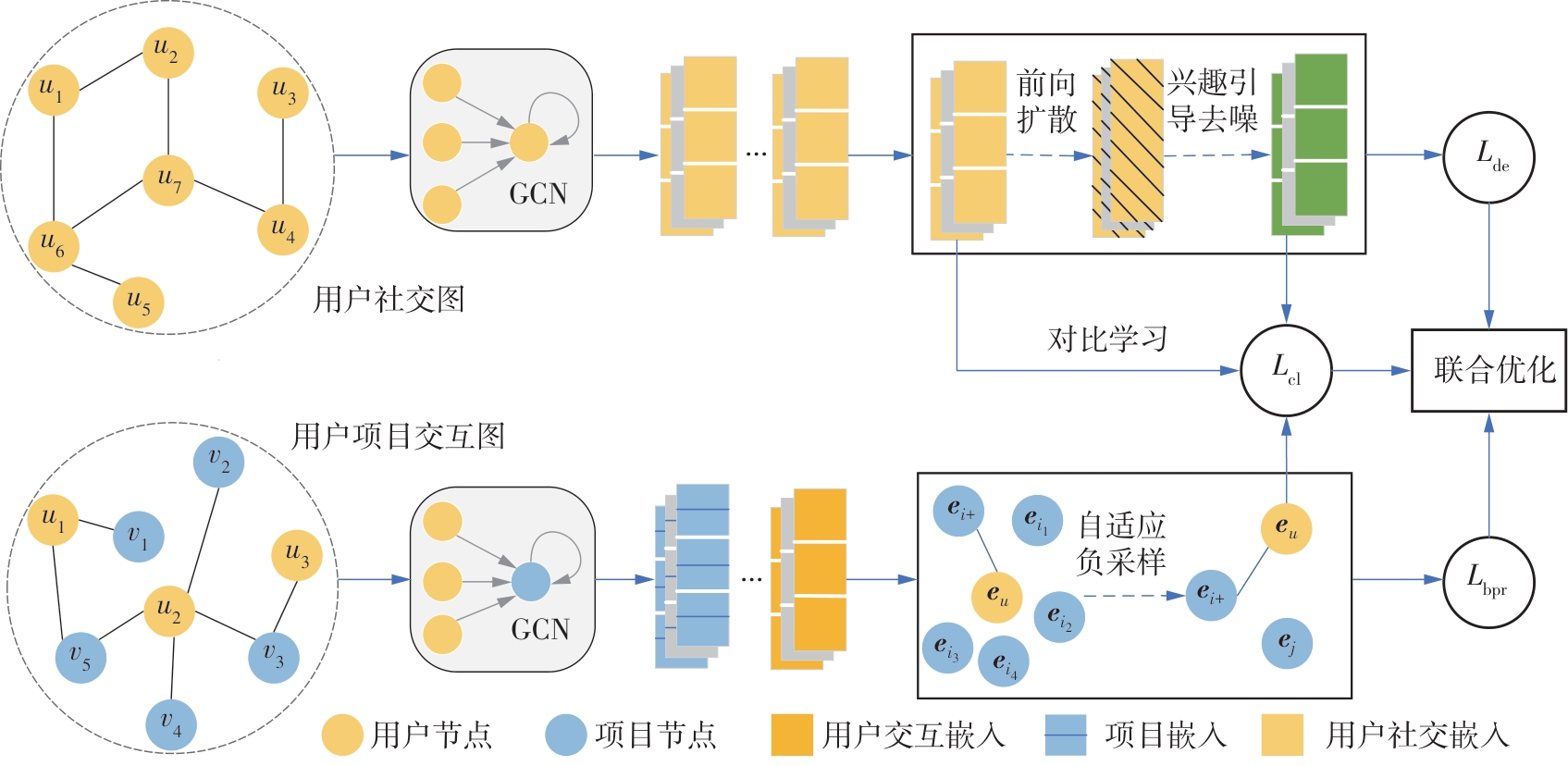
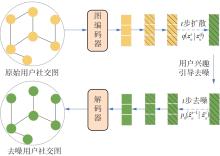
Fig.2
Social diffusion process"
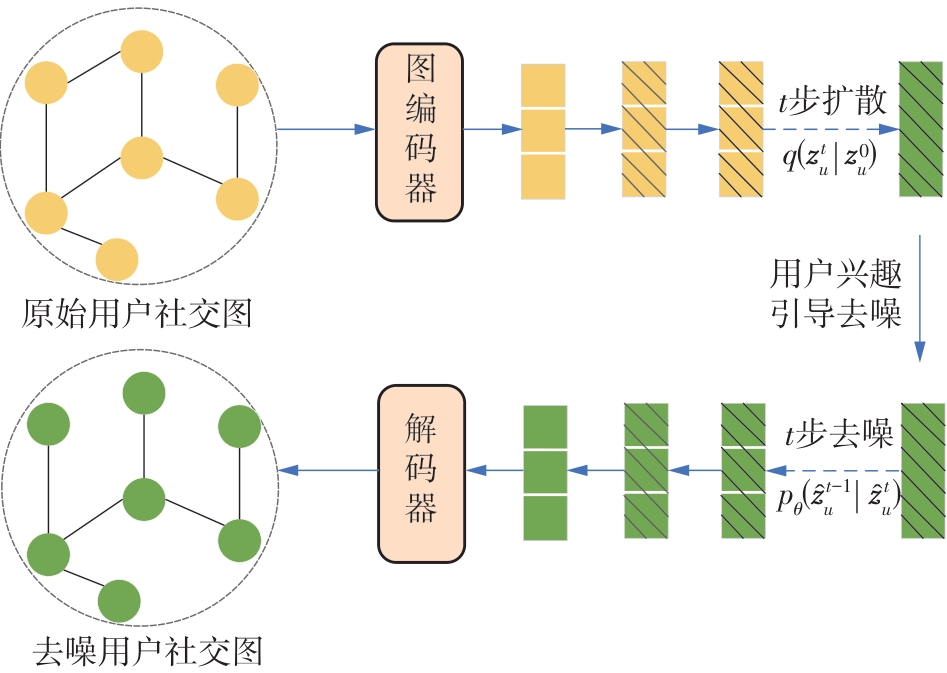
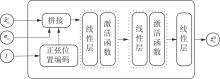
Fig.3
Denoising module"
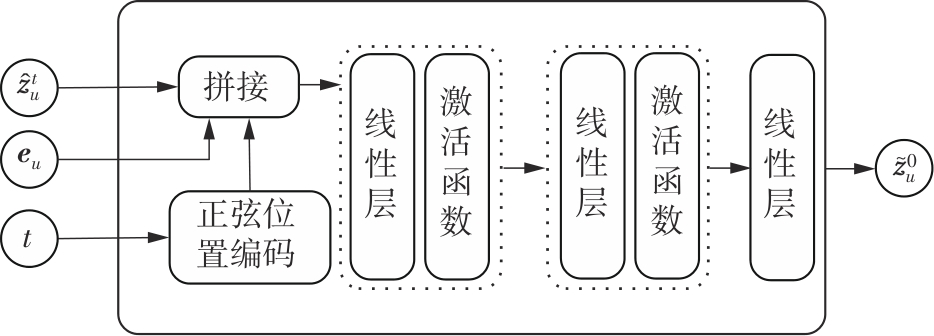
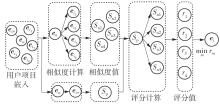
Fig.4
Process of adaptive negative sampling"
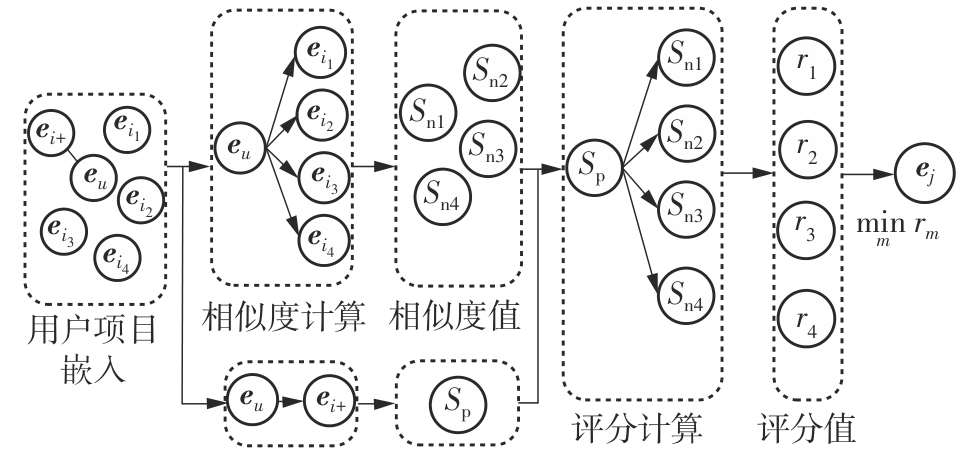

Table 1
Statistics of three datasets"
| 数据集 | 数量 | 稠密度/% | ||||
|---|---|---|---|---|---|---|
| 用户 | 项目 | 交互 | 社交 | 交互 | 社交 | |
| Douban | 12 910 | 22 291 | 591 296 | 169 150 | 0.21 | 0.10 |
| Epinions | 22 160 | 296 269 | 922 116 | 355 754 | 0.01 | 0.07 |
| Yelp | 30 934 | 22 123 | 441 304 | 1 001 010 | 0.06 | 0.10 |
Table 2
Performance comparison of six models"
| 模型 | R@20 | NDCG@20 | ||||
|---|---|---|---|---|---|---|
| Douban | Epinions | Yelp | Douban | Epinions | Yelp | |
| GDMSR | 0.140 9 | 0.039 1 | 0.096 3 | 0.094 8 | 0.023 6 | 0.050 6 |
| DSL | 0.127 9 | 0.052 4 | 0.100 4 | 0.083 3 | 0.031 3 | 0.054 9 |
| SHaRe | 0.146 5 | 0.048 0 | 0.093 3 | 0.097 3 | 0.027 8 | 0.049 3 |
| GBSR | 0.165 5 | 0.054 4 | 0.115 7 | 0.115 1 | 0.032 0 | 0.063 4 |
| HDSR | 0.166 8 | 0.060 8 | 0.119 6 | 0.115 7 | 0.035 9 | 0.065 1 |
| SARec | 0.186 8 | 0.070 3 | 0.136 1 | 0.127 9 | 0.039 9 | 0.074 8 |
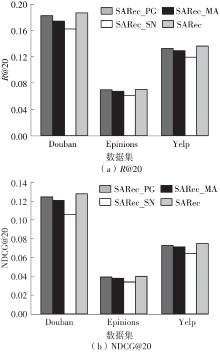
Fig.5
Effectiveness analysis of key components of SARec model"
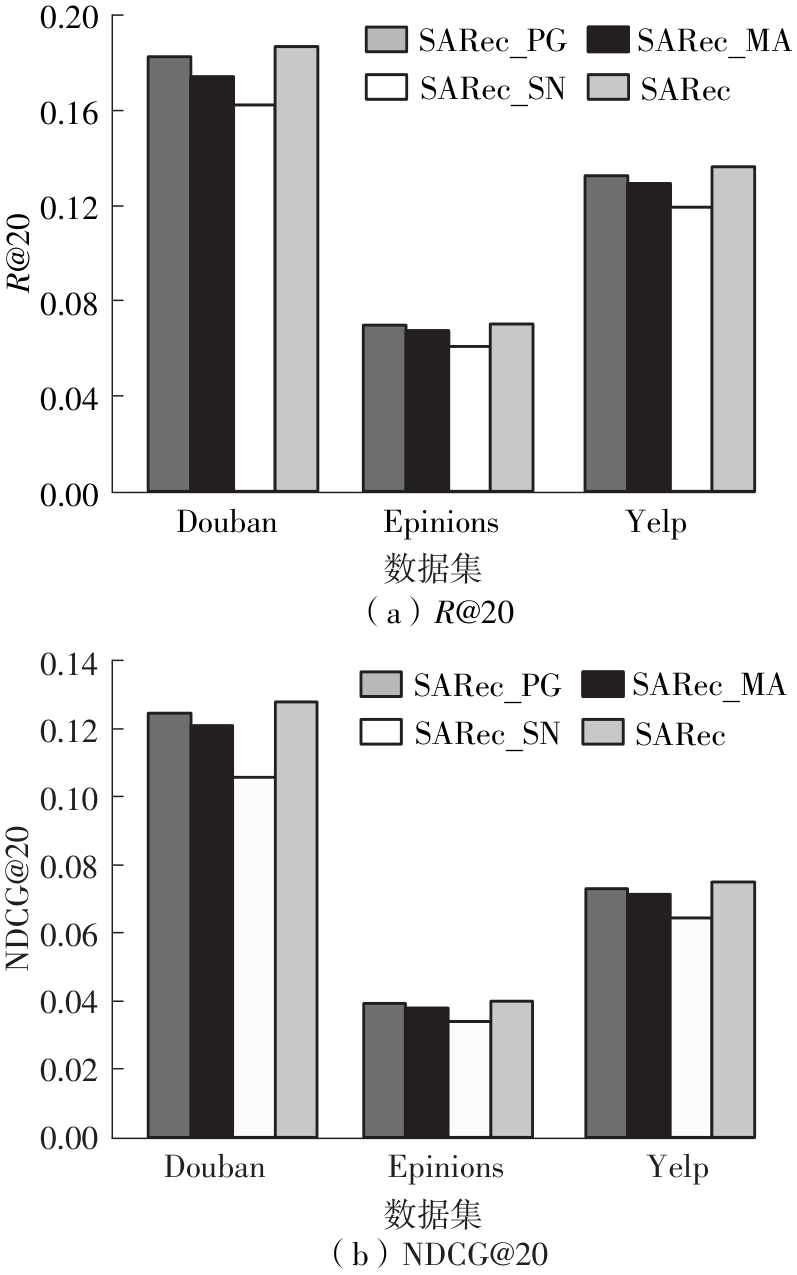
Table 3
Effect of parameter λ2 on the performance of SARec model"
| λ2 | R@20 | NDCG@20 |
|---|---|---|
| 0.001 | 0.157 2 | 0.101 7 |
| 0.010 | 0.164 8 | 0.107 5 |
| 0.050 | 0.186 9 | 0.128 3 |
| 0.100 | 0.181 5 | 0.124 9 |
| 0.500 | 0.122 6 | 0.069 2 |
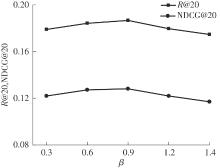
Fig.6
Effect of parameter β on the performance of SARec model"
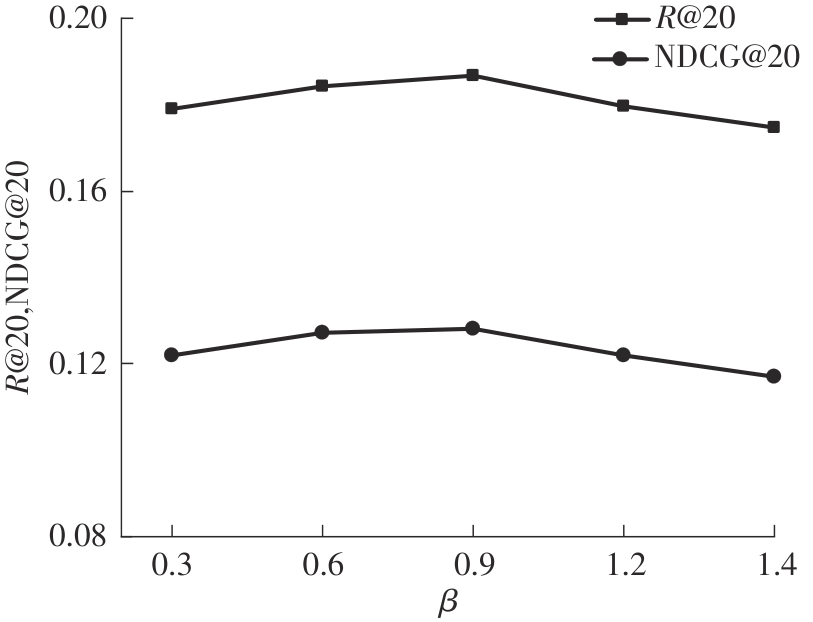
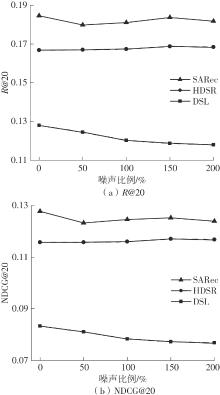
Fig.7
Effect of noise ratios on the performance of SARec model"
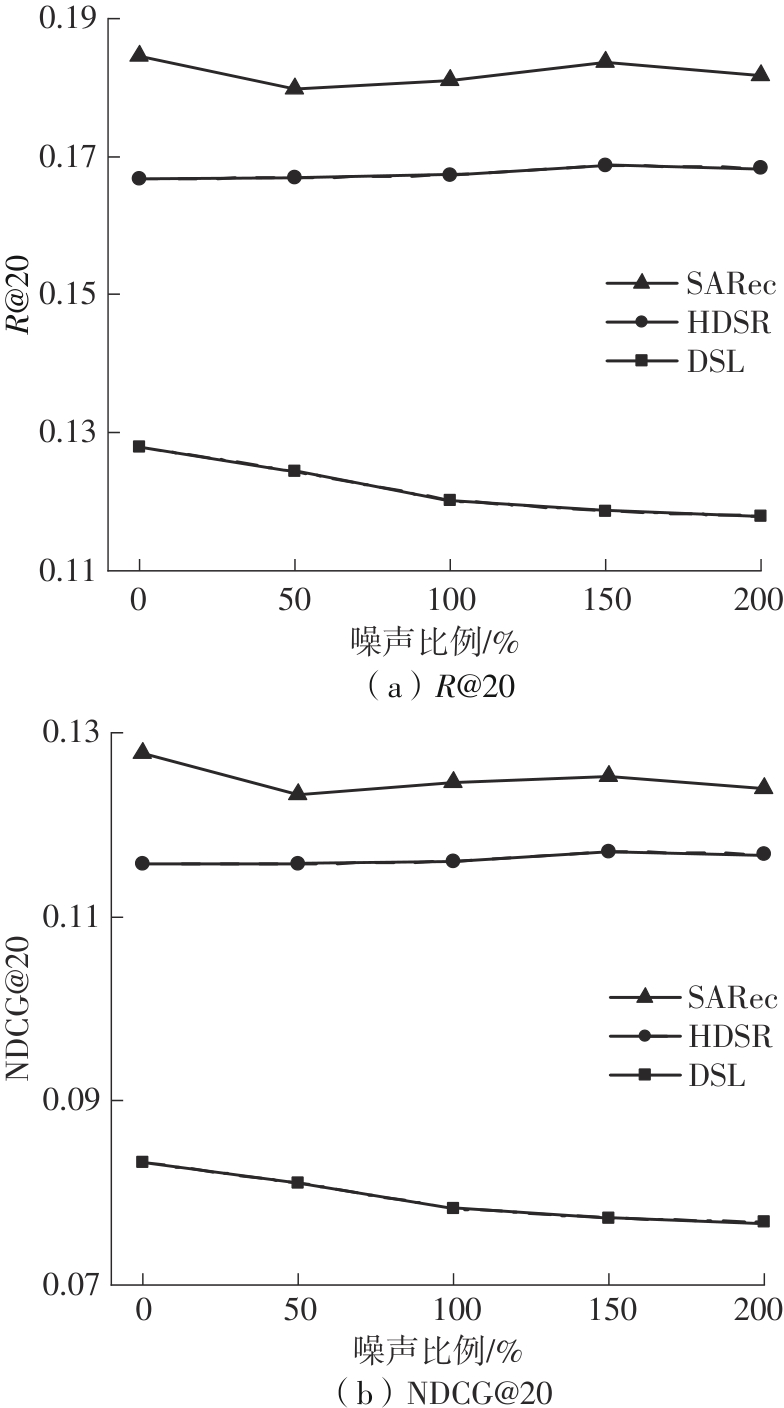
Table 4
Training time per epoch and testing time of different models"
| 模型 | 训练时间/s | 测试时间/s | ||||
|---|---|---|---|---|---|---|
| Douban | Epinions | Yelp | Douban | Epinions | Yelp | |
| DSL | 36.04 | 72.57 | 21.08 | 3.02 | 5.15 | 2.56 |
| GBSR | 24.92 | 44.75 | 21.92 | 2.50 | 4.65 | 1.85 |
| HDSR | 23.38 | 43.96 | 13.90 | 3.95 | 7.58 | 2.63 |
| SARec | 39.72 | 74.41 | 25.24 | 4.78 | 8.18 | 3.31 |
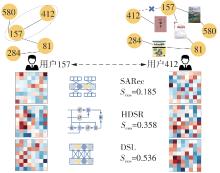
Fig.8
Case study on Douban dataset"
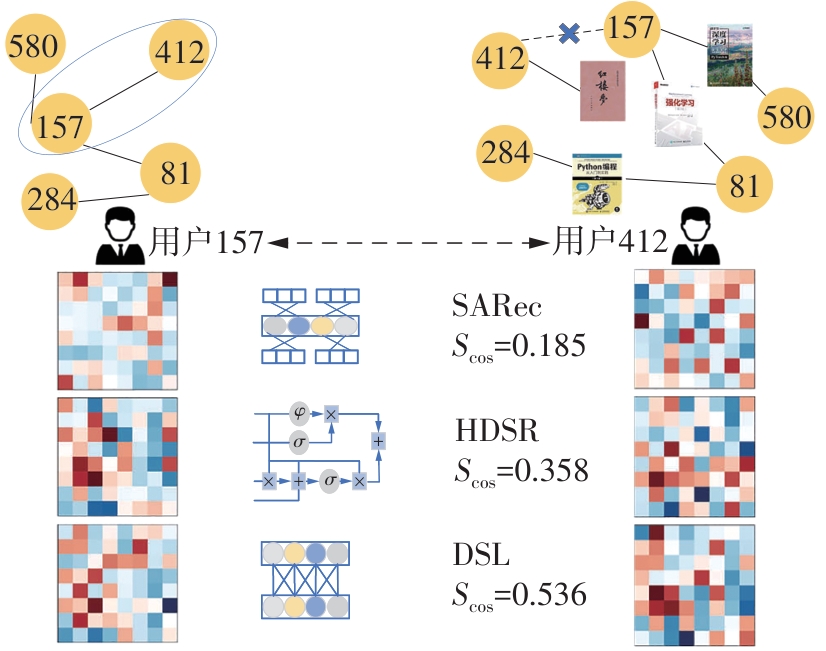
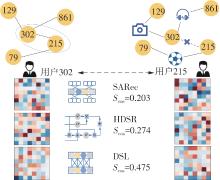
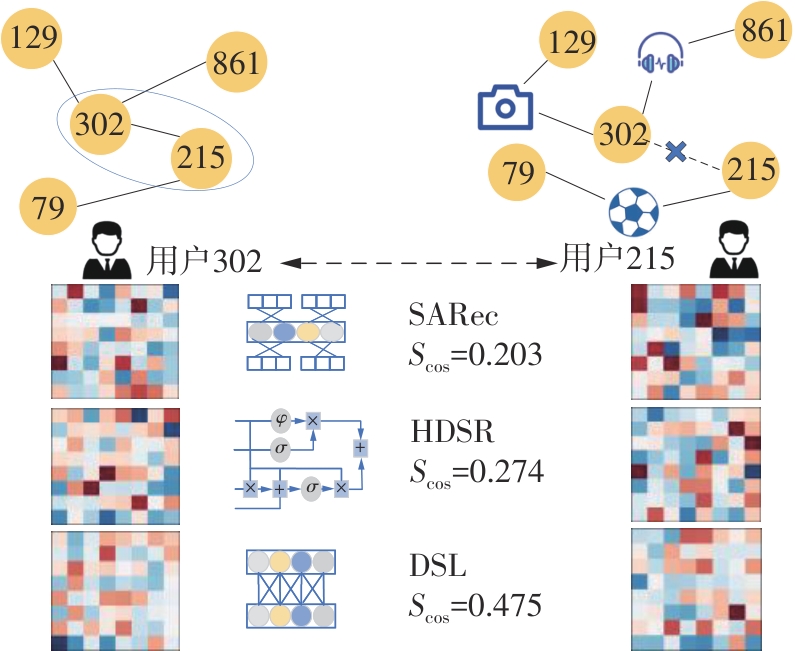
Fig.9
Case study on Epinions dataset"
| [1] | 蔡晓东,周青松,叶青 .基于动态邻域采样的社交推荐模型[J].华南理工大学学报(自然科学版),2024,52(2):32-41. |
| CAI Xiaodong, ZHOU Qingsong, YE Qing .Social reco-mmendation model based on dynamic neighborhood sampling[J].Journal of South China University of Techno-logy (Natural Science Edition),2024,52(2):32-41. | |
| [2] | MCPHERSON M, SMITH L, COOK J M .Birds of a feather:homophily in social networks[J].Annual Review of Sociology,2001,27(1):415-444. |
| [3] | SHARMA K, LEE Y C, NAMBI S,et al .A survey of graph neural networks for social recommender systems [J].ACM Computing Survey,2024,56(10):1-34. |
| [4] | ANAND V, MAURYA A K .A survey on recommender systems using graph neural network[J].ACM Transactions on Information Systems,2025,43(1):1-49. |
| [5] | LIAO J, ZHOU W, LUO F,et al .SocialLGN:light graph convolution network for social recommendation[J].Information Sciences,2022,589(15):595-607. |
| [6] | XIA L, SHAO Y, HUANG C,et al .Disentangled graph social recommendation[C]∥ Proceedings of 2023 IEEE the 39th International Conference on Data Engineering.Anaheim:IEEE,2023:2332-2344. |
| [7] | YU Z, WANG Y, HU M,et al .Integrating social and knowledge graphs in GNN-based recommender systems [C]∥ Proceedings of 2024 International Joint Conference on Neural Networks.Yokohama:IEEE,2024:1-8. |
| [8] | JIANG W, GAO X, XU G,et al .Challenging low homophily in social recommendation[C]∥ Proceedings of the ACM Web Conference 2024.Singapore:ACM,2024:3476-3484. |
| [9] | HU Z, NAKAGAWA S, ZHUANG Y,et al .Hierarchical denoising for robust social recommendation[J].IEEE Transactions on Knowledge and Data Engineering,2025, 37(2):739-753. |
| [10] | QUAN Y, DING J, GAO C .Robust preference-guided denoising for graph based social recommendation [C]∥ Proceedings of the ACM Web Conference 2023.Austin:ACM,2023:1097-1108. |
| [11] | MA W, WANG Y, ZHU Y,et al .MADM:a modela-gnostic denoising module for graph-based social recommendation[C]∥ Proceedings of the 17th ACM Inter-national Conference on Web Search and Data Mining.Merida:ACM,2024:501-509. |
| [12] | YANG Y, WU L, WANG Z,et al .Graph bottlenecked social recommendation[C]∥ Proceedings of the 30th ACM SIGKDD Conference on Knowledge Discovery and Data Mining.Barcelona:ACM,2024:3853-3862. |
| [13] | LAI R, CHEN L, ZHAO Y,et al .Disentangled negative sampling for collaborative filtering[C]∥ Proceedings of the 16th ACM International Conference on Web Search and Data Mining.Singapore:ACM,2023:96-104. |
| [14] | ZHAO Y, CHEN R, LAI R,et al .Augmented negative sampling for collaborative filtering[C]∥ Procee-dings of the 17th ACM Conference on Recommender Systems.Singapore: ACM,2023:256-266. |
| [15] | 马晓亮,高洁,刘英,等 .基于意图理解驱动的客服知识推荐大模型构建[J].华南理工大学学报(自然科学版),2025,53(3):40-49. |
| MA Xiaoliang, GAO Jie, LIU Ying,et al .Customer service knowledge recommendation large model construction driven by intent understanding[J].Journal of South China University of Technology (Natural Science Edition),2025,53(3):40-49. | |
| [16] | ZHAO J, WANG W, XU Y,et al .Denoising diffusion recommender model[C]∥ Proceedings of the 47th International ACM SIGIR Conference on Research and Development in Information Retrieval.Washington:ACM,2024:1370-1379. |
| [17] | LI A, BO Y .Dual graph denoising model for social recommendation[C]∥ Proceedings of the ACM on Web Conference 2025.Sydney:ACM,2025:347-356. |
| [18] | SUN Y, SUN Z, DU Y,et al .Model-agnostic social network refinement with diffusion models for robust social recommendation[C]∥ Proceedings of the ACM on Web Conference 2025.Sydney:ACM,2025:370-378. |
| [19] | YANG Z, DING M, HUNAG T,et al .Does negative sample matter?A review with insights into its theory and applications[J].IEEE Transactions on Pattern Analysis and Machine Intelligence,2024,46(8):5692-5710. |
| [20] | WANG T, XIA L, HUANG C,et al .Denoised self-augmented learning for social recommendation[C]∥ Proceedings of the 32th International Joint Conference on Artificial Intelligence.San Francisco:Morgan Kaufmann,2023:2324-2331. |
| [1] | WANG Qingrong, GAO Huanyi, ZHU Changfeng, HE Runtian, MU Zhuangzhuang. Traffic Congestion Prediction Based on Dynamic Adaptive Gated Graph Convolutional Networks [J]. Journal of South China University of Technology(Natural Science Edition), 2025, 53(9): 31-47. |
| [2] | LIU Huiting, LIU Shaoxiong, WANG Jiale, ZHAO Peng. Deep Reinforcement Learning Recommendation Model Based on Multi-Interest Contrast [J]. Journal of South China University of Technology(Natural Science Edition), 2025, 53(9): 11-21. |
| [3] | LU Lu, WAN Tong. A Method for Software Vulnerability Detection via Path Representations and Pretrained Model [J]. Journal of South China University of Technology(Natural Science Edition), 2025, 53(5): 56-65. |
| [4] | HU Guanghua, DAI Zhigang, WANG Qinghui. Machining Feature Recognition Method of B-Rep Model Based on Graph Neural Network [J]. Journal of South China University of Technology(Natural Science Edition), 2025, 53(5): 20-31. |
| [5] | CAO Ruifen, HU Weiling, LI Qiangsheng, BIN Yannan, ZHENG Chunhou. Prediction Method of IL-6 Inducing Peptides Based on Graph Neural Network [J]. Journal of South China University of Technology(Natural Science Edition), 2025, 53(5): 109-117. |
| [6] | CAI Xiaodong, DONG Lifang, HUANG Yeyang, ZHOU Li. Contrastive Learning Model Based on Text-Visual and Information Entropy Minimization [J]. Journal of South China University of Technology(Natural Science Edition), 2025, 53(3): 50-56. |
| [7] | CAI Xiaodong, ZHOU Qingsong, YE Qing. Social Recommendation Model Based on Dynamic Neighborhood Sampling [J]. Journal of South China University of Technology(Natural Science Edition), 2024, 52(2): 32-41. |
| [8] | YE Feng, CHEN Biao, LAI Yizong. Contrastive Knowledge Distillation Method Based on Feature Space Embedding [J]. Journal of South China University of Technology(Natural Science Edition), 2023, 51(5): 13-23. |
| [9] | ZHAO Rongchao, WU Baili, CHEN Zhuyun, et al. Graph Neural Network for Fault Diagnosis with Multi-Scale Time-Spatial Information Fusion Mechanism [J]. Journal of South China University of Technology(Natural Science Edition), 2023, 51(12): 42-52. |
| [10] | XU Lunhui, YU Jiaxin, PEI Mingyang, et al. Repositioning Strategy for Ride-Hailing Vehicles Based on Geometric Road Network Structure and Reinforcement Learning [J]. Journal of South China University of Technology(Natural Science Edition), 2023, 51(10): 99-109. |
| [11] | LU Yiqin, PAN Zhoushuang, ZHANG Yang, et al. Knowledge Graph Completion Method Based on Interactively Connected Graph Attention Network [J]. Journal of South China University of Technology(Natural Science Edition), 2022, 50(12): 13-19. |
| [12] | CAI Xiaodong, ZENG Zhiyang . AFGSRec: A Social Recommendation Model Based on Adaptive Fusion of Global Collaborative Features [J]. Journal of South China University of Technology(Natural Science Edition), 2022, 50(12): 71-79. |
| [13] | DU Qiliang, XIANG Zhaoyi, TIAN Lianfang, et al. Two-Stream Adaptive Attention Graph Convolutional Networks for Action Recognition [J]. Journal of South China University of Technology(Natural Science Edition), 2022, 50(12): 20-29. |
| [14] | CHEN Guohua, HU Xuewei, ZHOU Lixing, et al. Inversion Method Based on Chicken Swarm Optimization for Hazardous Chemicals Leakage and Diffusion Accident [J]. Journal of South China University of Technology (Natural Science Edition), 2021, 49(9): 56-64. |
| [15] |
LI Jiachun XIONG Dongqing CAO Jianzhou.
Colocation Privacy Protection Method in Mobile Social Networks
|
| Viewed | ||||||
|
Full text |
|
|||||
|
Abstract |
|
|||||