Journal of South China University of Technology(Natural Science Edition) ›› 2025, Vol. 53 ›› Issue (11): 62-76.doi: 10.12141/j.issn.1000-565X.240388
• Intelligent Transportation System • Previous Articles Next Articles
Research on the Mechanism Influencing the Coupling Coordination Between Road Significance and Traffic State
DENG Yajuan, SONG Siliang, CUI Liangbin, LI Yu, NIU Xiaolu, WU Qi
- School of Transportation Engineering,Chang’an University,Xi’an 710064,Shaanxi,China
-
Received:2024-07-28Online:2025-11-25Published:2025-05-09 -
About author:邓亚娟(1979—),女,博士,教授,主要从事多模式交通出行研究。E-mail: yjdeng@chd.edu.cn -
Supported by:the National Natural Science Foundation of China(52272316);the Key Research and Deve-lopment Program of Shaanxi Province(2023-YBGY-138)

CLC Number:
Cite this article
DENG Yajuan, SONG Siliang, CUI Liangbin, LI Yu, NIU Xiaolu, WU Qi. Research on the Mechanism Influencing the Coupling Coordination Between Road Significance and Traffic State[J]. Journal of South China University of Technology(Natural Science Edition), 2025, 53(11): 62-76.
share this article

Table 1
Structure of taxi GPS data"
| 字段 | 数据实例 | 字段 | 数据实例 | ||
|---|---|---|---|---|---|
| 车牌号 | 陕AD***** | 经度 | 108.88 | ||
| 时间 | Mon Nov 04 08:33:14 CST 2019 | 纬度 | 34.29 | ||
| 订单状态 | 0 | 电量 | 0 | ||
| 空重 | 1 | 温度 | 0 | ||
| 是否任务 | 0 | 订单编号 | 0 | ||
| gps | 0 | 汽车状态 | 0 | ||
| 营运状态 | 0 | 服务编号 | 0 | ||
| 点火状态 | 1 | 角度 | 10 | ||
| 速度 | 58 | 是否实时传输 | 1 | ||
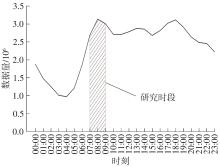
Fig.1
Time distribution of GPS data amount"
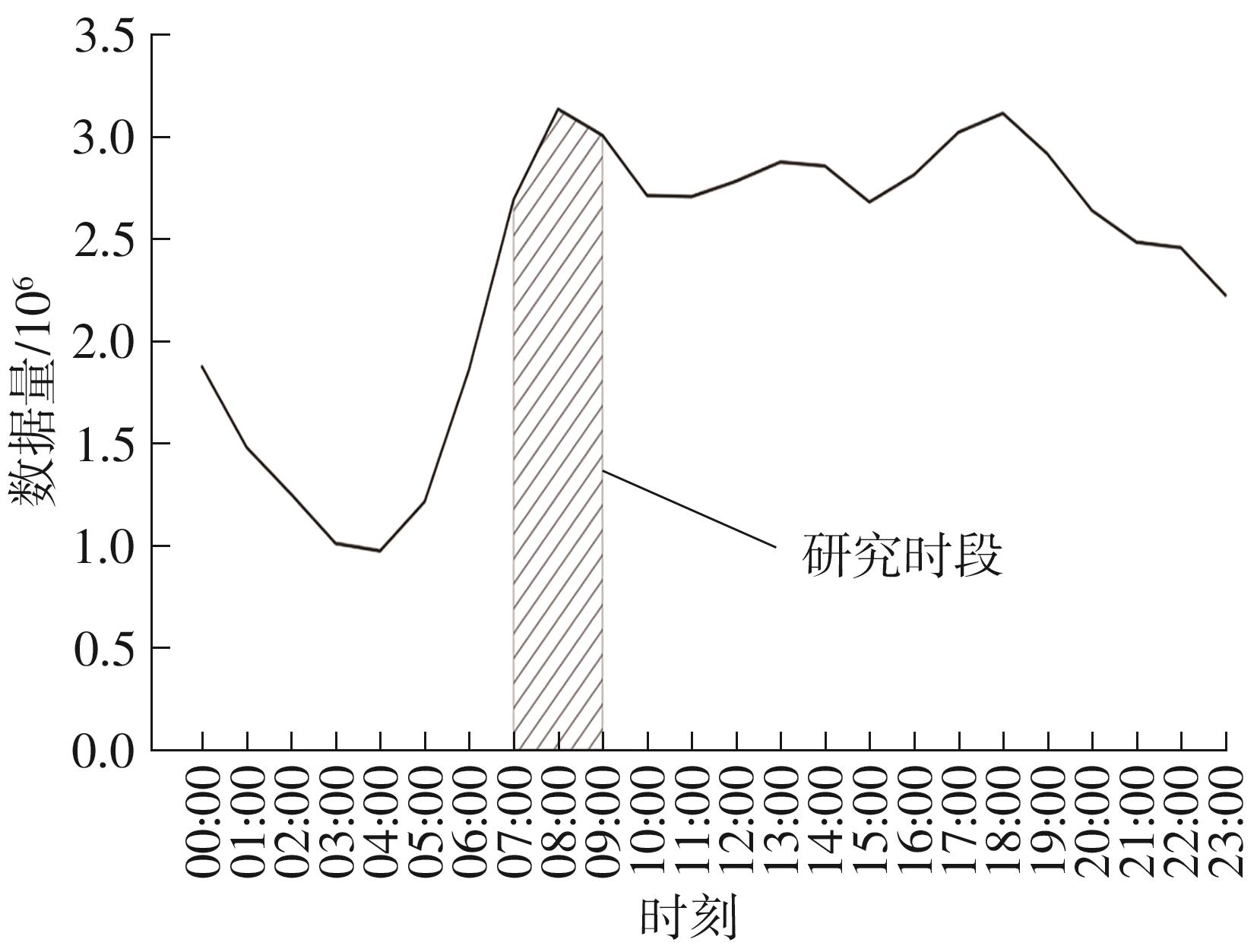
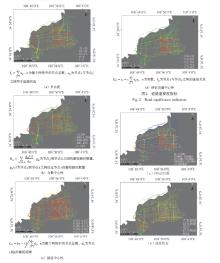
Fig.2
Road significance indicators"
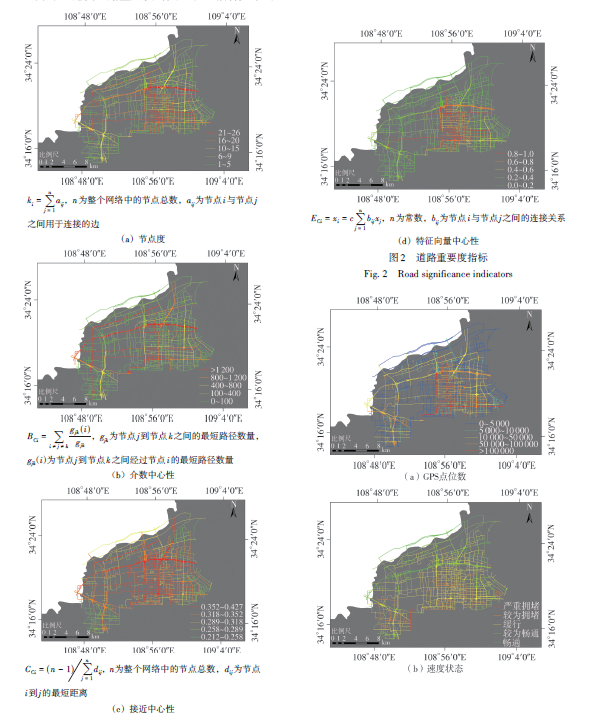
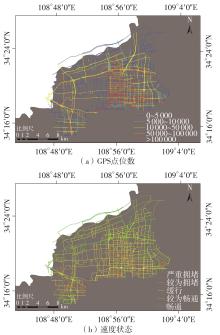
Fig.3
Distribution of traffic states"
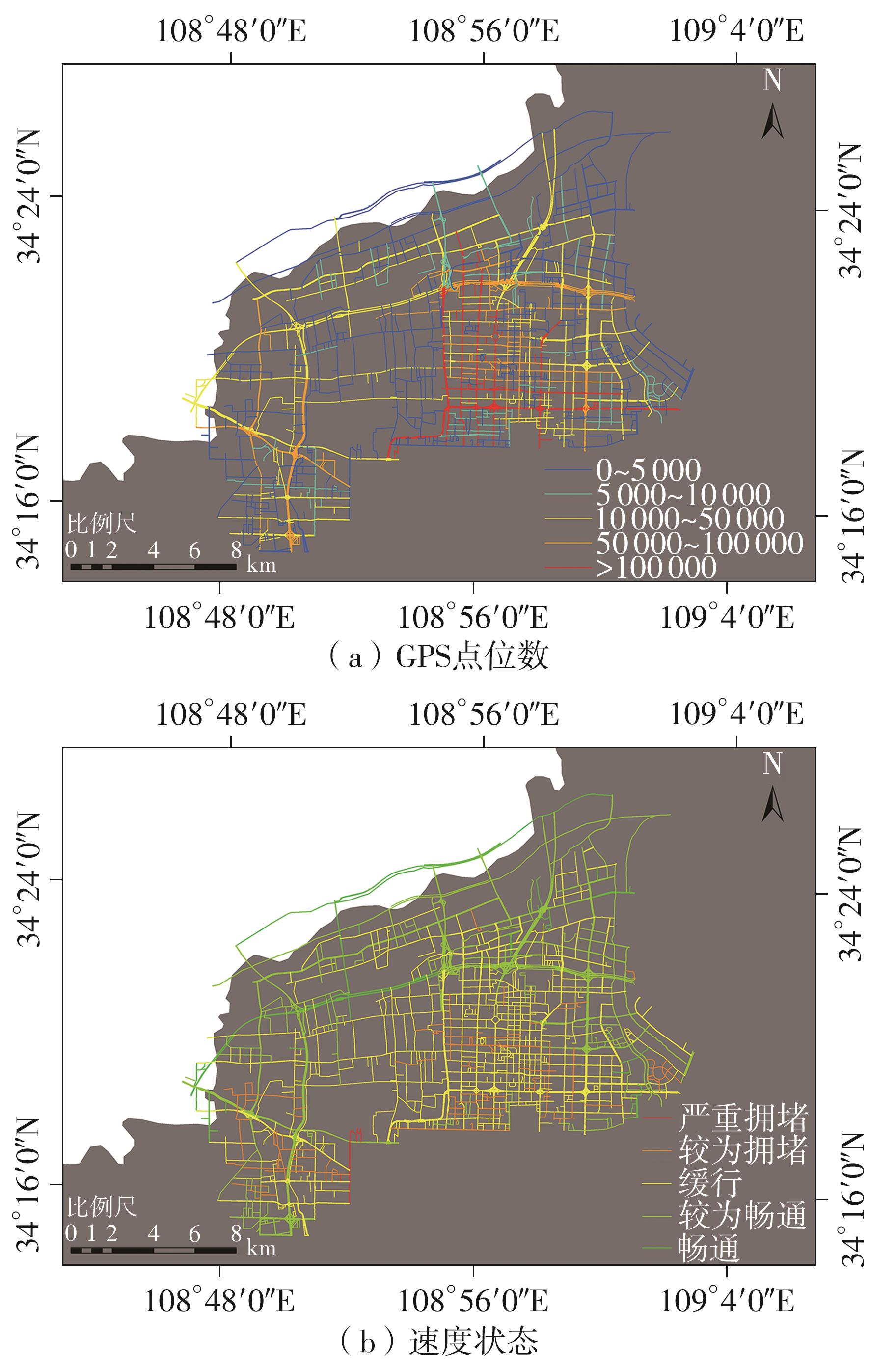
Table 2
Description of research variables"
| 类别 | 变量 | VIF值 | 描述 |
|---|---|---|---|
| 因变量 | 耦合协调度 | ||
| 道路特征 | 道路等级 | 2.814 | 道路等级,包括快速路、主干路、次干路和支路4个等级 |
| 车道数 | 5.568 | 道路的车道数量,表征道路宽度 | |
| 道路长度 | 2.249 | 道路的长度 | |
| 分隔型式 | 3.053 | 0表示无标线、无物理分隔;1表示标线分隔对向和机非车流;2表示标线分隔对向车流,物理分隔机非车流;3表示物理分隔对向车流,标线分隔机非车流;4表示物理分隔对向和机非车流 | |
| 交通环境 | 交叉口数量 | 1.978 | 道路交叉口数量 |
| 绿化面积[ | 3.094 | 道路沿线20 m缓冲区内的绿化面积 | |
| 公交站点数量 | 3.478 | 道路公交站点数量 | |
| 每千米公交站点数量 | 2.569 | 道路沿线的公交站点数量与道路长度之比 | |
| 土地利用 | 工业用地强度[ | 6.807 | 道路沿线50 m缓冲区内工业用地的面积与50 m缓冲区面积之比 |
| 公共管理用地强度 | 3.305 | 道路沿线50 m缓冲区内公共管理用地的面积与50 m缓冲区面积之比 | |
| 居住用地强度 | 8.636 | 道路沿线50 m缓冲区内居住用地的面积与50 m缓冲区面积之比 | |
| 商业用地强度 | 3.059 | 道路沿线50 m缓冲区内商业用地的面积与缓冲区面积之比 | |
| 土地利用混合度 | 2.073 |
Table 3
Statistical results of the degree of coupling coordination"
| 耦合协调程度 | 介数中心性 | 接近中心性 | 节点度 | 特征向量中心性 | ||||
|---|---|---|---|---|---|---|---|---|
| 频数 | 累积百分比/% | 频数 | 累积百分比/% | 频数 | 累积百分比/% | 频数 | 累积百分比/% | |
| 极度失调 | 23 | 11.44 | 1 | 0.50 | 1 | 0.5 | 1 | 0.50 |
| 严重失调 | 79 | 50.75 | 5 | 2.99 | 2 | 1.49 | 16 | 8.46 |
| 中度失调 | 47 | 74.13 | 13 | 9.45 | 73 | 37.81 | 82 | 49.25 |
| 轻度失调 | 19 | 83.58 | 88 | 53.23 | 65 | 70.15 | 53 | 75.62 |
| 濒临失调 | 13 | 90.05 | 47 | 76.62 | 23 | 81.59 | 21 | 86.07 |
| 勉强协调 | 8 | 94.03 | 23 | 88.06 | 17 | 90.05 | 11 | 91.54 |
| 初级协调 | 8 | 98.01 | 16 | 96.02 | 12 | 96.02 | 9 | 96.02 |
| 中级协调 | 2 | 99.00 | 3 | 97.51 | 3 | 97.51 | 3 | 97.51 |
| 良好协调 | 1 | 99.50 | 3 | 99.00 | 3 | 99.00 | 3 | 99.00 |
| 优质协调 | 1 | 100.00 | 2 | 100.00 | 2 | 100.00 | 2 | 100.00 |
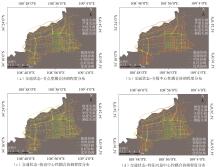
Fig.4
Distribution of the degree of multi-dimension coupling and coordination between traffic state and road significance"
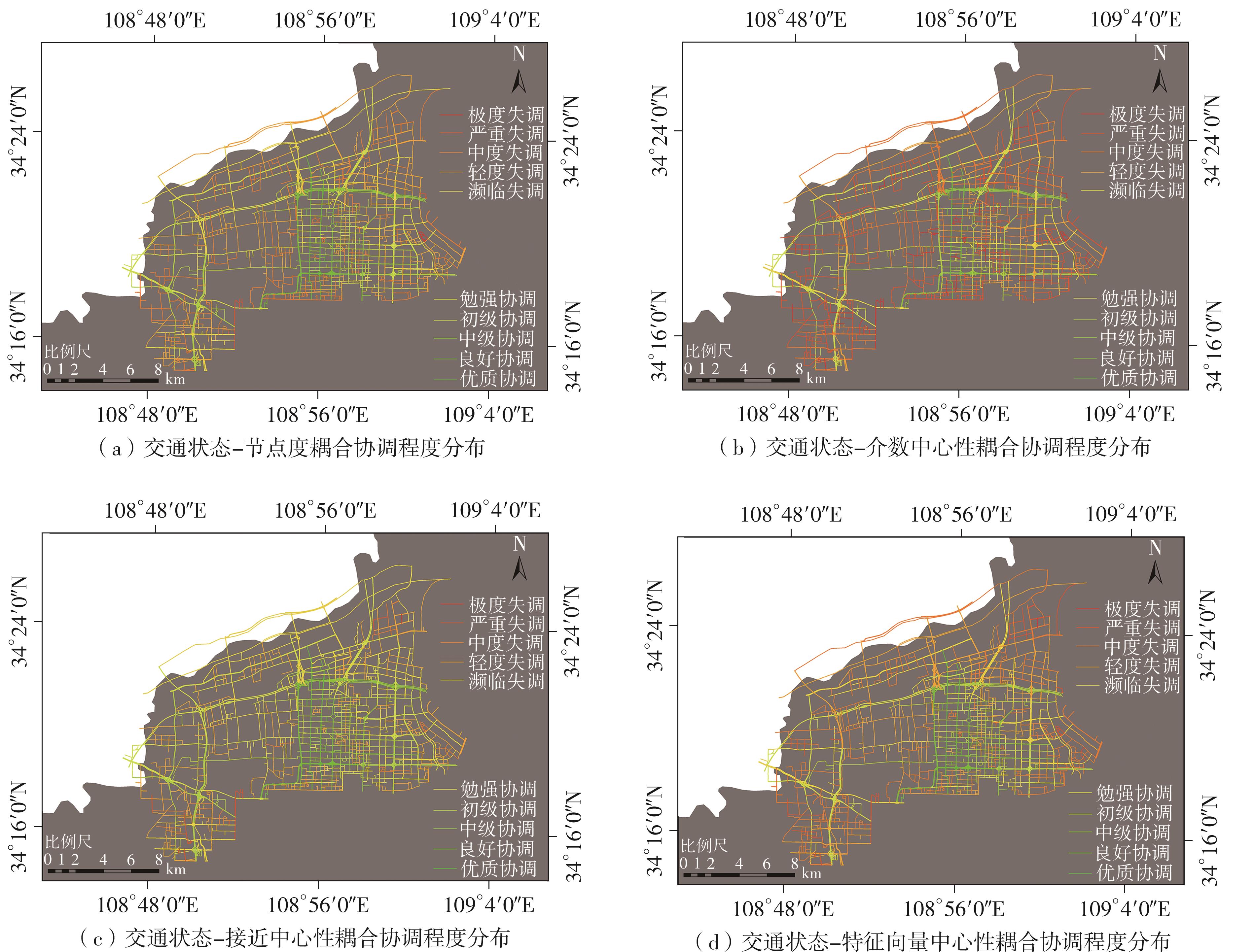
Table 4
Comparison of model effects of four regression methods"
| 回归方法 | 介数中心性 | 接近中心性 | 节点度 | 特征向量中心性 | ||||||||
|---|---|---|---|---|---|---|---|---|---|---|---|---|
| MAE | MSE | R2 | MAE | MSE | R2 | MAE | MSE | R2 | MAE | MSE | R2 | |
| CatBoost | 0.053 | 0.007 | 0.819 | 0.056 | 0.007 | 0.701 | 0.044 | 0.005 | 0.831 | 0.052 | 0.007 | 0.787 |
| 贝叶斯回归 | 0.050 | 0.005 | 0.815 | 0.053 | 0.006 | 0.670 | 0.047 | 0.005 | 0.765 | 0.060 | 0.008 | 0.674 |
| 多元线性回归 | 0.051 | 0.005 | 0.819 | 0.052 | 0.006 | 0.690 | 0.047 | 0.005 | 0.775 | 0.059 | 0.007 | 0.704 |
| 弹性网络回归 | 0.084 | 0.012 | 0.556 | 0.073 | 0.010 | 0.431 | 0.077 | 0.011 | 0.480 | 0.086 | 0.014 | 0.411 |
Fig.5
SHAP values of CatBoost regression for four scenarios"
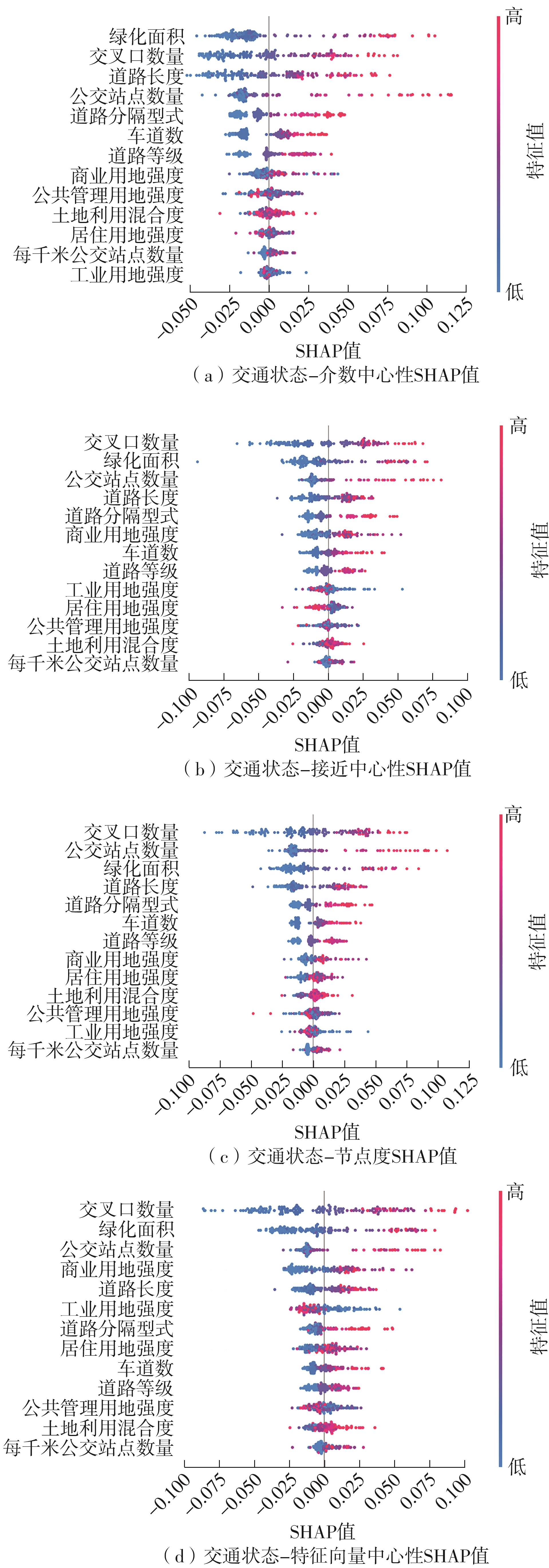
Fig.6
Distribution of forward uncoordinated roads"
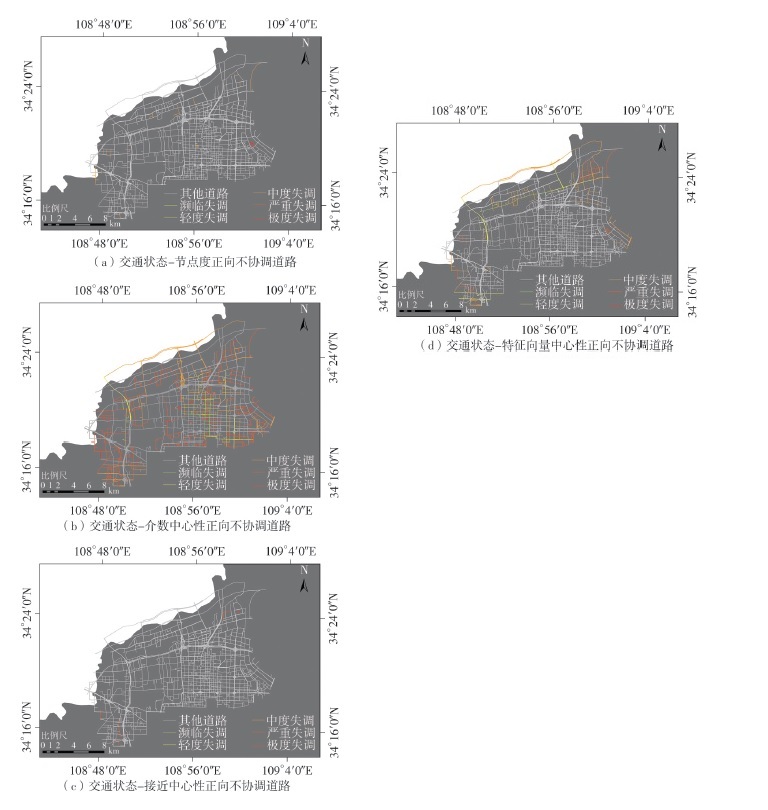
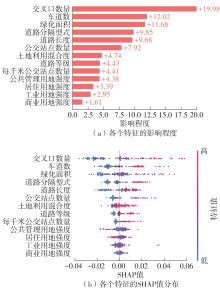
Fig.7
Influence factors analysis of traffic state-betweenness centrality positive incoordination"
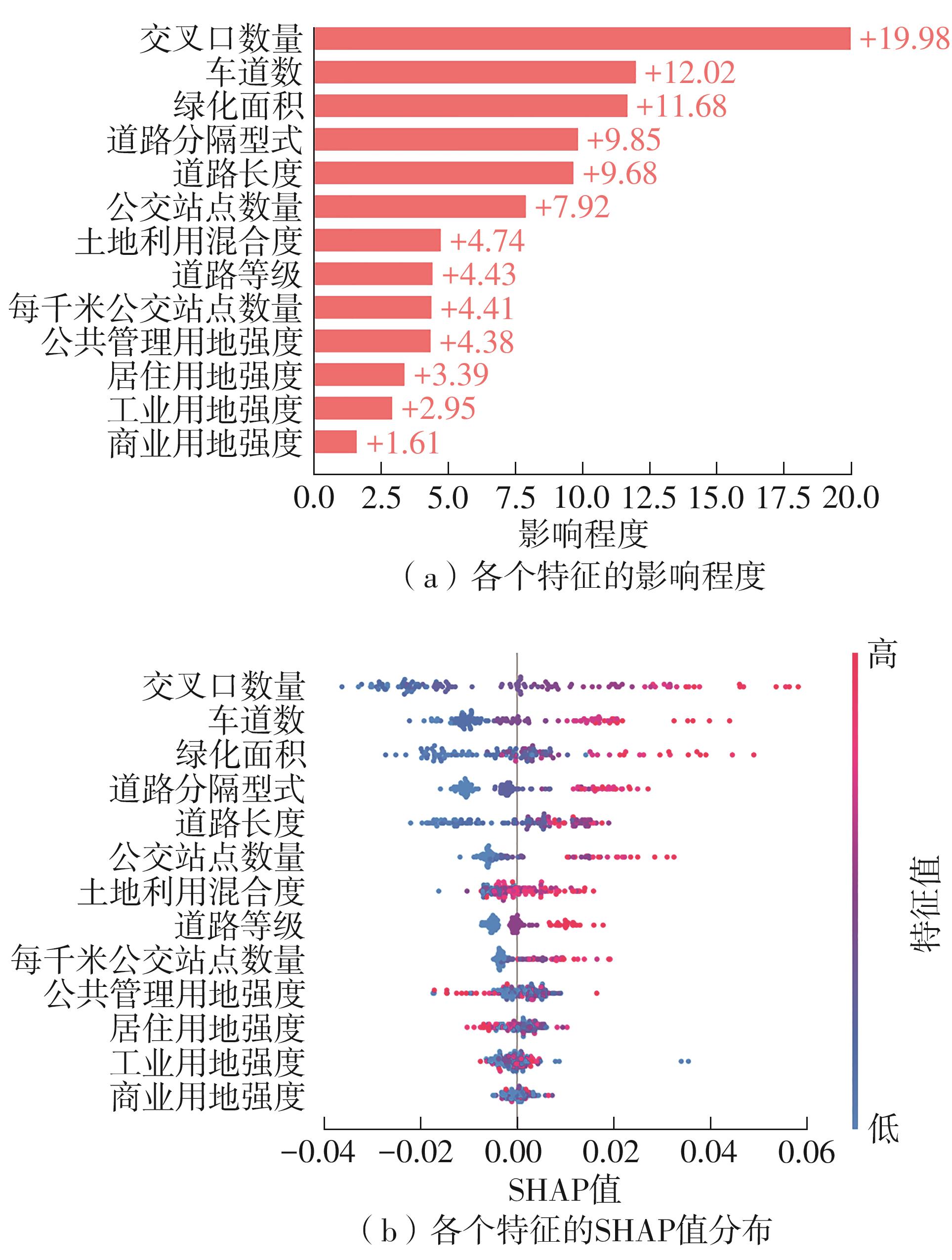
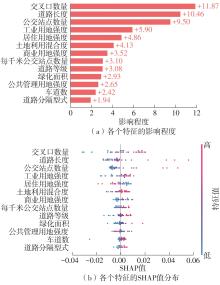
Fig.8
Influence factors analysis of traffic state-eigenvector centrality positive incoordination"
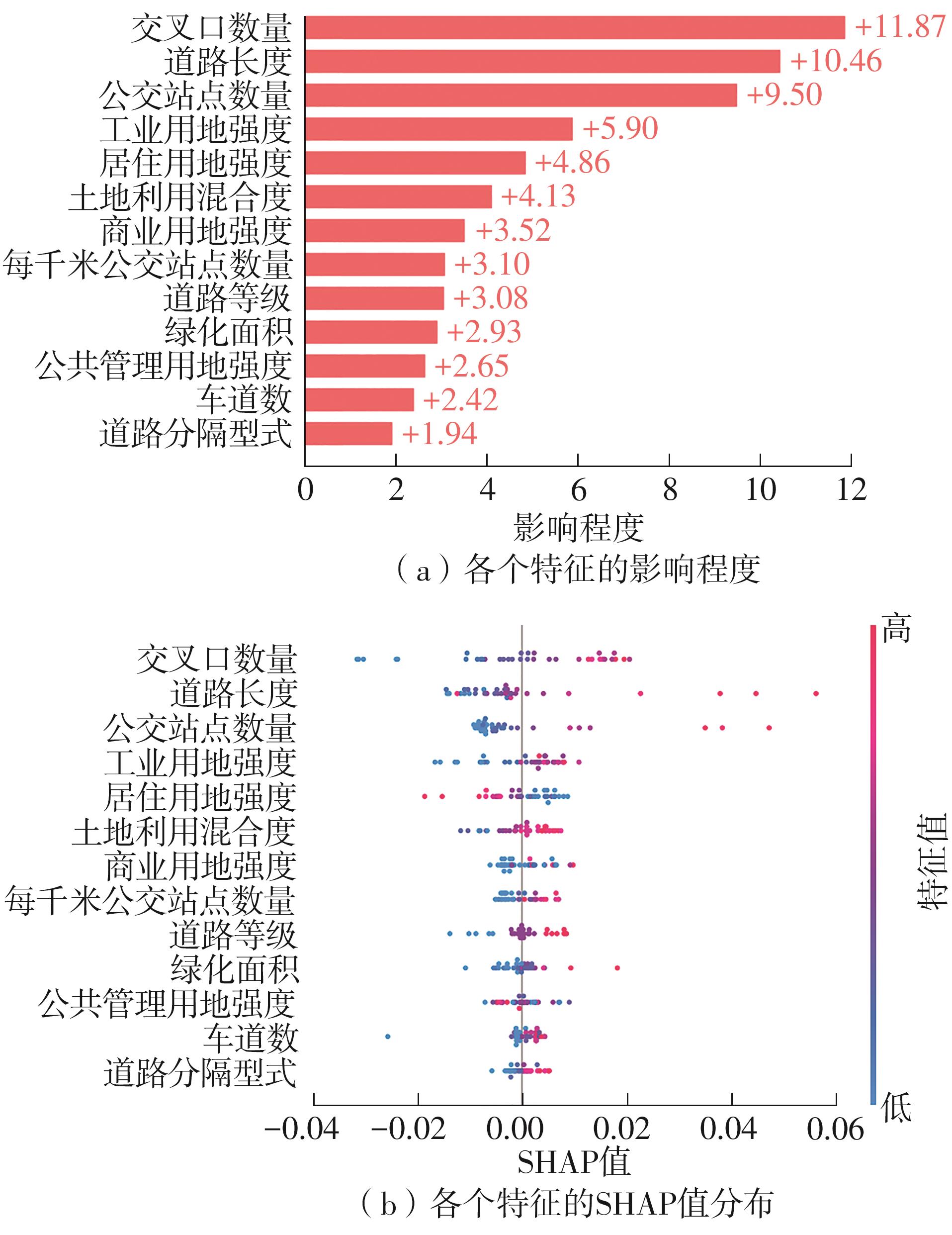
Fig.9
Distribution of negative uncoordinated roads"
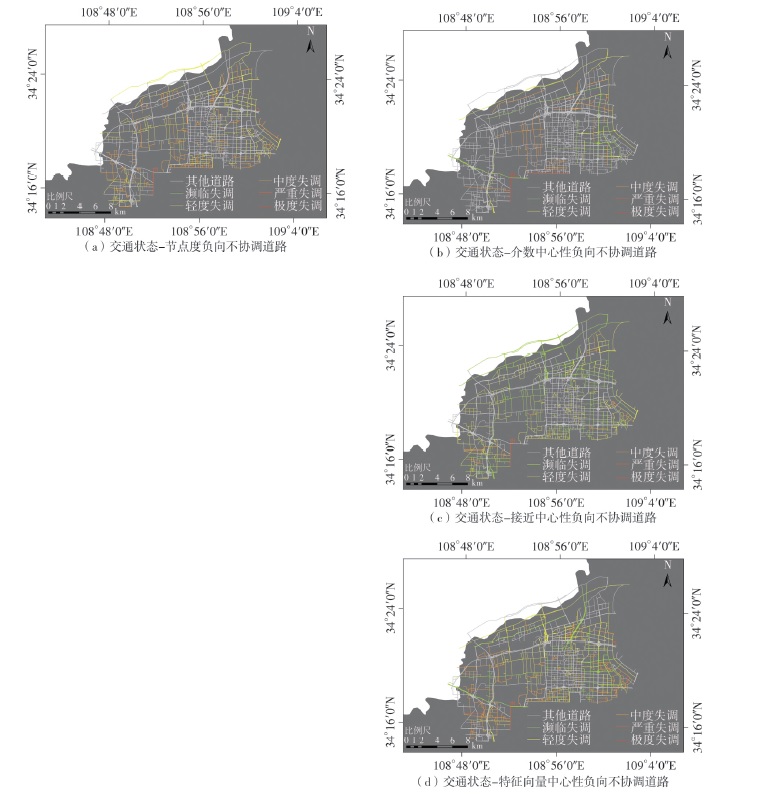
Fig.10
Influence factors analysis of traffic state-closeness centrality negative incoordination"
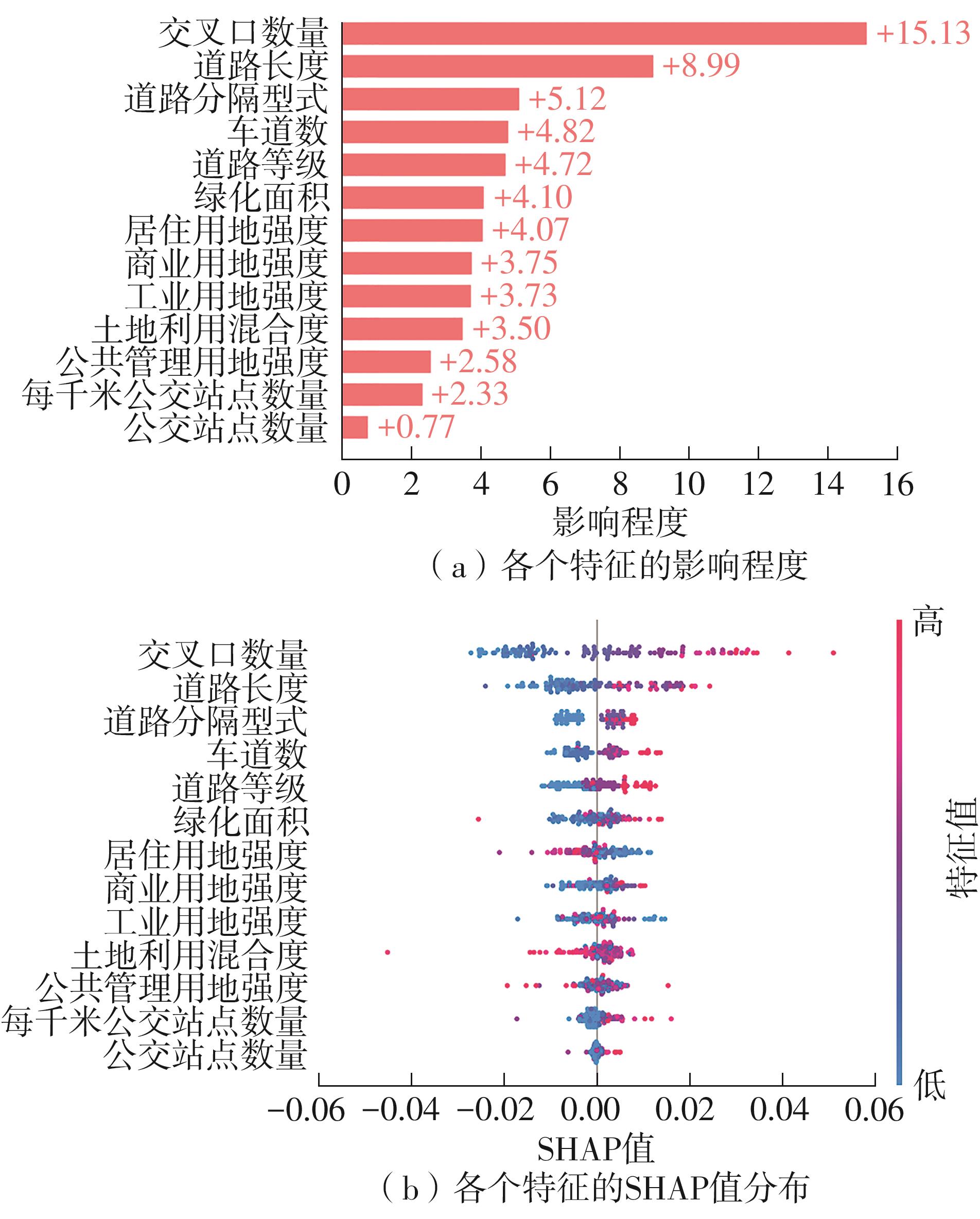
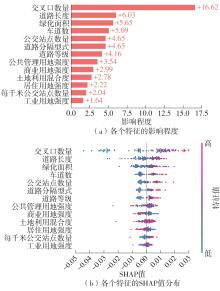
Fig.11
Influence factors analysis of traffic state-node degree negative incoordination"
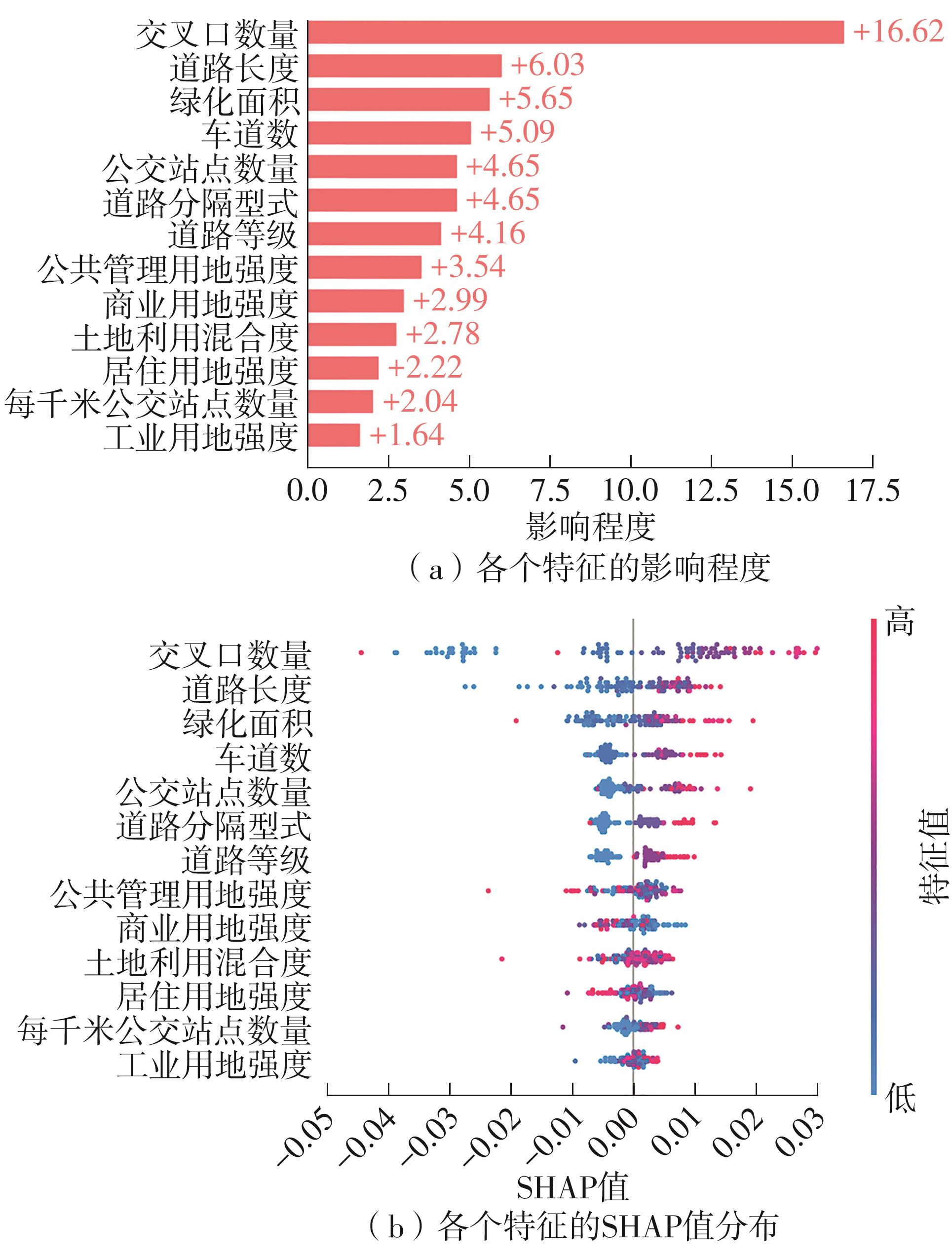
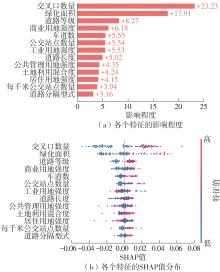
Fig.12
Influence factors analysis of traffic state-eigenvector centrality negative incoordination"
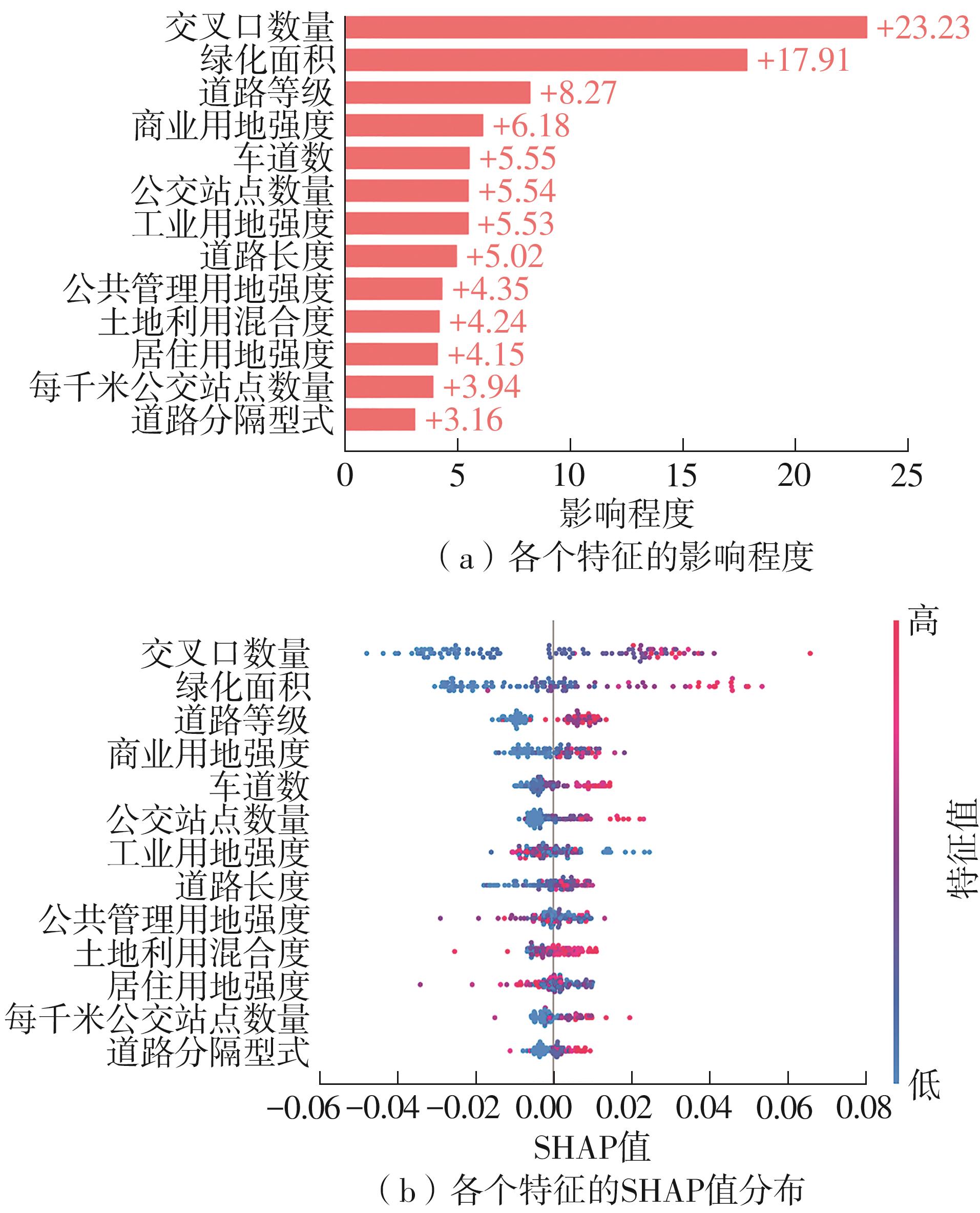
Table 5
Results of Sobol global sensitivity analysis"
| 变量名称 | 正向不协调 | 负向不协调 | ||||||||
|---|---|---|---|---|---|---|---|---|---|---|
| 交通状态-介数中心性 | 交通状态-特征向量中心性 | 交通状态-接近中心性 | 交通状态-节点度 | 交通状态-特征向量中心性 | ||||||
| ST | 置信区间/% | ST | 置信区间/% | ST | 置信区间/% | ST | 置信区间/% | ST | 置信区间/% | |
| 道路等级 | 0.033 | 0.41 | 0.030 | 0.45 | 0.079 | 0.90 | 0.030 | 0.42 | 0.205 | 0.87 |
| 车道数 | 0.126 | 1.59 | 0.021 | 0.51 | 0.035 | 0.47 | 0.031 | 0.37 | 0.029 | 0.39 |
| 道路长度 | 0.044 | 0.63 | 0.417 | 3.52 | 0.107 | 1.88 | 0.059 | 0.84 | 0.027 | 0.59 |
| 分隔型式 | 0.034 | 0.43 | 0.004 | 0.05 | 0.252 | 0.40 | 0.022 | 0.38 | 0.008 | 0.11 |
| 交叉口数量 | 0.496 | 4.24 | 0.200 | 2.20 | 0.394 | 3.63 | 0.748 | 6.47 | 0.436 | 4.87 |
| 绿化面积 | 0.149 | 1.86 | 0.017 | 0.27 | 0.015 | 0.21 | 0.075 | 0.73 | 0.192 | 2.54 |
| 公交站点数量 | 0.050 | 0.62 | 0.249 | 2.20 | 0.006 | 0.09 | 0.023 | 0.30 | 0.033 | 0.41 |
| 每千米公交站点数量 | 0.012 | 0.16 | 0.007 | 0.08 | 0.011 | 0.13 | 0.023 | 0.40 | 0.024 | 0.35 |
| 工业用地强度 | 0.027 | 0.31 | 0.029 | 0.43 | 0.019 | 0.28 | 0.030 | 0.45 | 0.018 | 0.28 |
| 公共管理用地强度 | 0.052 | 0.57 | 0.025 | 0.31 | 0.096 | 1.13 | 0.042 | 0.52 | 0.068 | 0.72 |
| 居住用地强度 | 0.016 | 0.19 | 0.026 | 0.36 | 0.112 | 1.32 | 0.049 | 0.89 | 0.059 | 2.36 |
| 商业用地强度 | 0.004 | 0.05 | 0.004 | 0.04 | 0.010 | 0.18 | 0.011 | 0.19 | 0.015 | 0.25 |
| 土地利用混合度 | 0.027 | 0.29 | 0.063 | 0.63 | 0.034 | 3.83 | 0.069 | 1.09 | 0.030 | 0.39 |
| [1] | 石飞,王炜 .城市路网结构分析[J].城市规划,2007(8):68-73. |
| SHI Fei, WANG Wei .Analysis of urban road network structure[J].Urban Planning,2007(8):68-73. | |
| [2] | 杨轸,郑瑞平,巩喆 .路网道路服役性能和交通状态耦合仿真预测[J].吉林大学学报(工学版),2025,55(6):1973-1983. |
| YANG Zhen, ZHENG Rui-ping, GONG Zhe .Highway infrastructure performance and traffic state prediction on road network[J].Journal of Jilin University (Engineering and Technology Edition),2025,55(6):1973-1983. | |
| [3] | 吴建军,高自友,孙会君 .城市交通网络上个体选择行为的统计动力学特性研究[J].交通运输系统工程与信息,2008(2):69-74. |
| WU Jian-jun, GAO Zi-you, SUN Hui-jun .Statistical properties of individual choice behaviors on urban transport networks[J].Journal of Transportation Systems Engineering and Information Technology,2008(2):69-74. | |
| [4] | HE F, YAN X, Liu Y,et al .A traffic congestion assessment method for urban road networks based on speed performance index[J].Procedia Engineering,2016,137:425-433. |
| [5] | 邓亚娟,王欢,杜若,等 .基于加权复杂网络的公路网等级结构划分[J].华南理工大学学报(自然科学版),2015,43(4):33-40. |
| DENG Ya-juan, WANG Huan, DU Ruo,et al .Division of highway network hierarchy based on weighted complex network[J].Journal of South China University of Technology (Natural Science Edition),2015,43(4):33-40. | |
| [6] | PAVITHRA P, LEVINSON D .Network structure and the journey to work: an intra-metropolitan analysis[J].Transportation Research Part A:Policy and Practice,2018,118:292-304. |
| [7] | XU D, WANG Y, PENG P,et al .The evaluation of the urban road network based on the complex network[J].IEEE Intelligent Transportation Systems Magazine,2022,14(3):200-211. |
| [8] | 邓毛颖,邓策方 .基于结构、效率、公平与韧性的路网密度适宜性评价研究[J].交通运输系统工程与信息,2023,23(6):22-32. |
| DENG Mao-ying, DENG Ce-fang .Evaluation of road networkdensity based on structure,efficiency,fairness and resilience[J].Journal of Transport Systems Engineering and Information Technology,2023,23(6):22-32. | |
| [9] | KONG Q, ZHAO Q, WEI C,et al .Efficient traffic state estimation for large-scale urban road networks[J].IEEE Transactions on Intelligent Transportation Systems,2013,14(1):398-407. |
| [10] | 苏飞 .城市道路路网交通运行状态分析方法及应用研究[D].北京:北京交通大学,2017. |
| [11] | YUAN Y, ZHANG W, YANG X,et al .Traffic state classification and prediction based on trajectory data[J].Journal of Intelligent Transportation Systems,2021,29(4):365-379. |
| [12] | XU Y, CAI X, WANG E,et al .Dynamic traffic correlations based spatio-temporal graph convolutional network for urban traffic prediction[J].Information Sciences,2023,21(6) :580-595. |
| [13] | 黎茂盛,李杭聪 .基于交叉口车牌识别数据的网络交通状态分类方法[J].哈尔滨工业大学学报,2023,55(11):82-90. |
| LI Mao-sheng, LI Hang-cong .Classification method of network traffic status based on electronic police data at intersections[J].Journal of Harbin Institute of Technology,2023,55(11):82-90. | |
| [14] | ZHANG W, ZHA H, ZHANG S,et al .Road section traffic flow prediction method based on the traffic factor state network[J].Physica A:Statistical Mechanics and Its Applications,2023,618:128712/1-18. |
| [15] | 白骅,王建军,蒋意眉 .基于点、线、面层次的公路网交通运行状态评价[J].中国公路学报,2018,31(11):197-204. |
| BAI Hua, WANG Jian-jun, JIANG Yi-mei .Evaluation of highway network traffic operation state based on point.line and area[J].China Journal of Highway and Transport,2018,31(11):197-204. | |
| [16] | ROSTAMI-SHAHRBABAKI M, SAFAVI A A, PAPAGEORGIOU M,et al .State estimation in urban traffic networks:a two-layer approach[J].Transportation Research Part C:Emerging Technologies,2020,115:102616/1-24. |
| [17] | QIN J, MEI G, XIAO L .Building the traffic flow network with taxi GPS trajectories and its application to identify urban congestion areas for traffic planning[J].Sustainability,2021,13:266/1-18. |
| [18] | 李玲 .城市路网结构及交通流时空特征分析[D].武汉:武汉大学,2022. |
| [19] | WANG S, YU D, KWAN M,et al .The impacts of road network density on motor vehicle travel:an empirical study of Chinese cities based on network theory[J].Transportation Research Part A:Policy and Practice,2021,132:144-156. |
| [20] | DING R, UJANG N, HAMID H B,et al .Application of complex networks theory in urban traffic network researches[J].Networks & Spatial Economics,2019,19:1281-1317. |
| [21] | PORTA S, CRUCITTI P, LATORA V .The network analysis of urban streets: a primal approach[J].Environment and Planning B:Planning and Design,2006,33(5):705-725. |
| [22] | PORTA S, CRUCITTI P, LATORA V .The network analysis of urban streets:a dual approach[J].Physica A:Statistical Mechanics and Its Applications,2006,369(2):853-866. |
| [23] | SANDIP C, TRIPARNEE K, TARAKNATH M .Does transportation network centrality determine housing price?[J].Journal of Transport Geography,2022,103:103397/1-13. |
| [24] | 成卫,黄金涛,陈昱光,等 .基于浮动车速度波动特征的交通状态识别[J].交通运输系统工程与信息,2023,23(1):67-76. |
| CHENG Wei, HUANG Jin-tao, CHEN Yu-guang,et al .Traffic state recognition based on speed fluctuation characteristics of floating car[J].Journal of Transportation Systems Engineering and Information Technology,2023,23(1):67-76. | |
| [25] | BRAUN M, Kunkler J,Kellner,F.Towards sustainable cities :utilizing floating car data to support location-based road network performance measurements[J].Sustainability,2020,12:8145/1-22. |
| [26] | CHEN Y, DU Z, WAN H .Impact of median separation facilities on drivers’shy-away effects: why are median separation facilities widely used in China?[J].Transportation Research Record,2024,2679(3):531-548. |
| [27] | 袁浩,任杰,杨睿,等 .考虑空间异质性的城市建成环境对交通拥堵状态的影响[J].武汉理工大学学报(交通科学与工程版),2021,45(5):840-845. |
| YUAN Hao, REN Jie, YANG Rui,et al .Influence of urban building environment on traffic congestion considering spatial heterogeneity[J].Journal of Wuhan University of Technology (Transportation Science & Engineering),2021,45(5):840-845. | |
| [28] | 王新军,王学斌,信欣 .城市居民通勤、用地布局与交通拥堵——基于片区尺度的实证研究[J].复旦学报(自然科学版),2018,57(2):199-204. |
| WANG Xin-jun, WANG Xue-bin, XIN Xin .The relationship between traffic congestion and the layout of urban land use—an empirical study based on area-scale[J].Journal of Fudan University (Natural Science),2018,57(2):199-204. | |
| [29] | SHI Q, LIU M, ANDREA M,et al .UGS-1m:fine-grained urban green space mapping of 31 major cities in China based on the deep learning framework[J].Earth System Science Data,2023,15(2):555-577. |
| [30] | GONG P, CHEN B, LI X,et al .Mapping essential urban land use categories in China (EULUC-China):preliminary results for 2018[J].Science Bulletin,2020,3(65):182-187. |
| [31] | 曾勋 .基于IC卡和GPS数据的公交服务能力评估[D].西安:长安大学,2020. |
| [32] | HUANG G, WU L, MA X,et al .Evaluation of CatBoost method for prediction of reference evapotranspiration in humid regions[J].Journal of Hydrology,2019,574:1029-1041. |
| [33] | KJERSTI A, MARTIN J, ANDERS L .Explaining in dividual predictions when features are dependent:more accurate approximations to SHapley values[J].Artificial Intelligence,2021,298(9):1-23. |
| [1] | ZHAO Xiaomei, HAO Guoyu, NIU Xiaojing, et al.. Traffic Boundary Control Strategy Based on Macroscopic Fundamental Diagram Under Different Rainfall [J]. Journal of South China University of Technology(Natural Science Edition), 2024, 52(1): 72-82. |
| [2] | SHANG Qiang LIN Ci-yun YANG Zhao-sheng BING Qi-chun TIAN Xiu-juan WANG Shu-xing. Traffic State Identification for Urban Expressway Based on Spectral Clustering and RS-KNN [J]. Journal of South China University of Technology (Natural Science Edition), 2017, 45(6): 52-58. |
| [3] | WANG Qiang SU Cheng. A Probe into Travel Spacing of Vehicles on Highway Bridges [J]. Journal of South China University of Technology (Natural Science Edition), 2016, 44(3): 96-102. |
| [4] | Li Shi- wu Xu Yi Sun Wen- cai Yang Zhong- kai Guo Meng- zhuYang Liang- kun Yu Xiao- dong Wang De- qiang. Remote Sensing Image Recognition for Vehicles Based on Self- Feedback Template Extraction [J]. Journal of South China University of Technology (Natural Science Edition), 2014, 42(5): 97-102. |
| [5] | ang Qing-fang Ma Ming-hui Liang Shi-dong Mei Duo. Freeway Traffic State Identification Based onToll Data [J]. Journal of South China University of Technology (Natural Science Edition), 2014, 42(12): 51-57,76. |
| Viewed | ||||||
|
Full text |
|
|||||
|
Abstract |
|
|||||