华南理工大学学报(自然科学版) ›› 2026, Vol. 54 ›› Issue (3): 127-134.doi: 10.12141/j.issn.1000-565X.250142

• 智慧交通系统 • 上一篇    下一篇

面向跨线运营的地铁乘务一体化优化方法

李昊  陈绍宽  石梦彤  陈梓琦   

  1. 北京交通大学 交通运输部综合交通运输大数据应用技术交通运输行业重点实验室/中国综合交通研究中心,北京100044

  • 出版日期:2026-03-25 发布日期:2025-09-26

Crew Integrated Optimization Method for Urban Rail Transit in Cross-line Operation  

LI Hao  CHEN Shaokuan  SHI Mengtong  CHEN Ziqi   

  1. Key Laboratory of Transport Industry of Big Data Application Technologies for Comprehensive Transport/ Integrated Transport Research Center of China, Beijing Jiaotong University, Beijing 100044, China

  • Online:2026-03-25 Published:2025-09-26

摘要:

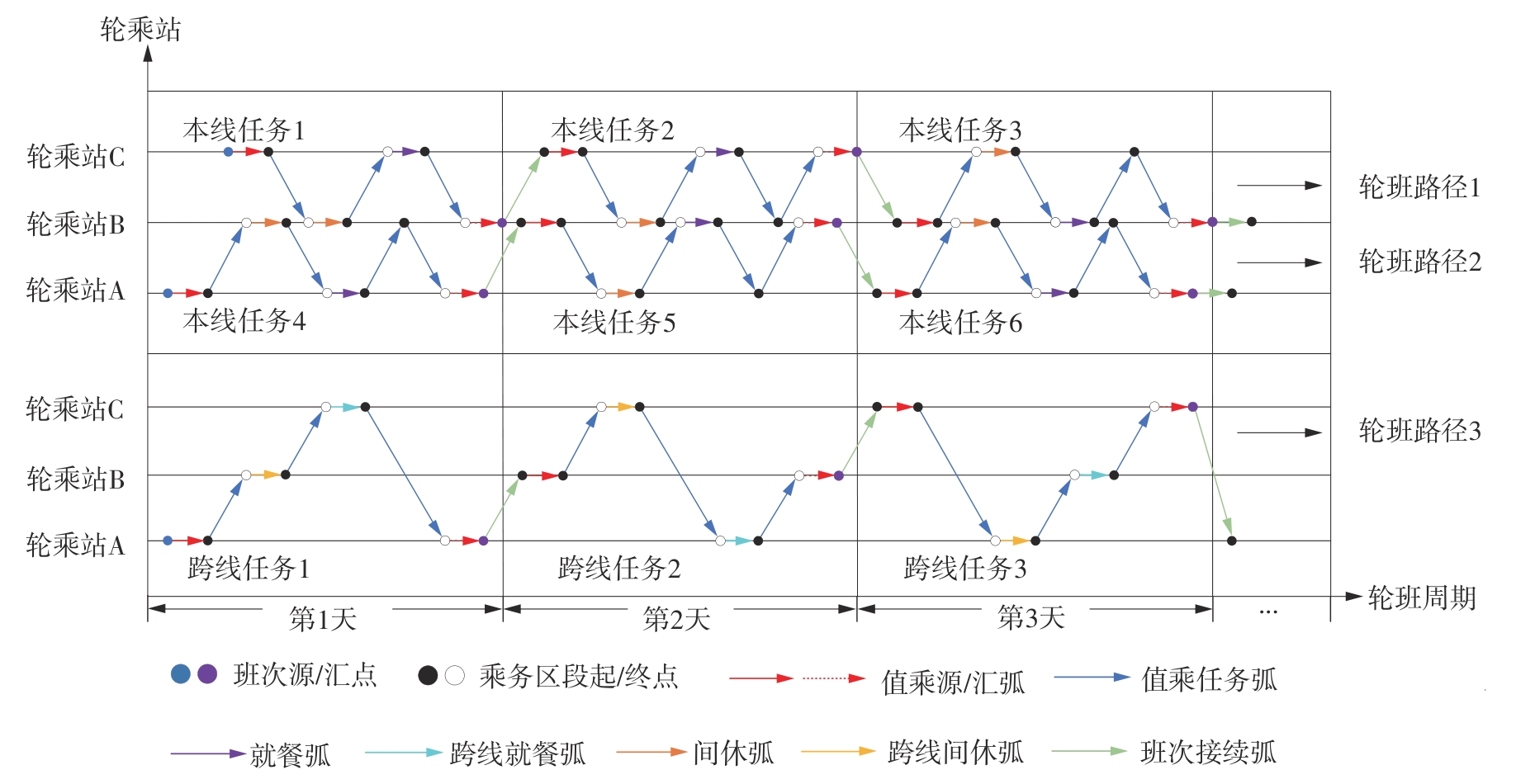
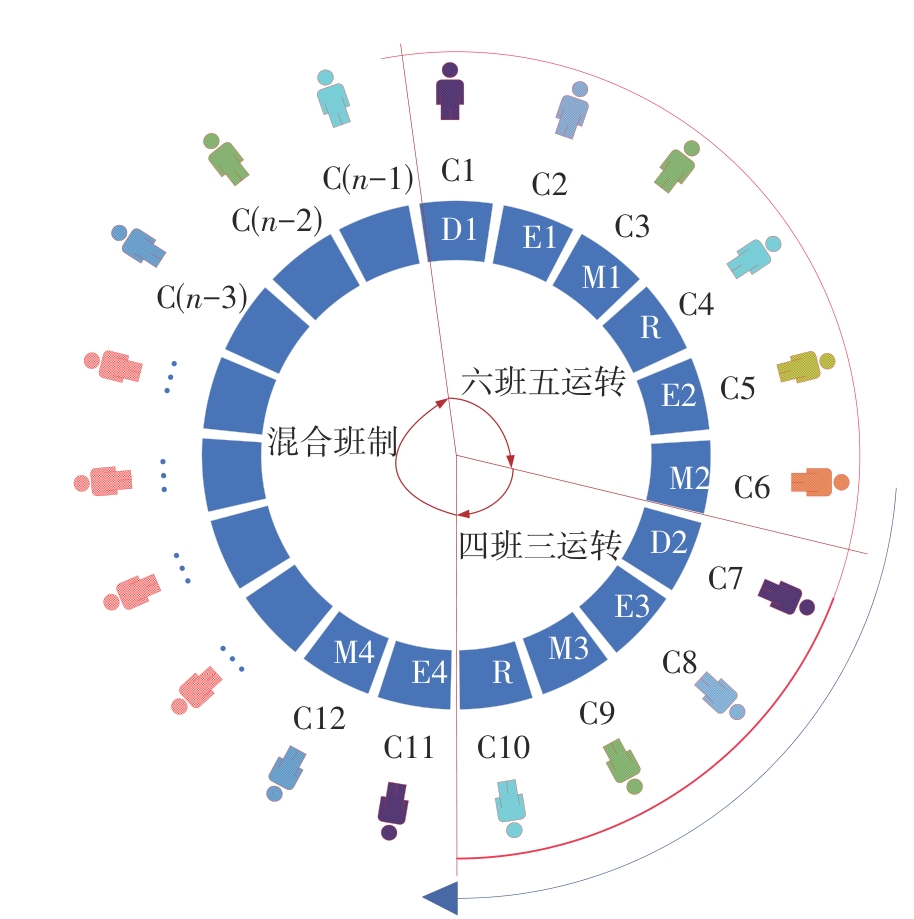
基于地铁列车跨线运行模式,分析乘务一体化优化对乘务计划编制效率和乘务员运用效率的影响。针对循环班制构造时空网络刻画乘务员在轮班周期内的乘务区段接续规则和轮班路径,以乘务员值乘班次数量和值乘空闲时间最小化为优化目标构建模型,在满足乘务区段接续规则的前提下确定轮班周期内乘务员的值乘任务,设计轮班路径搜索和改进列生成算法获取轮班周期内的值乘安排,提出混合班制的乘务轮班模式探讨班制间混合对乘务计划的影响。根据某市地铁乘务区段数据开展案例研究,结果表明:相较传统的轮班制度,混合班制可使一体化循环轮班模式乘务计划班次的平均工作效率提高1.5%~2.3%,使便乘区段数和乘务员需求数分别降低12.18%~24.45%和1.16%~11.46%;相较分阶段优化,一体化优化提高了班次平均工作效率和乘务员运用率,降低了轮班周期内的班次数和乘务区段冗余覆盖程度。混合班制模式下的一体化优化方法可适应灵活的轮班周期和各线路乘务区段时空分布的差异性,有利于保障乘务员的值乘均衡性和运用效率。

关键词: 城市轨道交通, 跨线运营, 轮班路径, 乘务一体化, 混合班制

Abstract:

To explore the impact of crew integrated optimization on the cost of crew scheduling and efficiency of crew utilization in cross-line operation, a spatio-temporal network was constructed to represent the rules for crew segment connections and shift paths. To determine the rules of crew segment connections, a network model was constructed with the optimization objectives of minimizing the number of shifts and idle time. The network graph search and improved column generation algorithm were designed to obtain shift paths. A mixed crew rostering approach was proposed to verify the impact on crew scheduling. The case study was carried out based on the crew data of some metro lines in a certain city. The results show that the integrated crew scheduling is able to increase the average work efficiency by 1.5%~2.3%. The deadhead segments and crews decrease by 12.18%~24.45% and 1.16%~11.46%. Compared with the phased optimization, the integrated optimization of crew scheduling improves the average work efficiency of shifts and utilization efficiency of crews. It reduces the number of daily shifts and average number of deadhead segments. The integrated optimization approach with the mixed crew rostering mode is able to adapt to the flexible shift cycles and spatiotemporal distribution differences of crew segments, which is conducive to ensuring the balance of shifts and efficiency of crew utilization.

Key words: urban rail transit, cross-line operation, shift path, crew integration, mixed crew rostering mode