华南理工大学学报(自然科学版) ›› 2025, Vol. 53 ›› Issue (8): 20-28.doi: 10.12141/j.issn.1000-565X.240455

• 智慧交通系统 • 上一篇    下一篇

共享单车与需求响应公交耦合优化研究

许航, 李欣, 袁昀   

  1. 大连海事大学 交通运输工程学院,辽宁 大连 116026
  • 收稿日期:2024-09-11 出版日期:2025-08-25 发布日期:2025-03-07
  • 通信作者: 李欣(1985—),男,博士,教授,主要从事多模式公交系统研究。 E-mail:xtopli@dlmu.edu.cn
  • 作者简介:许航(1995—),女,博士生,主要从事多模式公交系统研究。E-mail: xuhangll@dlmu.edu.cn
  • 基金资助:
    国家自然科学基金项目(52272317);大连海事大学中央高校基本科研业务费专项资金项目(0172412418)

Research on the Joint Optimization of Shared Bikes and Demand-Responsive Connector

XU Hang, LI Xin, YUAN Yun   

  1. Transportation Engineering College,Dalian Maritime University,Dalian 116026,Liaoning,China
  • Received:2024-09-11 Online:2025-08-25 Published:2025-03-07
  • Contact: 李欣(1985—),男,博士,教授,主要从事多模式公交系统研究。 E-mail:xtopli@dlmu.edu.cn
  • About author:许航(1995—),女,博士生,主要从事多模式公交系统研究。E-mail: xuhangll@dlmu.edu.cn
  • Supported by:
    the National Natural Science Foundation of China(52272317)

摘要:

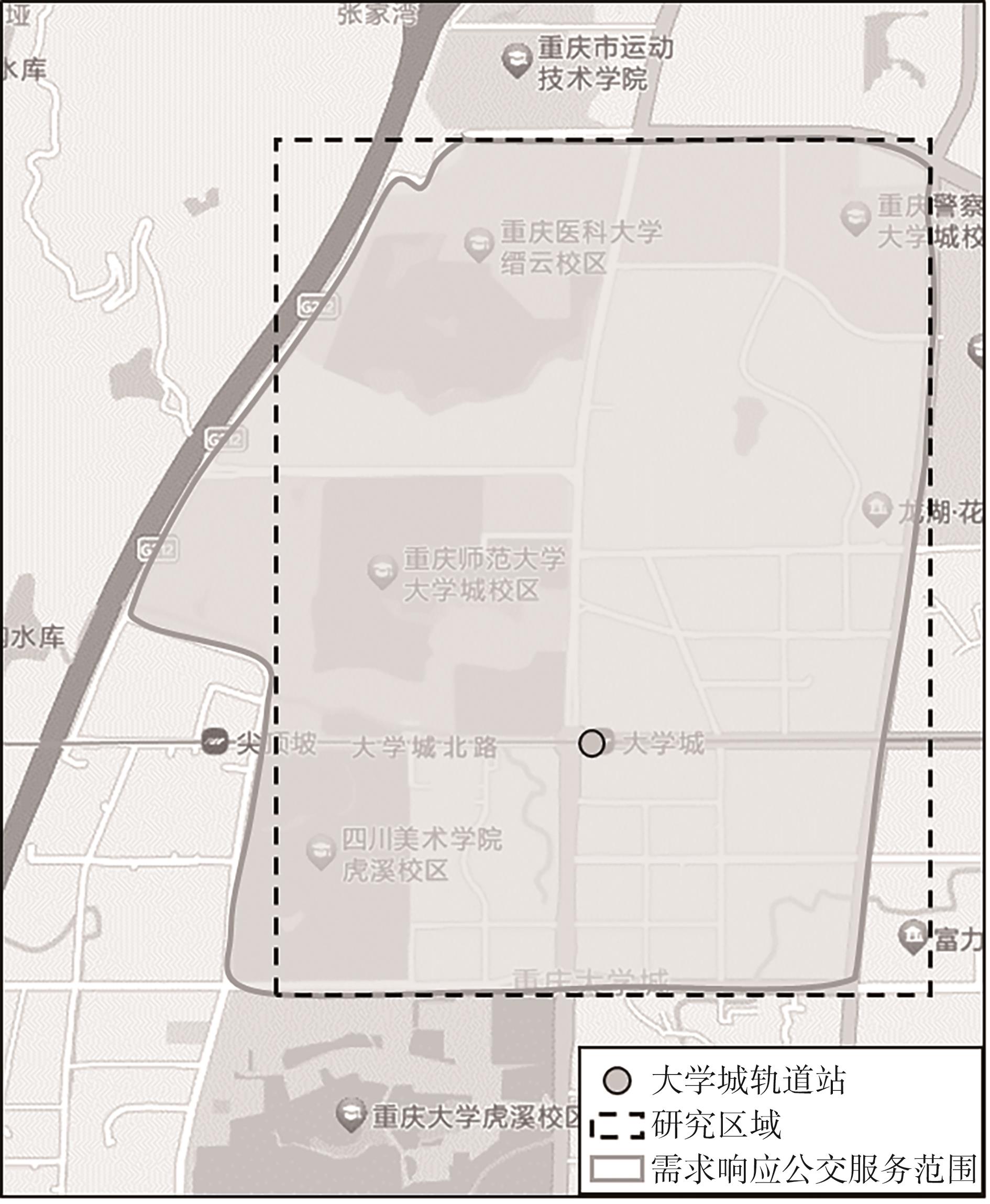
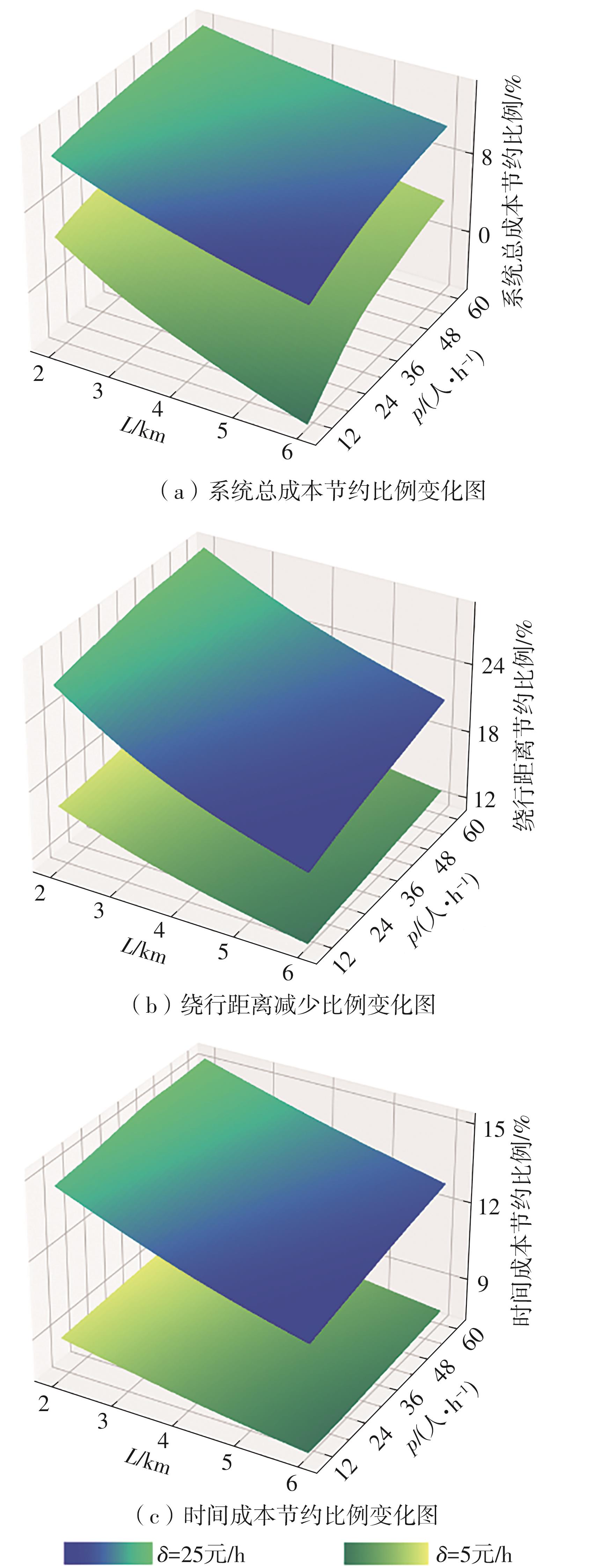
需求响应公交作为一种灵活的公共交通模式,能够根据乘客需求提供个性化的公交服务,已在国内外城市广泛应用。然而其在实际运营中却面临着服务效率与运营成本博弈的难题,以及难以实现“门到门”服务的难题。对此,提出一种共享单车接驳需求响应公交的联合出行模式,通过整合共享单车与需求响应公交的优势,实现两种交通方式的耦合优化,从而提高公共交通的整体服务效率与服务水平。基于连续近似方法,将离散的需求点与共享单车投放点连续化,推导计算公交运营成本、共享单车成本以及乘客出行时间成本,以最小化系统总成本为目标,对联合出行系统进行优化。为了验证所提出的联合出行系统的有效性,以重庆市大学城片区为案例进行实证研究,通过模拟联合出行系统在不同场景下的运营情况,将其与无共享单车接驳的传统需求响应公交系统进行对比。结果表明:联合出行系统可有效解决需求响应公交的运营难题,与传统需求响应公交系统相比,联合出行系统最高可降低14.8%的系统总成本、15.2%的出行时间成本和29%的公交车辆绕行。证明在需求响应公交系统中,引入共享单车作为接驳工具,能够显著降低公交运营成本,减少乘客的出行时间,同时减少公交车辆不必要的绕行,优化了公交运营路线,大幅提升了公共交通的服务效率与服务水平。

关键词: 城市交通, 耦合优化, 连续近似, 需求响应公交, 共享单车

Abstract:

Demand-Responsive Connector (DRC), as a flexible public transportation mode, can provide personalized bus services according to passengers’ needs and has been widely applied in urban areas both domestically and internationally. However, in actual operation, it faces the dilemma of balancing service efficiency and operational costs, as well as the challenge of achieving “door-to-door” services. To address these issues, a joint travel mode combining shared-bike transfer and DRC was proposed. By integrating the advantages of shared bikes and DRC, the coupling optimization of the two transportation modes can be realized, thereby improving the overall service efficiency and service level of public transportation. To this end, based on the continuous approximation method, discrete demand points and shared bicycle deployment locations were continuousized. The operating costs of the transit system, shared bicycle costs, and passenger travel time costs were derived and calculated. By minimizing the total system cost, the joint mobility system was optimized. With the goal of minimizing the total system cost, the coupling optimization of shared bicycles and demand-responsive buses was realized. To verify the effectiveness of the proposed joint travel system, an empirical study was conducted using the university town area of Chongqing as a case. The operation of the joint travel system under different scenarios was simulated and compared with the traditional DRC system without shared-bikes. The results show that the joint travel system can effectively address the operational problems of DRC. Compared with the traditional DRC system, the joint travel system can reduce the total system cost by up to 14.8%, the travel time saving by 15.2%, and the detouring saving of DRC vehicles by 29%. It is demonstrated that introducing shared bicycles as a first- and last-mile connection tool in demand-responsive transit systems can significantly reduce transit operating costs and passenger travel times. At the same time, it minimizes unnecessary detours by transit vehicles, optimizes transit routes, and greatly improves the efficiency and quality of public transportation services.

Key words: urban traffic, joint optimization, continuous approximation, demand-responsive connector, shared bike

中图分类号: