华南理工大学学报(自然科学版) ›› 2026, Vol. 54 ›› Issue (3): 160-171.doi: 10.12141/j.issn.1000-565X.250120
青藏严寒地区再生混凝土承重砌块耐久性分析
齐云鹏1, 王秋生1, 李芷逸2, 熊逸峻1
- 1.北京工业大学 城市与工程安全减灾教育部重点实验室,北京 100124
2.湖南经研电力设计有限公司,湖南 长沙 410004
-
收稿日期:2025-04-23出版日期:2026-03-25发布日期:2025-10-10 -
通信作者:王秋生(1977—),男,博士,教授,主要从事岩土类材料变形破坏机理及新型材料研制研究。 E-mail:wangqs@bjut.edu.cn -
作者简介:齐云鹏(1995—),男,博士生,主要从事固废材料性能改良及微观机理研究。E-mail:2415998292@qq.com -
基金资助:国家自然科学基金项目(51679003);国家自然科学基金项目(52130905)
Durability Analysis of Load-Bearing Recycled Concrete Blocks in Severe Cold Regions of Qinghai-Tibet
QI Yunpeng1, WANG Qiusheng1, LI Zhiyi2, XIONG Yijun1
- 1.The Key Laboratory of Urban Security and Disaster Engineering of Ministry of Education,Beijing University of Technology,Beijing 100124,China
2.Hunan Economic Institute Electric Power Design Co. ,Ltd. ,Changsha 410004,Hunan,China
-
Received:2025-04-23Online:2026-03-25Published:2025-10-10 -
Contact:王秋生(1977—),男,博士,教授,主要从事岩土类材料变形破坏机理及新型材料研制研究。 E-mail:wangqs@bjut.edu.cn -
About author:齐云鹏(1995—),男,博士生,主要从事固废材料性能改良及微观机理研究。E-mail:2415998292@qq.com -
Supported by:the National Natural Science Foundation of China(51679003)

摘要:
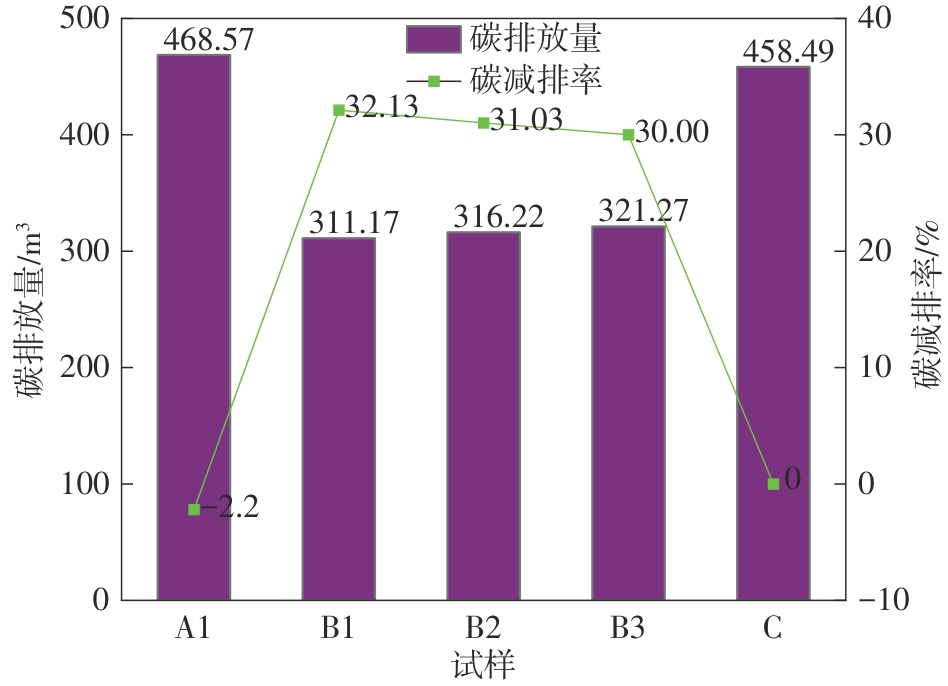
为实现固体废弃物资源化利用,提升青藏严寒地区再生混凝土砌块性能。在100%再生粗骨料基础上,研究了再生细骨料和活性掺合料对大掺量固废再生混凝土承重砌块抗渗性、耐水性及抗冻性的影响,采用扫描电镜(SEM)、核磁共振(NMR)技术分析了再生混凝土的微观结构,基于生命周期方法(LCA)定量评估了材料性能、成本和碳排放。结果表明:再生混凝土承重砌块渗透性和吸水率随再生细骨料的增加逐渐增大,随粉煤灰与矿渣复掺比的降低先减小后增大,抗冻性和软化系数变化规律则相反。当再生粗骨料取代率为100%、粉煤灰与矿渣复掺比为3∶1时,砌块抗压强度为11.77 MPa,抗折强度为3.89 MPa,软化系数为0.99,吸水率为0.7%,冻融50次后质量损失率为2.2%,抗压强度与抗折强度损失率分别为10.2%和13.9%,满足严寒地区承重及耐久性要求,可作为推荐配合比。微观分析表明,碱激发促进了复合胶凝材料二次水化,生成了更多的水化产物填充内部孔隙,使再生混凝土的细观结构更加密实。随着冻融次数的增加,砌块内部孔隙数量逐渐增多,微孔和中孔逐渐衍生为大孔和裂隙,导致砌块性能劣化。基于性能-成本-碳排放分析,单掺100%再生粗骨料不利于低碳减排,混掺再生骨料和活性掺合料的推荐配合比综合效益最优,碳减排率为31.03%。
中图分类号:
引用本文
齐云鹏, 王秋生, 李芷逸, 熊逸峻. 青藏严寒地区再生混凝土承重砌块耐久性分析[J]. 华南理工大学学报(自然科学版), 2026, 54(3): 160-171.
QI Yunpeng, WANG Qiusheng, LI Zhiyi, XIONG Yijun. Durability Analysis of Load-Bearing Recycled Concrete Blocks in Severe Cold Regions of Qinghai-Tibet[J]. Journal of South China University of Technology(Natural Science Edition), 2026, 54(3): 160-171.

表1
骨料物理性能"
| 骨料 | 表观密度/(kg·m-3) | 堆积密度/(kg·m-3) | 空隙率/% | 含泥量/% | 吸水率/% | 压碎指标/% |
|---|---|---|---|---|---|---|
| 天然碎石 | 2 630 | 1 564 | 41 | 0.3 | 0.47 | 10.4 |
| 再生粗骨料 | 2 594 | 1 410 | 46 | 0.5 | 5.19 | 20.6 |
| 天然河砂 | 2 600 | 1 801 | 31 | 0.5 | 2.30 | |
| 再生细骨料 | 2 468 | 1 693 | 33 | 1.6 | 19.60 |
表2
胶凝材料主要化学组成 (%)"
| 材料 | SiO2 | Al2O3 | Fe2O3 | CaO | MgO | SO3 | Na2O | K2O |
|---|---|---|---|---|---|---|---|---|
| 水泥 | 20.45 | 4.99 | 4.10 | 59.76 | 2.13 | 2.93 | 0.17 | 0.71 |
| 粉煤灰 | 46.72 | 31.16 | 8.35 | 4.07 | 2.83 | 1.27 | 0.63 | 0.59 |
| 矿渣 | 30.19 | 15.01 | 2.14 | 36.35 | 8.78 | 1.68 | 0.49 | 0.45 |
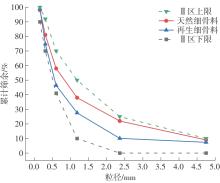
图1
颗粒级配曲线"
表3
再生混凝土砌块设计配合比1) (kg/m3)"
| 试样 | 水玻璃 | 水 | 水泥 | 再生粗骨料 | 碎石 | 河砂 | 再生细骨料 | 活性掺合料 | F/S复掺比 | |
|---|---|---|---|---|---|---|---|---|---|---|
| 粉煤灰(F) | 矿渣(S) | |||||||||
| A1 | 50 | 100 | 500 | 1 172 | 578 | |||||
| A2 | 50 | 100 | 500 | 1 172 | 520 | 58 | ||||
| A3 | 50 | 100 | 500 | 1 172 | 405 | 173 | ||||
| A4 | 50 | 100 | 500 | 1 172 | 289 | 289 | ||||
| B1 | 50 | 100 | 300 | 1 172 | 578 | 200 | 4∶0 | |||
| B2 | 50 | 100 | 300 | 1 172 | 578 | 150 | 50 | 3∶1 | ||
| B3 | 50 | 100 | 300 | 1 172 | 578 | 100 | 100 | 2∶2 | ||
| B4 | 50 | 100 | 300 | 1 172 | 578 | 50 | 150 | 1∶3 | ||
| B5 | 50 | 100 | 300 | 1 172 | 578 | 200 | 0∶4 | |||
| C | 50 | 100 | 500 | 1 172 | 578 | |||||
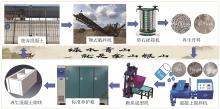
图2
再生混凝土砌块制作工艺"
表4
再生混凝土砌块力学性能"
| 试样 | 块体密度/(kg·m-3) | 抗压强度/MPa | 抗折强度/MPa | 折压比 | 成本/(元·m-3) |
|---|---|---|---|---|---|
| A1 | 1 162±0.88 | 10.42±0.89 | 3.46±0.83 | 0.33 | 359.74 |
| A2 | 1 138±0.78 | 9.26±0.50 | 3.14±0.06 | 0.34 | 355.99 |
| A3 | 1 122±0.94 | 8.27±0.99 | 2.88±0.22 | 0.35 | 348.55 |
| A4 | 1 119±0.06 | 7.11±0.84 | 2.17±0.97 | 0.31 | 341.05 |
| B1 | 1 182±0.94 | 10.73±0.58 | 3.73±0.39 | 0.35 | 329.23 |
| B2 | 1 174±0.30 | 11.77±0.35 | 3.89±0.80 | 0.33 | 330.93 |
| B3 | 1 161±0.15 | 9.67±0.16 | 3.33±0.79 | 0.34 | 332.63 |
| B4 | 1 147±0.60 | 8.57±0.11 | 2.93±0.08 | 0.34 | 334.33 |
| B5 | 1 126±0.49 | 7.41±0.94 | 2.57±0.93 | 0.35 | 336.03 |
| C | 1 211±0.58 | 10.49±0.95 | 3.81±0.66 | 0.36 | 429.43 |
图3
再生混凝土承重砌块抗渗性能"
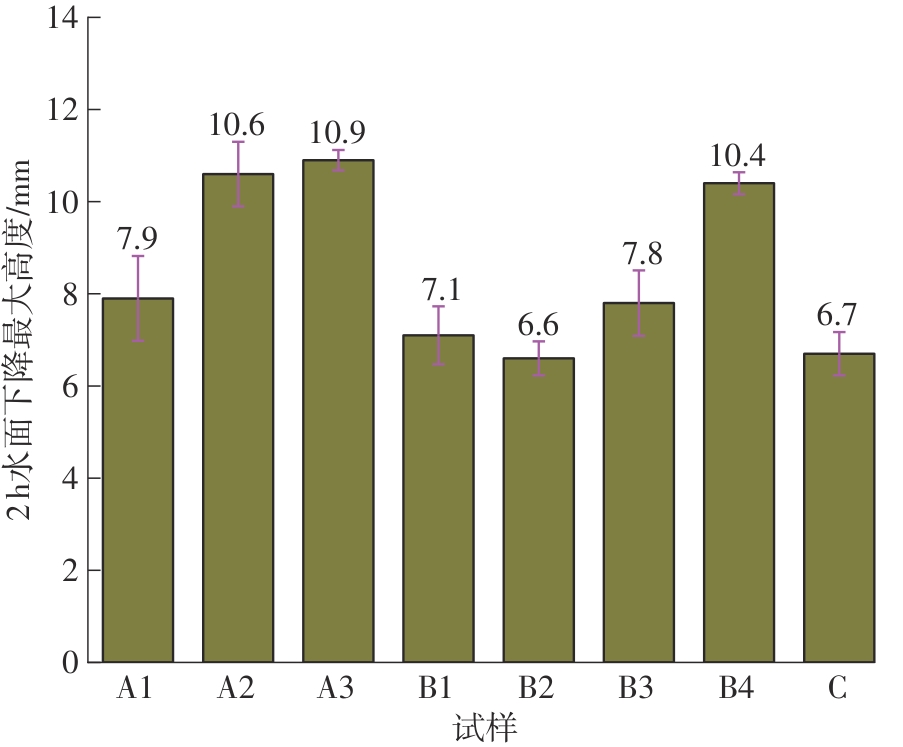
图4
不同砌块试样的微观形貌"
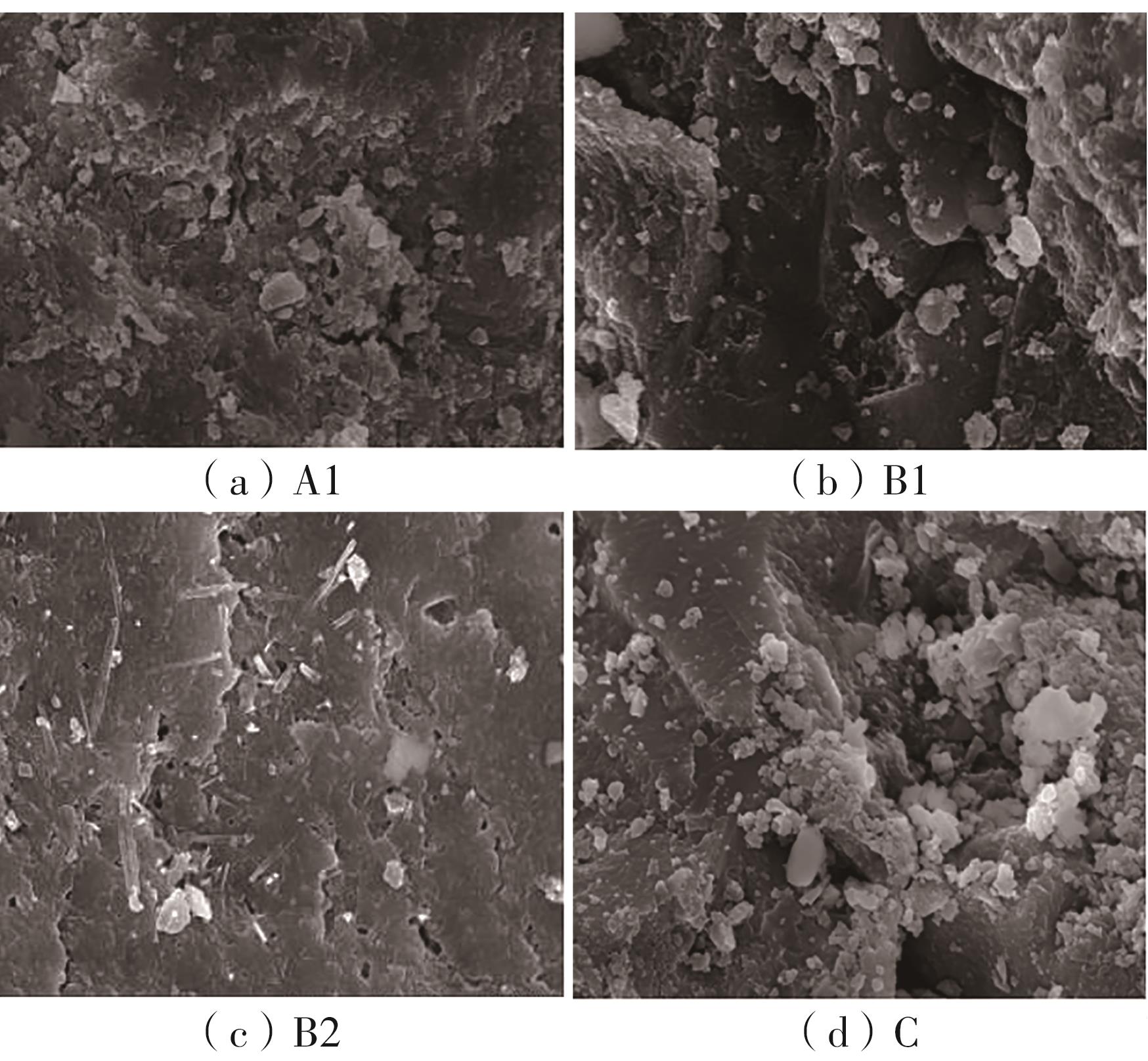
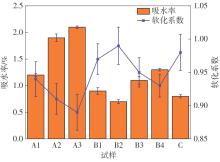
图5
再生混凝土承重砌块耐水性能"
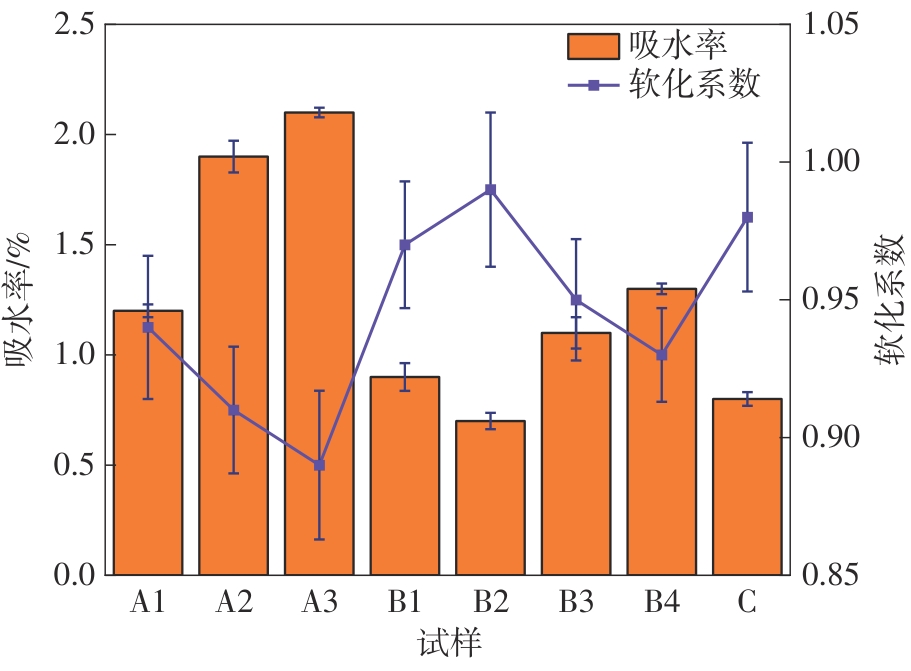
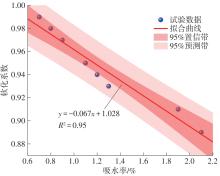
图6
砌块软化系数与吸水率之间的关系"
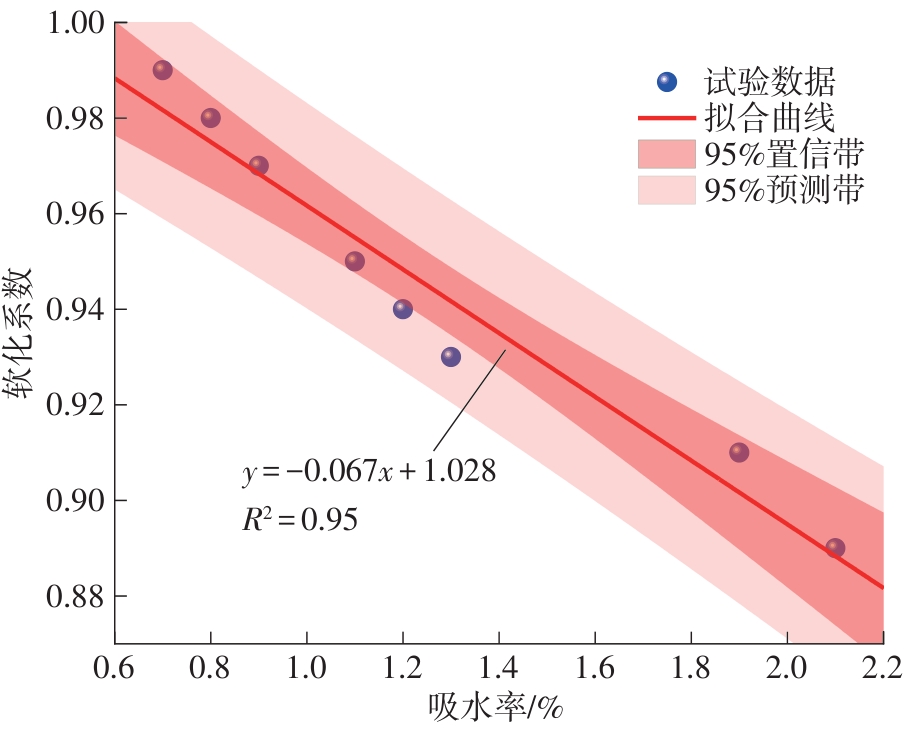
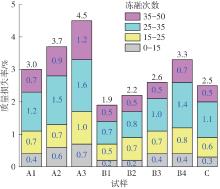
图7
再生混凝土承重砌块冻融质量损失"
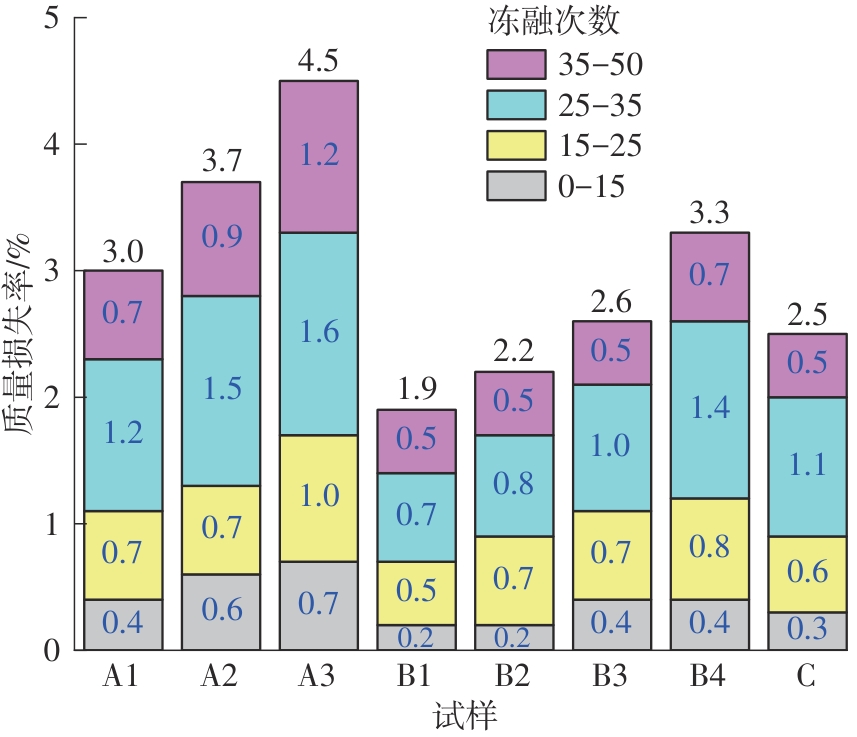
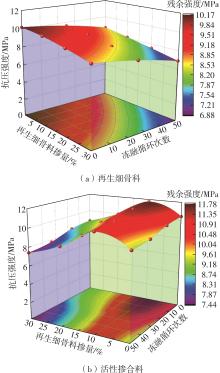
图8
冻融对砌块抗压强度的影响"
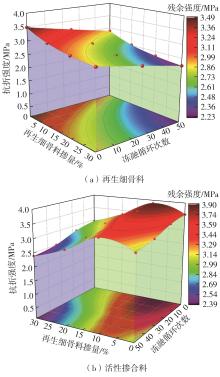
图9
冻融对砌块抗折强度的影响"
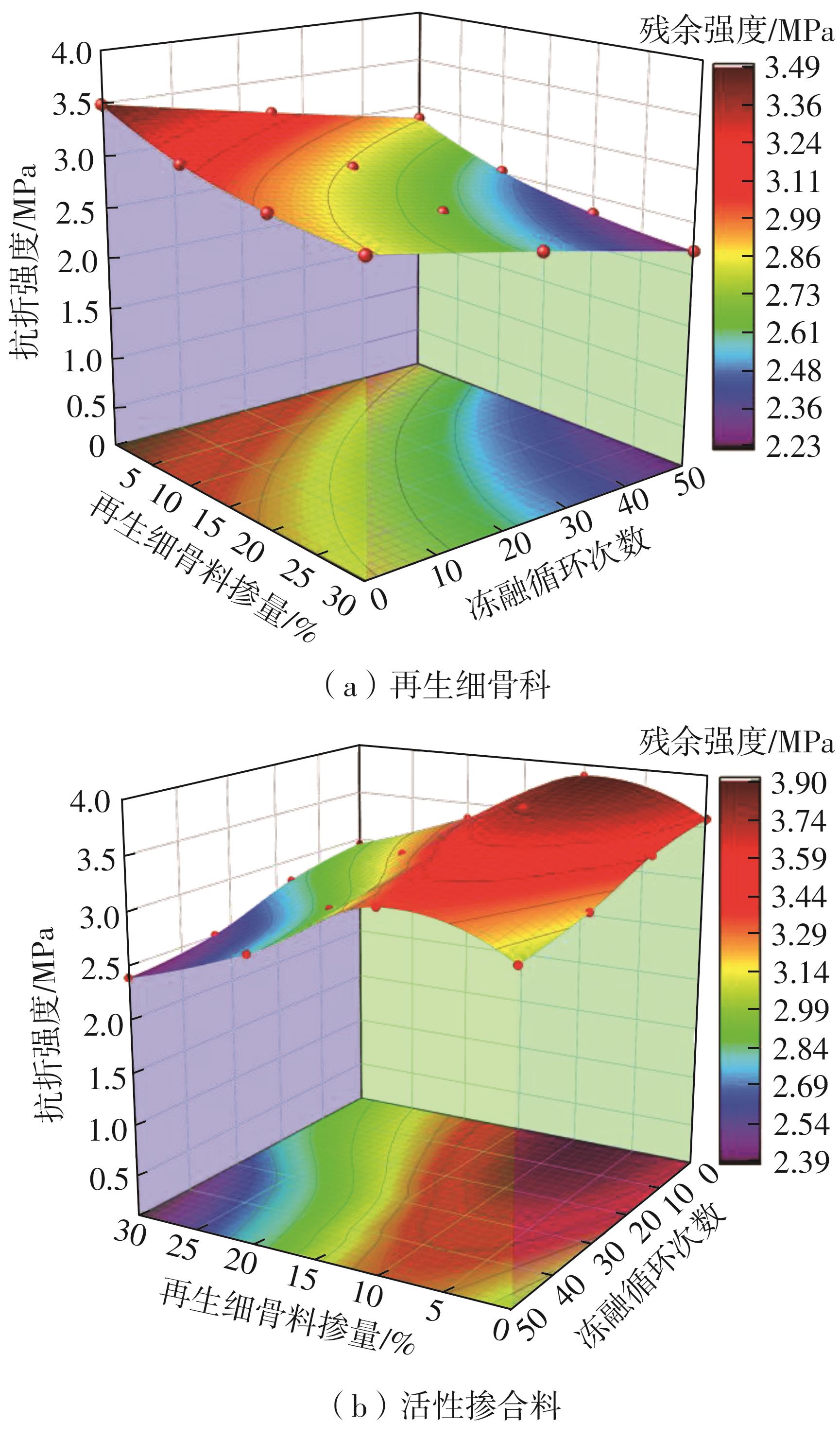
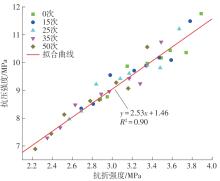
图10
砌块抗压强度与抗折强度之间的关系"
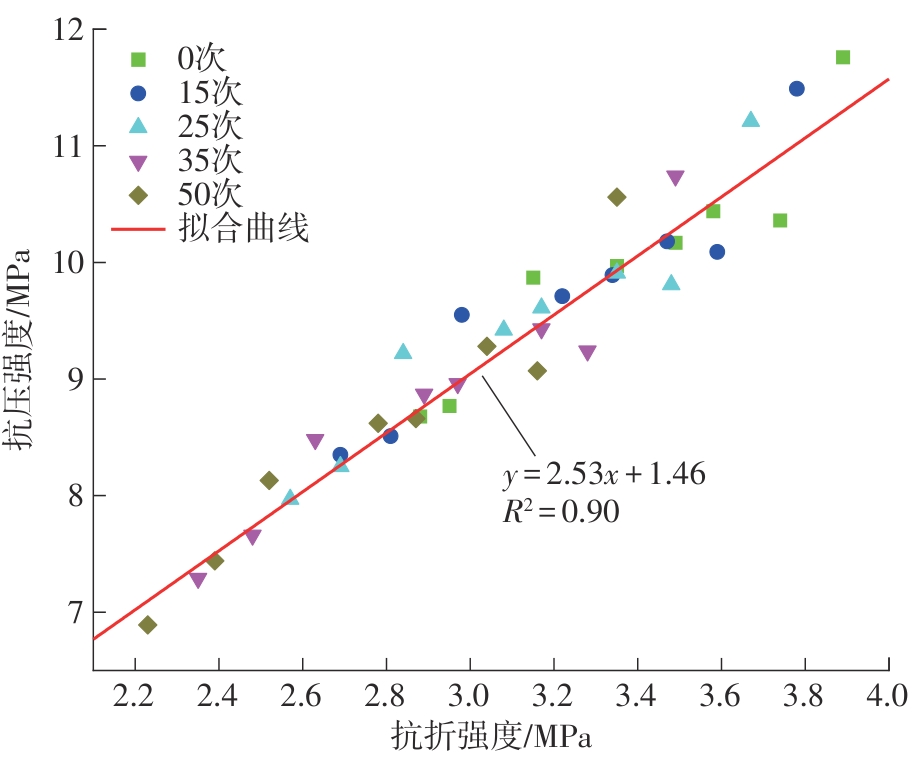
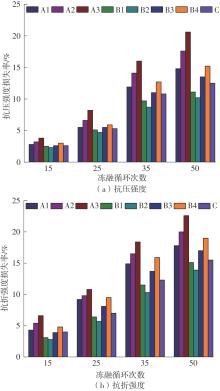
图11
再生混凝土承重砌块冻融强度损失"
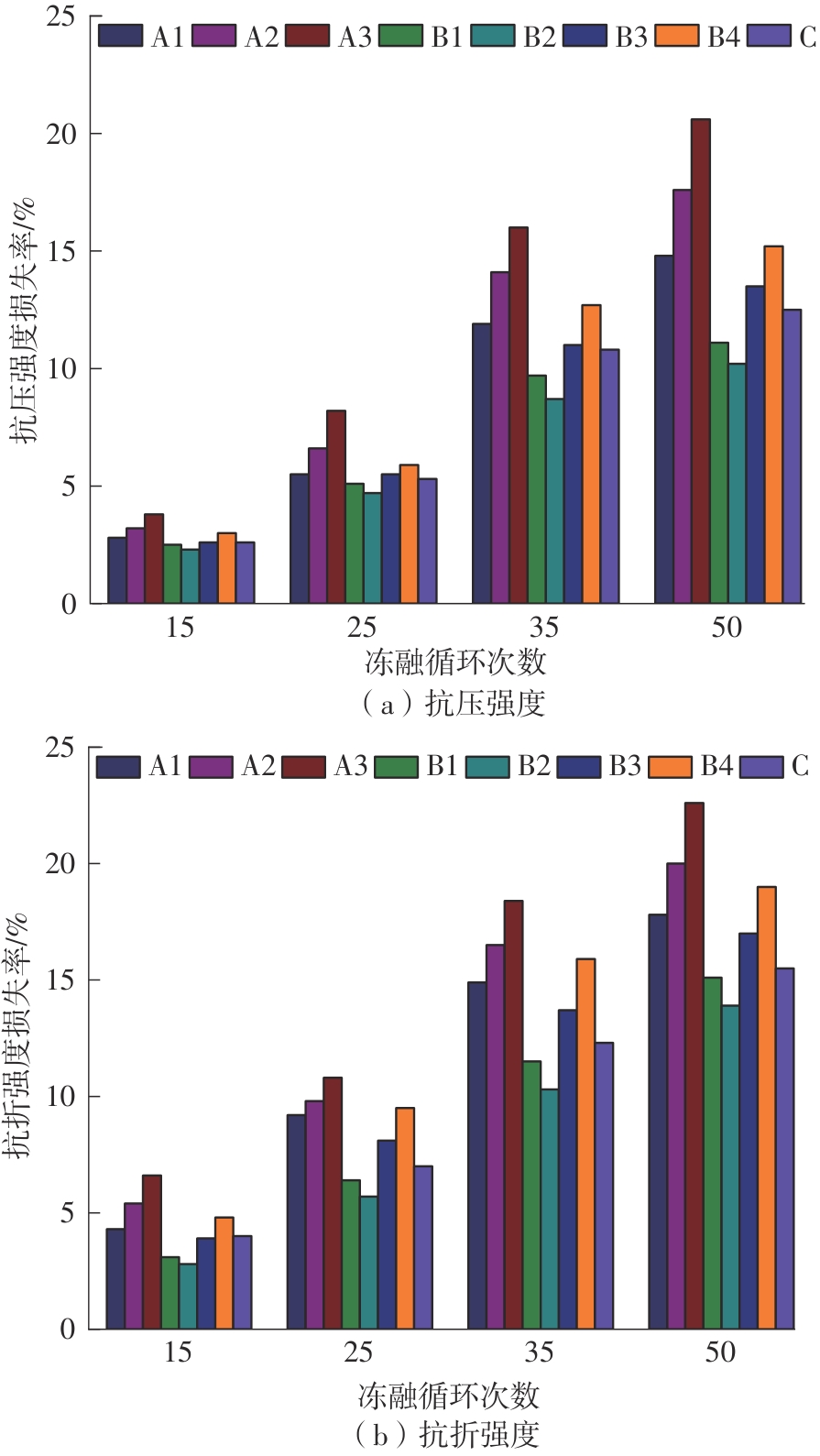
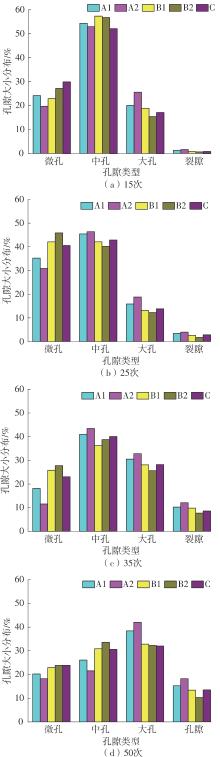
图12
不同冻融次数砌块内部孔隙分布"
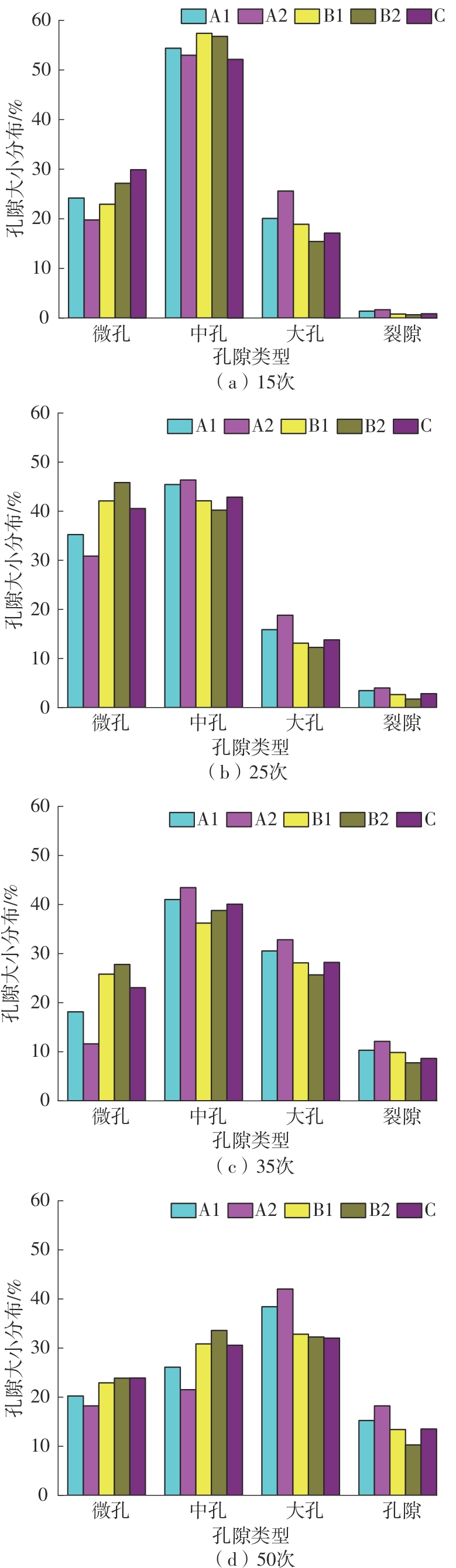
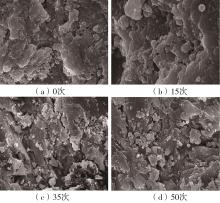
图13
冻融前后砌块微观结构变化特征"
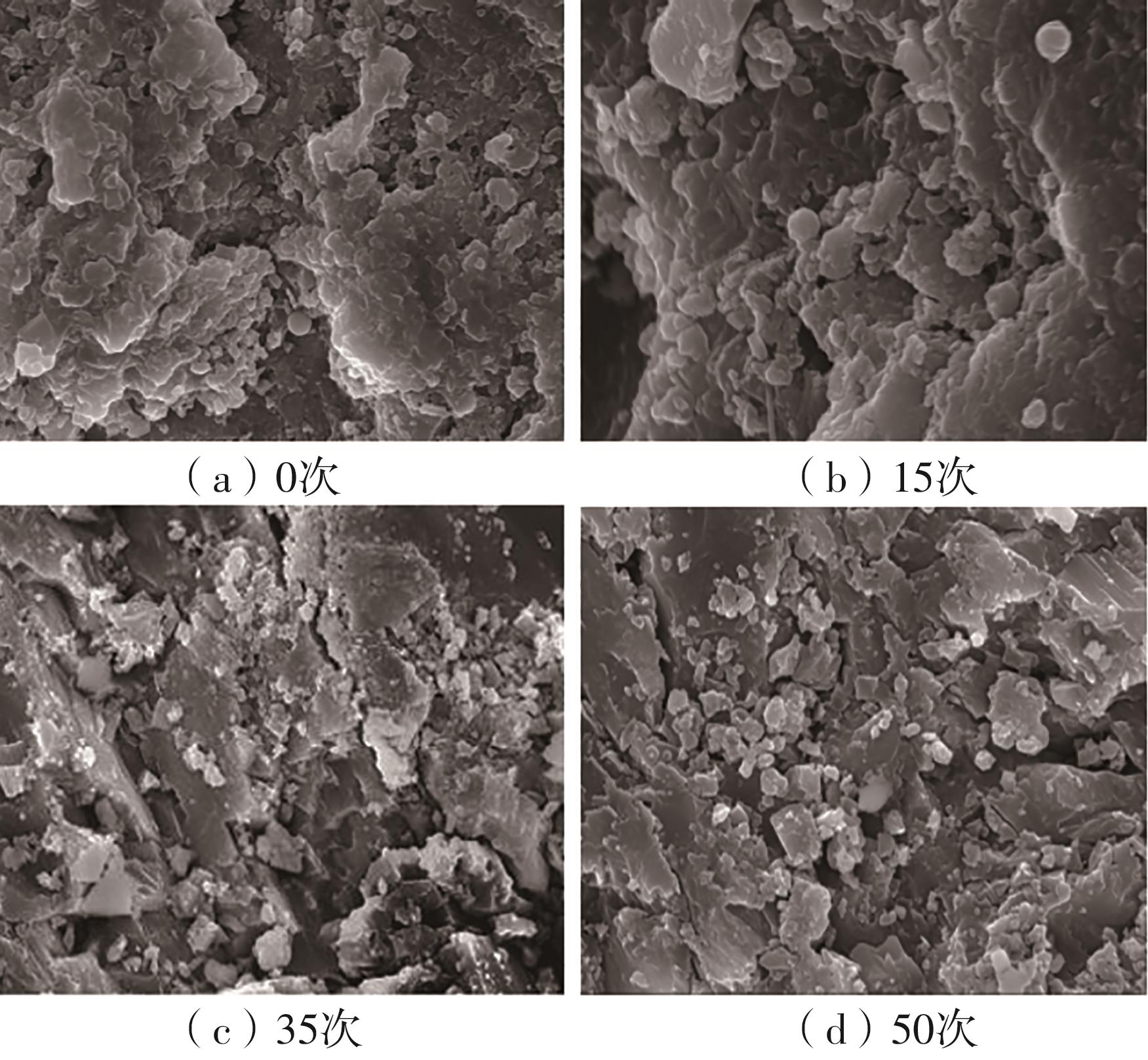
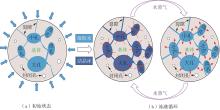
图 14
冻融过程水分传输和孔隙变化示意图"
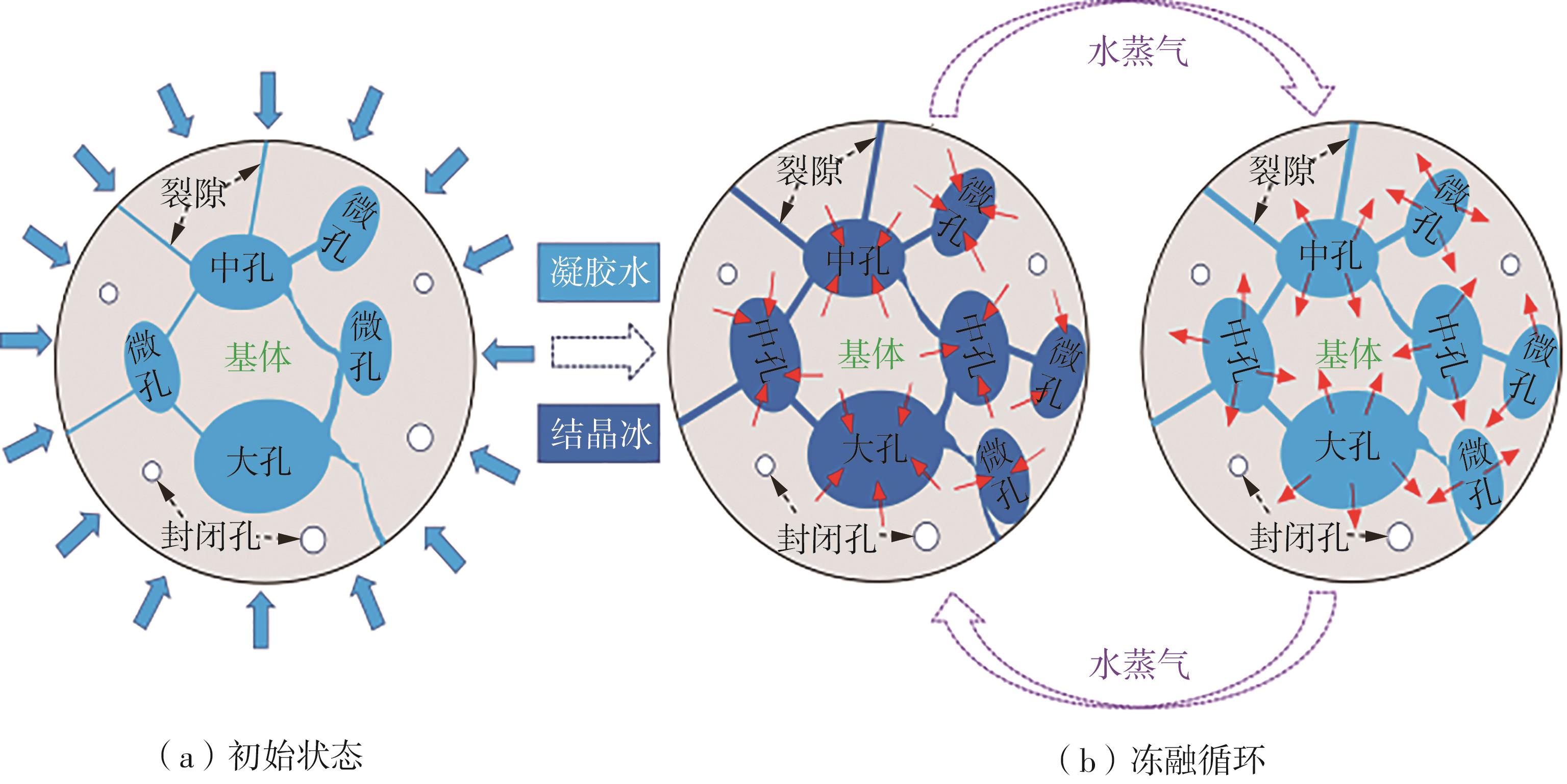
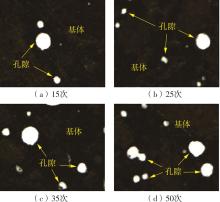
图15
不同冻融次数砌块内部孔隙演变"
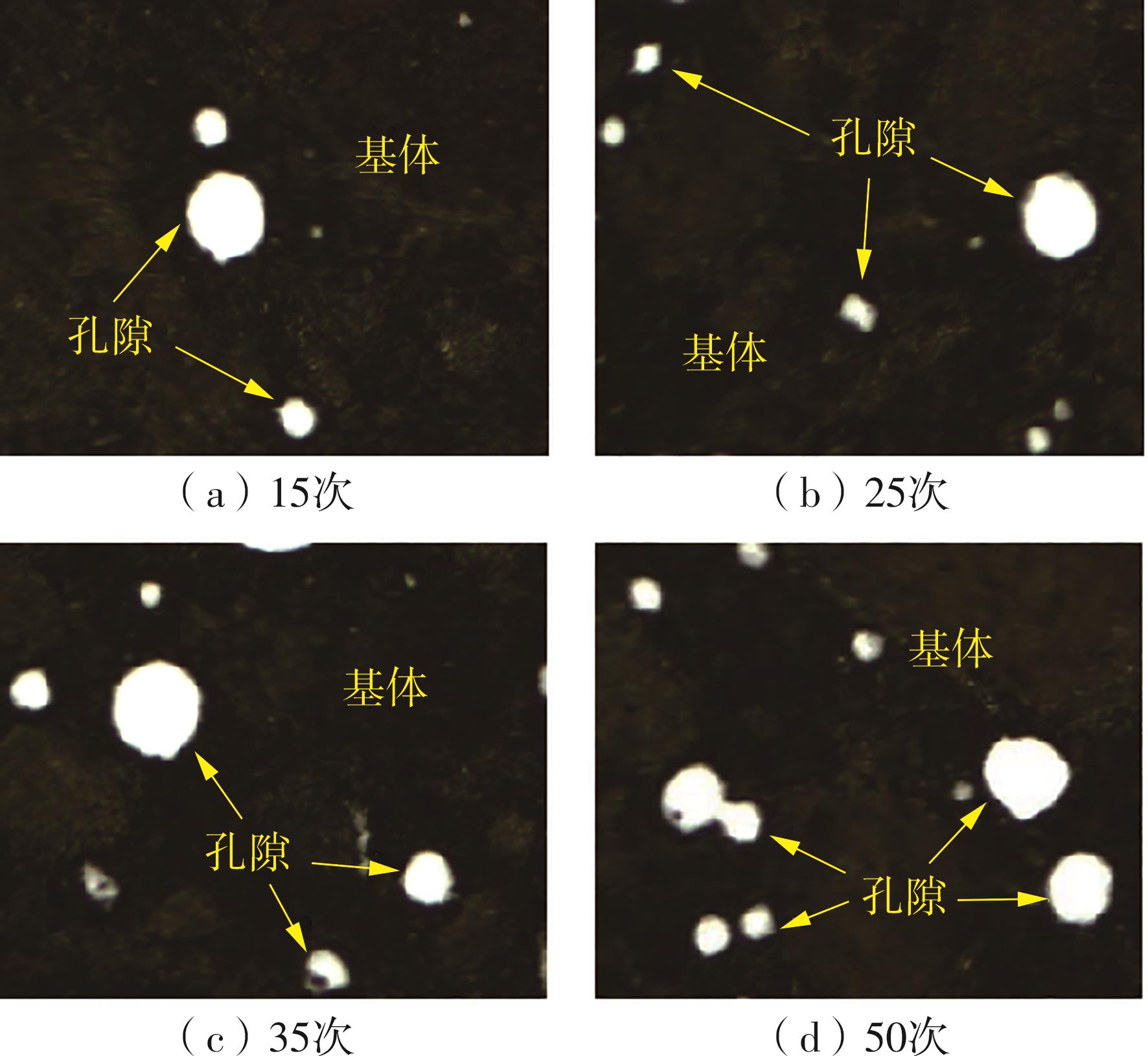
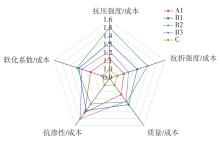
图16
冻融50次后不同砌块性能比较"
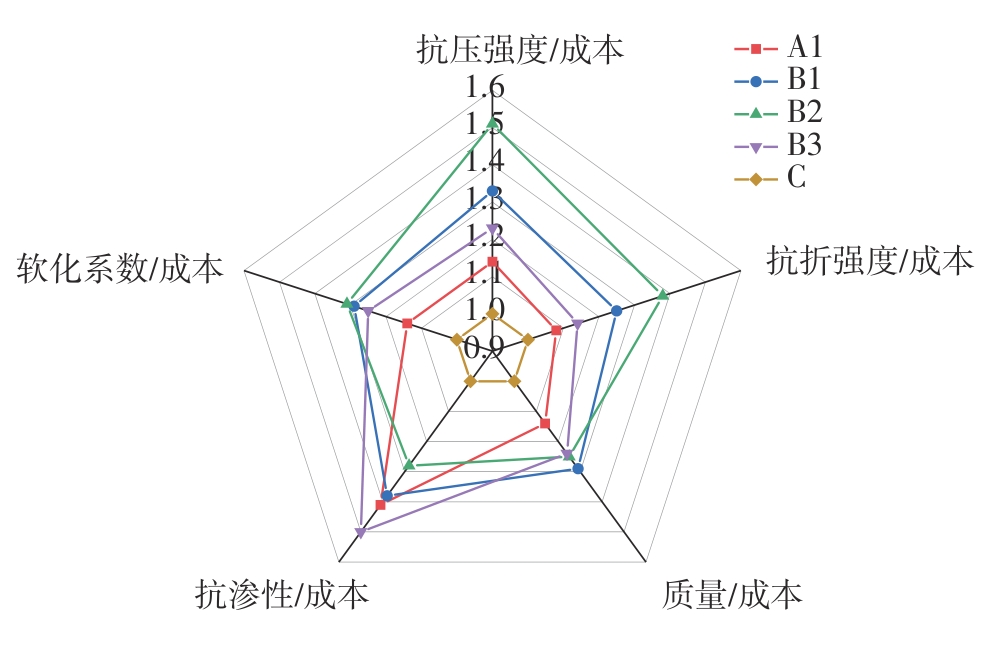
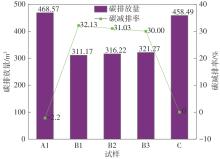
图17
不同砌块碳排放量及碳减排率对比"
| [1] | 蒋正武,高文斌,杨巧,等 .低碳混凝土的技术理念与途径思考[J].建筑材料学报,2023,26(11):1143-1150. |
| JIANG Zhengwu, GAO Wenbin, YANG Qiao, et al .Technical principles and approaches for low carbon concrete[J].Journal of Building Materials,2023,26(11):1143-1150. | |
| [2] | 肖建庄,张航华,唐宇翔,等 .废弃混凝土再生原理与再生混凝土基本问题[J].科学通报,2023,68(5):510-523. |
| XIAO Jianzhuang, ZHANG Hanghua, TANG Yuxiang,et al .Principles for waste concrete recycling and basic problems of recycled concrete[J].Chinese Science Bulletin, 2023, 68(5): 510-523. | |
| [3] | 张军辉,丁乐,张安顺 .建筑垃圾再生料在路基工程中的应用综述[J].中国公路学报,2021,34(10):135-154. |
| ZHANG Jun-hui, DING Le, ZHANG An-shun .Application of recycled aggregates from construction and demoliton waste in subgrade engineering:a review[J].China Journal of Highway and Transport,2021,34(10):135-154. | |
| [4] | 吴军, 张金生, 谈云志, 等 .磷石膏-矿渣-石灰固化底泥力学性能及微观机理[J].应用基础与工程科学学报, 2024, 32(5): 1360-1373. |
| WU Jun, ZHANG Jinsheng, TAN Yunzhi, et al .Mechanical properties and microscopic mechanism of phosphogypsum-slag-lime solidified sediment[J].Journal of Basic Science and Engineering, 2024, 32(5):1360-1373. | |
| [5] | 陈春红, 张海燕, 张勇刚, 等 .不同来源垃圾焚烧炉渣的理化性质及再生砂浆的强度变异性[J].华南理工大学学报(自然科学版),2024,52(10):87-100. |
| CHEN Chunhong, ZHANG Haiyan, ZHANG Yonggang,et al .Physical and chemical characteristics of incineration bottom ash (IBA) from different sources and strength variability of IBA recycled mortar [J].Journal of South China University of Technology(Natural Science Edition), 2024, 52(10): 87-100. | |
| [6] | SUTTAPHAKDEE P, DULSANG N, LORWANISHPAISARN N,et al .Optimizing mix proportion and properties of lightweight concrete incorporated phase change material paraffin/recycled concrete block composite[J].Construction and Building Materials, 2016, 127: 475-483. |
| [7] | KONG Kun-feng, CHEN Feng, XIAO Yuan-jie, et al .Investigating particle breakage and compressibility cha-racteristics of unbound aggregate materials recycled from building demolition wastes[J].Journal of Central South University, 2023, 30(10): 3499-3516. |
| 孔坤锋,陈锋,肖源杰,等. 建筑拆除废弃物再生骨料颗粒破碎与压缩特性[J]. 中南大学学报(英文版), 2023, 30(10): 3499-3516. | |
| [8] | GARCIA-TRONCOSO N, LI L, QUAN C, et al .Comparative study on the properties and high temperature resistance of self-compacting concrete with various types of recycled aggregates[J].Case Studies in Construction Materials, 2021, 15(10): e00678/1-11. |
| [9] | ZHOU W, LU H L, LI Z .The study on the impact of recycled fine aggregate and powder on the mechanics and thermal performance of recycled concrete hollow blocks[J].Key Engineering Materials,2012,509:119-122. |
| [10] | 冯春花,崔卜文,郭晖,等 .水泥浆-碳化协同增强再生混凝土骨料研究[J].材料导报,2023,37(21):22060098/1-5. |
| FENG Chunhua, CUI Buwen, GUO Hui, et al .Study on the synergistic effect of cement slurry-carbonation for enhancing recycled concrete aggregate[J].Materials Reports,2023,37(21):22060098/1-5. | |
| [11] | 苏捷, 朱君, 史才军, 等 .硅灰强化再生混凝土抗压强度尺寸效应[J].湖南大学学报(自然科学版), 2022, 49(5): 174-180. |
| SU Jie, ZHU Jun, SHI Caijun, et al .Scale effect of cubic compressive strength for recycled concrete with silica-fume modification[J].Journal of Hunan University(Natural Sciences), 2022, 49(5): 174-180. | |
| [12] | LUO W, HE X, LI R, et al .Investigation of “internal-external” enhanced method for recycled aggregate[J].Construction and Building Materials, 2025, 467(10): 140405/1-26. |
| [13] | YANG L, LI S .Analysis of the effect of substitution rate on the mechanical properties of recycled concrete hollow block[J].Advances in Materials Science and Engineering, 2019, 2019:7546376/1-12. |
| [14] | 陈伟, 刘蜜, 张明亮, 等 .再生混凝土横孔空心砌块墙体局部受压性能试验研究[J].中南大学学报(自然科学版), 2021, 52(11): 4063-4073. |
| CHEN Wei, LIU Mi, ZHANG Mingliang, et al .Study on local compressive performance of recycled concrete hollow block wall with cross holes[J].Journal of Central South University(Science and Technology),2021, 52(11): 4063-4073. | |
| [15] | HE X X, LIANG M X .Development of load-bearing thermal insulation recycled concrete block and research on its thermal performance[J].Advanced Materials Research, 2014, 3381(1004/1005):1503-1507. |
| [16] | 张会芝, 郑建岚 .再生混凝土自保温砌块墙体传热性能[J].建筑材料学报, 2016, 19(2):304-309. |
| ZHANG Huizhi, ZHENG Jianlan .Heat transfer cha-racteristics of recycled concrete self insulation block wall[J].Journal of Building Materials,2016,19(2):304-309. | |
| [17] | 鲍玖文, 于子浩, 张鹏, 等 .再生粗骨料混凝土及其构件抗冻性能研究进展[J].建筑结构学报,2022, 43(4): 142-157. |
| BAO Jiuwen, YU Zihao, ZHANG Peng, et al .Review on frost resistance property of recycled coarse aggregate concrete and its structural components[J].Journal of Building Structures, 2022, 43(4):142-157. | |
| [18] | 张超, 任鹏鹏, 邓鹏, 等 .再生骨料透水混凝土力学性能和耐久性研究[J].湖南大学学报(自然科学版), 2023, 50(3): 185-194. |
| ZHANG Chao, REN Pengpeng, DENG Peng, et al .Study on mechanical properties and durability performance of pervious concrete containing recycled aggregate[J].Journal of Hunan University(Natural Sciences), 2023, 50(3): 185-194. | |
| [19] | 贡力, 梁颖, 宫雪磊, 等 .硫酸盐环境下再生混凝土抗冻耐久性及界面微观结构研究[J].应用基础与工程科学学报, 2023, 31(4): 1006-1017. |
| GONG Li, LIANG Ying, GONG Xuelei, et al .Study on frost resistance durability and interface microstructure of recycled concrete in sulfate environment[J].Journal of Basic Science and Engineering,2023, 31(4): 1006-1017. | |
| [20] | 陈春红, 朱平华, 刘荣桂, 等 .大气环境下再生混凝土自保温砌块耐久性能研究[J].混凝土,2022, 11(9): 156-160. |
| CHEN Chunhong, ZHU Pinghua, LIU Ronggui,et al .Durability of recycled concrete self-insulation block in atmospheric environment[J].Concrete,2022,11(9):156-160. | |
| [21] | 吕擎峰、王子帅、谷留杨,等 .硫酸钠对碱激发粉煤灰基地质聚物的强度及微观结构的影响[J].中南大学学报(英文版),2020,27(6):1691-1702. |
| LV Qing-feng, WANG Zi-shuai, GU Liu-yang,et al .Effect of sodium sulfate on strength and microstructure of alkali-activated fly ash based geopolymer[J].Journal of Central South University,2020,27(6):1691-1702. | |
| [22] | XIAO Jianzhuang, DENG Qi, DUAN Zhenhua,et al .Carbonation modification of recycled fine aggregate and its effect on rheological properties of mortar[J].Journal of Basic Science and Engineering, 2024, 32(5):1486-1495. |
| 肖建庄, 邓琪, 段珍华, 等 .再生细骨料碳化改性及其对砂浆流变性的影响[J].应用基础与工程科学学报, 2024, 32(5): 1486-1495. | |
| [23] | 李振军, 刘喜, 赵辰宇, 等 .钢纤维地聚物再生混凝土孔隙结构与力学性能试验研究[J].复合材料学报, 2024, 41(10): 5516-5526. |
| LI Zhenjun, LIU Xi, ZHAO Chenyu, et al .Pore structure and mechanical properties of steel fiber reinforced geopolymerrecycled aggregate concrete[J].Acta Materiae Compositae Sinica, 2024, 41(10):5516-5526. | |
| [24] | 雷斌, 李召行, 邹俊, 等 .荷载与腐蚀冻融耦合作用下再生混凝土耐久性能试验[J].农业工程学报, 2018, 34(20): 169-174. |
| LEI Bin, LI Zhaohang, ZOU Jun, et al .Experiment on durability of recycled concrete under coupling multi-factors of load and corrosion freeze-thaw[J].Transactions of the Chinese Society of Agricultural Engineering, 2018, 34(20): 169-174. | |
| [25] | 赵羽习,张大伟,夏晋,等 .混凝土结构全寿命减碳技术研究进展[J].建筑结构学报,2024,45(3):1-14. |
| ZHAO Yuxi, ZHANG Dawei, XIA Jin, et al .Research progress of life-cycle carbon emission reduction technologies for concrete structures[J].Journal of Building Structures, 2024, 45(3): 1-14. |
| [1] | 张同生, 李凯, 谭康豪, 常泽洲, 谭艳臣, 唐亮, 杨东来, 曾思清. 高石粉机制砂混凝土组成设计与性能优化[J]. 华南理工大学学报(自然科学版), 2025, 53(8): 123-136. |
| [2] | 李冰, 何敏, 何霓, 潘志琴, 张霞, 陈欣冉, 李均羿, 李琳. 漆酶协同阿魏酸对小麦面团理化特性及面包品质的影响[J]. 华南理工大学学报(自然科学版), 2025, 53(4): 113-124. |
| [3] | 李旻, 姚棋水. 随机振动载荷下橡胶隔振器的疲劳寿命计算[J]. 华南理工大学学报(自然科学版), 2024, 52(12): 14-21. |
| [4] | 张恒, 黄俊光, 李伟科, 等. 电渗-氯化钙对硫酸钠盐渍土变形的影响[J]. 华南理工大学学报(自然科学版), 2023, 51(4): 53-60. |
| [5] | 殷素红, 李燕梅, 丁伟敏, 等. 硫铁尾矿矿化剂对水泥熟料煅烧及性能的影响[J]. 华南理工大学学报(自然科学版), 2023, 51(11): 74-81. |
| [6] | 陈维平, 李兵, 凌自成, 等. 添加Ce对Fe-Cr-B合金微观结构及耐铝液腐蚀性能的影响[J]. 华南理工大学学报(自然科学版), 2021, 49(9): 73-79. |
| [7] | 魏小兰, 林国庆, 丁静, 等. 硝酸熔盐纳米流体比热容提高的模拟与实验研究[J]. 华南理工大学学报(自然科学版), 2021, 49(9): 46-55. |
| [8] | 张恒 马勤国 胡赫 牛富俊. 使用氯化钙溶液加固淤泥质黏土的电渗试验研究[J]. 华南理工大学学报(自然科学版), 2019, 47(3): 119-125. |
| [9] | 吴杰 梁沛聪. 某汽车排气系统的机械疲劳寿命仿真分析 [J]. 华南理工大学学报(自然科学版), 2018, 46(3): 35-41. |
| [10] | 曾俊杰 范志宏 熊建波 王胜年. 基于海洋环境浪溅区长期暴露试验的偏高岭土混凝土耐久性研究[J]. 华南理工大学学报(自然科学版), 2018, 46(11): 53-60. |
| [11] | 杨医博 普永强 严卫军 郭文瑛 王恒昌. 碱渣的微观结构及氯离子溶出特性[J]. 华南理工大学学报(自然科学版), 2017, 45(5): 82-89. |
| [12] | 刘国琴 万文博. 凝胶剂对三元油脂凝胶结构及其荷载量的影响[J]. 华南理工大学学报(自然科学版), 2016, 44(10): 143-150. |
| [13] | 尹寿伟 马雯 徐航 唐传核 杨晓泉. 均质条件对明胶乳液膜物理性能及控释性的影响[J]. 华南理工大学学报(自然科学版), 2012, 40(8): 128-132,138. |
| [14] | 张立彦 吴兵 包丽坤. 加热对三黄鸡胸肉嫩度、质构及微观结构的影响[J]. 华南理工大学学报(自然科学版), 2012, 40(8): 116-121. |
| [15] | 范志宏 黎鹏平 苏达根 王胜年. 胶凝材料组成对钢筋混凝土耐久性的影响[J]. 华南理工大学学报(自然科学版), 2012, 40(4): 85-89,94. |
| 阅读次数 | ||||||
|
全文 |
|
|||||
|
摘要 |
|
|||||