华南理工大学学报(自然科学版)

• 计算机科学与技术 • 上一篇    下一篇

基于社交扩散和自适应负采样的推荐算法

蔡晓东 李婷 苏一峰   

  1. 桂林电子科技大学 信息与通信学院,广西 桂林 541004

  • 发布日期:2025-09-26

Recommendation Algorithm Based on Social Diffusion and Adaptive Negative Sampling

CAI Xiaodong LI Ting SU Yifeng   

  1. School of Information and Communication, Guilin University of Electronic Technology, Guilin 541004, Guangxi, China

  • Published:2025-09-26

摘要:

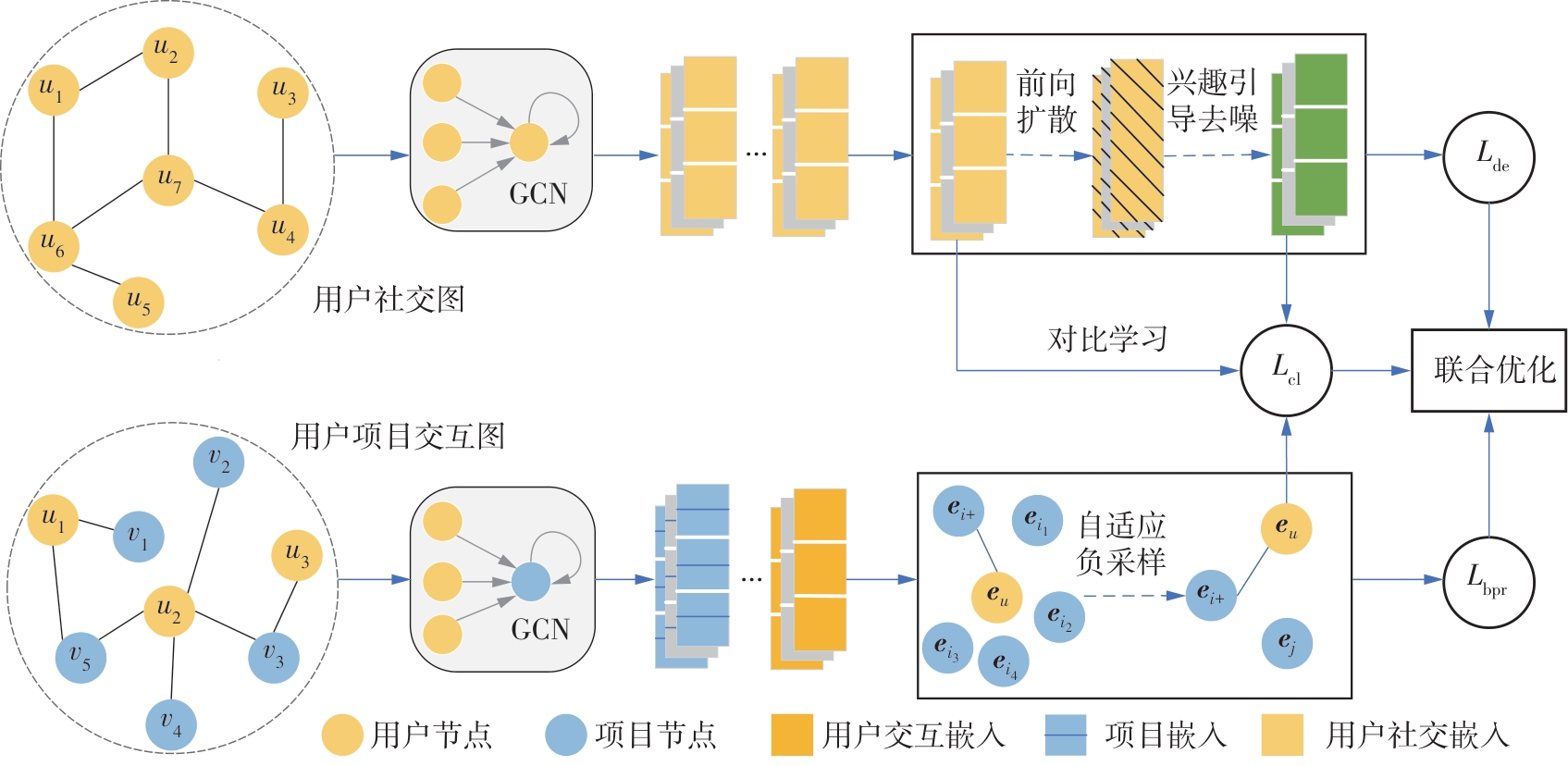
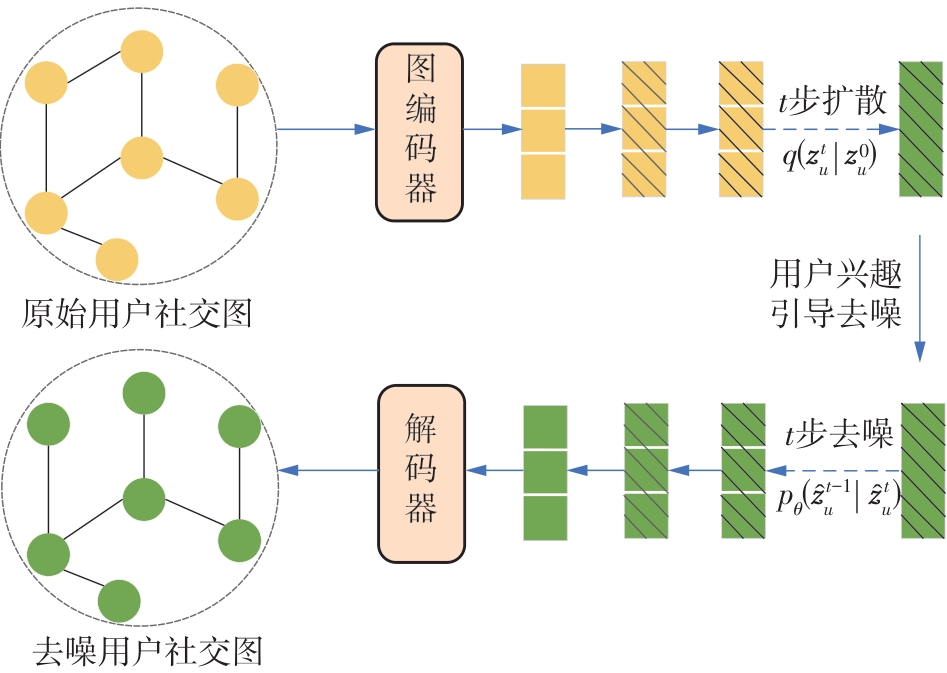
基于图神经网络的社交推荐算法利用社交网络提升推荐系统的性能。但是现有算法大多直接将原始社交图整合到推荐系统中,忽略了社交网络中存在的非同质性社交连接,从而为推荐系统引入噪声信息。此外,现有负采样方法选择固定难度的负样本,容易产生假负样本,导致模型对用户偏好的区分度不足。为解决上述问题,文中提出一种基于社交扩散和自适应负采样的推荐算法。首先,在社交网络进行前向扩散和用户兴趣引导去噪,生成同质性用户社交表示;然后利用多视图表征对齐方法,能够最大化用户表示在去噪社交图、原始社交图和用户项目交互图的互信息,优化用户表示质量;另外,根据正样本预测评分选择自适应难度的负样本,实现正负样本相似度边界的动态校准,提升模型的整体性能。实验结果表明,该文方法较当前先进模型效果显著,在Douban数据集上Recall指标和NDCG指标分别提升了12%和10.5%,在Epinions数据集上分别提升了15.6%和11.1%,在Yelp数据集上分别提升了13.8%和14.9%,验证了其能有效缓解噪声干扰,区分正负样本之间的细微差别。

关键词: 推荐算法, 社交网络, 图神经网络, 扩散模型, 对比学习, 负采样

Abstract:

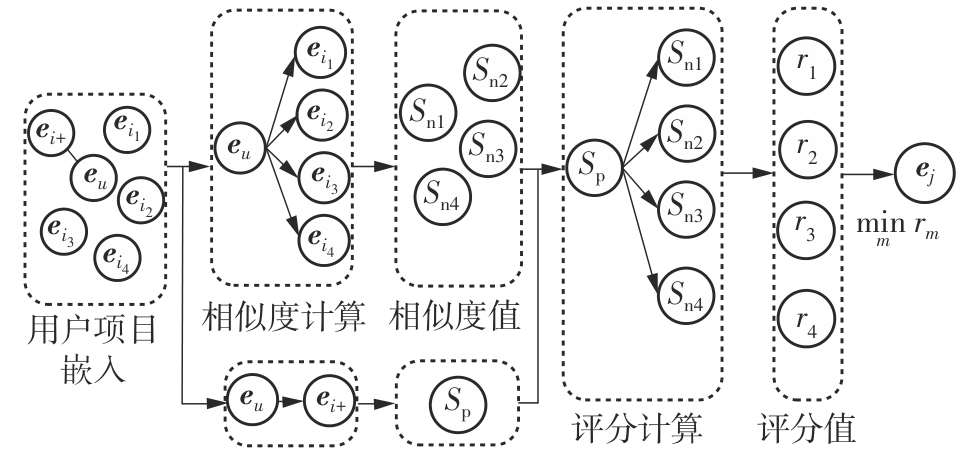
Graph Neural Network (GNN)-based social recommendation algorithms leverage social relations to improve recommendation performance. However, directly incorporating raw social graph often introduces noise due to non-homophilous connections. Moreover, existing negative sampling strategies typically adopt a fixed hardness, which may generate false negatives and weaken the model’s ability to capture user preferences. To address these limitations, this paper proposes a recommendation algorithm based on social diffusion and adaptive negative sampling. Specifically, we first apply forward diffusion and interest-guided denoising on the social network to obtain homophilic social representations. Then, a multi-view alignment mechanism is introduced to maximize mutual information among user representations from the denoised social graph, the raw social graph, and the user-item interaction graph, thereby enhancing representation quality. In addition, adaptive negative sampling dynamically adjusts sample hardness according to the predicted scores of positive items, calibrating the decision boundary between positive and negative instances. Extensive experiments demonstrate that the proposed model consistently outperforms other advanced social recommendation approaches. On the Douban dataset, Recall and NDCG increase by 12% and 10.5% respectively; on Epinions, by 15.6% and 11.1%; and on Yelp, by 13.8% and 14.9%, highlighting its effectiveness in mitigating noise interference and distinguishing subtle differences between positive and negative samples.

Key words: recommendation algorithm, social network, graph neural network, diffusion model, contrastive learning, negative sampling