Journal of South China University of Technology(Natural Science Edition) ›› 2026, Vol. 54 ›› Issue (3): 91-103.doi: 10.12141/j.issn.1000-565X.250244
• Intelligent Transportation System • Previous Articles Next Articles
Electric Bus Scheduling Optimization in Cold-Region Cities Based on Battery-Vehicle Matching
HU Baoyu, ZHANG Yuheng
- College of Civil Engineering and Transportation,Northeast Forestry University,Harbin 150040,Heilongjiang,China
-
Received:2025-07-22Online:2026-03-25Published:2025-10-31 -
About author:胡宝雨(1987—),男,副教授,博士生导师,主要从事公共交通规划与运营研究。E-mail: hubaoyu@nefu.edu.cn -
Supported by:the Natural Science Foundation of Heilongjiang Province(YQ2022E003);the China Postdoctoral Science Foundation(2023M740558);the Heilongjiang Postdoctoral Fund(LBH-Z23045)

CLC Number:
Cite this article
HU Baoyu, ZHANG Yuheng. Electric Bus Scheduling Optimization in Cold-Region Cities Based on Battery-Vehicle Matching[J]. Journal of South China University of Technology(Natural Science Edition), 2026, 54(3): 91-103.
share this article
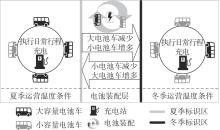
Fig. 1
Schematic diagram of electric bus battery configuration strategy"
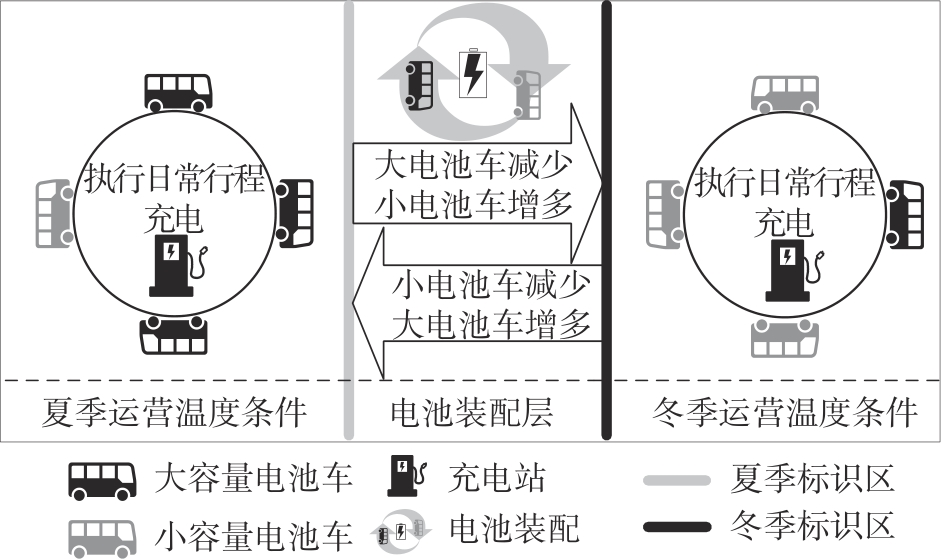
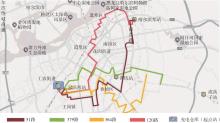
Fig. 2
Bus route map"
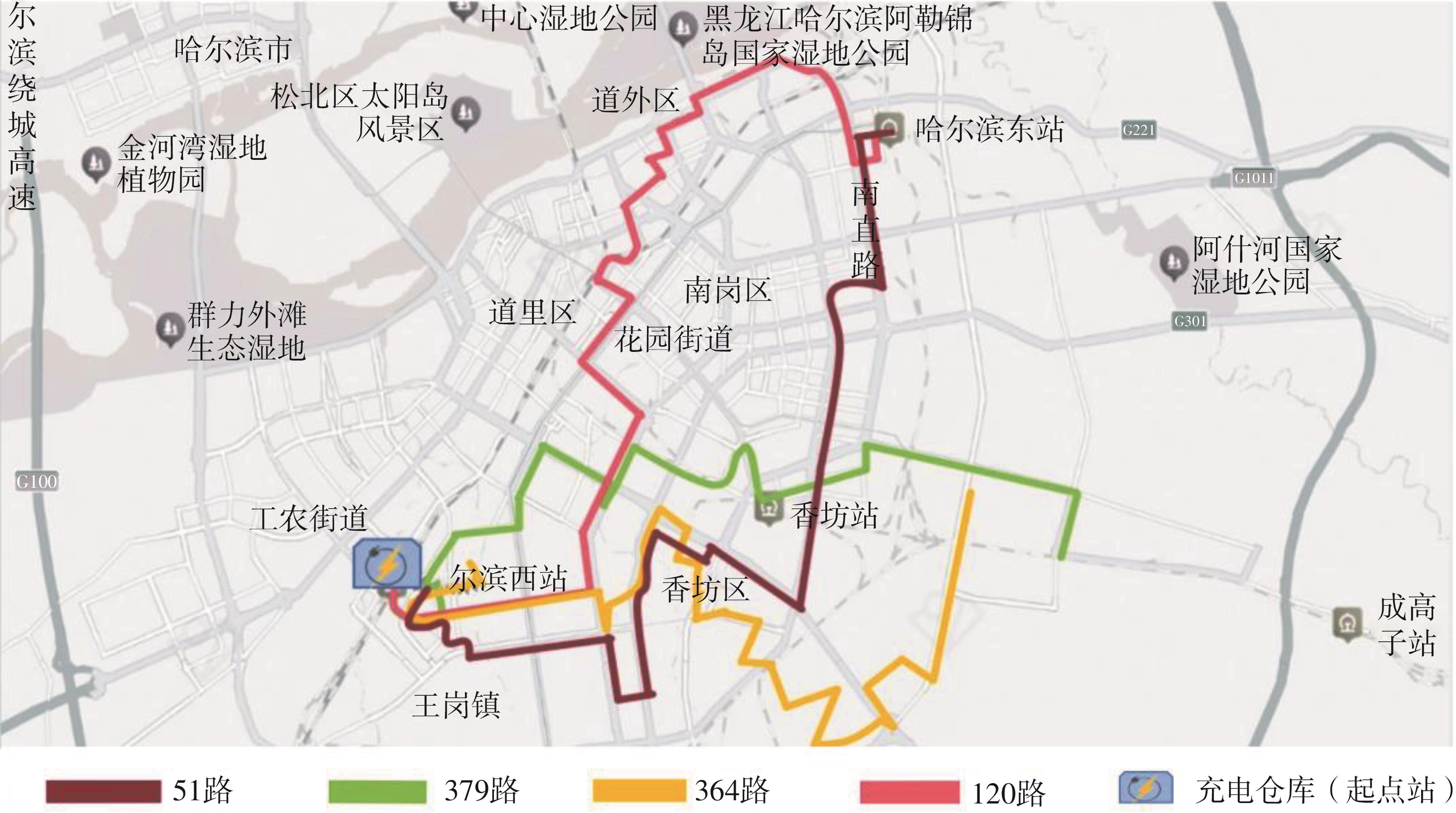

Table 1
Baseline route data"
| 线路 | 51路 | 379路 | 364路 | 120路 |
|---|---|---|---|---|
| 单程长度/km | 25.5 | 23 | 28 | 24.6 |
| 单程行程时间/h | 1.5 | 1.27 | 1.3 | 1.5 |
| 平均行程速度/(km·h-1) | 17 | 18.4 | 21.5 | 16.4 |
| 发车频率/(车次·h-1) | 9 | 11~13 | 6 | 6~7 |
Table 2
Time-of-use electricity rates"
| 06:00 — 07:00,09:00 — 11:30,15:30 — 20:00 | 1.137 |
| 07:00 — 09:00,11:30 — 15:30,20:00 — 22:30 | 0.766 |
| 22:30 — 06:00 | 0.395 |
Table 3
Demand charge"
| 参数 | 取值 | 参数 | 取值 | ||
|---|---|---|---|---|---|
| 33 | 1.3 | ||||
| 60 | 0.75 | ||||
| 1 000 | 45 | ||||
Table 4
Seasonal temperature distribution"
| 温度范围/℃ | 平均温度 | |
|---|---|---|
| 春季 | 8~23 | 16 |
| 夏季 | 22~36 | 30 |
| 秋季 | -1~16 | 5 |
| 冬季 | -36~-6 | -25 |
Table 5
Model parameters"
| 参数 | 取值 | 参数 | 取值 | ||
|---|---|---|---|---|---|
| -4.09e-4 | 37.73 | ||||
| -2.167 | 3 332.31 | ||||
| 1.408e-5 | 41.56 | ||||
| 6.13 | -2.73 | ||||
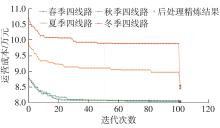
Fig. 3
Algorithm iteration curves"
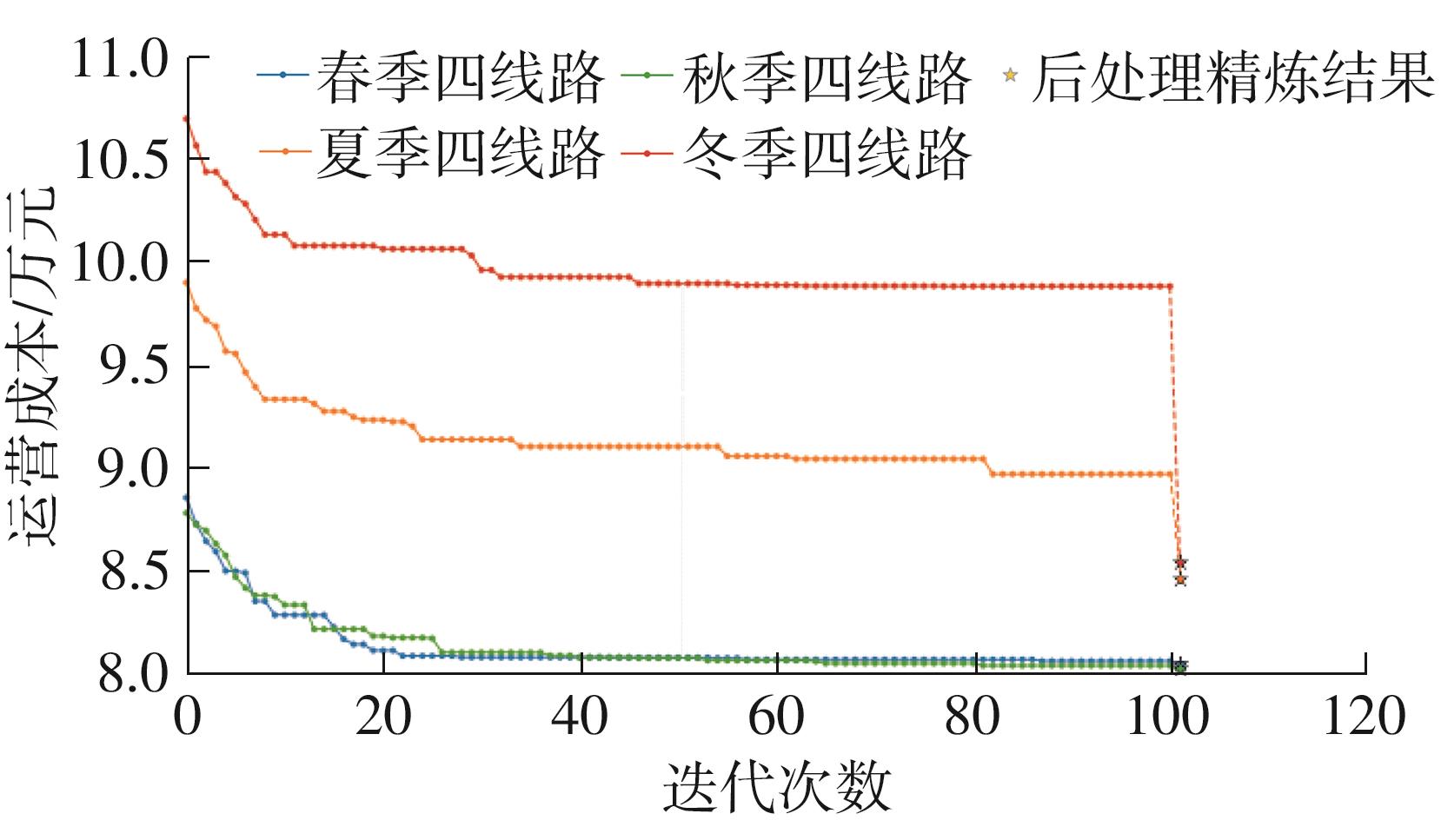
Table 6
Comparison of optimization results"
| 解 | 总车队规模/辆 | 电池数量/块 | 电池拥有成本退化值/(元· | 车辆维护费/(元· | 充电费用/(元· | 需求费用/(元· |
|---|---|---|---|---|---|---|
| 134 | 134(小) | 2.82×10⁶ | 7.37×10⁶ | 6.89×10⁶ | 3.95×10⁵ | |
| 111 | 111(大) | 1.84×10⁶ | 6.10×10⁶ | 5.62×10⁶ | 2.98×10⁵ | |
| 129 | 129(小) | 2.37×10⁶ | 7.10×10⁶ | 6.37×10⁶ | 6.54×10⁵ | |
| 112 | 91(大) 26(小) | 1.70×10⁶ | 6.13×10⁶ | 5.74×10⁶ | 5.73×10⁵ | |
| 解 | 初始总购置费用/元 | |||||
| 94 202 | 109 461 | 95 824 | 113 699 | 3.76×10⁷ | 1.82×10⁸ | |
| 92 017 | 101 147 | 91 122 | 106 851 | 3.56×10⁷ | 1.61×10⁸ | |
| 93 842 | 104 146 | 92 255 | 109 789 | 3.64×10⁷ | 1.74×10⁸ | |
| 81 798 | 86 128 | 81 694 | 87 470 | 3.09×10⁷ | 1.61×10⁸ |
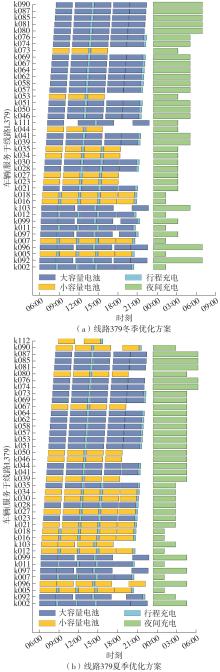
Fig. 4
Optimized electric bus schedule"
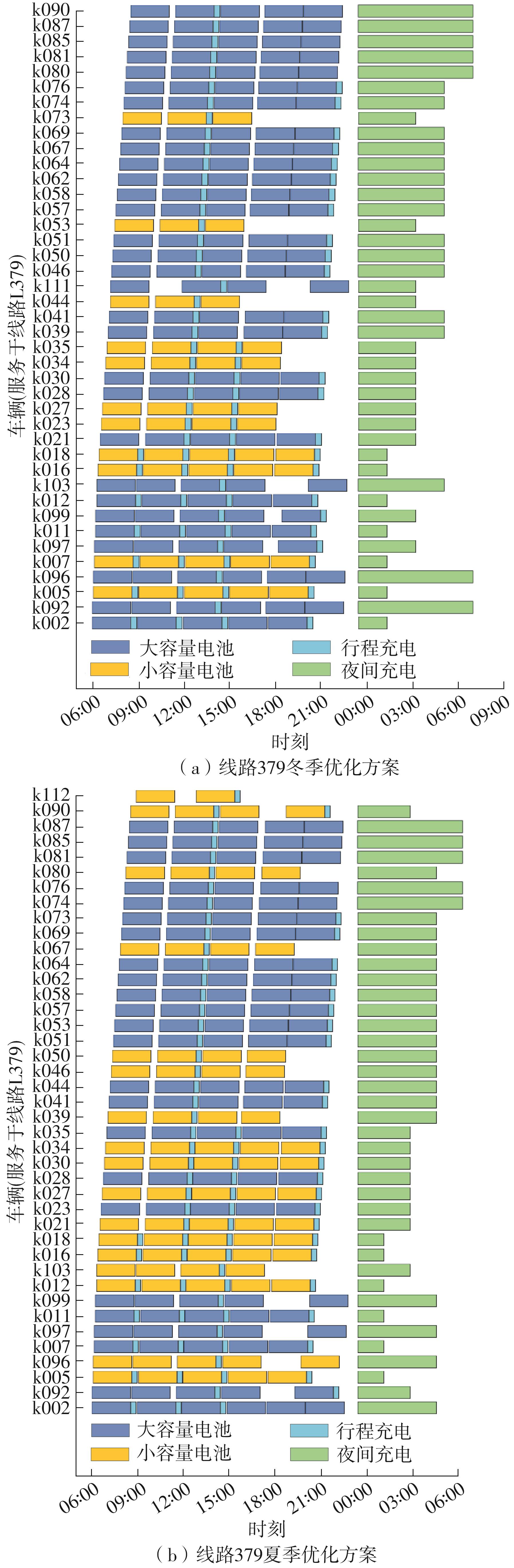
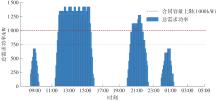
Fig. 5
Illustration of peak and average power"
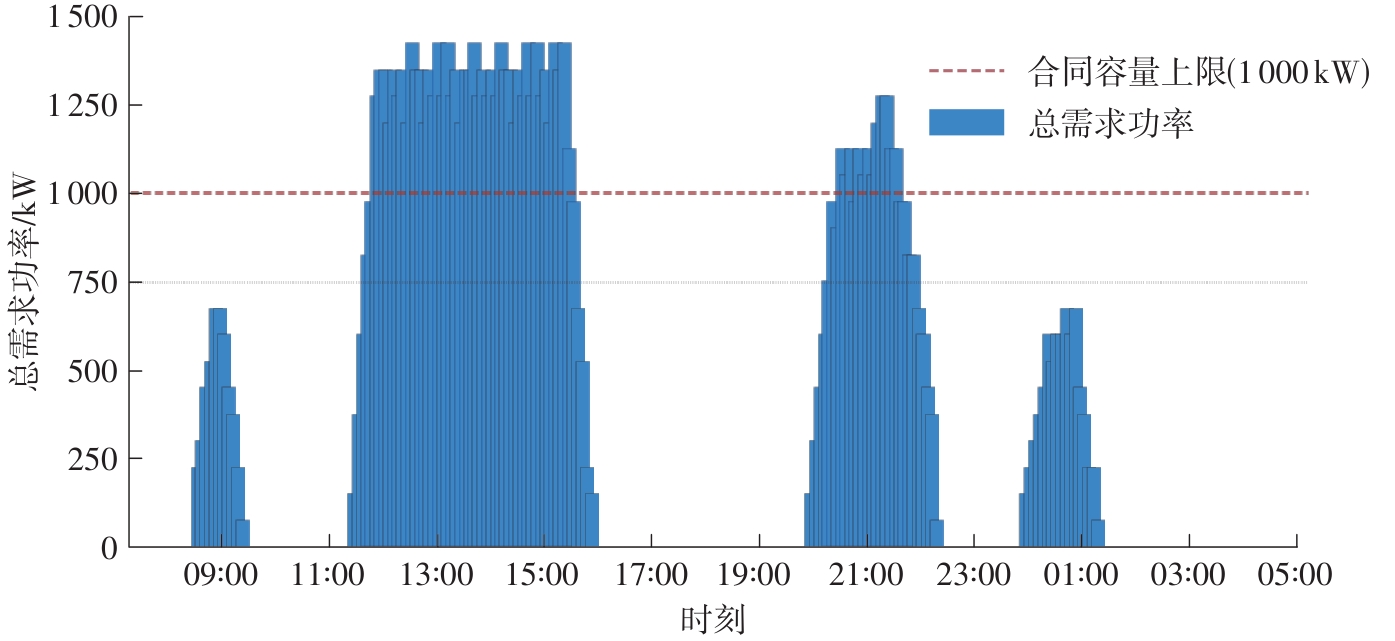
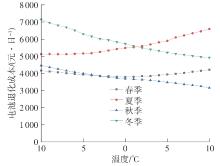
Fig. 6
Sensitivity analysis to the temperature range"
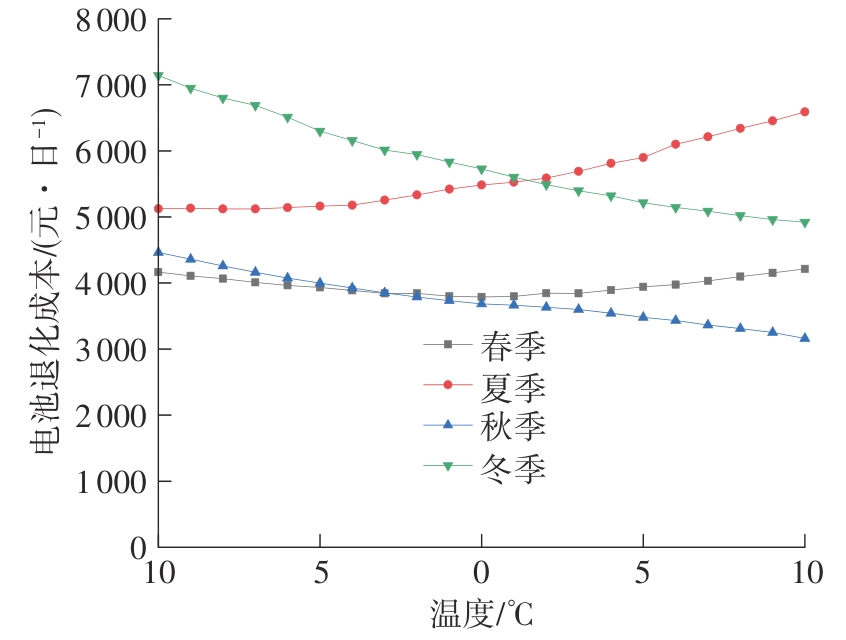
Table 7
Comparison of results for temperature ranges"
| 季节 | |||||
|---|---|---|---|---|---|
| 春季 | 91大 19小 | 89大 21小 | 90大 20小 | 92大 18小 | 91大 19小 |
| 夏季 | 88大 24小 | 91大 21小 | 89大 23小 | 85大 27小 | 82大 30小 |
| 秋季 | 87大 23小 | 84大 26小 | 83大 27小 | 89大 21小 | 91大 19小 |
| 冬季 | 86大 26小 | 79大 33小 | 82大 30小 | 87大 25小 | 88大 24小 |
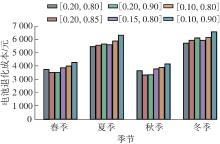
Fig. 7
Sensitivity analysis to the SOC range"
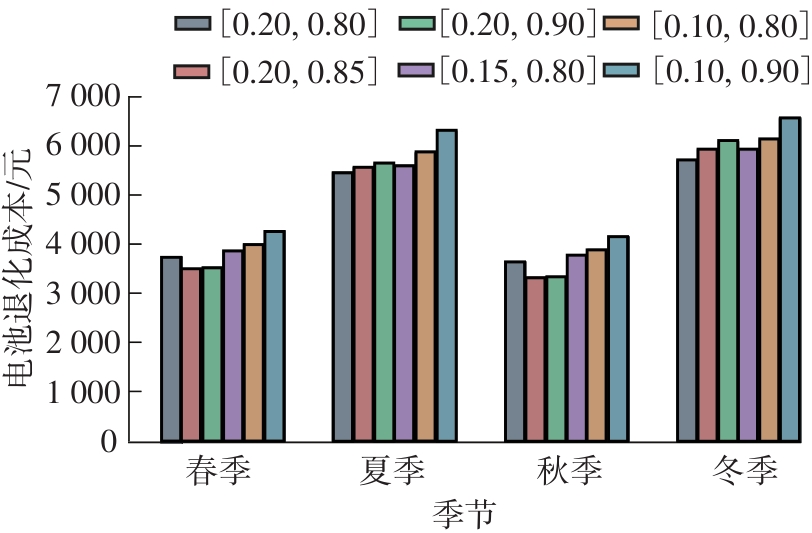
Table 8
Basic data of larger-scale instance"
| 场站 | 所在区域 | 主要线路 |
|---|---|---|
| 通江湿地 | 道里区 | 23路、42路、47路、126路、旅游观光2线 |
| 博物馆环岛 | 南岗区 | 6路、7路、8路、10路、14路、104路 |
| 哈西公路客运站 | 南岗区 | 11路、31路、120路、336路、51路、379路、364路 |
| 平房新疆大街 | 平房区 | 210路、220路、343路、370路、399路 |
| 松北科技创新城 | 松北区 | 35路、146路、环线1/2路、商务班车S5 |
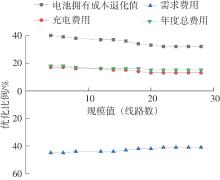
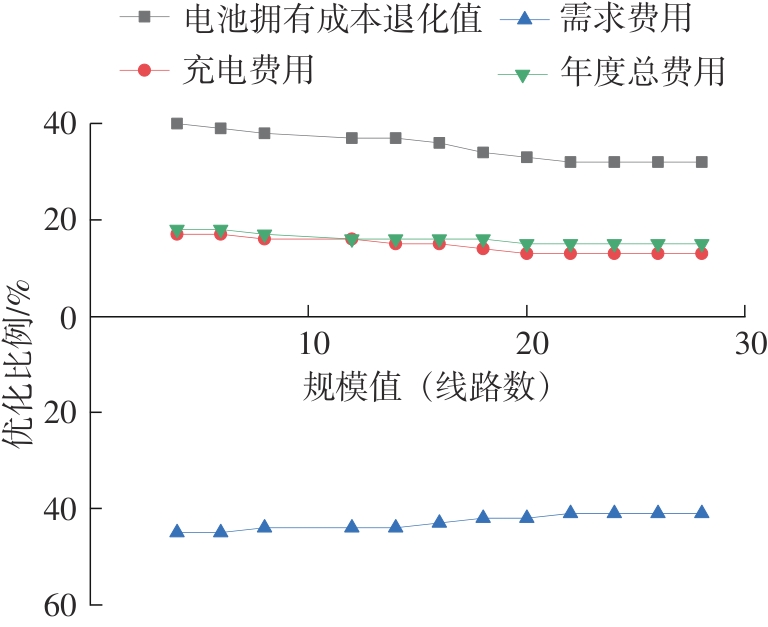
Fig. 8
Comparison of optimization results under larger-scale scenarios"
| [1] | BASMA H, MANSOUR C, HADDAD M,et al .A novel method for co-optimizing battery sizing and charging strategy of battery electric bus fleets:an application to the city of Paris[J].Energy,2023,285:129459/1-12. |
| [2] | LAM L, BAUER P .Practical capacity fading model for Li-ion battery cells in electric vehicles[J].IEEE Transactions on Power Electronics,2012,28(12):5910-5918. |
| [3] | ZHOU Y, MENG Q, ONG G P .Electric bus charging scheduling for a single public transport route considering nonlinear charging profile and battery degradation effect[J].Transportation Research Part B:Methodological, 2022,159:49-75. |
| [4] | ZENG Z, WANG S, QU X .On the role of battery degradation in en-route charge scheduling for an electric bus system[J].Transportation Research Part E:Logistics and Transportation Review,2022,161:102727/1-15. |
| [5] | 郑斐峰,王志鑫,刘明 .考虑峰谷分时电价和电池损耗成本的纯电动公交车充电调度优化研究[J].中国管理科学,2024,32(11):125-135. |
| ZHENG Feifeng, WANG Zhixin, LIU Ming .Charging scheduling optimization of battery electric buses considering peak-valley electricity price and battery damage cost[J].Chinese Journal of Mangement Science,2024, 32(11):125-135. | |
| [6] | ZHANG L, WANG S, QU X .Optimal electric bus fleet scheduling considering battery degradation and non-linear charging profile[J].Transportation Research Part E:Logistics and Transportation Review,2021,154:102445/1-27. |
| [7] | MANZOLLI J A, TROVAO J P F, ANTUNES C H .Electric bus coordinated charging strategy considering V2G and battery degradation[J].Energy,2022,254:124252/1-11. |
| [8] | WANG J, KANG L, LIU Y .Optimal scheduling for electric bus fleets based on dynamic programming approach by considering battery capacity fade[J].Renewable and Sustainable Energy Reviews,2020,130:109978/1-13. |
| [9] | 陈丽娟,秦萌,顾少平,等 .计及电池损耗的电动公交车参与V2G的优化调度策略[J].电力系统自动化,2020,44(11):52-60. |
| CHEN Lijuan, QIN Meng, GU Shaoping,et al .Optimal dispatching strategy of electric bus participating in vehicle-to-grid considering battery loss[J].Automation of Electric Power System,2020,44(11):52-60. | |
| [10] | HE Y, LIU Z, SONG Z .Optimal charging scheduling and management for a fast-charging battery electric bus system[J].Transportation Research Part E:Logistics and Transportation Review,2020,142:102056/1-24. |
| [11] | CONG Y, WANG H, BIE Y,et al .Double-battery configuration method for electric bus operation in cold regions[J].Transportation Research Part E:Logistics and Transportation Review,2023,180:103362/1-21. |
| [12] | GAIROLA P, NEZAMUDDIN N .Optimization framework for integrated battery electric bus planning and charging scheduling[J].Transportation Research Part D:Transport and Environment,2023,118:103697/1-20. |
| [13] | SHANG H, LIU Y, WU W,et al .Multi-depot vehicle scheduling with multiple vehicle types on overlapped bus routes[J].Expert Systems with Applications,2023,228:120352/1-16. |
| [14] | DUAN M, LIAO F, QI G,et al .Integrated optimization of electric bus scheduling and charging planning incorporating flexible charging and timetable shifting strategies[J].Transportation Research Part C:Emerging Technologies,2023,152:104175/1-26. |
| [15] | SARASKETA-ZABALA E, GANDIAGA I,RODRIGUEZ- |
| MARTINEZ L M,et al .Calendar ageing analysis of a LiFePO4/graphite cell with dynamic model validations:towards realistic lifetime predictions[J].Journal of Power Sources,2014,272:45-57. | |
| [16] | LIAO L, ZUO P, MA Y,et al .Effects of temperature on charge/discharge behaviors of LiFePO4 cathode for Li-ion batteries[J].Electrochimica Acta,2012,60:269-273. |
| [17] | WANG Y, MA J, ZHANG L,et al .Spatial distribution of,and variations in,cold regions in china from 1961 to 2019[J].Sustainability,2022,14(1):465/1-12 |
| [1] | LI Kunchen, ZHANG Yali, YUAN Wei, et al. Vehicle Behavior Prediction for Electric Buses Based on Phase Space Reconstruction [J]. Journal of South China University of Technology(Natural Science Edition), 2026, 54(4): 1-. |
| [2] | HU Yucong, HUANG Weibin, CHEN Junhua, WU Weitiao. Joint Optimization of Electric Bus Charging Station Siting and Vehicle Scheduling [J]. Journal of South China University of Technology(Natural Science Edition), 2026, 54(3): 79-90. |
| [3] | YANG Yonghui, LI Zhixian, WANG Minhui, XU Hanming, CHEN Yingcong, WEN Shangsheng. UWB/INS Indoor Positioning Method Based on Self-Resetting Genetic Particle Filtering [J]. Journal of South China University of Technology(Natural Science Edition), 2026, 54(1): 83-93. |
| [4] | ZHANG Yali, SHEN Yubo, YUAN Wei, ZHANG Kang, ZHANG Huiming. Evaluation Model for Eco-Driving Performance of Pure Electric Bus Drivers [J]. Journal of South China University of Technology(Natural Science Edition), 2025, 53(8): 29-41. |
| [5] | DU Heng, LÜ Yanting, HUANG Hui, MA Baizhou. High-Precision Improved Hyperbolic Tangent Model for Multi-Stage Flow Channel Magnetorheological Damper [J]. Journal of South China University of Technology(Natural Science Edition), 2025, 53(7): 39-49. |
| [6] | HU Baoyu, QI Yue, JIA Dianjing, CHENG Guozhu. Joint Optimization of Loop Line Electric Bus Vehicle Scheduling and Driver Scheduling [J]. Journal of South China University of Technology(Natural Science Edition), 2025, 53(6): 91-103. |
| [7] | XIONG Jie, LAI Kefan, LI Tongfei, et al. Charging Schedule Optimization of Battery Electric Bus Considering Nonlinear Charging Profile [J]. Journal of South China University of Technology(Natural Science Edition), 2024, 52(9): 115-130. |
| [8] | WANG Yongxing, BI Jun, XIE Dongfan, SAI Qiuyue. Layout Optimization of Static Wireless Charging Facilities for Electric Buses by Considering Battery Degradation Characteristics [J]. Journal of South China University of Technology(Natural Science Edition), 2024, 52(6): 45-55. |
| [9] | LU Yiqin, HUANG Chenghai, CHEN Jiarui, et al. Time Sensitive Network Scheduling Method Based on Genetic Algorithm [J]. Journal of South China University of Technology(Natural Science Edition), 2024, 52(2): 1-12. |
| [10] | QIU Yudong, WANG Zhan, XIE Zhishen. Optimization for Steel Frames with Semirigid Connections Based on Hybrid Algorithms [J]. Journal of South China University of Technology(Natural Science Edition), 2023, 51(6): 72-77. |
| [11] | ZHANG Wenhui, SU Jiaqi, HA Zihong, et al. Location and Capacity Optimization Model of Battery-Swapped Electric Bus Charging Station [J]. Journal of South China University of Technology(Natural Science Edition), 2023, 51(10): 126-134. |
| [12] | BIE Yiming, ZHU Aoze, CONG Yuan. Electric Bus Scheduling Method Considering Differences in the State of Health of Batteries [J]. Journal of South China University of Technology(Natural Science Edition), 2023, 51(10): 11-21. |
| [13] | WENG Jiancheng, WANG Maolin, LIN Pengfei, et al. Cross-line Combined Bus Scheduling Optimization Method Based on Passenger Flow Characteristic Identification [J]. Journal of South China University of Technology(Natural Science Edition), 2022, 50(9): 39-48. |
| [14] | QIN Yaqin, QIAN Zhengfu, XIE Jiming, et al. Cooperative Lane Change Decision-Making Model of Bottleneck Emergency Section in Weaving Area Based on Social Force [J]. Journal of South China University of Technology(Natural Science Edition), 2022, 50(7): 66-75. |
| [15] | ZHENG Yajing, LI Yaohui, JIN Wenzhou. Connection Scheme Optimization of Last Trains of Urban Mass Transit Network Based on Considering the Transfer Passengers [J]. Journal of South China University of Technology(Natural Science Edition), 2022, 50(5): 32-39. |
| Viewed | ||||||
|
Full text |
|
|||||
|
Abstract |
|
|||||