Journal of South China University of Technology(Natural Science Edition) ›› 2026, Vol. 54 ›› Issue (3): 160-171.doi: 10.12141/j.issn.1000-565X.250120
• Materials Science & Technology • Previous Articles Next Articles
Durability Analysis of Load-Bearing Recycled Concrete Blocks in Severe Cold Regions of Qinghai-Tibet
QI Yunpeng1, WANG Qiusheng1, LI Zhiyi2, XIONG Yijun1
- 1.The Key Laboratory of Urban Security and Disaster Engineering of Ministry of Education,Beijing University of Technology,Beijing 100124,China
2.Hunan Economic Institute Electric Power Design Co. ,Ltd. ,Changsha 410004,Hunan,China
-
Received:2025-04-23Online:2026-03-25Published:2025-10-10 -
Contact:王秋生(1977—),男,博士,教授,主要从事岩土类材料变形破坏机理及新型材料研制研究。 E-mail:wangqs@bjut.edu.cn -
About author:齐云鹏(1995—),男,博士生,主要从事固废材料性能改良及微观机理研究。E-mail:2415998292@qq.com -
Supported by:the National Natural Science Foundation of China(51679003)

CLC Number:
Cite this article
QI Yunpeng, WANG Qiusheng, LI Zhiyi, XIONG Yijun. Durability Analysis of Load-Bearing Recycled Concrete Blocks in Severe Cold Regions of Qinghai-Tibet[J]. Journal of South China University of Technology(Natural Science Edition), 2026, 54(3): 160-171.
share this article

Table 1
Physical properties of aggregates"
| 骨料 | 表观密度/(kg·m-3) | 堆积密度/(kg·m-3) | 空隙率/% | 含泥量/% | 吸水率/% | 压碎指标/% |
|---|---|---|---|---|---|---|
| 天然碎石 | 2 630 | 1 564 | 41 | 0.3 | 0.47 | 10.4 |
| 再生粗骨料 | 2 594 | 1 410 | 46 | 0.5 | 5.19 | 20.6 |
| 天然河砂 | 2 600 | 1 801 | 31 | 0.5 | 2.30 | |
| 再生细骨料 | 2 468 | 1 693 | 33 | 1.6 | 19.60 |
Table 2
Main chemical composition of cementitious materials"
| 材料 | SiO2 | Al2O3 | Fe2O3 | CaO | MgO | SO3 | Na2O | K2O |
|---|---|---|---|---|---|---|---|---|
| 水泥 | 20.45 | 4.99 | 4.10 | 59.76 | 2.13 | 2.93 | 0.17 | 0.71 |
| 粉煤灰 | 46.72 | 31.16 | 8.35 | 4.07 | 2.83 | 1.27 | 0.63 | 0.59 |
| 矿渣 | 30.19 | 15.01 | 2.14 | 36.35 | 8.78 | 1.68 | 0.49 | 0.45 |
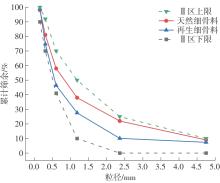
Fig.1
Particle gradation curves"
Table 3
Design mix ratio of recycled concrete blocks"
| 试样 | 水玻璃 | 水 | 水泥 | 再生粗骨料 | 碎石 | 河砂 | 再生细骨料 | 活性掺合料 | F/S复掺比 | |
|---|---|---|---|---|---|---|---|---|---|---|
| 粉煤灰(F) | 矿渣(S) | |||||||||
| A1 | 50 | 100 | 500 | 1 172 | 578 | |||||
| A2 | 50 | 100 | 500 | 1 172 | 520 | 58 | ||||
| A3 | 50 | 100 | 500 | 1 172 | 405 | 173 | ||||
| A4 | 50 | 100 | 500 | 1 172 | 289 | 289 | ||||
| B1 | 50 | 100 | 300 | 1 172 | 578 | 200 | 4∶0 | |||
| B2 | 50 | 100 | 300 | 1 172 | 578 | 150 | 50 | 3∶1 | ||
| B3 | 50 | 100 | 300 | 1 172 | 578 | 100 | 100 | 2∶2 | ||
| B4 | 50 | 100 | 300 | 1 172 | 578 | 50 | 150 | 1∶3 | ||
| B5 | 50 | 100 | 300 | 1 172 | 578 | 200 | 0∶4 | |||
| C | 50 | 100 | 500 | 1 172 | 578 | |||||
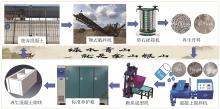
Fig.2
Manufacturing process of recycled concrete block"
Table 4
Mechanical properties of recycled concrete block"
| 试样 | 块体密度/(kg·m-3) | 抗压强度/MPa | 抗折强度/MPa | 折压比 | 成本/(元·m-3) |
|---|---|---|---|---|---|
| A1 | 1 162±0.88 | 10.42±0.89 | 3.46±0.83 | 0.33 | 359.74 |
| A2 | 1 138±0.78 | 9.26±0.50 | 3.14±0.06 | 0.34 | 355.99 |
| A3 | 1 122±0.94 | 8.27±0.99 | 2.88±0.22 | 0.35 | 348.55 |
| A4 | 1 119±0.06 | 7.11±0.84 | 2.17±0.97 | 0.31 | 341.05 |
| B1 | 1 182±0.94 | 10.73±0.58 | 3.73±0.39 | 0.35 | 329.23 |
| B2 | 1 174±0.30 | 11.77±0.35 | 3.89±0.80 | 0.33 | 330.93 |
| B3 | 1 161±0.15 | 9.67±0.16 | 3.33±0.79 | 0.34 | 332.63 |
| B4 | 1 147±0.60 | 8.57±0.11 | 2.93±0.08 | 0.34 | 334.33 |
| B5 | 1 126±0.49 | 7.41±0.94 | 2.57±0.93 | 0.35 | 336.03 |
| C | 1 211±0.58 | 10.49±0.95 | 3.81±0.66 | 0.36 | 429.43 |
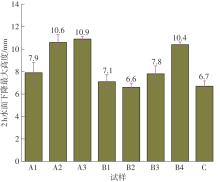
Fig.3
Impermeability of load-bearing recycled concrete block"
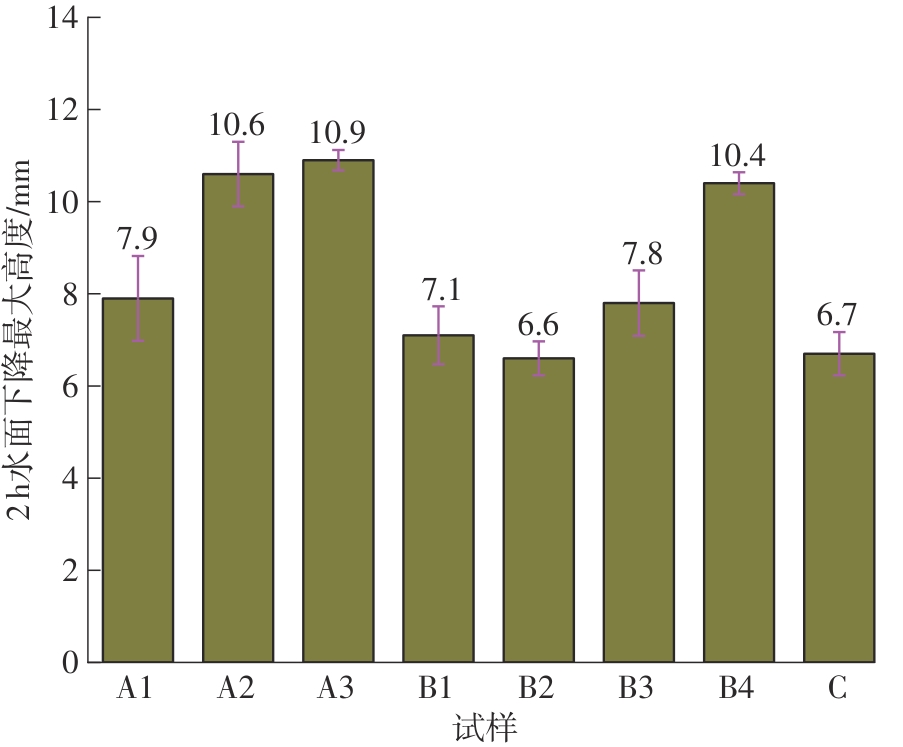
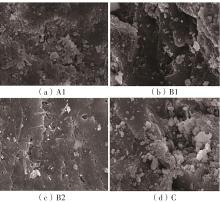
Fig.4
Microstructure of different block samples"
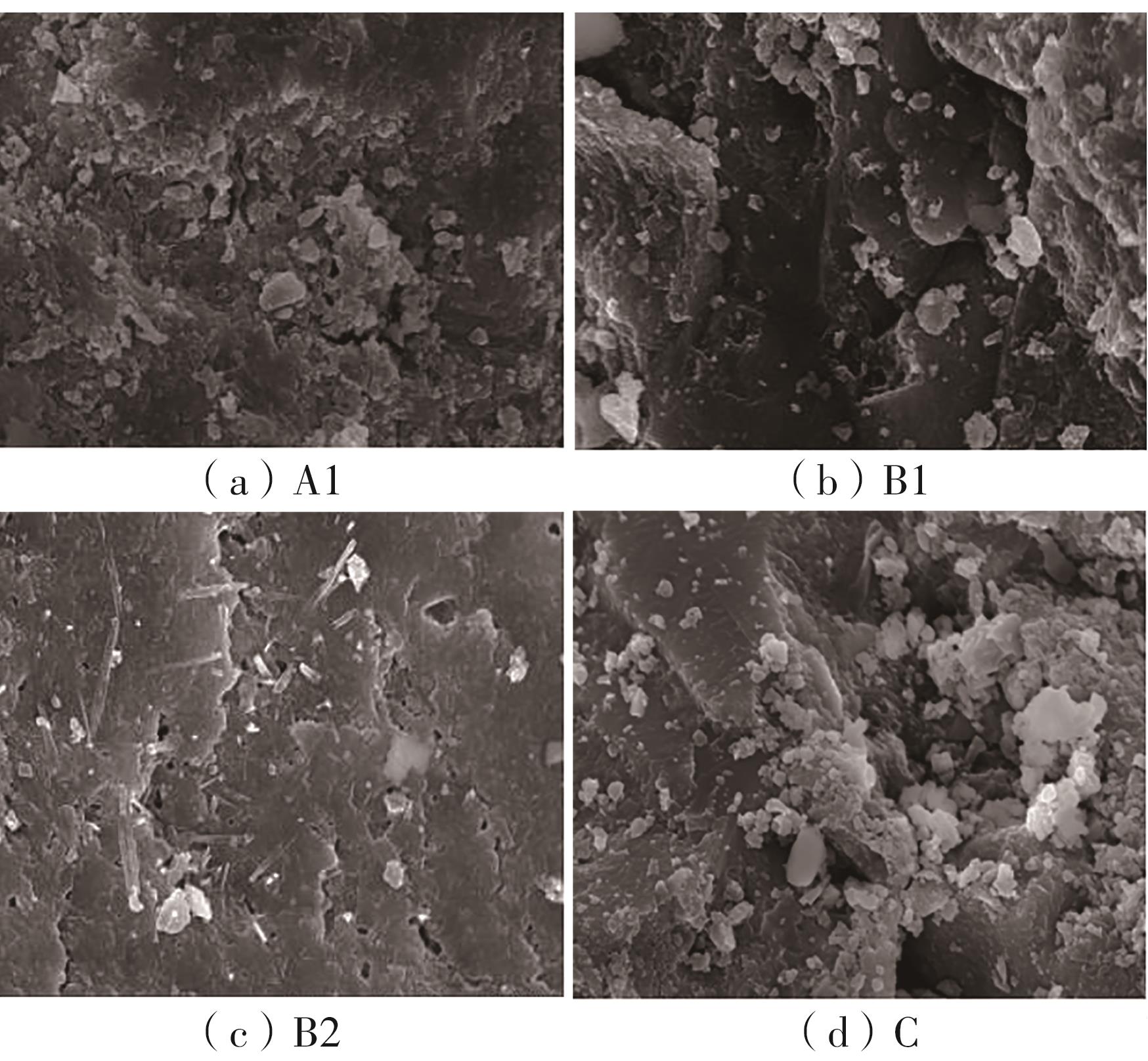
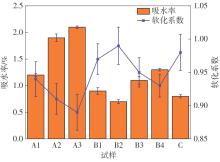
Fig.5
Water resistance of load-bearing recycled concrete block"
Fig.6
Relationship between softening coefficient and water absorption of block"
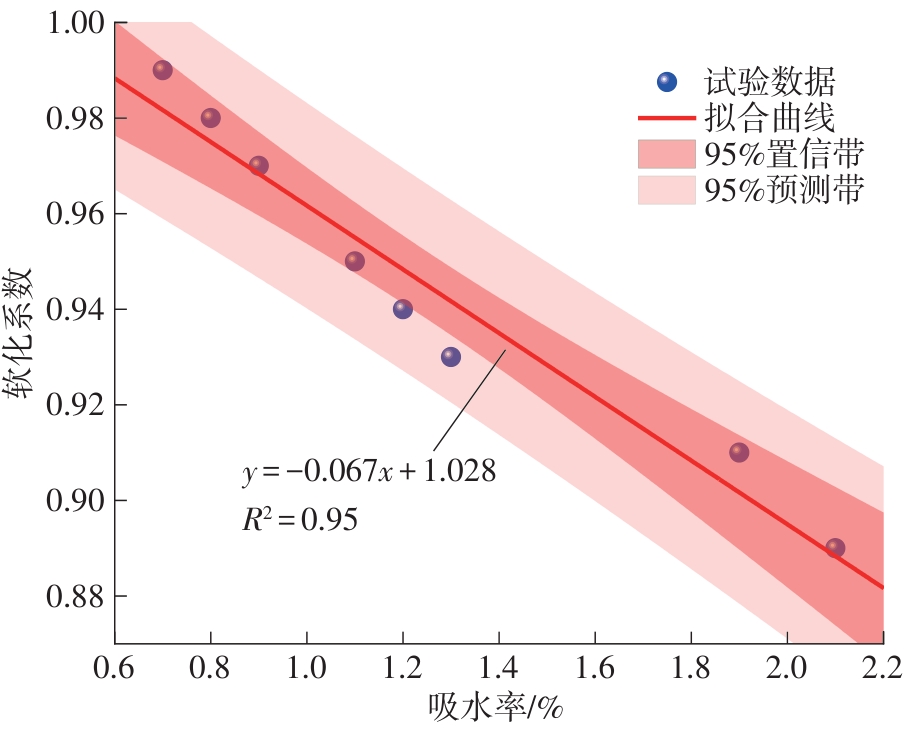
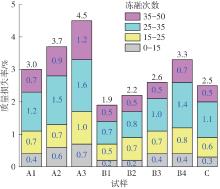
Fig.7
Freeze-thaw mass loss of load-bearing recycled concrete block"
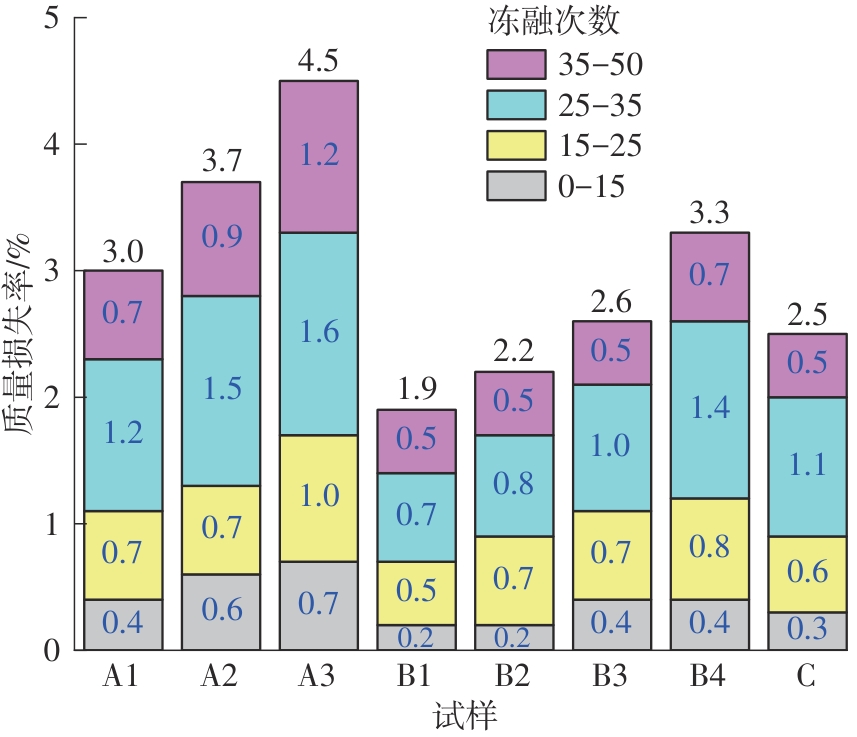
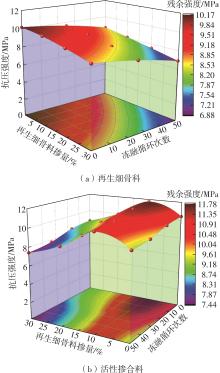
Fig.8
Effect of freeze-thaw on compressive strength of block"
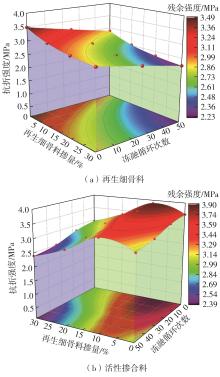
Fig.9
Effect of freeze-thaw on flexural strength of block"
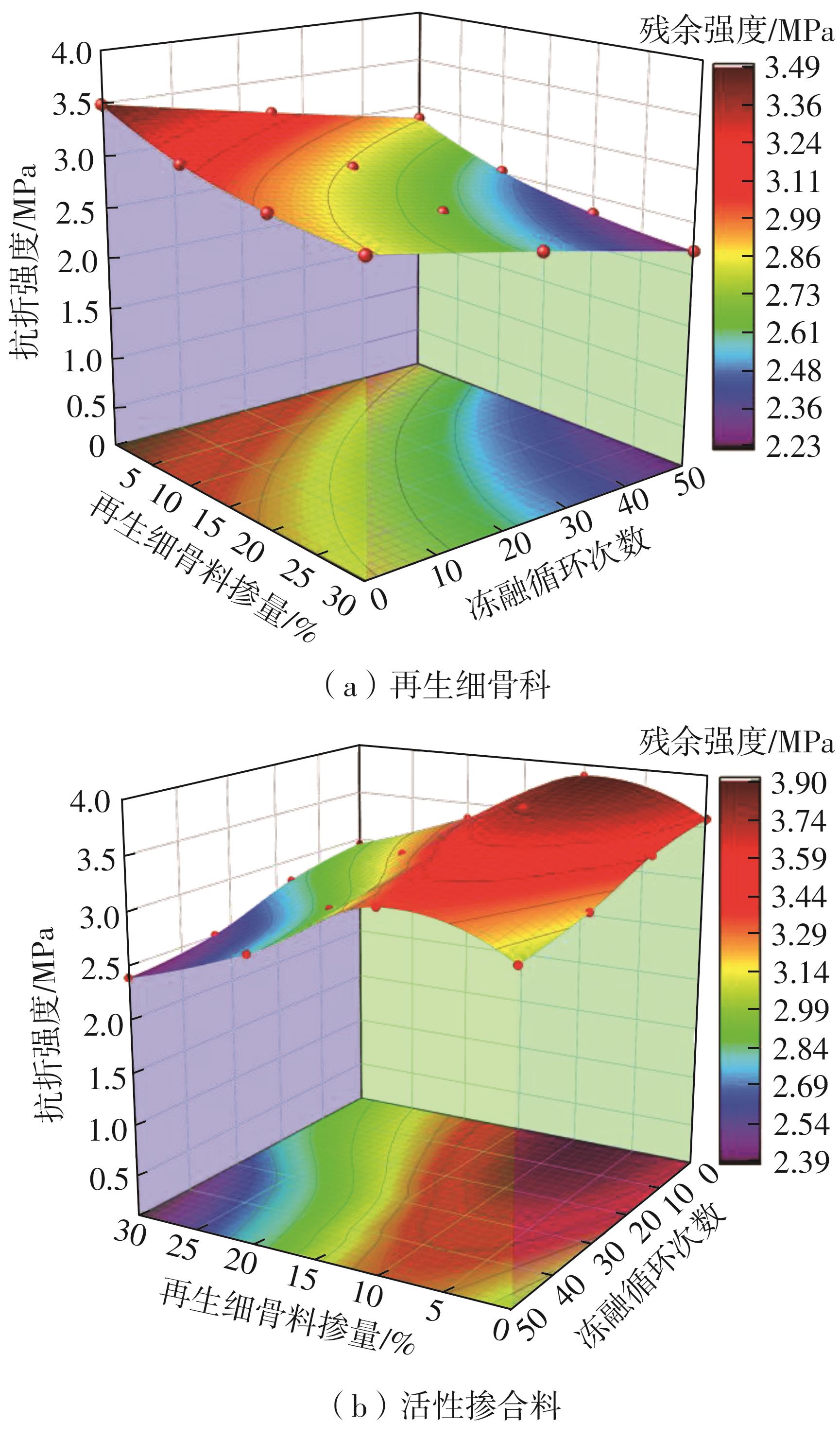
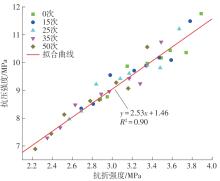
Fig.10
Relationship between compressive strength and fle-xural strength of block"
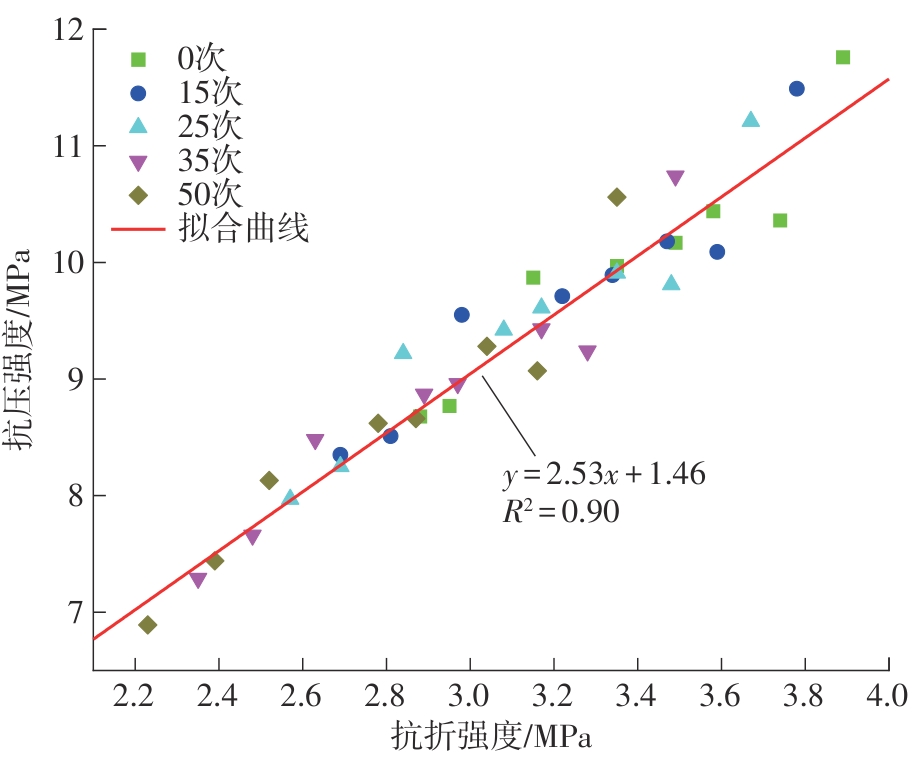
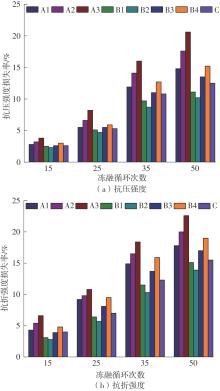
Fig.11
Freeze-thaw strength loss of load-bearing recycled concrete block"
Fig.12
Internal pore distribution of blocks with different freeze-thaw times"
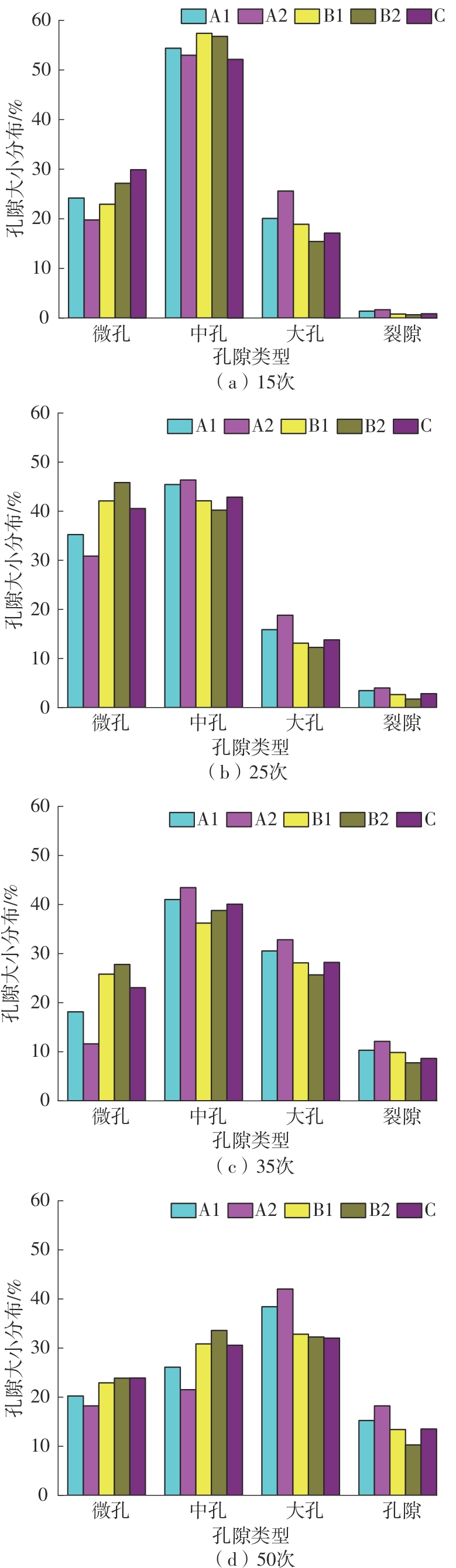
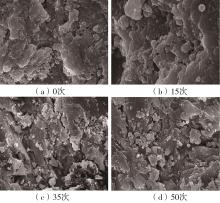
Fig.13
Change characteristics of block microstructure before and after freeze-thaw"
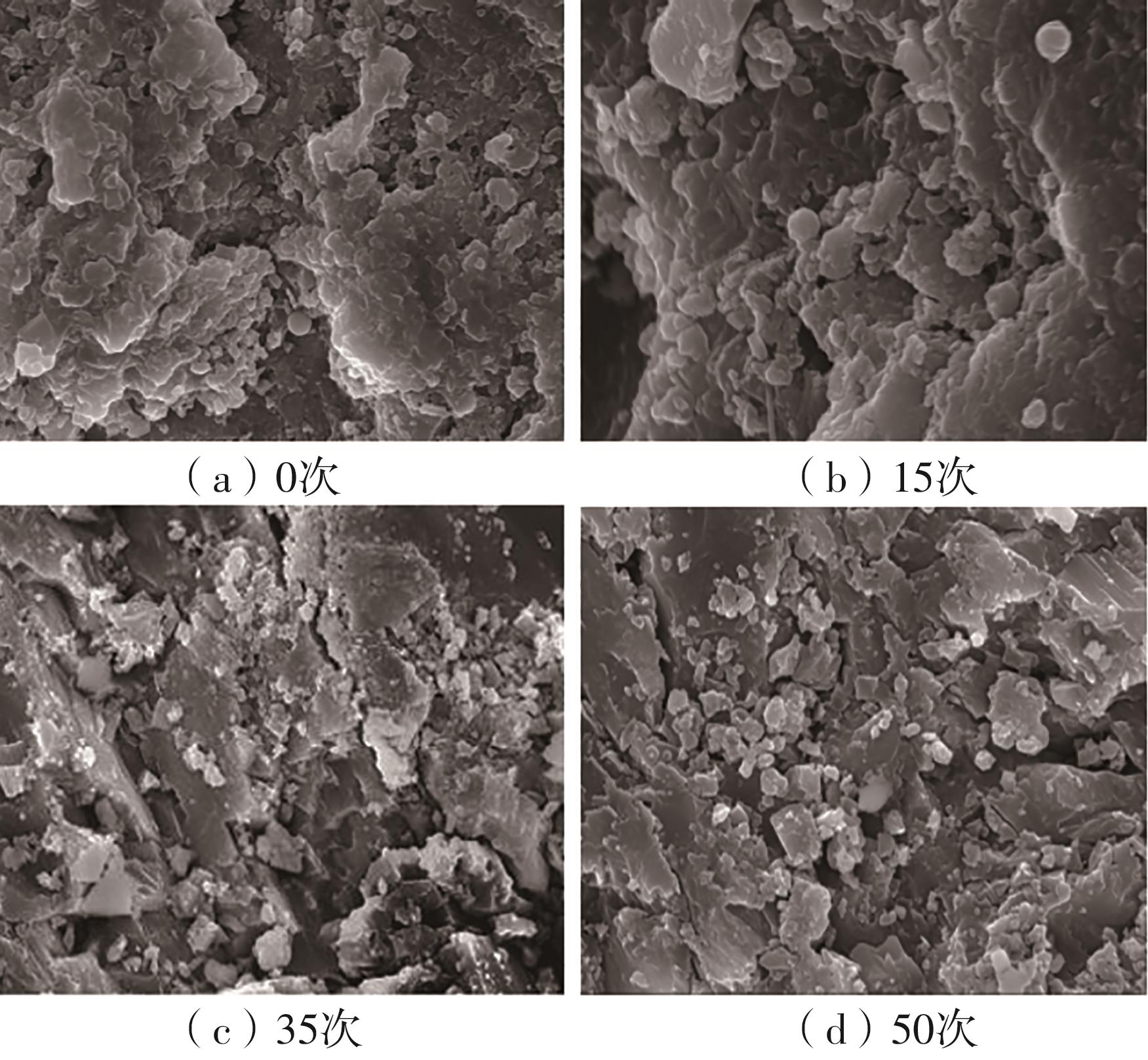
Fig. 14
Schematic diagram of water transport and pore change during freeze-thaw process"
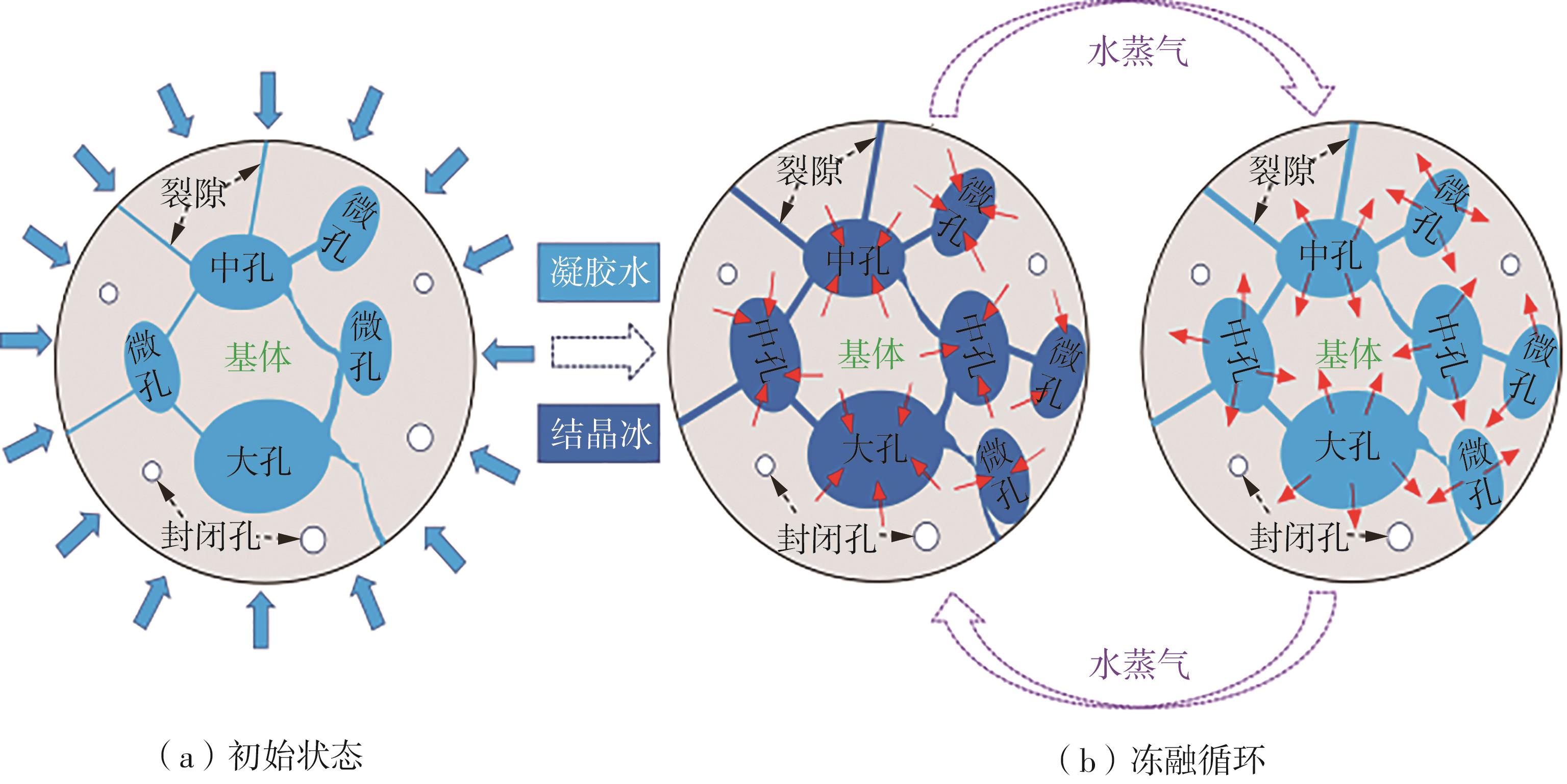
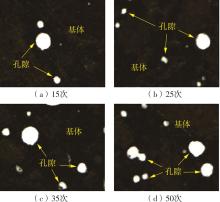
Fig.15
Internal pore evolution of blocks with different freeze-thaw times"
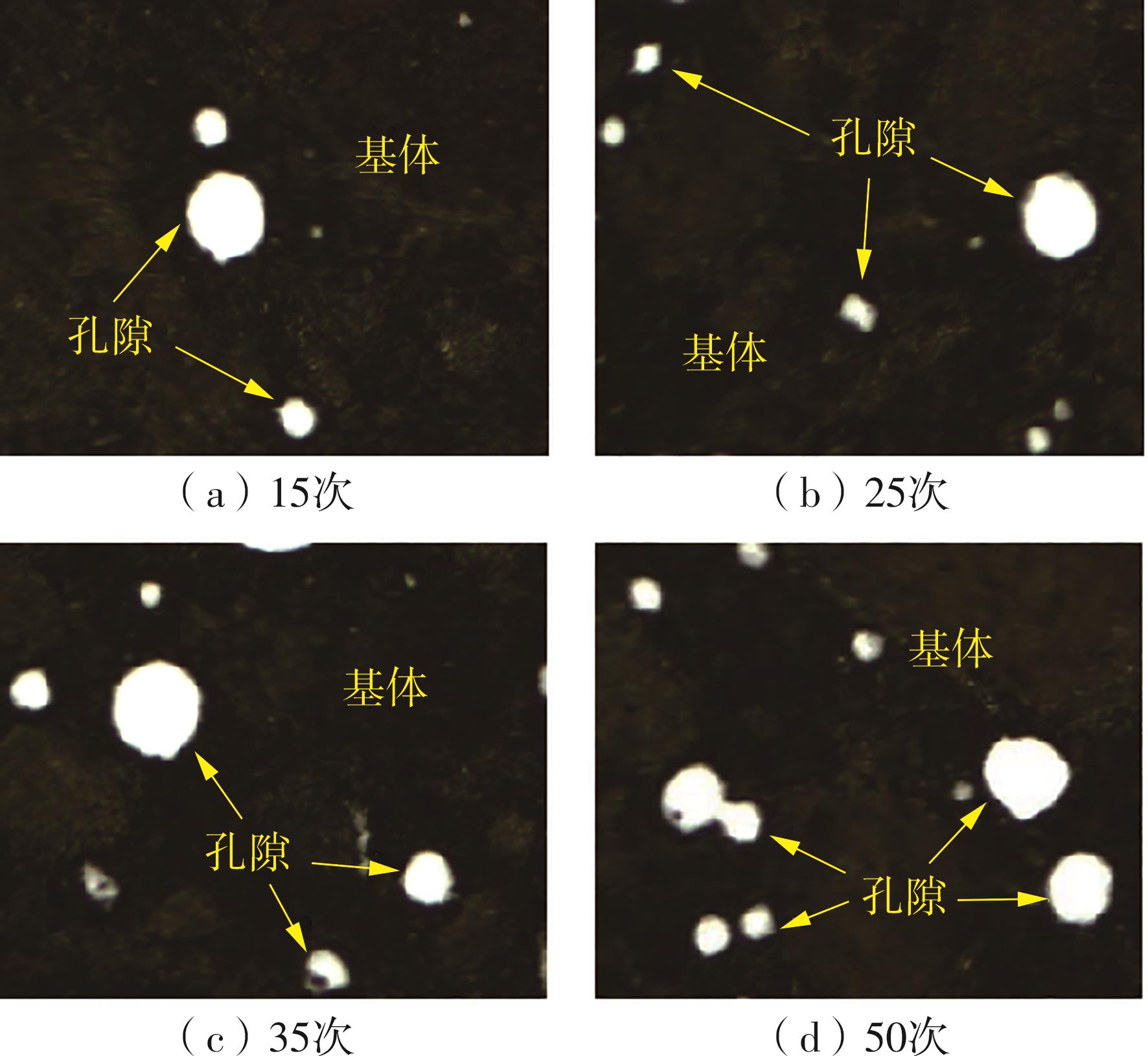
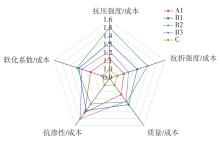
Fig.16
Performance comparison of different blocks after 50 freeze-thaw cycles"
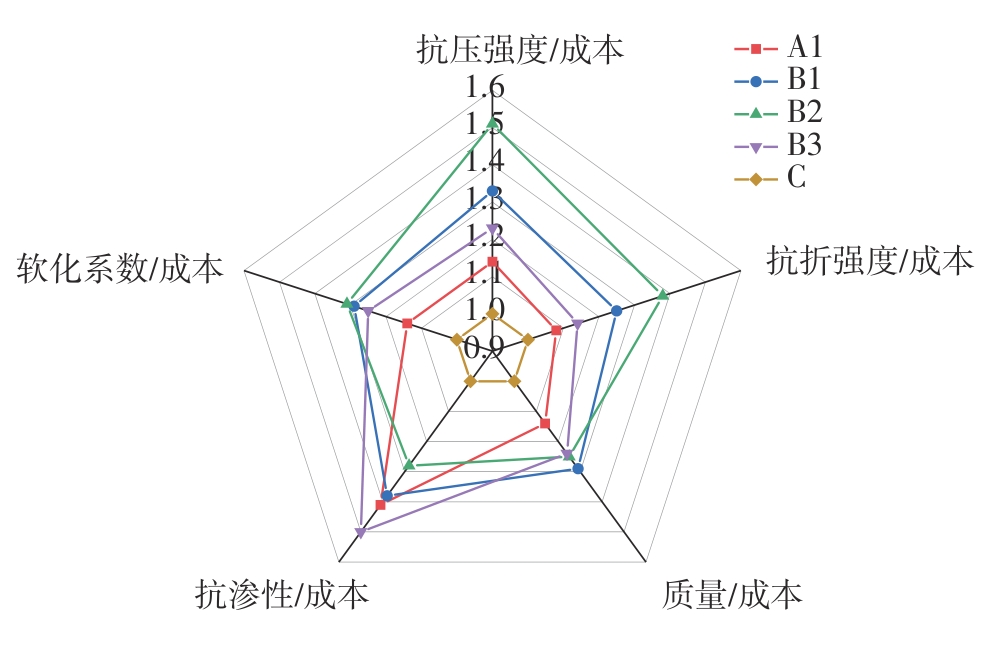
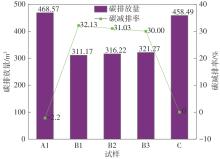
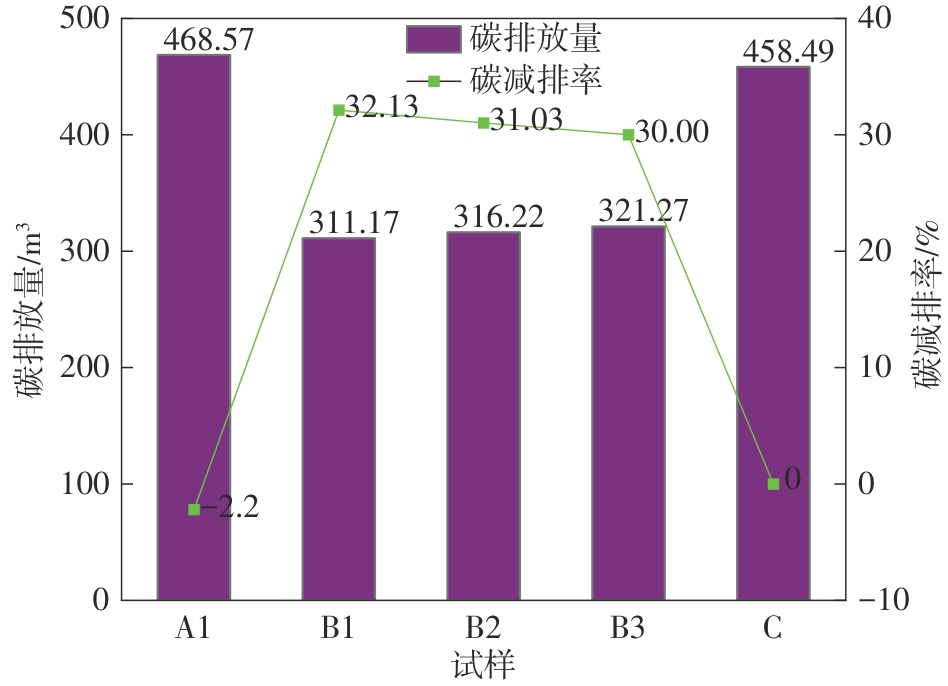
Fig.17
Comparison of carbon emissions and carbon reduction rates of different blocks"
| [1] | 蒋正武,高文斌,杨巧,等 .低碳混凝土的技术理念与途径思考[J].建筑材料学报,2023,26(11):1143-1150. |
| JIANG Zhengwu, GAO Wenbin, YANG Qiao, et al .Technical principles and approaches for low carbon concrete[J].Journal of Building Materials,2023,26(11):1143-1150. | |
| [2] | 肖建庄,张航华,唐宇翔,等 .废弃混凝土再生原理与再生混凝土基本问题[J].科学通报,2023,68(5):510-523. |
| XIAO Jianzhuang, ZHANG Hanghua, TANG Yuxiang,et al .Principles for waste concrete recycling and basic problems of recycled concrete[J].Chinese Science Bulletin, 2023, 68(5): 510-523. | |
| [3] | 张军辉,丁乐,张安顺 .建筑垃圾再生料在路基工程中的应用综述[J].中国公路学报,2021,34(10):135-154. |
| ZHANG Jun-hui, DING Le, ZHANG An-shun .Application of recycled aggregates from construction and demoliton waste in subgrade engineering:a review[J].China Journal of Highway and Transport,2021,34(10):135-154. | |
| [4] | 吴军, 张金生, 谈云志, 等 .磷石膏-矿渣-石灰固化底泥力学性能及微观机理[J].应用基础与工程科学学报, 2024, 32(5): 1360-1373. |
| WU Jun, ZHANG Jinsheng, TAN Yunzhi, et al .Mechanical properties and microscopic mechanism of phosphogypsum-slag-lime solidified sediment[J].Journal of Basic Science and Engineering, 2024, 32(5):1360-1373. | |
| [5] | 陈春红, 张海燕, 张勇刚, 等 .不同来源垃圾焚烧炉渣的理化性质及再生砂浆的强度变异性[J].华南理工大学学报(自然科学版),2024,52(10):87-100. |
| CHEN Chunhong, ZHANG Haiyan, ZHANG Yonggang,et al .Physical and chemical characteristics of incineration bottom ash (IBA) from different sources and strength variability of IBA recycled mortar [J].Journal of South China University of Technology(Natural Science Edition), 2024, 52(10): 87-100. | |
| [6] | SUTTAPHAKDEE P, DULSANG N, LORWANISHPAISARN N,et al .Optimizing mix proportion and properties of lightweight concrete incorporated phase change material paraffin/recycled concrete block composite[J].Construction and Building Materials, 2016, 127: 475-483. |
| [7] | KONG Kun-feng, CHEN Feng, XIAO Yuan-jie, et al .Investigating particle breakage and compressibility cha-racteristics of unbound aggregate materials recycled from building demolition wastes[J].Journal of Central South University, 2023, 30(10): 3499-3516. |
| 孔坤锋,陈锋,肖源杰,等. 建筑拆除废弃物再生骨料颗粒破碎与压缩特性[J]. 中南大学学报(英文版), 2023, 30(10): 3499-3516. | |
| [8] | GARCIA-TRONCOSO N, LI L, QUAN C, et al .Comparative study on the properties and high temperature resistance of self-compacting concrete with various types of recycled aggregates[J].Case Studies in Construction Materials, 2021, 15(10): e00678/1-11. |
| [9] | ZHOU W, LU H L, LI Z .The study on the impact of recycled fine aggregate and powder on the mechanics and thermal performance of recycled concrete hollow blocks[J].Key Engineering Materials,2012,509:119-122. |
| [10] | 冯春花,崔卜文,郭晖,等 .水泥浆-碳化协同增强再生混凝土骨料研究[J].材料导报,2023,37(21):22060098/1-5. |
| FENG Chunhua, CUI Buwen, GUO Hui, et al .Study on the synergistic effect of cement slurry-carbonation for enhancing recycled concrete aggregate[J].Materials Reports,2023,37(21):22060098/1-5. | |
| [11] | 苏捷, 朱君, 史才军, 等 .硅灰强化再生混凝土抗压强度尺寸效应[J].湖南大学学报(自然科学版), 2022, 49(5): 174-180. |
| SU Jie, ZHU Jun, SHI Caijun, et al .Scale effect of cubic compressive strength for recycled concrete with silica-fume modification[J].Journal of Hunan University(Natural Sciences), 2022, 49(5): 174-180. | |
| [12] | LUO W, HE X, LI R, et al .Investigation of “internal-external” enhanced method for recycled aggregate[J].Construction and Building Materials, 2025, 467(10): 140405/1-26. |
| [13] | YANG L, LI S .Analysis of the effect of substitution rate on the mechanical properties of recycled concrete hollow block[J].Advances in Materials Science and Engineering, 2019, 2019:7546376/1-12. |
| [14] | 陈伟, 刘蜜, 张明亮, 等 .再生混凝土横孔空心砌块墙体局部受压性能试验研究[J].中南大学学报(自然科学版), 2021, 52(11): 4063-4073. |
| CHEN Wei, LIU Mi, ZHANG Mingliang, et al .Study on local compressive performance of recycled concrete hollow block wall with cross holes[J].Journal of Central South University(Science and Technology),2021, 52(11): 4063-4073. | |
| [15] | HE X X, LIANG M X .Development of load-bearing thermal insulation recycled concrete block and research on its thermal performance[J].Advanced Materials Research, 2014, 3381(1004/1005):1503-1507. |
| [16] | 张会芝, 郑建岚 .再生混凝土自保温砌块墙体传热性能[J].建筑材料学报, 2016, 19(2):304-309. |
| ZHANG Huizhi, ZHENG Jianlan .Heat transfer cha-racteristics of recycled concrete self insulation block wall[J].Journal of Building Materials,2016,19(2):304-309. | |
| [17] | 鲍玖文, 于子浩, 张鹏, 等 .再生粗骨料混凝土及其构件抗冻性能研究进展[J].建筑结构学报,2022, 43(4): 142-157. |
| BAO Jiuwen, YU Zihao, ZHANG Peng, et al .Review on frost resistance property of recycled coarse aggregate concrete and its structural components[J].Journal of Building Structures, 2022, 43(4):142-157. | |
| [18] | 张超, 任鹏鹏, 邓鹏, 等 .再生骨料透水混凝土力学性能和耐久性研究[J].湖南大学学报(自然科学版), 2023, 50(3): 185-194. |
| ZHANG Chao, REN Pengpeng, DENG Peng, et al .Study on mechanical properties and durability performance of pervious concrete containing recycled aggregate[J].Journal of Hunan University(Natural Sciences), 2023, 50(3): 185-194. | |
| [19] | 贡力, 梁颖, 宫雪磊, 等 .硫酸盐环境下再生混凝土抗冻耐久性及界面微观结构研究[J].应用基础与工程科学学报, 2023, 31(4): 1006-1017. |
| GONG Li, LIANG Ying, GONG Xuelei, et al .Study on frost resistance durability and interface microstructure of recycled concrete in sulfate environment[J].Journal of Basic Science and Engineering,2023, 31(4): 1006-1017. | |
| [20] | 陈春红, 朱平华, 刘荣桂, 等 .大气环境下再生混凝土自保温砌块耐久性能研究[J].混凝土,2022, 11(9): 156-160. |
| CHEN Chunhong, ZHU Pinghua, LIU Ronggui,et al .Durability of recycled concrete self-insulation block in atmospheric environment[J].Concrete,2022,11(9):156-160. | |
| [21] | 吕擎峰、王子帅、谷留杨,等 .硫酸钠对碱激发粉煤灰基地质聚物的强度及微观结构的影响[J].中南大学学报(英文版),2020,27(6):1691-1702. |
| LV Qing-feng, WANG Zi-shuai, GU Liu-yang,et al .Effect of sodium sulfate on strength and microstructure of alkali-activated fly ash based geopolymer[J].Journal of Central South University,2020,27(6):1691-1702. | |
| [22] | XIAO Jianzhuang, DENG Qi, DUAN Zhenhua,et al .Carbonation modification of recycled fine aggregate and its effect on rheological properties of mortar[J].Journal of Basic Science and Engineering, 2024, 32(5):1486-1495. |
| 肖建庄, 邓琪, 段珍华, 等 .再生细骨料碳化改性及其对砂浆流变性的影响[J].应用基础与工程科学学报, 2024, 32(5): 1486-1495. | |
| [23] | 李振军, 刘喜, 赵辰宇, 等 .钢纤维地聚物再生混凝土孔隙结构与力学性能试验研究[J].复合材料学报, 2024, 41(10): 5516-5526. |
| LI Zhenjun, LIU Xi, ZHAO Chenyu, et al .Pore structure and mechanical properties of steel fiber reinforced geopolymerrecycled aggregate concrete[J].Acta Materiae Compositae Sinica, 2024, 41(10):5516-5526. | |
| [24] | 雷斌, 李召行, 邹俊, 等 .荷载与腐蚀冻融耦合作用下再生混凝土耐久性能试验[J].农业工程学报, 2018, 34(20): 169-174. |
| LEI Bin, LI Zhaohang, ZOU Jun, et al .Experiment on durability of recycled concrete under coupling multi-factors of load and corrosion freeze-thaw[J].Transactions of the Chinese Society of Agricultural Engineering, 2018, 34(20): 169-174. | |
| [25] | 赵羽习,张大伟,夏晋,等 .混凝土结构全寿命减碳技术研究进展[J].建筑结构学报,2024,45(3):1-14. |
| ZHAO Yuxi, ZHANG Dawei, XIA Jin, et al .Research progress of life-cycle carbon emission reduction technologies for concrete structures[J].Journal of Building Structures, 2024, 45(3): 1-14. |
| [1] | ZHANG Tongsheng, LI Kai, TAN Kanghao, CHANG Zezhou, TAN Yanchen, TANG Liang, YANG Donglai, ZENG Siqing. Mix Design and Performance Optimization of Stone Powder-Rich Manufactured Sand Concrete [J]. Journal of South China University of Technology(Natural Science Edition), 2025, 53(8): 123-136. |
| [2] | LI Bing, HE Min, HE Ni, PAN Zhiqin, ZHANG Xia, CHEN Xinran, LI Junyi, LI Lin. Effect of Laccase Synergy with Ferulic Acid on the Rheological Properties of Wheat Dough and the Quality of Bread [J]. Journal of South China University of Technology(Natural Science Edition), 2025, 53(4): 113-124. |
| [3] | FU Yuming, LI Changcheng, YAN Maorong, et al. Microstructure and High Temperature Deformation Resistance of Nickel-Based Coating on TC4 Surface [J]. Journal of South China University of Technology(Natural Science Edition), 2025, 53(1): 108-117. |
| [4] | LUO Zhen, SU Jie, WANG Xiaohua, et al. Research Progress Analysis of Laser-Arc Hybrid Welding of Aluminum Alloys [J]. Journal of South China University of Technology(Natural Science Edition), 2024, 52(3): 57-74. |
| [5] | LI Min, YAO Qishui. Calculation of Fatigue Life of Rubber Vibration Isolators Under Random Vibration Loads [J]. Journal of South China University of Technology(Natural Science Edition), 2024, 52(12): 14-21. |
| [6] | ZHANG Heng, HUANG Junguang, LI Weike, et al. Influence of Electroosmosis-Calcium Chloride Treatment on the Deformation of Sodium Sulfate Saline Soil [J]. Journal of South China University of Technology(Natural Science Edition), 2023, 51(4): 53-60. |
| [7] | YU Qijun, MA Ting, ZHANG Tongsheng, et al.. Effect of Particle Size on Hydration Kinetics and Microstructure Development of Recycled Brick Powder-Cement Pastes [J]. Journal of South China University of Technology(Natural Science Edition), 2023, 51(11): 63-73. |
| [8] | YIN Suhong, LI Yanmei, DING Weimin, et al.. Effect of Pyrite Tailings Mineralizer on Calcination and Properties of Cement Clinker [J]. Journal of South China University of Technology(Natural Science Edition), 2023, 51(11): 74-81. |
| [9] | TAN Haibing, LI Shu, WANG Jing, et al. Influence of Solution Temperature on Microstructure and Mechanical Property of GH4099 Alloy [J]. Journal of South China University of Technology(Natural Science Edition), 2022, 50(8): 136-143. |
| [10] | LIAO Yanfen, QIU Mengze, CHEN Shunkai, et al . Experimental Study on Thermal Drying Characteristics and Pollutant Discharge Law of Municipal Sludge [J]. Journal of South China University of Technology(Natural Science Edition), 2022, 50(8): 92-101. |
| [11] | CHEN Weiping, LI Bing, LING Zicheng, et al. Influence of Ce Addition on Microstructure and Corrosion Resistance to Molten Aluminum of Fe-Cr-B Alloys [J]. Journal of South China University of Technology (Natural Science Edition), 2021, 49(9): 73-79. |
| [12] | WEI Xiaolan, LIN Guoqing, DING Jing, et al. Simulation and Experiment Investigation into Specific Heat Capacity Enhancement of Nitrate Molten Salt Nanofluid [J]. Journal of South China University of Technology (Natural Science Edition), 2021, 49(9): 46-55. |
| [13] | ZHOU Tao, HE Lin, TIAN Pengfei, et al. Prediction Model of Microstructure Evolution in Shear Zone During Cutting Process [J]. Journal of South China University of Technology (Natural Science Edition), 2021, 49(1): 82-92. |
| [14] | LIAO Yanfen, CHEN Shunkai, ZHANG Manyu, et al. Numerical Analysis of MILD Combustion of Organic Solid Waste Pyrolysis Gas [J]. Journal of South China University of Technology (Natural Science Edition), 2020, 48(7): 28-35,46. |
| [15] | XU Daofen, CHEN Kanghua, XING Jun, et al. Microstructure and Corrosion Behavior of 2219 Aluminum Alloy Forging's Joint by TIG Welding [J]. Journal of South China University of Technology(Natural Science Edition), 2020, 48(3): 116-125. |
| Viewed | ||||||
|
Full text |
|
|||||
|
Abstract |
|
|||||