Journal of South China University of Technology(Natural Science Edition) ›› 2026, Vol. 54 ›› Issue (1): 60-69.doi: 10.12141/j.issn.1000-565X.250132
• Electronics, Communication & Automation Technology • Previous Articles Next Articles
A Lightweight Multivariate Time Series Prediction Method for Wastewater Treatment
TANG Lili, LIU Yiqi
- School of Automation Science and Engineering,South China University of Technology,Guangzhou 510640,Guangdong,China
-
Received:2025-04-30Online:2026-01-25Published:2025-06-13 -
Contact:刘乙奇(1983—),男,博士,教授,主要从事工业过程的建模、诊断和控制研究。 E-mail:aulyq@scut.edu.cn -
About author:唐莉丽(1997—),女,博士生,主要从事工业过程建模、数字孪生研究。E-mail: mzlytll@163.com -
Supported by:the National Natural Science Foundation of China(92467106);the Guangdong Basic and Applied Basic Research Foundation(2021B1515420003);the General College Innovation Team Project of Guangdong Province(2023KCXTDO72)

CLC Number:
Cite this article
TANG Lili, LIU Yiqi. A Lightweight Multivariate Time Series Prediction Method for Wastewater Treatment[J]. Journal of South China University of Technology(Natural Science Edition), 2026, 54(1): 60-69.
share this article
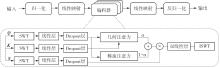
Fig.1
Structure of SWT-CA model"
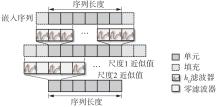
Fig.2
Tokenization process of stationary wavelet transform"
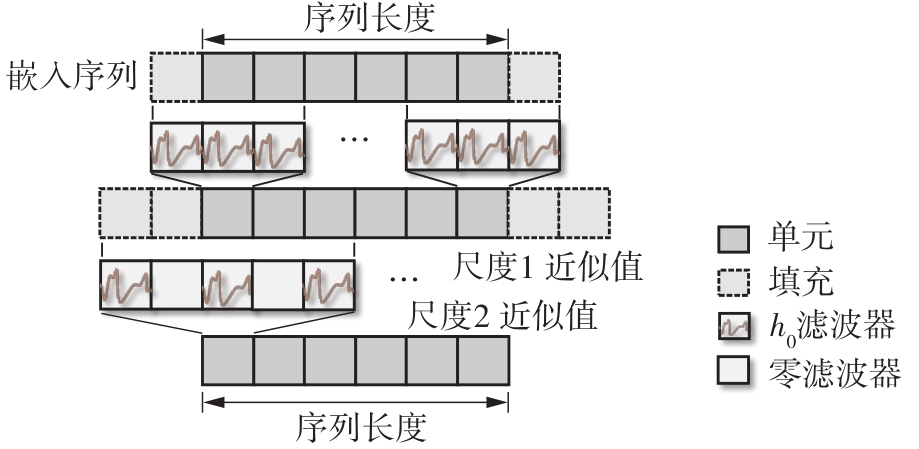

Fig.3
Double-linear projection process"

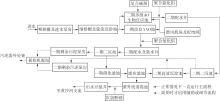
Fig.4
Process flow chart of a wastewater plant in Dongguan city"
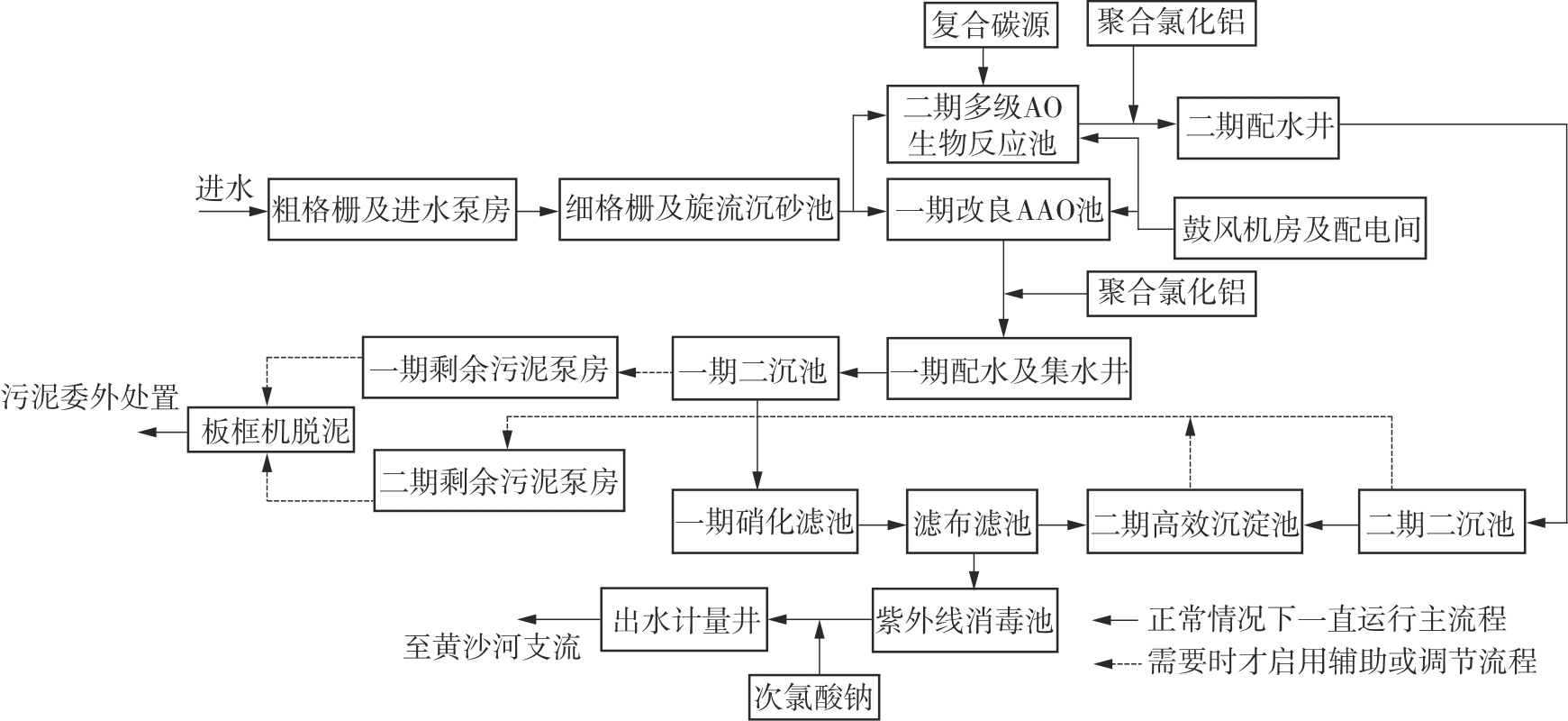

Table 1
Input and output variables of a wastewater plant in Dongguan"
| 序号 | 变量符号 | 变量含义 | 单位 |
|---|---|---|---|
| 1 | COD-in | 进水化学需氧量 | mg/L |
| 2 | NH+4-N | 铵态氮浓度 | mg/L |
| 3 | TN-in | 进水总氮浓度 | mg/L |
| 4 | pH-in | 进水pH值 | |
| 5 | SS-in | 进水悬浮固体浓度 | mg/L |
| 6 | Q-in | 进水流量 | m3/d |
| 7 | Efflu-TN | 出水总氮浓度 | mg/L |
| 8 | Efflu-SS | 出水悬浮固体浓度 | mg/L |
| 9 | Efflu-COD | 出水化学需氧量 | mg/L |
Table 2
Total parameters of different MTS models"
| 模型 | 步长 | 参数量 |
|---|---|---|
| Autoformer | 12 | 10 515 459 |
| 24 | 10 515 459 | |
| 48 | 10 515 459 | |
| FEDformer | 12 | 16 544 771 |
| 24 | 16 806 915 | |
| 48 | 16 806 915 | |
| Informer | 12 | 11 313 667 |
| 24 | 11 313 667 | |
| 48 | 11 313 667 | |
| TimesNet | 12 | 1 199 621 359 |
| 24 | 1 199 622 523 | |
| 48 | 1 199 624 851 | |
| SimpleTM | 12 | 10 052 |
| 24 | 10 448 | |
| 48 | 11 240 | |
| SWT-CA | 12 | 10 388 |
| 24 | 10 592 | |
| 48 | 11 000 |
Table 3
Prediction results of different MTS models with step of 12"
| 模型 | 预测变量 | PCC | MSE | MAE | RMSSD |
|---|---|---|---|---|---|
| Autoformer | TN | 0.640 | 0.713 1 | 0.630 5 | 1.988 5 |
| SS | 0.599 | 0.505 3 | 0.533 5 | ||
| COD | 0.617 | 0.770 1 | 0.678 5 | ||
| FEDformer | TN | 0.781 | 0.420 7 | 0.486 3 | 1.318 8 |
| SS | 0.683 | 0.368 9 | 0.466 6 | ||
| COD | 0.742 | 0.529 2 | 0.560 0 | ||
| Informer | TN | 0.834 | 0.326 6 | 0.410 0 | 1.081 5 |
| SS | 0.739 | 0.348 2 | 0.464 8 | ||
| COD | 0.406 6 | 0.478 7 | |||
| TimesNet | TN | 0.839 | 0.324 1 | 0.411 4 | 1.009 2 |
| SS | 0.753 | 0.289 5 | 0.395 9 | ||
| COD | 0.807 | 0.395 5 | 0.479 3 | ||
| SimpleTM | TN | 0.837 | 0.325 9 | 0.400 8 | 1.033 5 |
| SS | 0.751 | 0.301 4 | 0.402 1 | ||
| COD | 0.801 | 0.487 1 | 0.487 1 | ||
| SWT-CA | TN | 0.835 | 0.329 8 | 0.402 7 | 1.026 7 |
| SS | 0.755 | 0.294 8 | 0.400 2 | ||
| COD | 0.803 | 0.402 1 | 0.483 2 |
Table 4
Prediction results of different MTS models with step of 24"
| 模型 | 预测变量 | PCC | MSE | MAE | RMSSD |
|---|---|---|---|---|---|
| Autoformer | TN | 0.674 | 0.624 3 | 0.583 2 | 1.799 3 |
| SS | 0.631 | 0.438 0 | 0.495 9 | ||
| COD | 0.635 | 0.736 9 | 0.679 9 | ||
| FEDformer | TN | 0.724 | 0.509 5 | 0.545 7 | 1.517 3 |
| SS | 0.618 | 0.432 2 | 0.503 4 | ||
| COD | 0.706 | 0.575 4 | 0.599 1 | ||
| Informer | TN | 0.709 | 0.534 9 | 0.556 3 | 1.621 3 |
| SS | 0.660 | 0.440 8 | 0.522 7 | ||
| COD | 0.734 | 0.645 4 | 0.625 9 | ||
| TimesNet | TN | 0.790 | 0.417 3 | 0.473 1 | 1.248 7 |
| SS | 0.745 | 0.307 1 | 0.403 2 | ||
| COD | 0.756 | 0.524 1 | 0.556 8 | ||
| SimpleTM | TN | 0.651 | 0.662 5 | 0.585 9 | 1.821 0 |
| SS | 0.627 | 0.426 6 | 0.494 4 | ||
| COD | 0.622 | 0.731 6 | 0.668 1 | ||
| SWT-CA | TN | 0.819 | 0.383 8 | 0.497 6 | 1.134 4 |
| SS | 0.763 | 0.322 5 | 0.402 1 | ||
| COD | 0.776 | 0.518 0 | 0.537 1 |
Table 5
Prediction results of different MTS models with step of 48"
| 模型 | 预测变量 | PCC | MSE | MAE | RMSSD |
|---|---|---|---|---|---|
| Autoformer | TN | 0.446 | 1.043 8 | 0.768 3 | 2.591 4 |
| SS | 0.526 | 0.547 5 | 0.564 3 | ||
| COD | 0.488 | 1.000 1 | 0.811 0 | ||
| FEDformer | TN | 0.541 | 0.833 6 | 0.687 8 | 2.223 4 |
| SS | 0.550 | 0.538 8 | 0.564 7 | ||
| COD | 0.536 | 0.850 9 | 0.748 0 | ||
| Informer | TN | 0.626 | 0.674 8 | 0.635 7 | 1.905 1 |
| SS | 0.638 | 0.490 2 | 0.558 0 | ||
| COD | 0.611 | 0.739 9 | 0.673 6 | ||
| TimesNet | TN | 0.695 | 0.575 7 | 0.568 2 | 1.661 9 |
| SS | 0.670 | 0.383 4 | 0.458 2 | ||
| COD | 0.647 | 0.702 7 | 0.654 2 | ||
| SimpleTM | TN | 0.623 | 0.693 1 | 0.600 4 | 1.838 8 |
| SS | 0.615 | 0.431 4 | 0.498 9 | ||
| COD | 0.624 | 0.709 2 | 0.672 0 | ||
| SWT-CA | TN | 0.644 | 0.671 1 | 0.584 9 | 1.733 8 |
| SS | 0.650 | 0.403 5 | 0.476 6 | ||
| COD | 0.655 | 0.664 2 | 0.646 5 |
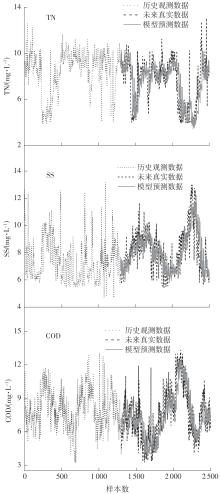
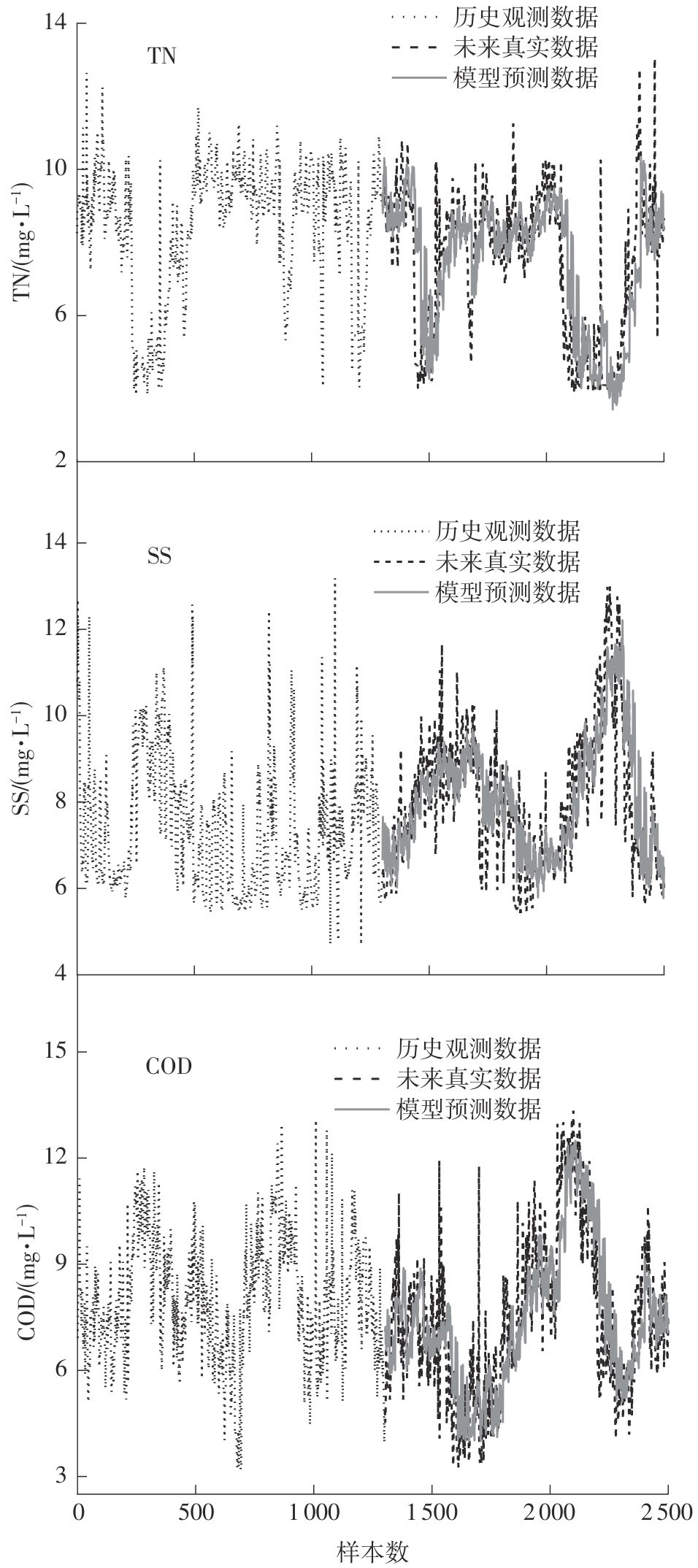
Fig.5
Prediction results of SWT-CA model"
| [1] | 吴菁 .污水处理非稳态特性下核建模方法关键问题的研究[D].广州:华南理工大学,2020. |
| [2] | 方港,袁珑华,王晓明,等 .基于集合卡尔曼-Elman网络的软测量建模方法[J].华南理工大学学报(自然科学版),2023,51(8):126-136. |
| FANG Gang, YUAN Longhua, WANG Xiaoming,et al .Research on ensemble Kalman filter-Elman neural network based soft-sensor model[J].Journal of South China University of Technology(Natural Science Edition),2023,51(8):126-136. | |
| [3] | SHYU H Y, CASTRO C J, BAIR R A,et al .Development of a soft sensor using machine learning algorithms for predicting the water quality of an onsite wastewater treatment system[J].ACS Environmental Au,2023,3(5):308-318. |
| [4] | HERNÁNDEZ-DEL-OLMO F, GAUDIOSO E, DURO N,et al .Machine learning weather soft-sensor for advanced control of wastewater treatment plants[J].Sensors,2019,19(14):3139/1-12. |
| [5] | LIU Z, WAN J, MA Y,et al .Online prediction of effluent COD in the anaerobic wastewater treatment system based on PCA-LSSVM algorithm[J].Environmental Science and Pollution Research,2019,26(13):12828-12841. |
| [6] | BAKI O T, ARAS E .Estimation of BOD in wastewater treatment plant by using different ANN algorithms[J].Membrane and Water Treatment,2018,9(6):455-462. |
| [7] | WU J, CHENG H, LIU Y,et al .Modeling of adaptive multi-output soft-sensors with applications in wastewater treatments[J].IEEE Access,2019,7:161887-161898. |
| [8] | 李东,黄道平,许翀,等 .基于协同训练的集成自适应GPR-RVM多输出模型研究[J].华南理工大学学报(自然科学版),2021,49(6):100-108. |
| LI Dong, HUANG Daoping, XU Chong,et al .On integrated adaptive GPR-RVM multi-output model based on co-training algorithm[J].Journal of South China University of Technology(Natural Science Edition),2021,49(6):100-108. | |
| [9] | SHABAN W M, XIE D, ELBAZ K,et al .Real-time water quality prediction of wastewater treatment plants using advanced deep learning networks[J].Journal of Water Process Engineering,2024,65:105775/1-9. |
| [10] | WEN Q, ZHOU T, ZHANG C,et al .Transformers in time series:a survey[EB/OL].(2022-02-15)[2025-04-01].. |
| [11] | ZHOU H, ZHANG S, PENG J,et al .Informer:beyond efficient transformer for long sequence time-series forecasting[C]∥ Proceedings of the Thirty-Fifth AAAI Conference on Artificial Intelligence.Palo Alto:AAAI,2021:11106-11115. |
| [12] | WU H, XU J, WANG J,et al .Autoformer:decomposition transformers with auto-correlation for long-term series forecasting[J].Advances in Neural Information Processing Systems,2021,34:22419-22430. |
| [13] | ZHOU T, MA Z, WEN Q,et al .FEDformer:frequency enhanced decomposed transformer for long-term series forecasting[C]∥ Proceedings of the 39th International Conference on Machine Learning.Baltimore:ML Research Press,2022:27268-27286. |
| [14] | GONG M, ZHAO Y, SUN J,et al .Load forecasting of district heating system based on Informer[J].Energy,2022,253:124179/1-14. |
| [15] | JIANG Y, GAO T, DAI Y,et al .Very short-term residential load forecasting based on deep-autoformer[J].Applied Energy,2022,328:120120/1-13. |
| [16] | JIN Z, FU X, XIANG L,et al .Informer learning framework based on secondary decomposition for multi-step forecast of ultra-short term wind speed[J].Engineering Applications of Artificial Intelligence,2025,139:109702/1-13. |
| [17] | 沈瑜,李江柽,梁栋,等 .特征选择的高效时间序列预测模型[J].哈尔滨工业大学学报,2025-03-21,doi:10.11918/202411025 . |
| SHEN Yu, LI Jiangcheng, LIANG Dong,et al .Efficient time series forecasting model for feature selection[J].Journal of Harbin Institute of Technology,2025-03-21,doi:10.11918/202411025 . | |
| [18] | SIFUZZAMAN M, ISLAM M R, ALI M Z .Application of wavelet transform and its advantages compared to Fourier transform[J].Journal of Physical Sciences,2009,13:121-134. |
| [19] | KUMAR A, TOMAR H, MEHLA V K,et al .Stationary wavelet transform based ECG signal denoising method[J].ISA Transactions,2021,114:251-262. |
| [20] | MICHAU G, FRUSQUE G, FINK O .Fully learnable deep wavelet transform for unsupervised monitoring of high-frequency timeseries[J].Proceedings of the National Academy of Sciences,2022,119(8):e2106598119/1-10. |
| [21] | HAAN P D, COHEN T, BREHMER J .Euclidean,projective,conformal:choosing a geometric algebra for equivariant transformers[C]∥ Proceedings of the 27th International Conference on Artificial Intelligence and Statistics.Valencia:ML Research Press,2024:3088-3096. |
| [22] | CHILD R, GRAY S, RADFORD A,et al .Generating long sequences with sparse transformers[EB/OL].(2019-04-23)[2025-04-01].. |
| [23] | MOJAHED A, BERGMAN L A, VAKAKIS A F .New inverse wavelet transform method with broad application in dynamics[J].Mechanical Systems and Signal Processing,2021,156:107691/1-22. |
| [24] | ZHANG J, LV Y, TAO J,et al .A robust real-time anchor-free traffic sign detector with one-level feature[J].IEEE Transactions on Emerging Topics in Com-putational Intelligence,2024,8(2):1437-1451. |
| [25] | WU H, HU T, LIU Y,et al .TimesNet:temporal 2D-variation modeling for general time series analysis[EB/OL].(2022-10-05)[2025-04-01].. |
| [26] | CHEN H, LUONG V, MUKHERJEE L,et al .SimpleTM:a simple baseline for multivariate time series forecasting[C]∥ Proceedings of the Thirteenth International Conference on Learning Representations.Singapore:OpenReview,2025:3089/1-26. |
| [1] | YUE Yongheng, NING Ruihou. Intelligent Vehicle Object Detection Algorithm Based on Lightweight CenterNet [J]. Journal of South China University of Technology(Natural Science Edition), 2024, 52(8): 45-55. |
| [2] | FANG Gang, YUAN Longhua, WANG Xiaoming, et al. Soft-Sensor Modeling Method Based on Ensemble Kalman Filter-Elman Neural Network [J]. Journal of South China University of Technology(Natural Science Edition), 2023, 51(8): 126-136. |
| [3] | ZHOU Zhong, DENG Zhuoxiang, CHEN Yun, et al. Strength Prediction of Foam Light Soil Based on GA-BP Neural Network [J]. Journal of South China University of Technology(Natural Science Edition), 2022, 50(11): 125-132. |
| [4] | LI Dong, HUANG Daoping, XU Chong, et al. On Integrated Adaptive GPR-RVM Multi-Output Model Based on Co-Training Algorithm [J]. Journal of South China University of Technology (Natural Science Edition), 2021, 49(6): 100-108. |
| [5] | CHENG Hongchao, WU Jing, LIU Yiqi, et al. Forecast Components-RVM Fault Detection Modeling for Wastewater Treatment [J]. Journal of South China University of Technology (Natural Science Edition), 2020, 48(3): 10-17. |
| [6] | CAI Liya, ZHAO Kegang, LI Jianfeng, et al. Performance of Short Glass Fiber Reinforced Composite and It's Application in Vehicle Body [J]. Journal of South China University of Technology (Natural Science Edition), 2020, 48(3): 108-115,135. |
| [7] | XU Yuge LAI Chunling LUO Fei . Bagging Ensemble Fault Diagnosis Modeling with Imbalanced classification in Wastewater Treatment Plant [J]. Journal of South China University of Technology (Natural Science Edition), 2018, 46(8): 107-115. |
| [8] |
HAN Leigang FAN Wenyan WANG Guohe WANG Zhenmin.
Development of Lightweight All-Sealed Wire Feeder for Underwater Robotic Welding System
|
| [9] | ZUO Wen-jie MA Hong-gang GUI Chun-yang LI Hang . Lightweight Design of Bus Frame Constrained by Static and Dynamic Stiffness [J]. Journal of South China University of Technology(Natural Science Edition), 2017, 45(8): 7-12. |
| [10] | XU Yu-ge LIU Li LUO Fei. A Self-Optimal Relevance Vector Machine with Multiple-Attribute Gaussian Kernel Functions [J]. Journal of South China University of Technology (Natural Science Edition), 2017, 45(1): 88-94. |
| [11] | PU Yue-wu XU Xiao-ma WANG Si-yao WU Jie-jie WEI Cheng. Investigation into Biofilm Colonization on a New-Type Biofilm Reactor for Domestic Wastewater Treatment in Traditional Villages [J]. Journal of South China University of Technology (Natural Science Edition), 2016, 44(3): 142-148. |
| [12] | Xu Yu- ge Cao Tao Luo Fei. Wastewater Effluent Quality Prediction Model Based on Relevance Vector Machine [J]. Journal of South China University of Technology (Natural Science Edition), 2014, 42(5): 103-108. |
| [13] | Lin Mei- jin Luo Fei Xu Yu- ge. Optimization Control of Biochemical Process of Wastewater Based on SFLA and PSO [J]. Journal of South China University of Technology (Natural Science Edition), 2013, 41(9): 51-57. |
| [14] | Xu Yu- ge Song Ya- ling Luo Fei Zhang Yong- tao Cao Tao. Energy- Saving Optimization of Wastewater Treatment System Based on Artificial Immune Algorithm [J]. Journal of South China University of Technology (Natural Science Edition), 2013, 41(8): 34-40. |
| [15] | Mo Li- huan Zhou Zhi- ming Wang Yu- feng Lu Li- cheng. Photocatalysis- Fenton Degradation of Papermaking- Reconstituted Tobacco Slice Wastewater Using Fe- Bent [J]. Journal of South China University of Technology (Natural Science Edition), 2013, 41(12): 43-48. |
| Viewed | ||||||
|
Full text |
|
|||||
|
Abstract |
|
|||||