华南理工大学学报(自然科学版) ›› 2025, Vol. 53 ›› Issue (12): 94-106.doi: 10.12141/j.issn.1000-565X.240596

• 结构安全 • 上一篇    下一篇

多层框架-稀疏人字撑结构的抗侧力性能

何亮1, 许照宇2, 沈文杰1, 童根树3, 刘志鑫1, 张磊3   

  1. 1.安徽省建筑设计研究总院股份有限公司,安徽 合肥 230000
    2.浙江水利水电学院 南浔创新研究院,浙江 杭州 310018
    3.浙江大学 高性能结构研究所,浙江 杭州 310058
  • 收稿日期:2024-12-25 出版日期:2025-12-25 发布日期:2025-07-01
  • 通信作者: 许照宇(1993—),男,博士,讲师,主要从事钢结构稳定理论研究。 E-mail:xuzhaoyu@zju.edu.cn
  • 作者简介:何亮(1979—),男,正高级工程师,主要从事钢结构设计研究。E-mail: 5996928@qq.com
  • 基金资助:
    浙江省自然科学基金重点项目(LZ22E080004)

Lateral Resistance of Multi-Storey Steel Frame with Sparse Chevron Bracings

HE Liang1, XU Zhaoyu2, SHEN Wenjie1, TONG Genshu3, LIU Zhixin1, ZHANG Lei3   

  1. 1.Anhui Architectural Design and Research Institute Co. ,Ltd. ,Heifei 230000,Anhui,China
    2.Nanxun Innovation Institute,Zhejiang University of Water Resources and Electric Power,Hangzhou 310018,Zhejiang,China
    3.Institute of Advanced Engineering Structures,Zhejiang University,Hangzhou 310058,Zhejiang,China
  • Received:2024-12-25 Online:2025-12-25 Published:2025-07-01
  • Contact: 许照宇(1993—),男,博士,讲师,主要从事钢结构稳定理论研究。 E-mail:xuzhaoyu@zju.edu.cn
  • About author:何亮(1979—),男,正高级工程师,主要从事钢结构设计研究。E-mail: 5996928@qq.com
  • Supported by:
    the Key Program of the Natural Science Foundation of Zhejiang Province(LZ22E080004)

摘要:

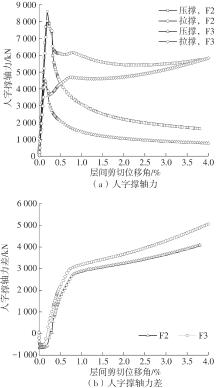
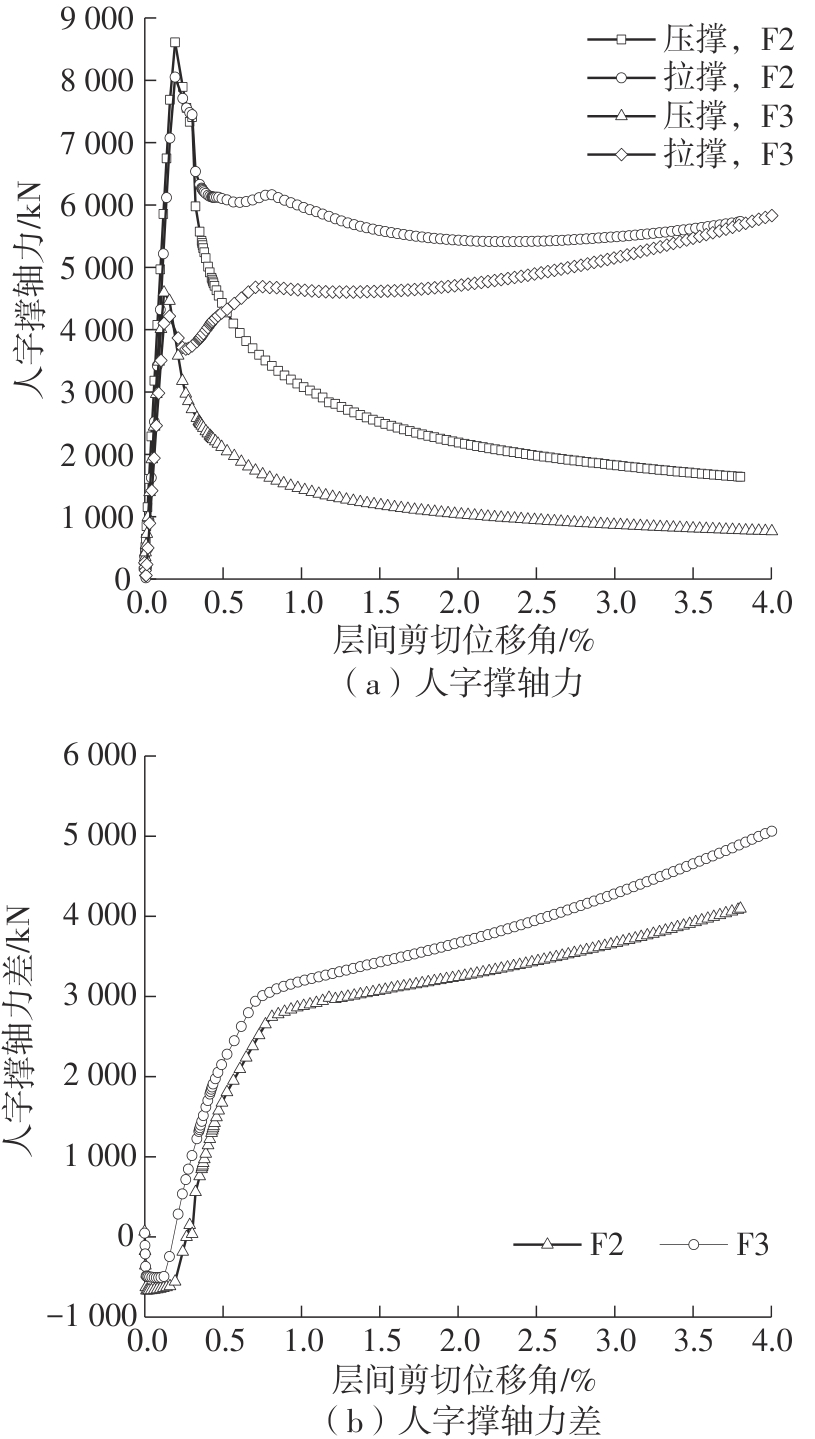
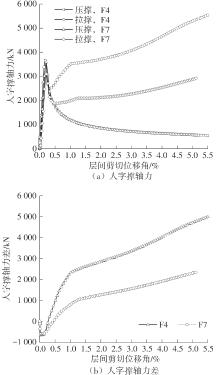
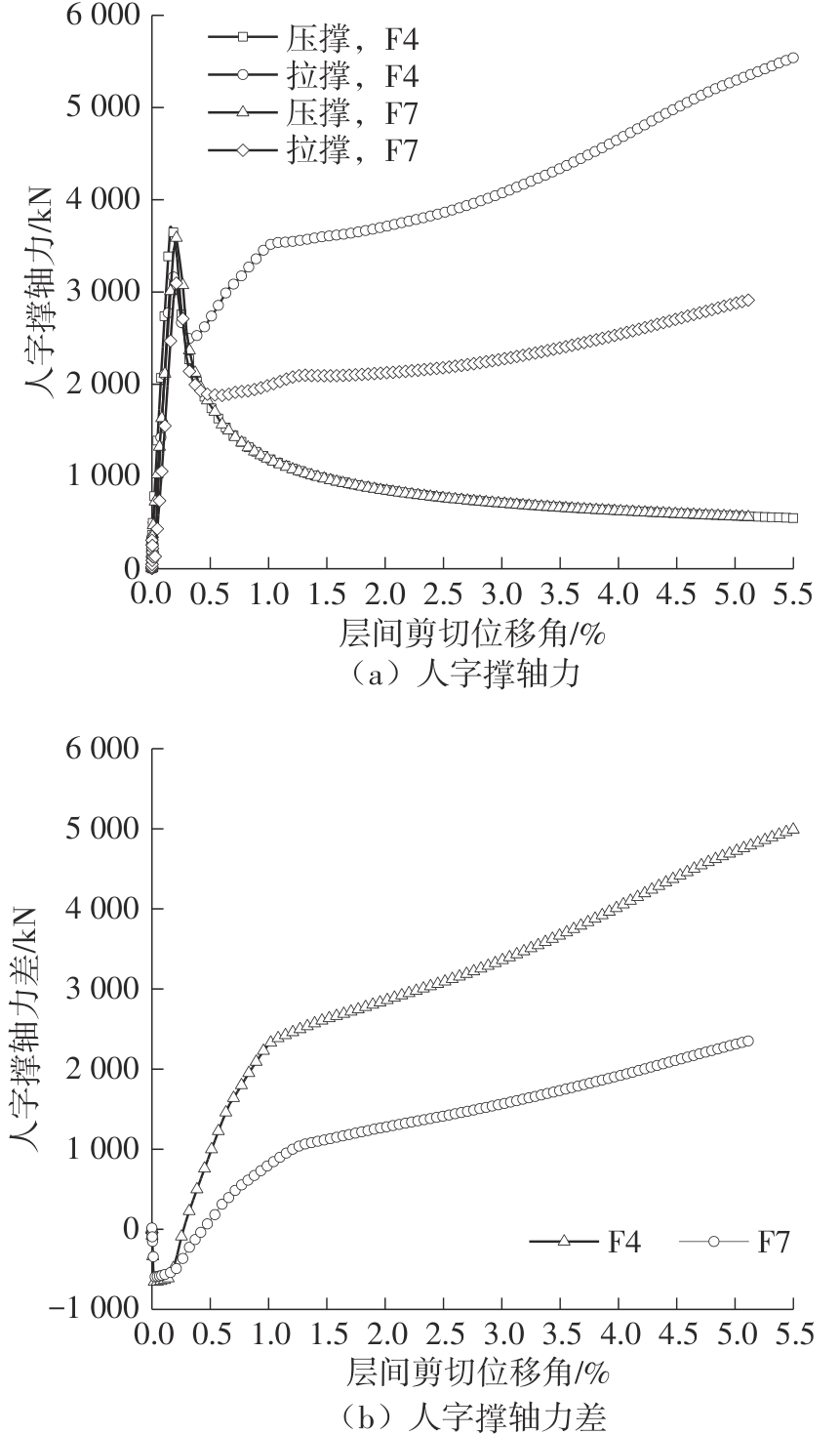
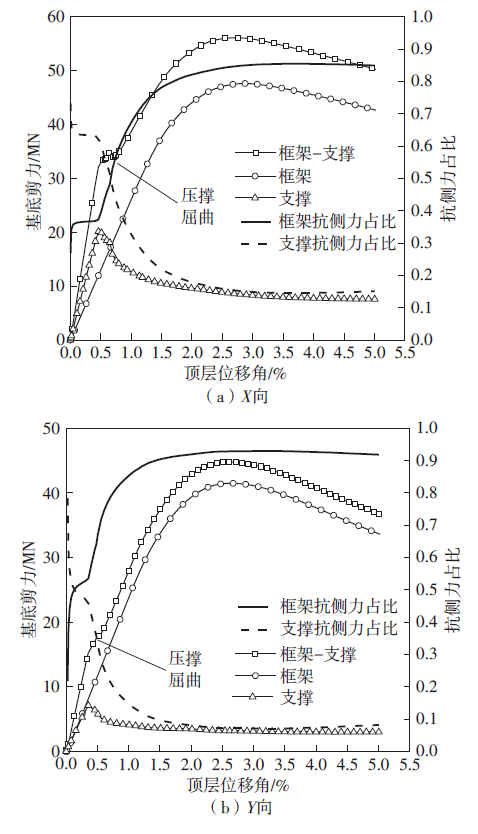
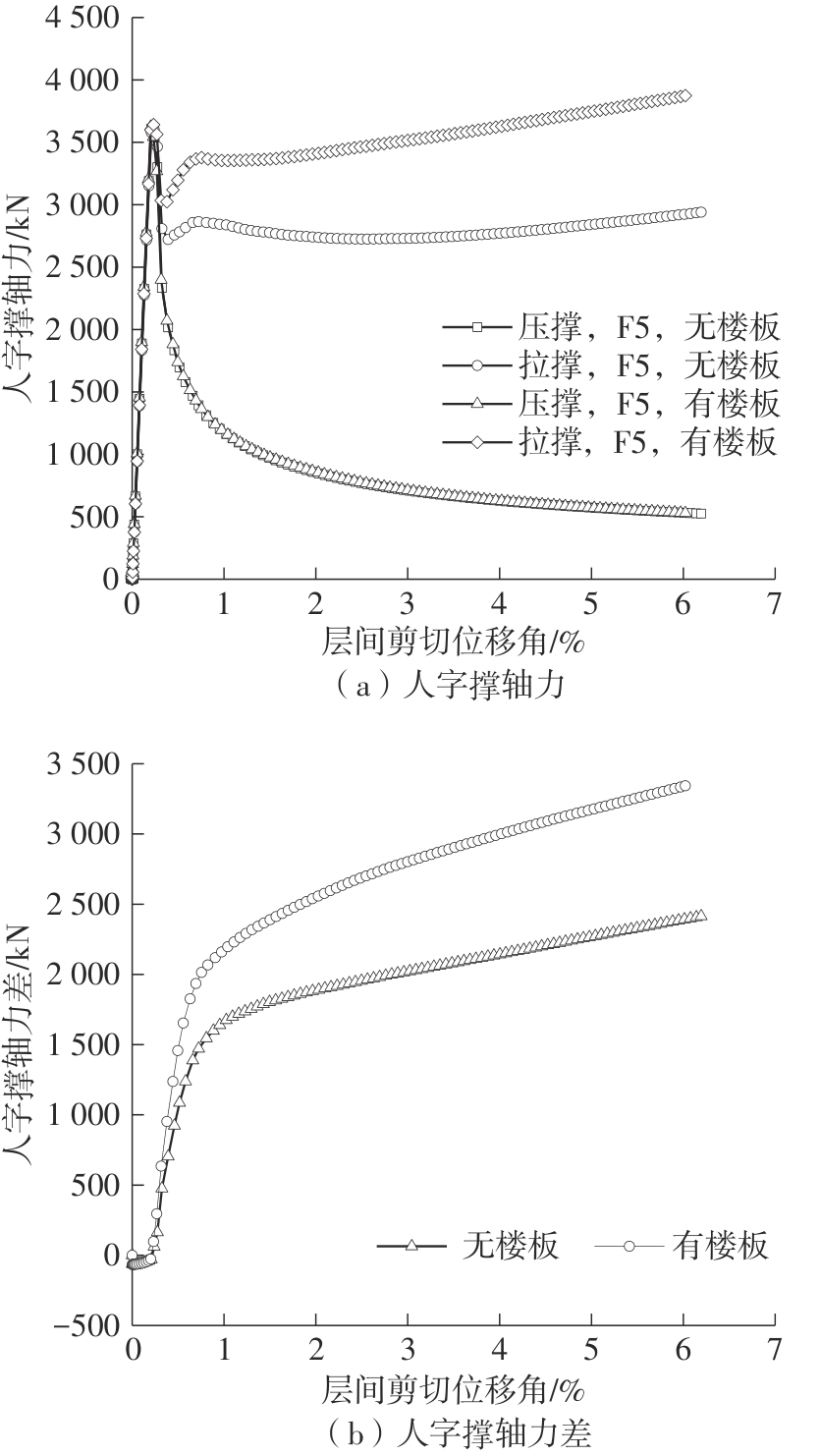
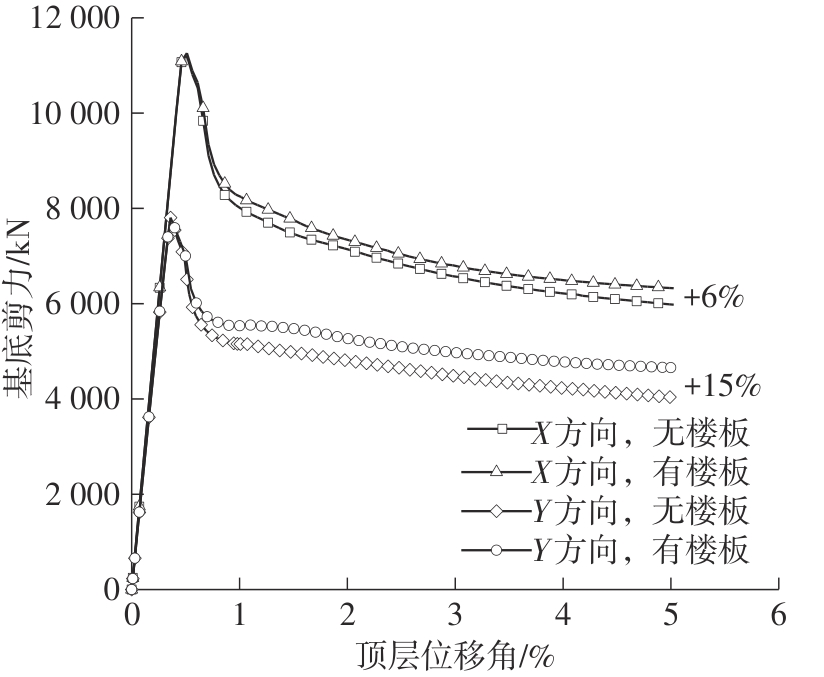
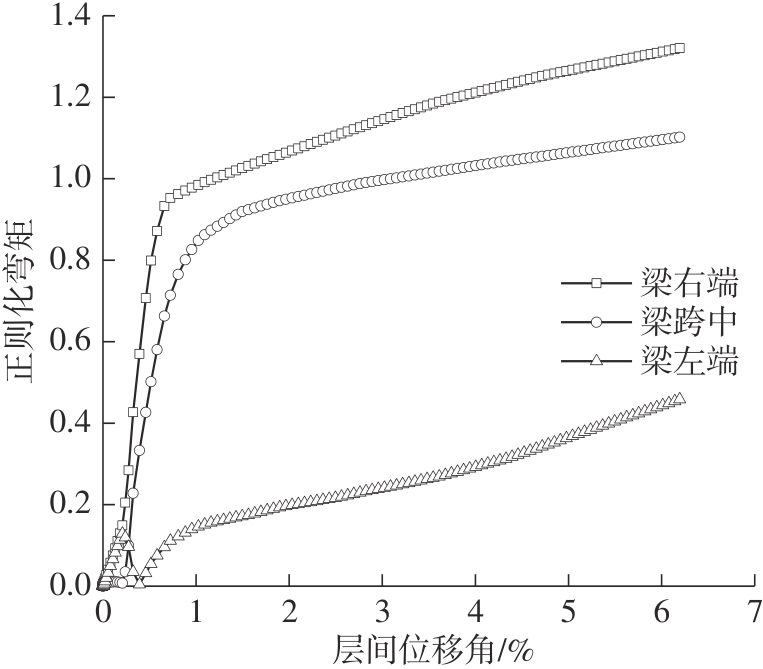
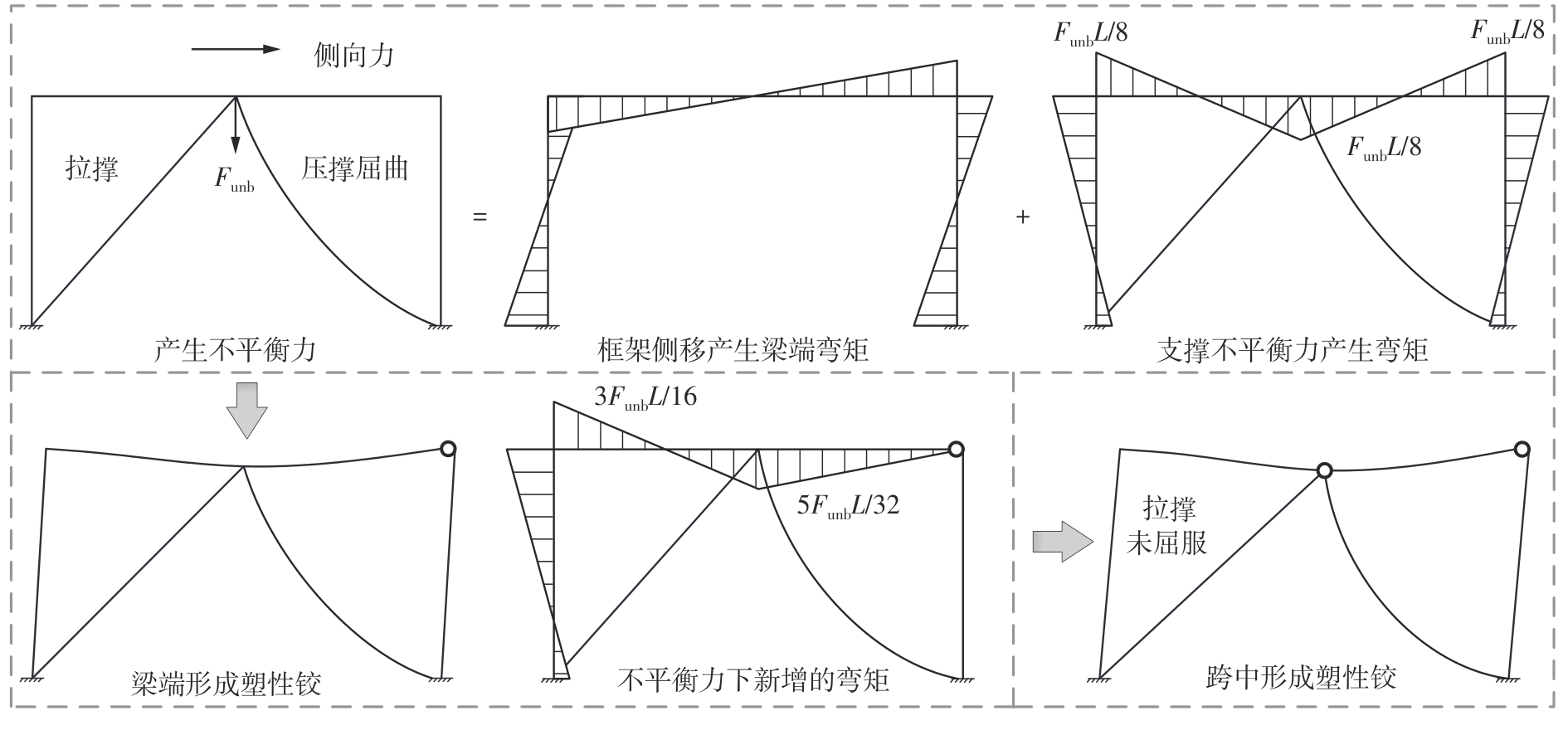
针对多层钢框架-稀疏人字撑结构的抗侧力性能展开深入研究,结合有限元分析和理论推导,系统探讨了横梁未充分加强情况下结构的力学行为及其对抗侧力性能的影响。通过弹塑性推覆分析,验证了多重抗侧力体系串并联理论模型的准确性,并揭示了支撑内力随层间位移角的变化规律。有限元分析结果表明,横梁的刚度和强度对压撑屈曲后拉撑轴力的发展具有显著影响,框架作为第2道抗侧力体系能够有效补偿支撑屈曲后的承载力退化。此外,楼板有效宽度与钢梁的组合效应可显著提高横梁的抗弯刚度,从而有利于拉撑轴力的发展,可减小压撑屈曲后承载力的退化。对于横梁未充分加强的刚接框架-人字撑结构,在侧向位移和不平衡力的共同作用下,横梁的塑性铰首先出现在压撑一侧的梁端,随后出现在横梁跨中。基于这一破坏模式,推导了受拉支撑轴力和横梁不平衡力的计算公式,结果显示其具有较高的精度。研究表明,即使横梁未满足《建筑抗震设计规范》第8.2.6-2条充分加强的要求,当框架抗侧能力占比较高时,整体结构的承载力仍不会随侧移的增加而退化,能够保证7度(0.1 g)设防烈度地震作用下的安全。提出的横梁不平衡力计算方法为优化框架-人字撑结构设计提供了新的思路,避免了传统设计中因横梁高度过大而导致的设计问题,为实际工程结构设计提供了重要的理论支持和实践指导。

关键词: 人字撑, 双重抗侧力结构, 横梁刚度, 楼板有效宽度, 支撑内力

Abstract:

This study conducts an in-depth investigation into the lateral resistance of multi-storey steel frames with sparse chevron bracing. By combining finite element analysis and theoretical derivation, the mechanical behaviour of structures with under-strengthened beams and its influence on lateral resistance are systematically examined. Through elastoplastic pushover analysis, the accuracy of the series-parallel theoretical model for dual lateral force-resisting systems is validated, and the variation of bracing internal forces with inter-story drift angle is revealed. Finite element results indicate that the stiffness and strength of beams significantly influence the development of tensile brace forces after buckling of the compressive brace. As a secondary lateral force-resisting system, the frame effectively compensates for the degradation in load-bearing capacity after brace buckling. In addition, the composite effect of the slab effective width and steel beam notably enhances the flexural stiffness of beam, thereby facilitating the development of tensile brace forces, and reducing the degradation of load-bearing capacity after compressive brace buckling. For rigid frame-chevron bracing structures with inadequately strengthened beams, under the combined action of lateral displacement and unbalanced forces, plastic hinges in the beam initially form at the beam end on the compressive brace side, followed by the mid-span of the beam. Based on this failure mode, formulas for calculating tensile brace forces and beam unbalanced forces are derived, demonstrating high accuracy. The study indicates that even when beams do not meet the sufficient strengthening requirements specified in Clause 8.2.6-2 of the Code for Seismic Design of Buildings, the overall load-bearing capacity does not deteriorate with increasing lateral displacement, provided that the frame contributes a relatively high proportion of lateral resistance. This ensures structural safety under seismic actions with an intensity of 7 degrees (0.1g). The proposed calculation method for beam unbalanced forces provides a new approach to optimizing chevron-braced frame design, avoiding the problem of excessively large beam depths in traditional design, and offering important theoretical support and practical guidance for engineering applications.

Key words: chevron bracing, dual lateral resistance structure, stiffness of the beam, effective width of the slab, bracing internal forces

中图分类号: