2025 Mechanical Engineering
With the increasing awareness of health and the popularization of competitive sports, the technological advancement and specialization of ball sports training have become a growing trend. In football training, the precise simulation of ball trajectories and the design of personalized training programs have emerged as key issues that need to be addressed urgently. To enhance the scientific rigor and effectiveness of football training and to promote its intelligent development, this study proposed an omnidirectional mobile intelligent ballistics trajectory simulation football training assistant robot by integrating technologies such as ball launching mechanisms, visual acquisition, data analysis, and motion control. Firstly, a forward dynamics model of football was constructed. Subsequently, considering complex physical factors such as air resistance and the Magnus force, this study designed an inverse kinematics solution model based on the RMSProp algorithm to solve the initial parameters for ball shooting, enabling precise adjustments of the yaw and pitch angles according to the target position, thereby achieving high-precision hits on the target point. Finally, a three-axis gimbal shooting robot capable of adjusting the shooting angle and position was developed and tested experimentally. Experimental results indicate that the training robot achieves a goal entry error of less than 0.45 m under various training conditions. The root mean square error between the theoretical and actual trajectories is less than 7.5 cm. These findings validate the robustness and precision of the previously described inverse kinematics solution model for ball launching. Additionally, this study established a detailed ball launching dataset, which can serve as an important resource for subsequent research in data science and artificial intelligence.
To enhance the comprehensive transmission performance of hypoid gears with high reduction ratios, this paper proposed a design method for significantly inclined contact lines based on active tooth surface design techno-logy. Firstly, multiple tooth surface imprints with varying degrees of contact line inclination were preset, with specified values for the semi-major axis of the contact ellipse and the length of the contact trace. The pinion conjugate tooth surface was then modified with a parabolic shape to achieve a tooth surface that meets the preset parameters. Subsequently, by integrating Tooth Contact Analysis (TCA) and Load Tooth Contact Analysis (LTCA) techniques, the amplitude of transmission error (ATE), amplitude of loaded transmission error (ALTE), tooth surface load distribution, root bending stress amplitude, and tooth surface flash temperature amplitude were obtained for each tooth surface. The influence of variations in contact trace length on these performance parameters was then analyzed. Finally, a target modified tooth surface was selected, and its comprehensive performance was analyzed and compared with that of the original tooth surface. A case study demonstrates that for a hypoid gear pair with a gear ratio of 5∶75, under conditions of highly inclined contact trace on the tooth surface, a longer contact trace length leads to lower contact stress, as well as reduced root bending stress and flash temperature on the tooth surface. The target tooth surface exhibits weakened edge contact, a 12.0% reduction in maximum root bending stress, more uniform contact stress distribution, and a 6.3% decrease in peak flash temperature. As a result, the scuffing load-carrying capacity is enhanced. Overall, the modified target tooth surface exhibits superior contact performance, better load-carrying capacity, and significantly enhanced comprehensive transmission performance.
Real-time visual and precise haptic interaction algorithms are critical for achieving accurate “tactile sensation” in virtual surgical training. In order to reduce storage space, improve computational efficiency, accurately calculate cutting forces during bone milling, and balance the visual and haptic interaction effect, this paper proposed a visual and haptic interaction algorithm based on the Tri-dexel model. Firstly, the Tri-dexel model was employed to represent the bone and the surgical milling tool. Real-time geometric deformation during the virtual bone milling was achieved through boolean operations and rapid surface reconstruction algorithms. Secondly, by integrating the geometric parameters of the surgical milling tool, a haptic interaction model based on the micro-element cutting force was proposed. This model utilizes the boolean operation results between the bone and surgical milling tool to quickly and accurately solve the instantaneous undeformed chip thickness. Thirdly, the cutting force coefficients were identified and the haptic interaction model was validated through milling experiments to achieve haptic rendering. Finally, an orthopedic virtual surgical training system was built based on the above-mentioned algorithms, and the interaction algorithm was tested and evaluated experimentally. The results show that the predicted forces align with experimental measurements, with an average force error of less than 7%. The visual and haptic interactive algorithm satisfies a visual refresh rate of 30 Hz and a haptic refresh rate of 1 kHz. The developed orthopedic virtual surgical training system provides users with a highly immersive virtual bone milling training experience that can effectively improve users’ hand-eye coordination.
To address the issue of adsorption instability encountered by magnetic wheel adsorption welding robots during underwater operation, this paper proposed a critical adsorption force calculation method for magnetic wheels based on centroid offset and vector superposition. This method comprehensively considers multiple failure modes, including traditional sliding failure, detachment failure, overturning failure, and the rarely studied skidding failure, effectively addressing the issue of adsorption instability caused by low accuracy in traditional adsorption force calculations. Firstly, based on the robot chassis structure, static models corresponding to four non-instability adsorption states were established, and a vector superposition method was proposed based on static coupling relationships. This method fully accounts for the influence of centroid offset on adsorption stability during actuator motion, providing a theoretical basis for the accurate calculation of the critical adsorption force of magnetic wheels. Then, a case study was conducted based on the permanent magnetic adsorption chassis of the existing underwater welding robots. The static analysis results were solved using Matlab and the variation law of the critical adsorption force of the chassis with maximum centroid offset at different spatial angles was summarized. Finally, an experimental setup was constructed to test the adsorption stability of the robot under various operational conditions. The experimental results demonstrate that the vector superposition method based on centroid offset can effectively improve the adsorption stability of underwater welding robots, providing novel theoretical support for the design and magnetic force optimization of subsequent magnetic adsorption chassis.
Gear surface treatment techniques such as gear grinding, shot peening and surface finishing may generate residual stress inside the material. Meanwhile, inhomogeneities are inevitably present in metal materials. Both residual stress and inhomogeneities have a significant impact on the contact fatigue life of gears. In order to effectively assess the contact fatigue risk of gears, this paper proposes a numerical model that comprehensively considers the combined effects of residual stress and inhomogeneities. This model uses the equivalent inclusion method to convert the inhomogeneities inside the gear into inclusions containing eigenstrains, and considers the coupling effect of inhomogeneities and residual stress in the displacement equation. During the research process, the stress distribution under the joint action of residual stress and inhomogeneities is computed, and the model is verified using the finite element method. The equivalent stress is calculated using Dang Van criterion, which is then incorporated into the Lundberg-Palmgren life model to find the minimum number of cycles, and the influence laws of residual stress and inhomogeneities on the gear’s contact fatigue life are analyzed. Analytical results show that inhomogeneities have a much greater influence on the contact fatigue life of gears than residual stress, and they predominantly determine the earliest meshing point of contact fatigue on the gear; and that, under the combined effects of residual tensile stress and inhomogeneities, the maximum stress in the sub-surface layer increases and shifts towards the material surface, making the gear more prone to contact fatigue.
Near-infrared optical tracking systems can restore the movement of tracked objects in real time based on the markers attached to the tracked objects. This technology has now been widely adopted across numerous fields. This paper proposed a real-time tracking method for muli-objects that is robust to target loss. First, based on the imaging characteristics of reflective marker balls in near-infrared cameras, the geometric center of each marker was extracted using the grayscale centroid method. Then, the SORT algorithm was used as a multi-objetcs tracking method in each monocular camera to match each marker point between frames. The matching relationship of the image points of the markers in each camera was determined based on the principle of epipolar geometry combined with the weighted bipartite graph matching method, and the three-dimensional spatial coordinates of each tracked marker were calculated in real time based on the triangulation method. Next, the markers were grouped based on their spatial relationships during motion to identify markers belonging to the same object. Spatial feature vectors were established for tracked objects using the Euclidean distances between markers within the same group, serving as matching references for reappearing lost objects. When a fully lost object reproduced, re-matching is performed using cosine distance of these feature vectors. Finally, the proposed algorithm was experimentally verified. The experiment shows that the tracking accuracy of the proposed algorithm can reach about 0.5 mm at a speed of not less than 60 f/s. In addition, the lost reproduced objects and markers can be correctly re-matched.
When simulating the flow field characteristics of the gas bearing-rotor system using the computational fluid dynamics (CFD) method, the gas film thickness is one of the crucial structural parameters. However, shape and dimensional errors arising during component machining, as well as the deviations caused by the system assembly, can lead to certain discrepancies between the actual gas film and the ideal designed gas film in terms of the spatial morphology and scale. This further affects the reliability and accuracy of the numerical calculation results. Therefore, this paper first proposed the concept of effective gas film thickness for the flow field. Through the comparative analysis and correction of the bidirectional fluid-structure interaction numerical simulation and experimental results, the reasonable equivalent gas film thickness was finally determined. The research results show that the adoption of the bidirectional fluid-structure interaction numerical simulation method can reveal the transient characteristics of the gas film flow field and the variation law of the rotor attitude, and predict and evaluate whether the gas bearing-rotor system can operate safely, saving the cost of experimental testing. The rotor inclination angle was adopted as the comparative analysis feature, providing an intuitive reference basis for the system performance deviation analysis between numerical simulations and experimental tests. The established equivalent gas film thickness maximally simplifies the numerical simulation model while enhancing computational efficiency, and simultaneously maintains reasonable result reliability. Taking a supply pressure of 0.6 MPa and a unilateral steady-state force of 80 N as an example, through error analysis and approximation, the estimated equivalent gas film thickness in the fluid-structure interaction simulation model was cyclically established and corrected. Eventually, the relative error of the system inclination angle was controlled within 5%, which greatly improved the consistency between the numerical simulation results and the performance of the actual engineering system. Furthermore, this approach provides a reliable method and basis for the application of the gas bearing-rotor simulation system in structural design, performance prediction and evaluation.
The multi-stage flow channel magnetorheological damper (MFC-MRD) in the hydraulic actuator can effectively improve the underdamping characteristics of hydraulic valve-controlled cylinder system and improve the stability of the system. It possesses potential application value in such equipment such as legged robots and excavators. However, the high power density design of MFC-MRD may inevitably increase the effective length of the damping channel, thereby increasing the damping force of the system, which makes the existing dynamic model cannot accurately describe the nonlinear hysteresis characteristics of MFC-MRD. In order to improve the nonlinear hysteresis characteristics of MFC-MRD, on the basis of mechanical performance test and by analyzing the multi-stage flow channel structure and nonlinear hysteresis curve characteristics, the hyperbolic tangent curve is segmented and reorganized, and then an improved hyperbolic tangent model conforming to the hysteresis characteristics is proposed. In the process of parameter identification, to avoid model parameters falling into local optimum and “premature”, the selection operator of genetic algorithm is improved, and a three-level stepwise approximation selection operator is proposed to improve the identification accuracy of model parameters. Moreover, the relationship between model parameters and current is accurately obtained according to the mechanical experimental data. The comparison results of different models show that the improved hyperbolic tangent model established in this paper is of higher accuracy than the Bouc-Wen model and the data-driven model because it can accurately describe the nonlinear hysteresis characteristics of MFC-MRD, with an accuracy increase of up to 75%.
Automatic feature recognition is one of the key technologies of intelligent manufacturing. Traditional rule-based recognition algorithms have poor scalability, and the methods based on deep convolutional networks are of low accuracy because they use discrete models as input and the recognition results are difficult to accurately map back to the original CAD model, causing inconvenience in application. In view of these shortcomings, a feature recognition method based on graph neural network, which can directly analyze B-Rep models, is proposed. The method extracts effective characteristic information and geometric information from the B-Rep structures to form a feature descriptor, and then establishes an adjacency graph with high-level semantic information based on the topological structure of the CAD model. By taking the adjacency graph as the input, an efficient graph neural network model is constructed. By introducing a differentiable generalized message aggregation function and a residual connection mechanism, the model possesses stronger information aggregation performance and multi-level feature capture capabilities. What is more, message normalization strategy is used to ensure the stability of the training process and to accelerate the convergence of the model. After the training, the network can directly classify and annotate all faces in the B-Rep model, thereby realizing feature recognition. Experimental results on the public dataset MFCAD++ demonstrate that the proposed method achieves an accuracy of 99.53% and an average intersection-over-union ratio of 99.15%, which outperforms other similar studies. Further evaluations using more complex testing cases and typical CAD cases from real engineering applications show that the proposed method is of better generalization ability and adaptability.
The CNC machining of molds and various 3D parts involves numerous cavity features, and the design of machining toolpaths directly affects machining quality and efficiency. With the advancements in high-speed milling technology, CNC machines provide the hardware foundation for improving cavity machining efficiency, but they also place higher demands on CAM toolpath design. Traditional CAM toolpaths tend to cause abrupt changes in cutting load when dealing with areas such as cavity corners, slots, and intersections of circular paths. This load instability limits the improvement of feed rate and cutting depth, negatively impacting both machining efficiency and quality. To address these issues, this paper proposes a hybrid toolpath planning and feed rate optimization method aiming at achieving constant load machining for cavities. The method, which is based on a multi-level block structure, first calculates the material removal rate and then divides the machining areas into stable, semi-stable and load fluctuation regions. For different regions, circular toolpaths, feed speed optimization and variable-radius trochoidal paths are comprehensively adopted to ensure smooth load control throughout the machining process. By applying trochoidal paths in areas prone to load fluctuations, sudden load variations can be reduced and stable machining process can be ensured. Experimental results show that the proposed toolpath planning and feed rate optimization method is suitable for generating CAM toolpaths for various complex cavities, with good load stability and better machining quality.
Due to its single function and low flexibility, the existing emergency rescue equipment is difficult to meet the requirements of complex emergency operations under geological disasters such as earthquake. To solve this problem, an electromechanical hydraulic quick coupling device, which can realize fast change of attachments and free adjustment of posture, is designed. The device can be quickly integrated into emergency rescue equipment to complete high-mobility and multi-function rescue tasks. In the investigation, first, the extreme load characteristics, as well as the stress and strain situations during the operation of the device are simulated and analyzed, through which the weak part and load spectrum are determined. Then, the reliability theoretical models considering cyclic damage strength degradation under deterministic and random periodic stress are deduced and established, and the mapping relationship between the reliability and the failure rate of the rotating mechanism is determined. Furthermore, based on linear elastic fracture mechanics, the crack propagation of the weak part of inclined oil cylinder’s piston rod is analyzed, and the fatigue life of the device is determined via the local stress strain method to ensure that the device can meet the application requirements. Finally, the developed device is integrated into the walking rescue robot. Test results show that the proposed quick coupling device can realize the rapid switching of various attachments such as bucket and gripper, with a switching time of less than 15 s, as well as the increases by ±40° yaw and ±360° rotation degrees of freedom, thus meeting the requirements of flexible operation. This research provides theoretical reference for the design of similar devices.
As the key equipment of asphalt pavement regeneration construction, the cold recycling machine can realize cold in-place recycling and improve the construction efficiency. The cold recycling machine faces the issue of asphalt accumulating easily at the nozzle when spraying foamed asphalt, as well as uneven flow rates across the nozzles. To solve the above problems, it is necessary to increase the pressure of foamed asphalt nozzle to reduce asphalt accumulation and balance the flow of each nozzle. This article first started from the essence of asphalt foa-ming behavior, and based on the multiphase flow mixing theory, considered the viscoelasticity of asphalt and phase changes of water during the asphalt foaming process. The viscosity-temperature characteristic function of asphalt and the phase change function of water were introduced into the calculation model to modify the fluid volume (VOF) model and establish a control model for asphalt foaming behavior. Next, numerical simulations were conducted and the results were compared with experimental data. It was found that the errors of the asphalt foaming behavior control model in terms of nozzle pressure and flow rate were 9.2% and 7.7%. Based on the aforementioned asphalt foa-ming behavior model, a numerical simulation model for the foamed asphalt spraying device was then constructed, simulating the foamed asphalt spraying process according to the designed experimental scheme. Based on the simulation results, a Kriging surrogate model was constructed on the Isight platform, and a multi-objective optimization model was established with the goal of improving outlet pressure and reducing the mass flow rate difference of each nozzle. The multi-objective optimization model was solved by the NSGA-Ⅱ algorithm. Finally, a Pareto solution set was obtained and analyzed. The results show that when the asphalt pipe diameter is 0.74a, the foaming water pipe diameter is 0.58b, the foamed asphalt nozzle diameter is 0.6c, and the number of foamed asphalt nozzles is d, the performance of the foamed asphalt spraying device is optimal. By considering the characteristics of asphalt foaming behavior, the performance of the foamed asphalt spraying device is enhanced by adjusting the nozzle pressure and balancing the flow rates across the nozzles.
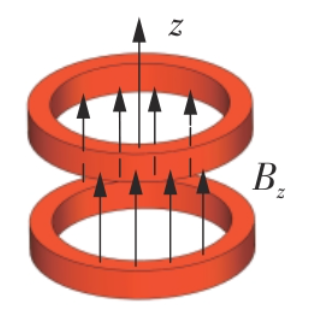
Current permanent magnet spherical joints commonly face issues such as complex electromagnetic drive structures, difficulties in coupled magnetic field modeling, magnetic moment singularities, and insufficient resistance to external disturbances. To solve the problems, this study developed a permanent magnet flexible direct-drive spherical joint with an embedded fully suspended permanent magnet rotor as the core based on the rotational fixed-axis effect, where the rotor axis of the permanent magnet always tends to align with the axis of rotation of the magnetic field. The new stator consists of a three-axis orthogonal nested combination of two sets of saddle coils and one set of Helmholtz coils. To solve the redundancy issue of magnetic moment control variables, a three-phase current formula was used to superimpose the spatial universal rotating magnetic field with the yaw and pitch angles as independent control variables. This enables the decoupling of the yaw and pitch magnetic moments of the permanent magnet rotor in the rotating magnetic field, as well as the realization of the universal spherical joint’s two-degree-of-freedom motion (yaw and pitch) under the guidance of the rotating magnetic field’s axis. Furthermore, the system stability was proved using the Lyapunov function, and a non-singular fast terminal sliding mode control method optimized by a fuzzy algorithm was applied to suppress chatter and reduce trajectory errors at the output end. The theoretical simulation results verified the effectiveness of the controller. Compared with sliding mode control method without fuzzy algorithm optimization,when external disturbance is applied, the sliding mode controller with fuzzy algorithm optimization can effectively suppress chattering, improve tracing speed, reduce output trajectory errors. Simulations and experiments show that the spherical joint has a simple electromagnetic structure, along with convenient analytical modeling of the magnetic field. The input current variables correspond one-to-one with the output magnetic moment variables. The system exhibits good anti-interference capability and effective chatter suppression, achieving fast tracking of the desired trajectory for the spherical joint. The dynamic tracking performance is excellent, and the system demonstrates improved adaptability in complex environments.
In order to explore the extrusion law of large-scale and small-scale hollow thin-wall aluminum profiles for rails, simulation software HyperXtrude is used to numerically simulate the extrusion process of the profiles, the influences of mold structure and process parameters on the extrusion are analyzed, and the forming rules of two large-scale and small-scale profiles with similar shapes are compared. The results show that, in terms of mold structure, the modification of welding chamber and drainage groove has the most obvious influence on large-scale and small-scale profiles, for instance, the change in welding chamber significantly reduce the maximum deformation of the small-scale profile, with a reduction of 42.82%, while that for the large-scale profile is 25.34%. The change in drainage groove structure shows different impact trends—after altering the drainage groove, the maximum deformation reduction of the large-scale profile is 40.88%, while that of the small-scale profile is 24.72%. The drainage groove of small-scale profile is relatively shorter, and the modification of the drainage groove of large-scale profile is more complicated, so that the change of drainage groove has a more significant impact on large-scale profile. Moreover, in terms of process parameters, according to the changes of metal deformation, metal flow rate and the SDV values of the profile exit section under different conditions, it is found that the extrusion speed and the die temperature have more significant impact on the large-scale profile, while the billet diameter has a more pronounced effect on the small-scale profile. This research provides theoretical support for optimizing the extrusion process of aluminum profiles.
In order to reveal the formation mechanism of saw tooth-shaped chips in cast & wrought high-temperature alloy GH4198 and predict chip morphology through theoretical models, orthogonal cutting experiments were conducted. Based on the slip line field model, the geometric shape of the chips was predicted, and the influence of cutting parameters on chip formation was analyzed. A three-stage formation model of saw tooth-shaped chips considering the tool edge radius was proposed, and a two-dimension orthogonal cutting thermo-mechanical coupled finite element model was established, with its rationality being verified through experiments. By analyzing the variations of stress, equivalent plastic strain and temperature during the chip formation obtained from simulations, the formation mechanism of saw tooth-shaped chips was investigated. The results show that the shear angle increases with the increase in cutting speed and feed rate, while the chip thickness decreases with the increase in cutting speed. At the cutting speeds of 10, 20 and 30 m/min, the relative errors of the predicted chip thickness are respectively 4.20%, 12.34% and 24.73%, the maximum chip thickness compression ratios are respectively 3.19, 2.78 and 2.26, and the chip serration degrees are respectively 0.20, 0.36 and 0.58. At a cutting speed of 30 m/min, obvious cracks appear in the chips, and the saw teeth exhibit an overall inclined shape. At the feed rates of 0.05, 0.10 and 0.15 mm/r, the relative errors of the predicted minimum chip thickness are respectively 17.66%, 8.66% and 5.07%, the maximum chip thickness compression ratios are respectively 2.82, 2.78 and 2.61, and the chip serration degrees are respectively 0.12, 0.36 and 0.42. The slip line field model effectively predicts the variation of chip thickness with cutting parameters. With the increase in cutting speed and feed rate, the chip thickness compression ratio shows a decreasing trend, while the serration degree increases with a gradually slowing trend. Additionally, the influence of the tool edge radius on chip formation was analyzed through finite element simulation, and the effectiveness of the theoretical model for saw tooth-shaped chip formation was verified.
Rail grinding is a technology that removes the top fatigue layer of rails by applying high speed rotating grinding wheels. When the grinding wheels become abrasion, it typically leads to a decrease in material removal efficiency and an increase in grinding zone temperature. To prevent these issues from negatively affecting grinding operations, timely replacement of worn-out grinding wheels is necessary. This paper proposed a neural network-based method for predicting the wear level and residual life of rail grinding wheels, enabling the optimal timing for wheel replacement. The principle of this method is as follows: the axial acceleration signal of the motor spindle connected to the grinding wheel was collected, and based on this signal, characteristic parameters that describe the wear level of the grinding wheel were extracted. These characteristic parameters were then transformed using the Z-score method, which removes the dimensionality of the parameters and improves their comparability. After that, the XGBoost algorithm was employed to filter the most relevant features that are strongly correlated with the wheel’s service life. A fusion strategy integrating wear time and wheel wear volume was adopted as the criterion for assessing the wear and service life. Constructing a neural network model that mapped the filtered feature parameters to both the wear volume and the grinding wheel thickness. The experimental data along with the grinding wheels abrasion was obtained by using the experimental device. The data was divided into mutually independent training and validation sets, which were used to train and validate the constructed neural network, respectively. The results show that the method achieves comparable accuracy in both the training and validation sets. In the validation set, the accuracy for determining the wear level of the grinding wheel is 87.9%, with misclassified samples mainly concentrated in the transition zone of wear progression. The prediction accuracy for the grinding wheel life is -5.3%. Additionally, the method demonstrates a certain level of generalizability across different grinding process parameters.
Rocket assisted zero length launch is an important form of UAV launch. The selection of launch parameters such as launch angle, booster angle, and booster thrust directly affects the success or failure of UAV launch mission. In the design phase of unmanned aerial vehicle rocket assisted zero length launch, key parameters such as launch angle, booster angle, and booster thrust are selected based on engineering experience. However, this approach faces several challenges, including long iteration cycles for optimal parameter selection, poor design interactivity, and the potential risk of causing instability in the UAV’s flight posture. This study focused on a specific UAV and conducts dynamic and kinematic modeling of its launch phase, constructing a six-degree-of-freedom nonlinear model. A UAV launch trajectory parameterization simulation software was developed using QT/C++ software, and the software’s effectiveness was verified through comparison with real UAV launch test data. At the same time, in order to solve the problem of autonomous optimization of launch parameters, sparrow search algorithm (SSA), particle swarm optimization algorithm (PSO), and genetic algorithm (GA) optimization modules were introduced based on the backpropagation neural network (BP neural network) parameter prediction model. A UAV launch parameter optimization method based on SSA optimized BP neural network was proposed to eliminate the overfitting and local optimal effects of BP neural network in the parameter prediction process. The absolute error (MAE), average percentage error (MAPE), and root mean square error (RMSE) of the parameter prediction results were calculated to comprehensively evaluate the superiority of SSA-BP in predicting launch parameters, and the rationality of the launch parameter selection was verified through launch trajectory verification. The results indicate that the SSA-BP model has the highest prediction accuracy and robustness for launch parameters, and can provide a design basis for the autonomous selection of launch parameters in the engineering design stage of unmanned aerial vehicle launch subsystems.
The development needs of miniaturization, lightness and low cost of electronic products have posed significant challenges to the design and manufacture of heat dissipation modules. In order to solve the heat dissipation pro-blem of thin high-performance routers and small electronic devices, 6 kinds of aluminum plate radiators with surface micro-functional structures were designed on the basis of smooth aluminum plate radiators. According to the newly designed aluminum plate radiators, an experimental test platform was built. Under the conditions of natural convection and micro-convection, the heat dissipation performance of the 6 new aluminum plate radiators was compared with that of the smooth aluminum plate radiators. The results show that under the condition of natural convection, when the heat source power is 3.0~6.0 W, the heat dissipation performance of the square pin-fin aluminum plate is the best. Compared with the smooth surface aluminum plate, the average Nusselt number is increased by about 18%, the product of heat transfer coefficient and heat transfer area is increased by about 17%, and the heat source temperature is reduced by about 2.0 K. Compared with smooth surface aluminum plate, the average Nusselt number of round pin-fin aluminum plate increases by 7%, the product of heat transfer coefficient and heat transfer area increases by about 5%, and the heat source decreases by about 1.3 K. After surface treatment, the sandblasted square pin-fin aluminum plate can reduce the heat source temperature by 2.0~3.9 K, and the nano-carbon square pin-fin aluminum plate can reduce the heat source temperature by 5.3~8.6 K. The sandblasted round pin-fin aluminum plate can reduce the heat source temperature by 1.9~2.5 K, and the nano-carbon round pin-fin aluminum plate can reduce the heat source temperature by 4.9~7.7 K. Under the micro-convection condition of wind speed of 2 m/s, the round pin-fin aluminum plate has the best heat dissipation performance. Compared with the smooth surface aluminum plate, the average Nusselt number is increased by about 8%, the temperature of the heat source is reduced by 3.6 K at 6 W, and the thermal resistance is reduced by 18%. Compared with the smooth surface aluminum plate, the average Nusselt number of the square pin-fin aluminum plate is increased by about 6%, the temperature of the heat source can be reduced by 2.4 K at 6 W, and the thermal resistance is reduced by 11%. The higher the heat source power, the better the heat dissipation performance of the aluminum plate with surface micro-functional structure compared with the smooth surface aluminum plate.
 2025 Mechanical Engineering
