
Journal of South China University of Technology(Natural Science) >
Antitumor Activity of Ferulic Acid and Its Colonic Metabolites
Received date: 2022-03-14
Online published: 2022-04-06
Supported by
the Natural Science Foundation of Guangdong Province(2021A1515012110)
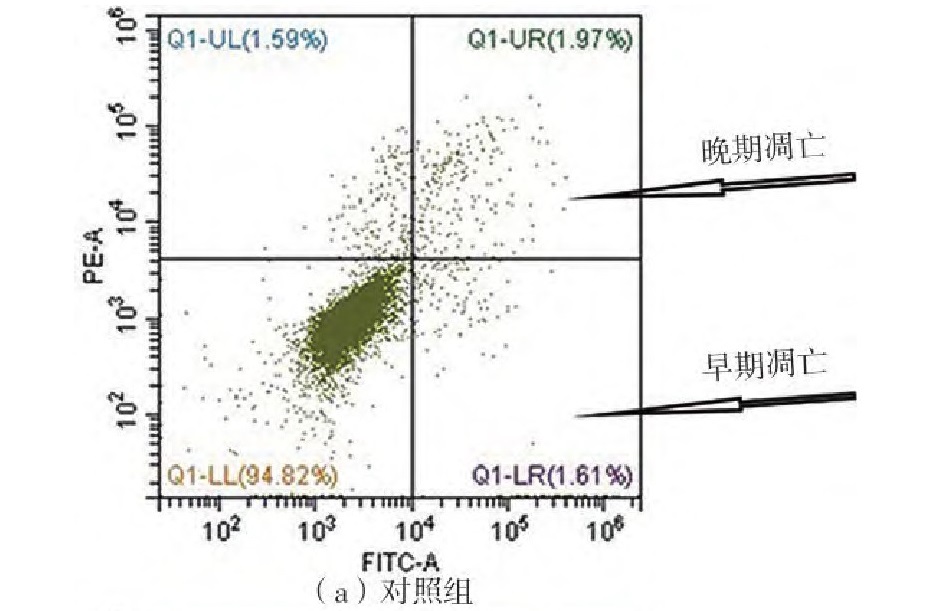
Ferulic acid (FA) is a common dietary polyphenol which is widely found in plant tissues. It has various biological activities such as antioxidant, anti-inflammatory, antithrombotic, and hypoglycemic. Due to the biological activities of dietary polyphenols largely depend on their digestion and absorption in vivo, studies on the intestinal metabolites of dietary polyphenols have gradually attracted researchers’ interest in recent years. Ferulic acid cannot be absorbed in the stomach and small intestine, but it can be converted into a series of hydroxyphenylpropionic acid compounds under the action of colonic esterases. This study selected three main colonic metabolites of FA, namely, 3-(3,4-dihydroxyphenyl) propionic acid (3,4diOHPPA), 3-(3-hydroxyphenyl) propionic acid (3OHPPA) and 3-phenylpropionic acid (PPA), to evaluate their antioxidant and antitumor activities. The results show that the antioxidant activity of metabolite 3,4diOHPPA is superior to that of FA and metabolites 3OHPPA and 3PPA. FA and its three metabolites can significantly inhibit the proliferation of HepG2 with EC50 values of 1.82 mmol/L (FA), 0.74 mmol/L (3,4diOHPPA), 7.77 mmol/L (3PPA) and 4.52 mmol/L (3PPA), respectively. Cell-cycle experiments show that FA and its three metabolites can regulate HepG2 cell cycle progression in an orderly manner, blocking the cell cycle in G2 or S phase. FA and its three metabolites can also induce apoptosis of HepG2 in a dose-dependent manner. Among them, FA and 3,4diOHPPA can increase the total apoptosis rate of HepG2 cells to 15.47% and 71.84% (4.23% for the control). After a pretreatment for 24 h, FA exerts its antiproliferative effects by upregulating Bax, p53 genes and downregulating CDK-2, CDK-4 genes; 3,4diOHPPA inhibits the proliferation of HepG2 by upregulating Bax, caspase-3 genes and downregulating CDK-2, CDK-4 genes. All these findings show that the anti-oxidative and anti-HepG2 cell proliferation ability of the metabolite 3,4diOHPPA is superior to that of FA. This research provides theoretical support for the antitumor activity of FA and its colonic metabolites, revealing the health benefits of FA intestinal metabolites.
Key words: ferulic acid; colonic metabolites; antitumor activity; proliferation
ZHENG Bisheng, YANG Wenhan, XU Qiuxiong, et al . Antitumor Activity of Ferulic Acid and Its Colonic Metabolites[J]. Journal of South China University of Technology(Natural Science), 2022 , 50(8) : 30 -40 . DOI: 10.12141/j.issn.1000-565X.220113
| 1 | BARONE E, CALABRESE V, MANCUSO C .Ferulic acid and its therapeutic potential as a hormetin for age-related diseases[J].Biogerontology,2009,10(2):97-108. |
| 2 | CHOWDHURY S, GHOSH S, DAS A K,et al .Ferulic acid protects hyperglycemia-induced kidney damage by regulating oxidative insult,inflammation and autophagy[J].Frontiers in Pharmacology,2019,10:3389. |
| 3 | GIZAWY H A EL, BOSHRA S A, MOSTAFA A,et al . Pimenta dioica (L.) Merr. bioactive constituents exert anti-SARS-CoV-2 and anti-inflammatory activities: molecular docking and dynamics,in vitro,and in vivo studies[J].Molecules,2021,26(19):5844. |
| 4 | CHOI J H, PARK J K, KIM K M,et al .In vitro and in vivo antithrombotic and cytotoxicity effects of ferulic acid[J].Journal of Biochemical and Molecular Toxicology,2018,32(1):1002. |
| 5 | JUNG E H, KIM S R, HWANG I K,et al .Hypoglycemic effects of a phenolic acid fraction of rice bran and ferulic acid in C57BL/KsJ-db/db mice[J].Journal of Agricultural and Food Chemistry,2007,55(24):9800-9804. |
| 6 | MANCUSO C, SANTANGELO R .Ferulic acid: pharmacological and toxicological aspects[J].Food and Chemical Toxicology,2014,65:185-195. |
| 7 | LI D, RUI Y X, GUO S D,et al .Ferulic acid: a review of its pharmacology,pharmacokinetics and derivatives[J].Life Sci,2021,284:119921. |
| 8 | RECHNER A R, KUHNLE G, BREMNER P,et al .The metabolic fate of dietary polyphenols in humans[J].Free Radical Bio Med,2002,33(2):220-235. |
| 9 | CHESSON A, PROVAN G J, RUSSELL W R,et al .Hydroxycinnamic acids in the digestive tract of livestock and humans[J].Journal of the Science of Food and Agriculture,1999,79(3):373-378. |
| 10 | ZHAO Z H, MOGHADASIAN M H .Chemistry,natural sources,dietary intake and pharmacokinetic properties of ferulic acid:a review[J].Food Chem,2008,109(4):691-702. |
| 11 | BRAUNE A, BUNZEL M, YONEKURA R,et al .Conversion of dehydrodiferulic acids by human intestinal microbiota[J].Journal of Agricultural and Food Chemistry,2009,57(8):3356-3362. |
| 12 | ANSON N M, SELINHEIMO E, HAVENAAR R,et al.Bioprocessing of wheat bran improves in vitro bioaccessibility and colonic metabolism of phenolic compounds[J]. Journal of Agricultural and Food Chemistry,2009,57(14):6148-6155. |
| 13 | RUSSELL W R, SCOBBIE L, CHESSON A,et al .Anti-inflammatory implications of the microbial transformation of dietary phenolic compounds[J].Nutrition and Cancer-An International Journal,2008,60(5):636-642. |
| 14 | CELIK E E, GOKMEN V, FOGLIANO V .Soluble Antioxidant compounds regenerate the antioxidants bound to insoluble parts of foods[J].Journal of Agricultural and Food Chemistry,2013,61(43):10329-10334. |
| 15 | ZHENG S L, ZHANG H, LIU R H,et al .Do short chain fatty acids and phenolic metabolites of the gut have synergistic anti-inflammatory effects? - New insights from a TNF-alpha-induced Caco-2 cell model[J].Food Res Int,2021,139:109833/1-13. |
| 16 | ADOM K K, LIU R H .Rapid peroxyl radical scavenging capacity (PSC) assay for assessing both hydrophilic and lipophilic antioxidants[J].Journal of Agricultural and Food Chemistry,2005,53(17):6572-6580. |
| 17 | WOLFE K L, LIU R H .Cellular antioxidant activity (CAA) assay for assessing antioxidants,foods,and dietary supplements[J]. Journal of Agricultural and Food Chemistry,2007,55(22):8896-8907. |
| 18 | FELICE D L, SUN J, LIU R H .A modified methylene blue assay for accurate cell counting[J].Journal of Functional Foods,2009,1(1):109-118. |
| 19 | BI H C, KRAUSZ K W, MANNA S K,et al .Optimization of harvesting,extraction,and analytical protocols for UPLC-ESI-MS-based metabolomic analysis of adherent mammalian cancer cells[J].Anal Bioanal Chem,2013,405(15):5279-5289. |
| 20 | ZHANG X W, ZHANG M W, DONG L H,et al .Phytochemical profile,bioactivity,and prebiotic potential of bound phenolics released from rice bran dietary fiber during in vitro gastrointestinal digestion and colonic fermentation[J].Journal of Agricultural and Food Chemistry,2019,67(46):12796-12805. |
| 21 | KIKUZAKI H, HISAMOTO M, HIROSE K,et al .Antioxidant properties of ferulic acid and its related compounds[J].Journal of Agricultural and Food Chemistry,2002,50(7):2161-2168. |
| 22 | GRAF E .Antioxidant potential of ferulic acid[J].Free Radic Biol Med,1992,13(4):435-448. |
| 23 | AFSHARI A R, MOLLAZADEH H, HENNEY N C,et al .Effects of statins on brain tumors:a review[J].Semin Cancer Biol,2021,73:116-133. |
| 24 | D’ARCY M S .Cell death:a review of the major forms of apoptosis,necrosis and autophagy[J].Cell Biol Int,2019,43(6):582-592. |
| 25 | ELMORE S .Apoptosis:a review of programmed cell death[J].Toxicol Pathol,2007,35(4):495-516. |
| 26 | 董雅洁,高维娟 .bcl-2、bax、caspase-3在细胞凋亡中的作用及其关系[J].中国老年学杂志,2012,32(21):4828-4830. |
| 26 | DONG Yajie, GAO Weijuan .Effect of bcl-2,bax and caspase-3 on cell apoptosis and corresponding relationship[J].Chinese Journal of Gerontology,2012,32(21):4828-4830. |
| 27 | WAJANT H, PFIZENMAIER K, SCHEURICH P .Tumor necrosis factor signaling[J].Cell Death Differ,2003,10(1):45-65. |
| 28 | OTTO T, SICINSKI P .Cell cycle proteins as promising targets in cancer therapy[J].Nat Rev Cancer,2017,17(2):93-115. |
| 29 | JIN Y, FAN Y, YAN E Z,et al .Effects of sodium ferulate on amyloid-beta-induced MKK3/MKK6-p38 MAPK-Hsp27 signal pathway and apoptosis in rat hippocampus[J].Acta Pharmacol Sin,2006,27(10):1309-1316. |
/
| 〈 |
|
〉 |