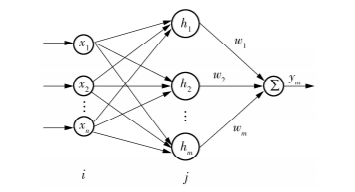
A soft wearable upper limb rehabilitation robot was designed based on the principles of light weight, flexibility, easy-wear and ergonomics to make up the shortcomings of traditional rehabilitation robot, such as heavy weight, difficult to wear and poor motion flexibility. The robot body was make of elastic cloth and the pneumatic artificial muscle(PAM)was used as the antagonistic driving joint of the actuator to realize the elbow flexion/extension and pronation/supination motion. Moreover, the dynamic model of the rehabilitation robot is established according to the mathematical model of the new PAM and Lagrange dynamic equation. Aiming at the control difficulties of the soft system driven by PAMs, such as easy chattering and delayed response, a PID controller based on RBF neural network was designed. Aiming at the problem that the initial parameters of PID controller depend on experience, the fuzzy PID controller was designed to determine the optimal initial parameters of PID controller. Finally, the performance of the RBF-PID controller was verified through simulation and experimental research, and was compared with the traditional PID controller. The results show that the RBF-PID controller has fast response speed and high control stability, and it can realize the stable control of the soft rehabilitation robot.
DI Yu-Yi
,
MA Xin-Yuan
,
CHEN Dong-Dong
,
YANG Chen-Ye
,
LEI Jing-Tao
. Research on Joint Motion Control of Soft Wearable Upper Limb Rehabilitation Robots[J]. Journal of South China University of Technology(Natural Science), 2021
, 49(6)
: 19
-27
.
DOI: 10.12141/j.issn.1000-565X.200498
