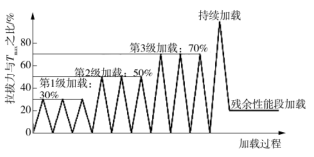
Compared with ordinary Portland cement, geopolymer has the advantages of environmental friendliness, fast hardening and high early strength, smaller shrinkage, and better bond behavior. To investigate the feasibility of using geopolymer mortar as anchorage adhesive, pull-out tests were conducted on post-installed steel bars anchored by geopolymer mortar. Influences of substrate type (concrete, granite), anchorage depth, rebar diameter, and loading mode (monotonic, repeated) on anchorage performance of geopolymer mortar were investigated. Geopolymer mortar was compared with usual cement mortar and commercial organic adhesive, and its bond strength was compared with that of inorganic adhesive reported in literature. The results show that the anchorage performance of geopolymer mortar is significantly better than that of cement mortar and is almost equivalent to that of commercial organic adhesive. For a ribbed rebar with a diameter (d) of 16mm, when using geopolymer mortar as adhesive in concrete and granite substrate, a minimum embedded depth of 12d required by code can already satisfy the ancho-rage quality requirements. Furthermore, it is also showed that the anchorage performance of geopolymer mortar has no significant degradation under repeated loading, at a repeated loading level not higher than 70% of the ultimate load. Thus, geopolymer mortar can be used as anchorage adhesive for post-installed steel bars in the concrete substrate and granite substrate in practice.
ZHANG Haiyan, LI Qiyu, JIANG Weian, et al
. Anchorage Performance of Post-Installed Steel Bars Using Geopolymer Mortar as Adhesive[J]. Journal of South China University of Technology(Natural Science), 2021
, 49(8)
: 65
-74,84
.
DOI: 10.12141/j.issn.1000-565X.200417
