Architecture & Civil Engineering

Application of Improved Particle Swarm Mutation Algorithm to Building Energy-Saving Optimization

Expand
  • 1. School of Architecture,Tianjin University,Tianjin 300072,China; 2. Tianjin Key Laboratory of Architectural Physics and Environmental Technology,Tianjin University,Tianjin 300072,China; 3. International Engineering Institute,Tianjin University,Tianjin 300072,China; 4. China Construction Engineering Design Group Corporation Limited,Beijing 100037,China
刘刚(1977-),男,教授,博士生导师,主要从事绿色建筑技术研究。

Received date: 2019-11-11

  Revised date: 2020-05-08

  Online published: 2020-09-14

Supported by

Supported by the National Key R&D Program of China (2016YFC0700200) and the National Natural Science Foundation of China (51628803)
Abstract

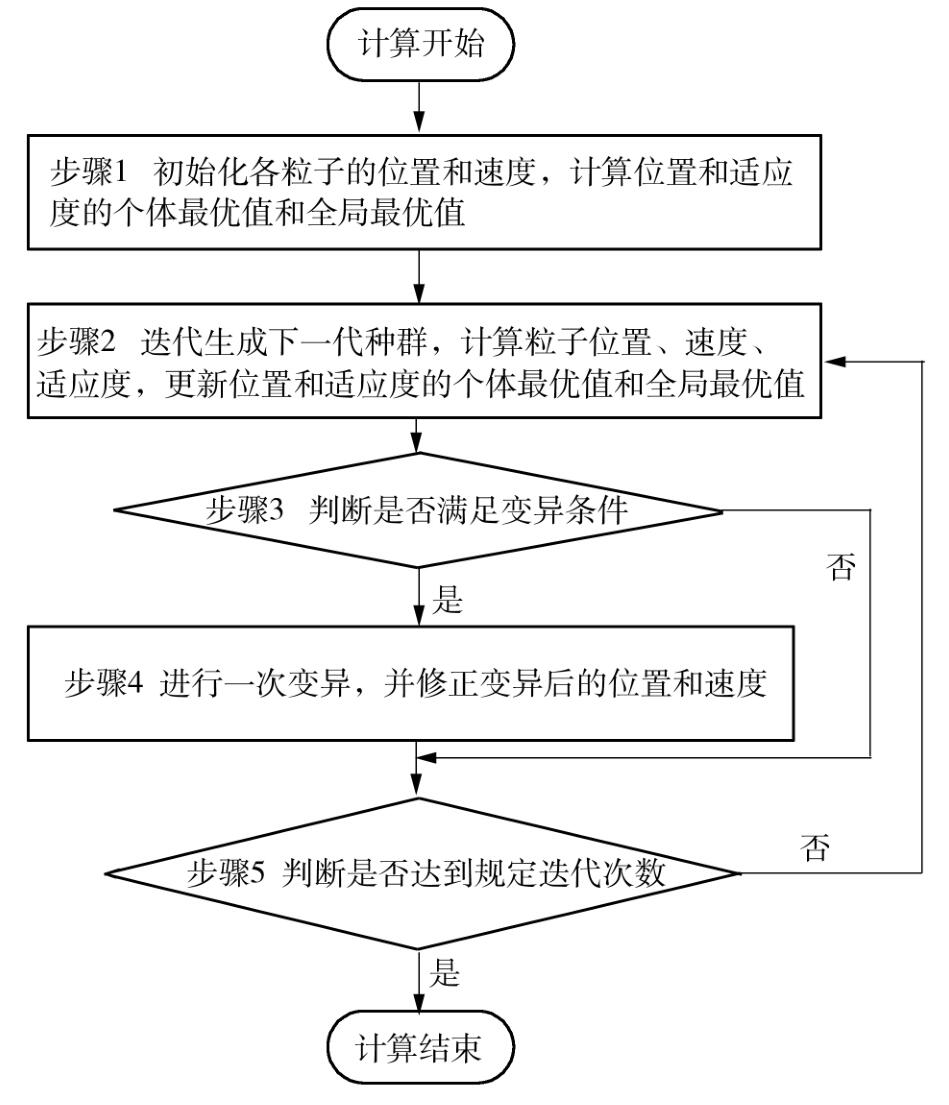
When particle swarm optimization algorithm is used in the building energy-saving optimization,it is easy to converge untimely in the local optima due to the multi-peak characteristic of the building energy model. The combination of the distributed mutation operator and particle swarm algorithm can provide a solution to this pro-blem. In this paper,4 existing particle swarm mutation algorithms were studied. Aiming at the problem of low effects of optimization,the specific operations of the mutations were improved,and the effectiveness of 4 improved algo-rithms was verified by test functions. Then,they were applied to a building energy-saving optimization case. Experi-mental results show that,as compared with the existing particle swarm mutation algorithms,the improved algorithm can decrease the average value of object function by 1. 3% at least and increase the convergence rate by over 3 times,which means that the optimization effect is obviously improved. Thus,it is concluded that the improved al-gorithms is effective and applicable in general building energy-saving optimization.

Cite this article

LIU Gang, WANG Mo, DONG Weixing, et al . Application of Improved Particle Swarm Mutation Algorithm to Building Energy-Saving Optimization[J]. Journal of South China University of Technology(Natural Science), 2020 , 48(10) : 48 -55 . DOI: 10.12141/j.issn.1000-565X.190824

Outlines

/