Mechanical Engineering

Analysis of Pore Characteristics and Permeability of Sintered Stainless Steel Wire Mesh Porous Material 

Expand
  • School of Mechanical and Automotive Engineering∥National Engineering Research Center of Near-Net-Shape Forming for Metallic Materials,South China University of Technology,Guangzhou 510640,Guangdong,China
周照耀(1965-),男,教授,博士生导师,主要从事金属加工工艺、组织、性能等的研究。

Received date: 2019-07-12

  Revised date: 2019-11-14

  Online published: 2020-04-01

Supported by

Supported by the Science and Technology Planning Project of Guangdong Province (2016A010103006)
Abstract

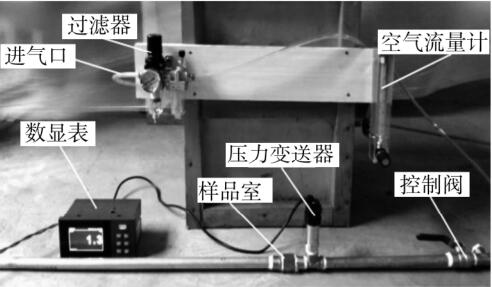
Using 304 stainless steel wire mesh as raw material,the sintered stainless steel wire mesh porous plate was prepared by winding,pressing,rolling and vacuum sintering. The surface picture of the plate was obtained by scanning electron microscopy (SEM). The formation process of the interface and the pore was analyzed,and the pore size,pore distribution and porosity of the stainless steel wire mesh porous material were obtained. Based on the improved Darcy’s law,a device for testing the permeability of the porous plate was designed. The viscous per-meability coefficient and the inertial permeability coefficient were used as the air permeability index of the porous plate to evaluate the permeability of the stainless steel wire mesh porous material. Then the influence of porosity on the permeability of the stainless steel wire mesh porous material was determined. The study result shows that the plate has uniform pore distribution and continuous metal skeleton,with a pore diameter of 0 ~60μm and a porosity of 20% ~40%. The study also indicates a close relationship between permeability and porosity as well as thick-ness,which means the permeability of porous material increases with the increase of the porosity and the decrease of the thickness.

Cite this article

ZHOU Zhaoyao LU Huangjun WANG Junwen . Analysis of Pore Characteristics and Permeability of Sintered Stainless Steel Wire Mesh Porous Material [J]. Journal of South China University of Technology(Natural Science), 2020 , 48(4) : 38 -44 . DOI: 10.12141/j.issn.1000-565X.190447

Outlines

/