Traffic & Transportation Engineering

Analysis of Commuting Mode Based on Behavior Dynamics of Time Characteristics

Expand
  • School of Civil Engineering and Transportation,South China University of Technology,Guangzhou 510640,Guangdong,China 
姚树申(1980-),男,讲师,博士生,主要从事数据挖掘、交通信息系统、公共交通研究. E-mail:ysstree@163. com

Received date: 2019-01-02

  Revised date: 2019-03-27

  Online published: 2019-08-01

Supported by

Supported by the National Natural Science Foundation of China(51308227)
Abstract

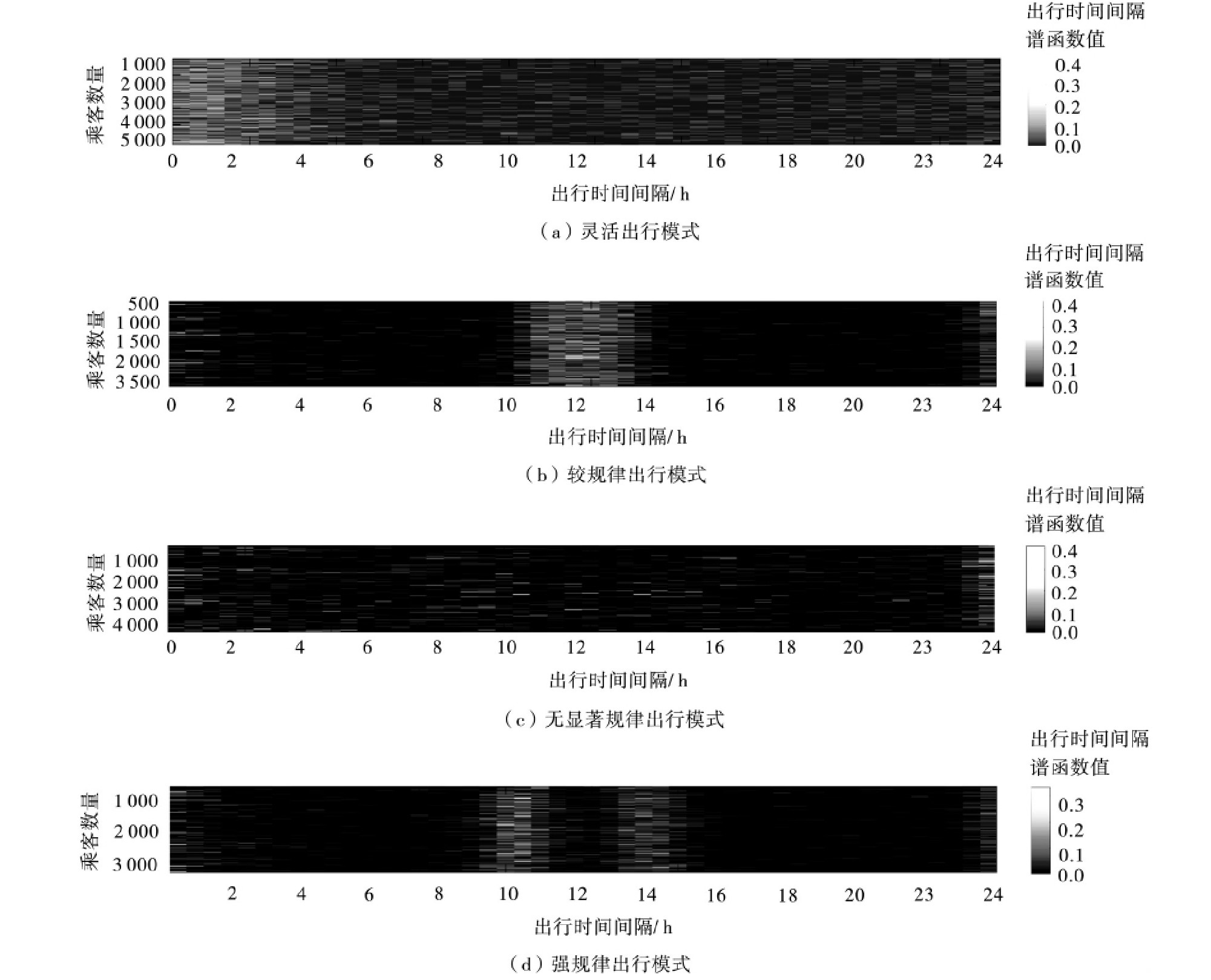
Public transportation is an effective measure to solve urban traffic congestion problems. As a major par- ticipant in urban public transportation,commuting groups and their behavioral patterns have long been the focus of academic research. The study constructed the passenger bus travel time interval distribution with behavior dynamics method based on the whole sample travel data. It demonstrates the universality of“power law representation”of human behavior from the group level. But at the same time,the phenomenon of“power law dissipation”has been observed in some individual samples. In-depth study finds that the individuals deviating from power law fitting characteristics have more regular travel rules generally. Further,the clustering methods of commuter passengers was proposed based on curve fitting parameters and travel interval spectral function. The methods can solve the subdivision problem of commuter passengers intuitively and effectively. The case of Zhuhai shows that the research has a strong practical value for in-depth study of urban public transport travel rules.

Cite this article

YAO Shushen WENG Xiaoxiong LI Feiyu . Analysis of Commuting Mode Based on Behavior Dynamics of Time Characteristics[J]. Journal of South China University of Technology(Natural Science), 2019 , 47(9) : 53 -60 . DOI: 10.12141/j.issn.1000-565X.180647

References

 
Outlines

/