Mechanical Engineering

Fast-Response Anthropomorphic Motion Control Algorithm Without Overshoot of Humanoid Manipulator Based on Prescribed Performance Function

  • ZHAO Jing WANG Yan CHEN Yuqing
Expand
  •  1. College of Mechanical Engineering and Applied Electronics Technology,Beijing University of Technology,Beijing 100124, China;
    2. School of Electronic and Communication Engineering,Guiyang University,Guiyang 550005,Guizhou,China
赵京( 1962-) ,男,博士,教授,主要从事机器人运动规划及控制研究

Received date: 2018-11-09

  Revised date: 2019-04-24

  Online published: 2019-09-01

Supported by

 Supported by the National Natural Science Foundation of China( 51975008) 
Abstract

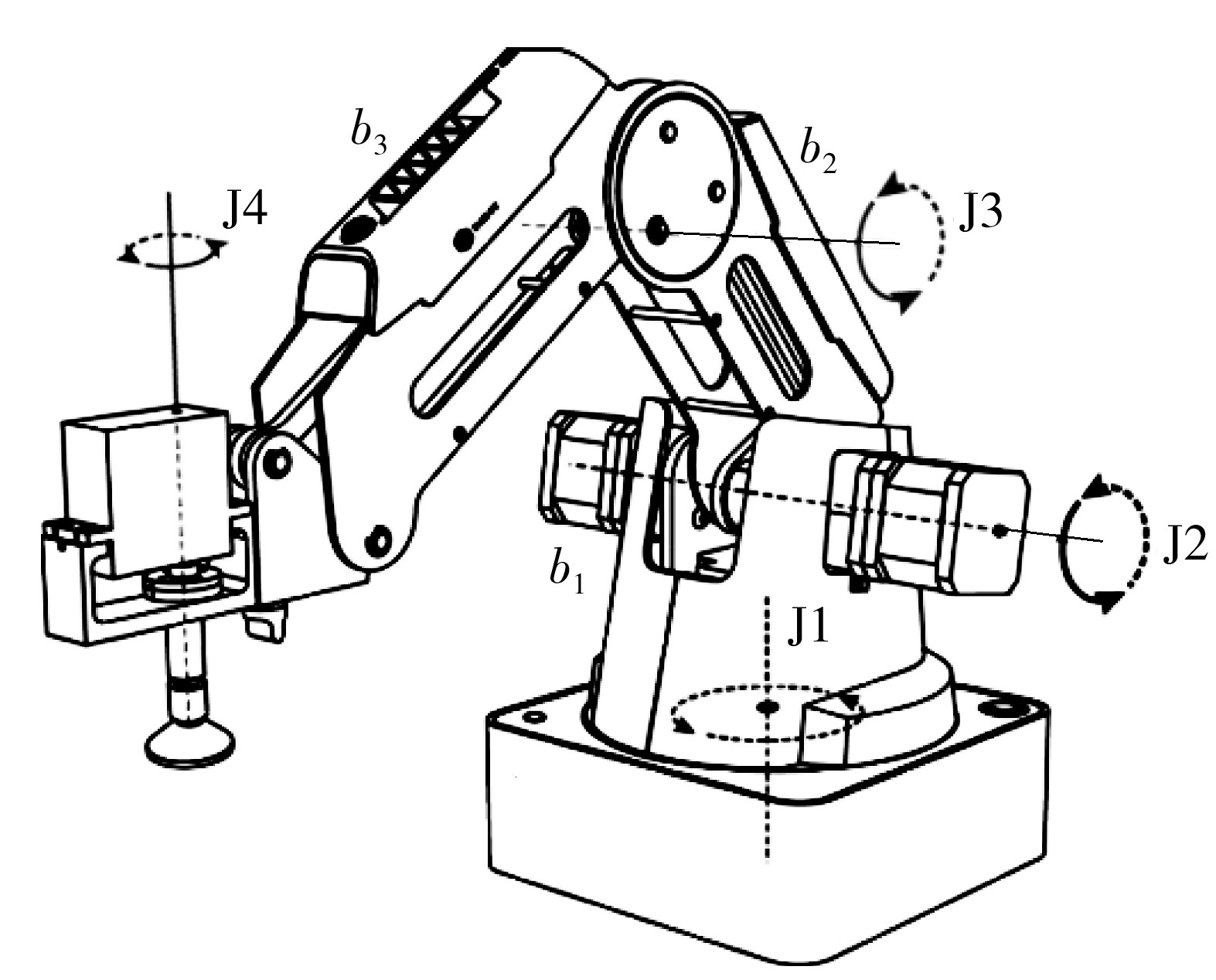
In order to ensure safety in the process of interaction between people and the manipulator and acquire the fast response without overshoot, the traditional PID control was improved by introducing the prescribed performance control,and a fast humanoid motion control algorithm without overshoot for the manipulator was proposed. Based on PID control, the algorithm utilizes the prescribed performance control to make the convergence speed and overshoot of control errors satisfy the preset conditions,and make the control error converge to a preset relatively small area, so as to control the steady and dynamic performance of the system ( including overshoot and convergence speed, etc. ) . The analysis results of modeling and simulation of spatial three joints manipulator show that the proposed prescribed performance PID control has the advantage of fast response and no overshoot comparing with the traditional PID control. Thus,the control algorithm suits to anthropomorphic manipulator motion control. Finally,the validity of the algorithm was verified by the prototype experiment of Dobot robot with 4 degrees of freedom. 

Cite this article

ZHAO Jing WANG Yan CHEN Yuqing . Fast-Response Anthropomorphic Motion Control Algorithm Without Overshoot of Humanoid Manipulator Based on Prescribed Performance Function[J]. Journal of South China University of Technology(Natural Science), 2019 , 47(10) : 42 -50 . DOI: 10.12141/j.issn.1000-565X.180499

References

 
Outlines

/