Traffic & Transportation Engineering

Low Carbon Travel Intention Data Mining for Residents Based on K-means Clustering and Random Forest Algorithm

Expand
  •  1. School of Transportation,Jilin University,Changchun 130000,Jilin,China; 2. School of Automotive and TrafficEngineering,Jiangsu University,Zhenjiang 212013,Jiangsu,China
吴文静(1980-),女,博士,副教授,主要从事交通运输系统规划、交通行为分析研究. E-mail:wuwj@ jlu. edu. cn

Received date: 2018-03-14

  Revised date: 2019-03-27

  Online published: 2019-06-01

Supported by

Supported by the Research Project on Humanities and Social Sciences of Ministry of Education(19YJCZH189) 
Abstract

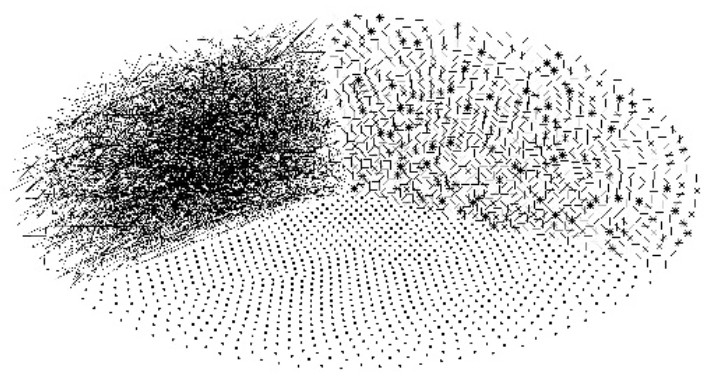
The research on the formation mechanism of residents' low carbon awareness will provide important basis for traffic managers to guide urban residents to choose low carbon travel. The questionnaire survey data of low car- bon travel intention were analyzed. The 15-dimensional questions under the framework of the theory of planned be- havior were considered as the intrinsic variables for residents' low carbon travel intention. K-means clustering algo- rithm was used to classify individual types according to individuals' willingness intensity. The results were used as the explanatory variables in the random forest algorithm for identifying individuals’attribute characteristics and travel characteristics of different types of individuals. The results show that,based on the Silhouette index test and the t-SNE dimension reduction visualization,the residents' low carbon travel intention can be divided into three categories: willingness,neutrality and unwilling; and based on the importance of the indicators,the 4 most signi- ficant factors are identified as the individual's occupation,residence,family composition,travel time. The re- search results provide suggestions for the development and management of urban traffic low carbonization from multi- ple perspectives.

Cite this article

WU Wenjing JING Peng JIA Hongfei ZHANG Minghang . Low Carbon Travel Intention Data Mining for Residents Based on K-means Clustering and Random Forest Algorithm[J]. Journal of South China University of Technology(Natural Science), 2019 , 47(7) : 105 -111 . DOI: 10.12141/j.issn.1000-565X.180116

References

 
Outlines

/