Materials Science & Technology

Hysteresis Torque Rolling Resistance Model Based on Discrete Element for Plastic Materials

  • WANG Anlin YU Yongqiang LI Xiaotian WANG Chuxin
Expand
  •  School of Mechanical Engineering,Tongji University,Shanghai 201804,China
王安麟( 1954-) ,男,教授,博士生导师,主要从事智能设计、工程机械、机电一体化大系统设计与控制等的研究

Received date: 2018-06-08

  Revised date: 2018-09-27

  Online published: 2019-04-01

Supported by

 Supported by the National Key Research and Development Plan( 2017YFC07040)
Abstract

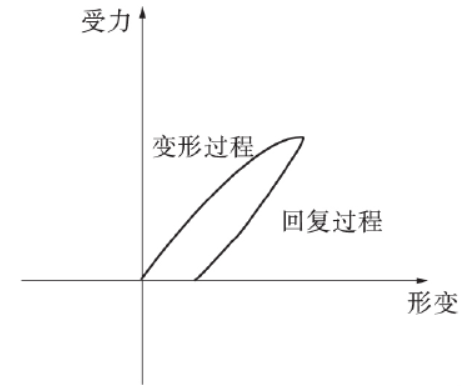
As the original spring-damper rolling resistance model cannot accurately express the change of the deformation of plastic materials,this paper presents a new rolling resistance model based on discrete element for plastic materials,namely the hysteresis torque rolling resistance model. In this model,based on the elasto-plastic deformation theory of particle materials,the rolling resistance torque of the discrete element particles is described as a hysteresis term and a damping term. The hysteresis term expresses the force imbalance caused by the state that the front half of the contact portion is in the deformation process and the latter half in the recovery process,while the damping term expresses the friction on particle surface. The presented rolling contact model is then verified by a particles pile test and achieves a more accurate expression of the unbalanced plastic deformation state on both sides of the particle contact center. From the viewpoint of microscopic process of particle contact,the proposed model is more consistent with material's elastic-plastic deformation mechanism and can be widely used to simulate plastic materials

Cite this article

WANG Anlin YU Yongqiang LI Xiaotian WANG Chuxin . Hysteresis Torque Rolling Resistance Model Based on Discrete Element for Plastic Materials[J]. Journal of South China University of Technology(Natural Science), 2019 , 47(5) : 56 -62,72 . DOI: 10.12141/j.issn.1000-565X.180279

References

 
Outlines

/