Journal of South China University of Technology(Natural Science Edition) ›› 2025, Vol. 53 ›› Issue (12): 46-60.doi: 10.12141/j.issn.1000-565X.240533
• Intelligent Transportation System • Previous Articles Next Articles
Signal Control Method of Adaptive Traffic Events in Connected Traffic Environment
JIANG Xiancai, WU Zhanling, SAN Jingqi
- School of Civil Engineering and Transportation,Northeast Forestry University,Harbin 150040,Heilongjiang,China
-
Received:2024-11-04Online:2025-12-25Published:2025-07-11 -
About author:蒋贤才(1974—),男,博士,教授,主要从事智能交通系统研究。E-mail: jxc023@126.com -
Supported by:the Natural Science Foundation of Heilongjiang Province(PL2024E012)

CLC Number:
Cite this article
JIANG Xiancai, WU Zhanling, SAN Jingqi. Signal Control Method of Adaptive Traffic Events in Connected Traffic Environment[J]. Journal of South China University of Technology(Natural Science Edition), 2025, 53(12): 46-60.
share this article
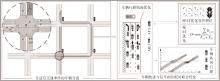
Fig.1
Schematic diagram of SCM-ATE optimization framework"
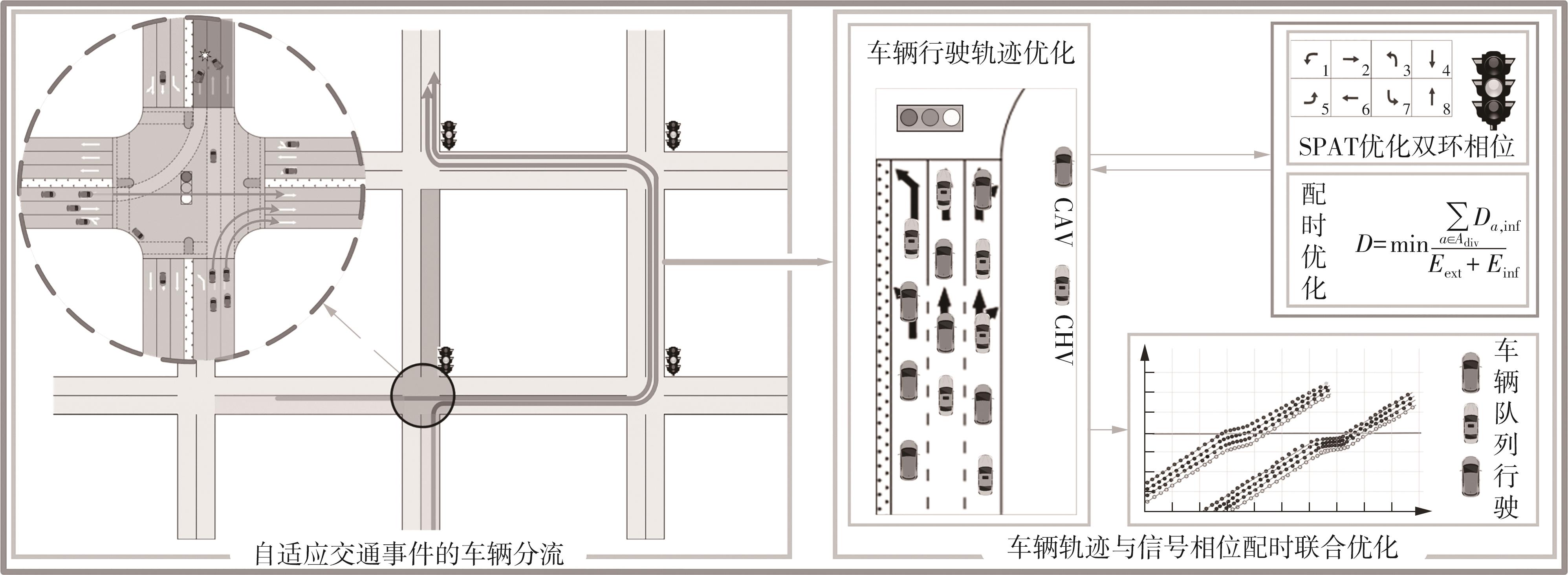

Fig.2
Schematic diagram of road network node information"
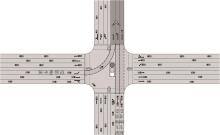
Fig.3
Schematic diagram of link lanes of traffic events"
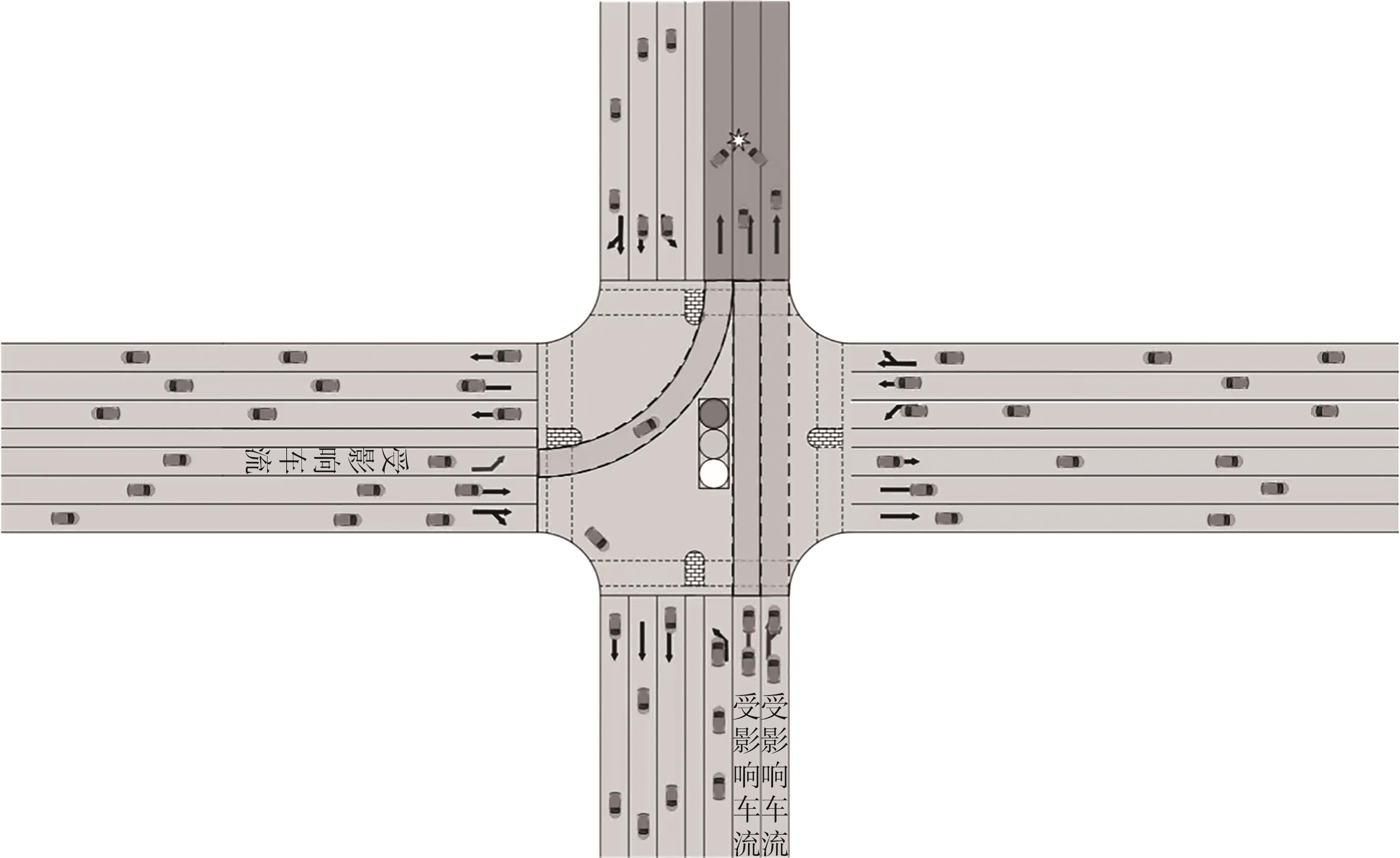

Table 1
Time consumption verification results of SCM-ATE scheme"
| 车辆数 | 动态规划耗时/ms | 轨迹优化耗时/ms | 总耗时/ms |
|---|---|---|---|
| 75 | 389.0±21.3 | 756.0±18.7 | 1 368.0±32.6 |
Table 2
Value of parameters used in this study"
| 参数 | 取值 |
|---|---|
| 道路限速/(m·s-1) | 16 |
| 交叉口限速/(m·s-1) | 11 |
| 最低速度/(m·s-1) | 4 |
| 最大加速度/(m·s-2) | 4 |
| 期望加速度/(m·s-2) | 2.5 |
| 连续车流之间的安全距离/m | 3.6 |
| 直行及右转车流最短绿灯时间/s | 20 |
| 直行及右转车流最长绿灯时间/s | 60 |
| 左转车流最短绿灯时间/s | 12 |
| 左转车流最长绿灯时间/s | 36 |
| 最小周期长度/m | 45 |
| 车长/m | 4 |
| CAV反应时间/s | 0.1 |
| CHV反应时间/s | 1.0 |
| 排队时相邻车辆安全距离/m | 0.5 |
| CAV-CAV和CHV-CAV饱和车头时距/s | 1 |
| CHV-CHV和CAV-CHV饱和车头时距/s | 2 |
| 直行及右转车道饱和流率/(pcu·h-1) | 1 805 |
| 左转车道饱和流率/(pcu·h-1) | 1 200 |
| CHV平均速度/(m·s-1) | 9 |
| 仿真时长/s | 3 600 |
| 车道宽度/m | 3.5 |
Fig.4
Traffic volumes at intersections in simulate road networks (Unit: pcu/h)"
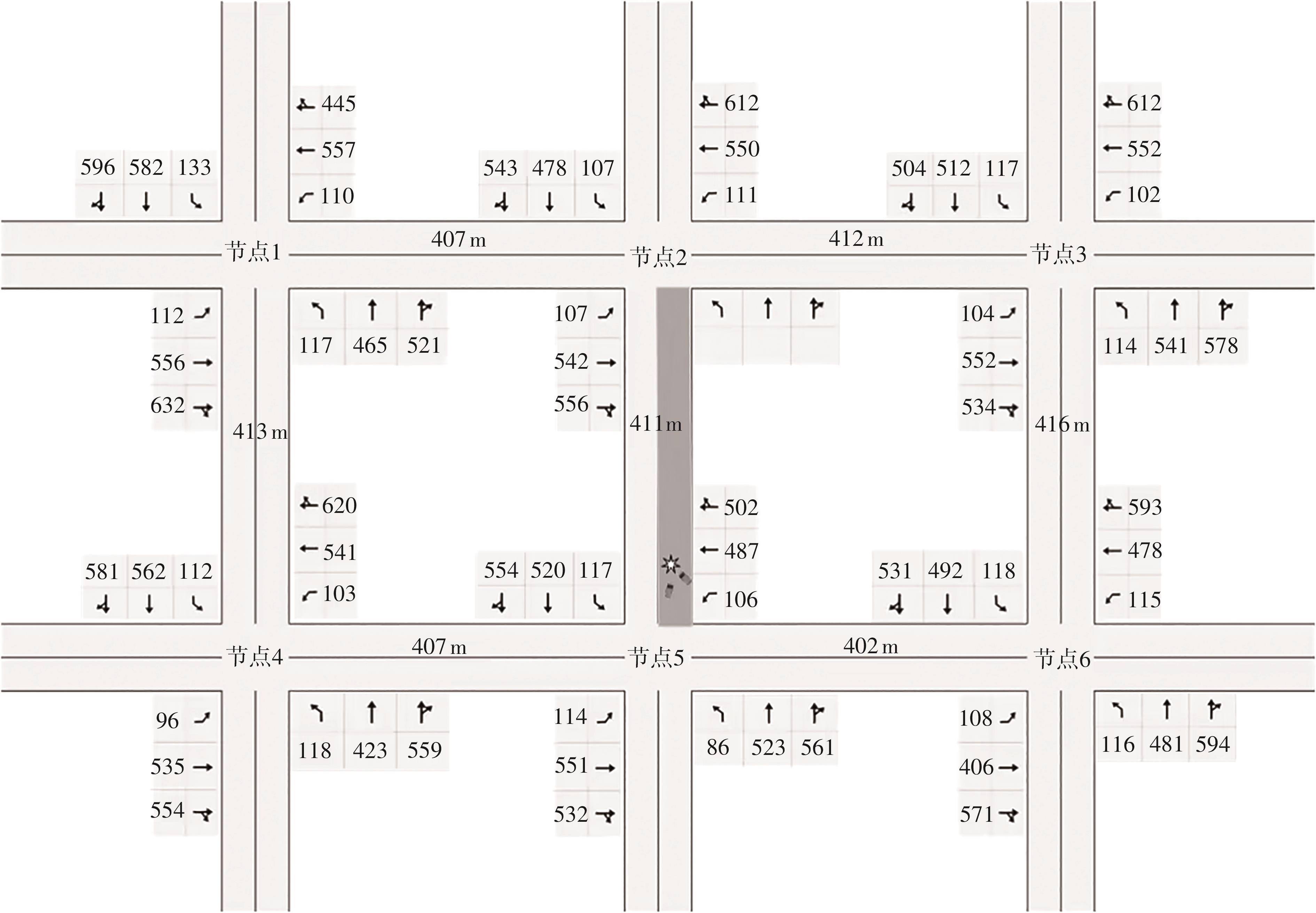
Table 3
Differences among three simulation schemes"
| 优化方法 | 信号优化 | 轨迹优化 | 信号与轨迹优化协同 |
|---|---|---|---|
| 方案1 | √ | √ | × |
| 方案2(JOTS-CVT) | √ | √ | √ |
| 方案3(SCM-ATE) | √ | √ | √ |
Table 4
Average delay and travel time of three schemes under different flow rate ratios"
交叉口 流率比 | 车均延误/s | 分流车的平均行程时间/s | ||||
|---|---|---|---|---|---|---|
| 方案1 | 方案2 | 方案3 | 方案1 | 方案2 | 方案3 | |
| 0.60 | 25.224 | 25.430 | 22.056 | 174.556 | 166.350 | 163.852 |
| 0.75 | 33.985 | 30.216 | 27.073 | 196.397 | 186.218 | 171.680 |
| 0.85 | 42.667 | 40.925 | 40.412 | 248.140 | 241.794 | 228.567 |
Table 5
Vehicle delay results of two schemes under high traffic flow"
| 方案 | 均值/s | 标准差/s | 极差/s |
|---|---|---|---|
| SCM-ATE | 39.5 | 9.25 | 55 |
| JOTS-CVT | 42.7 | 15.08 | 76 |
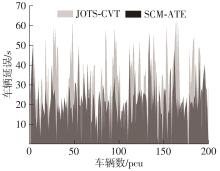
Fig.5
Comparison of vehicle delay"
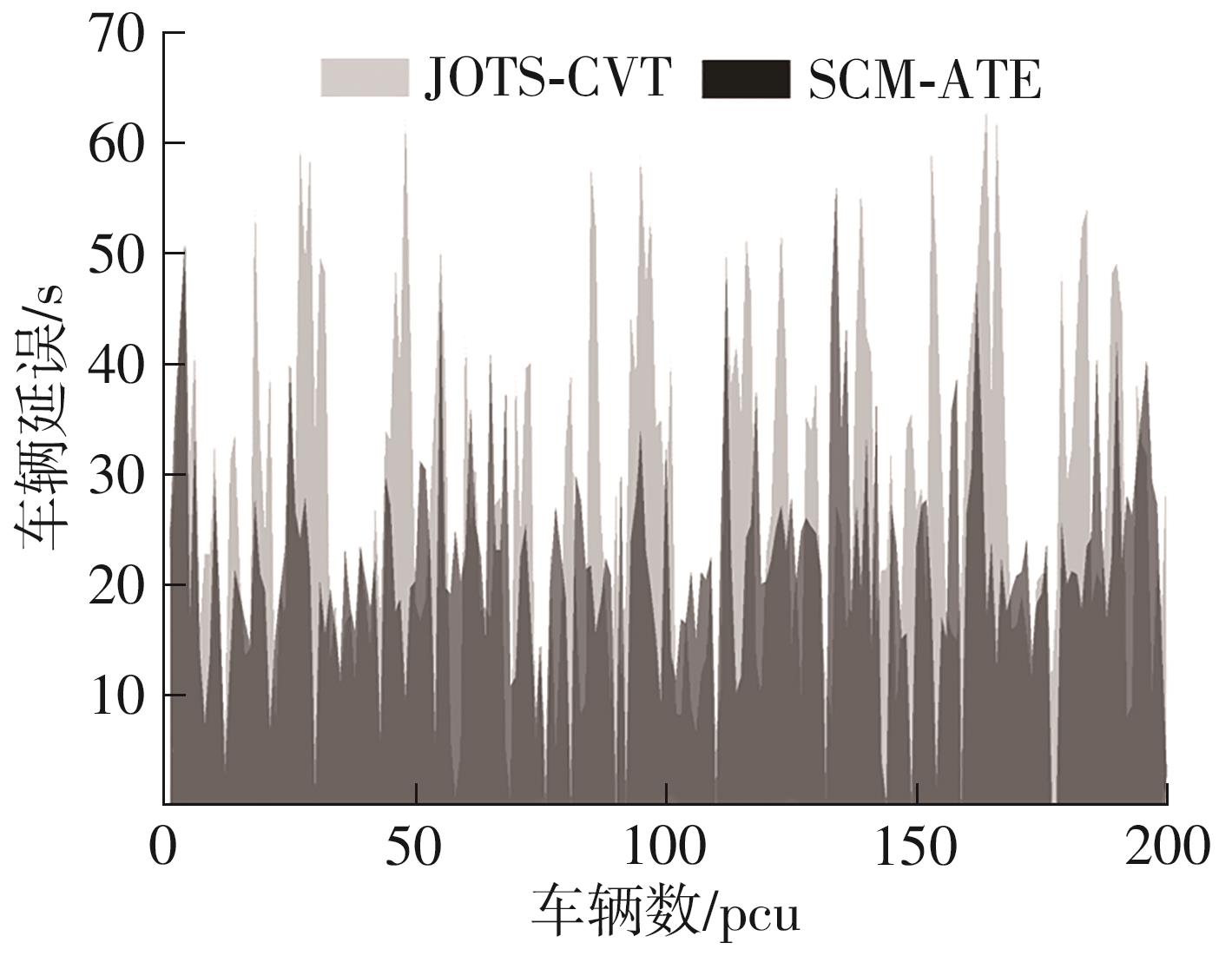
Table 6
Difference test results of vehicle delay between two schemes"
| 方案 | 均值/s | 标准差/s | 变异系数 | t检验 |
|---|---|---|---|---|
| SCM-ATE | 27.96 | 7.848 | 0.281 | 2.16 |
| JOTS-CVT | 30.26 | 12.852 | 0.425 |
Fig.6
Comparison of travel time of diverted vehicles"
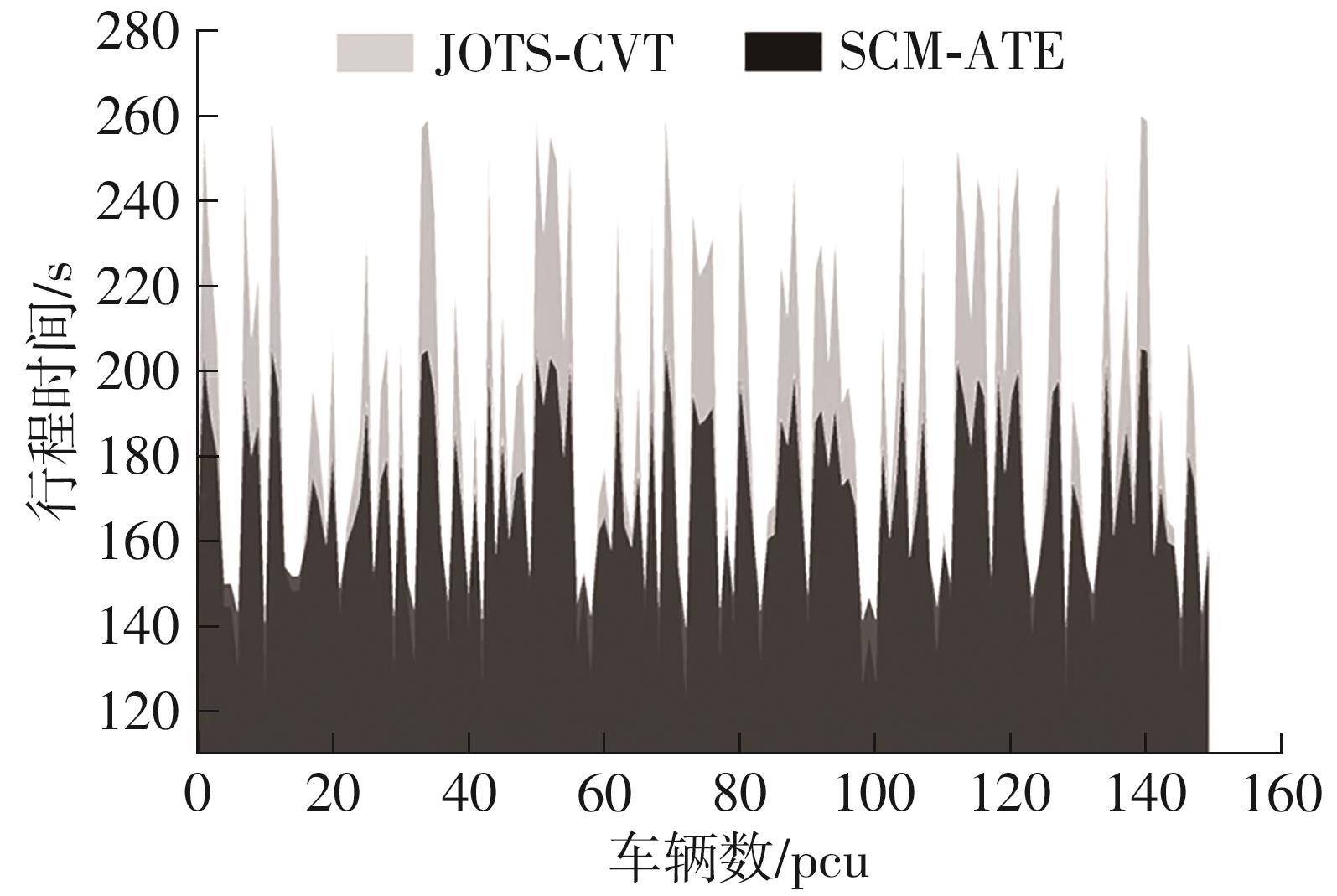
Table 7
Test results of differences in vehicle travel time between two schemes"
| 方案 | 均值/s | 标准差/s | 变异系数 | t检验 |
|---|---|---|---|---|
| SCM-ATE | 171.68 | 23.1 | 0.135 | 3.13 |
| JOTS-CVT | 183.92 | 42.0 | 0.228 |
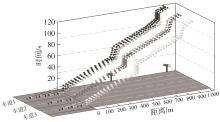
Fig.7
3D schematic of vehicle trajectories in SCM-ATE"
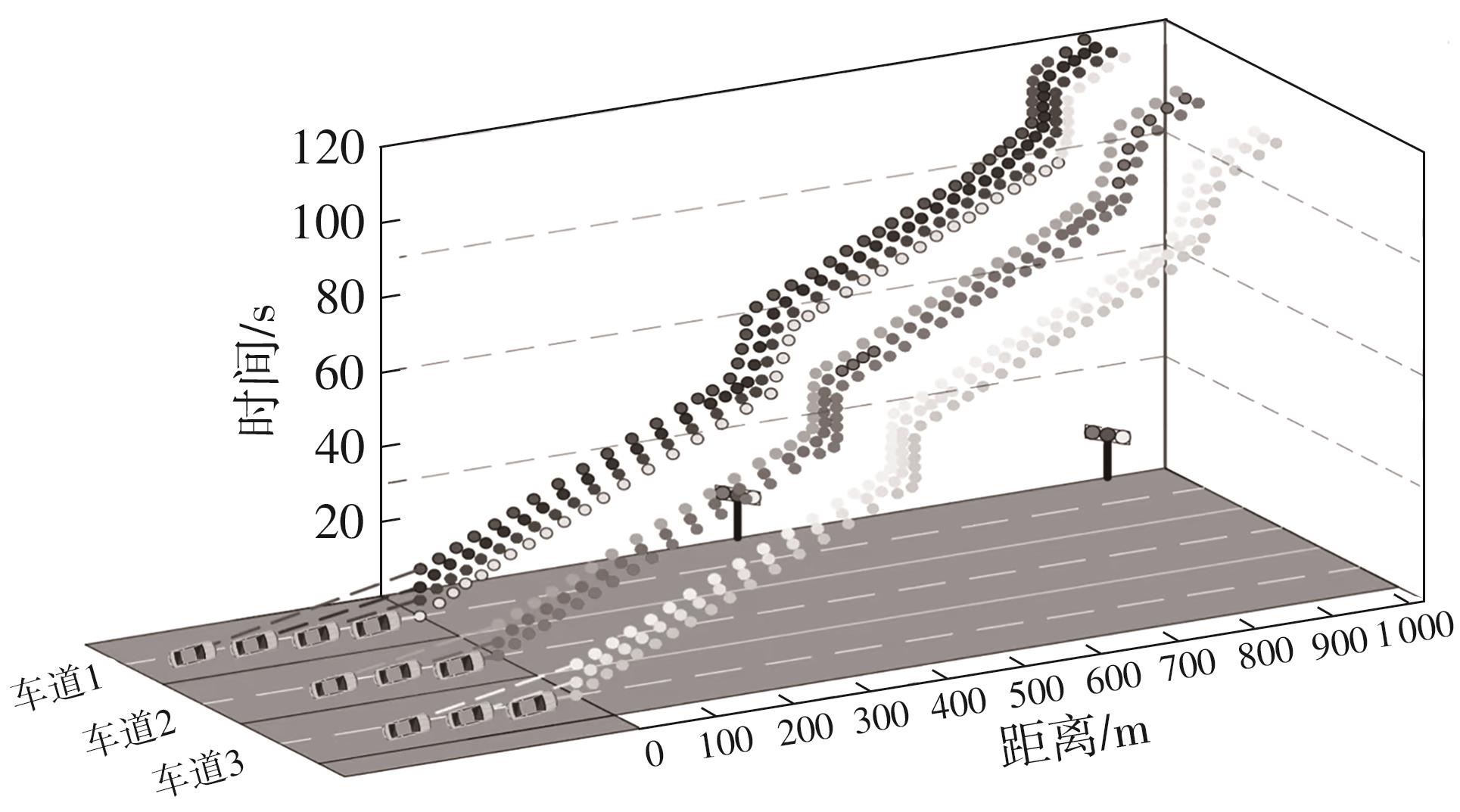
Fig.8
Vehicle trajectory optimization in JOTS-CVT and SCM-ATE"
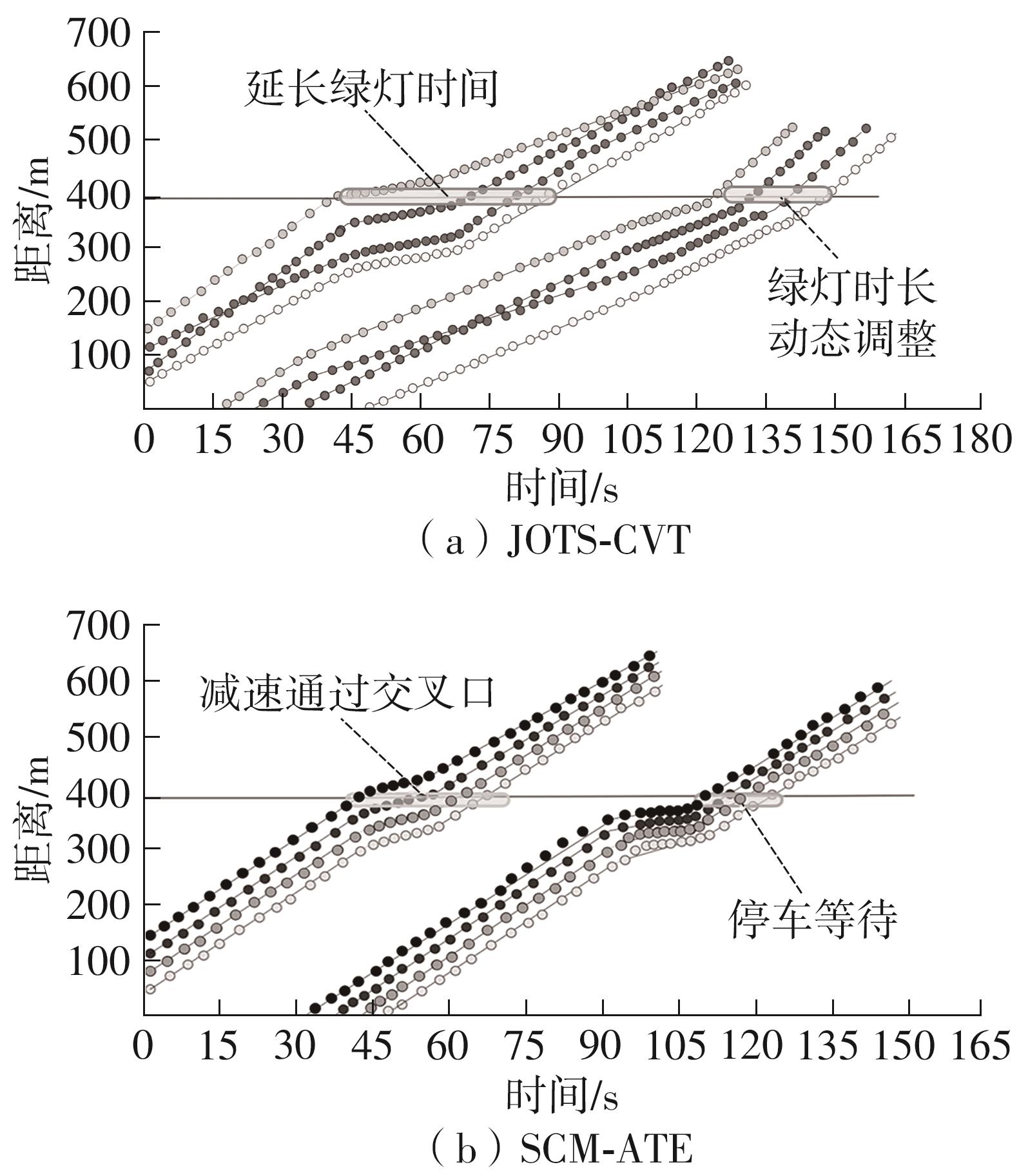
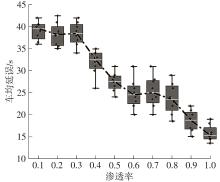
Fig.9
Average delay under different CAV permeabilities"
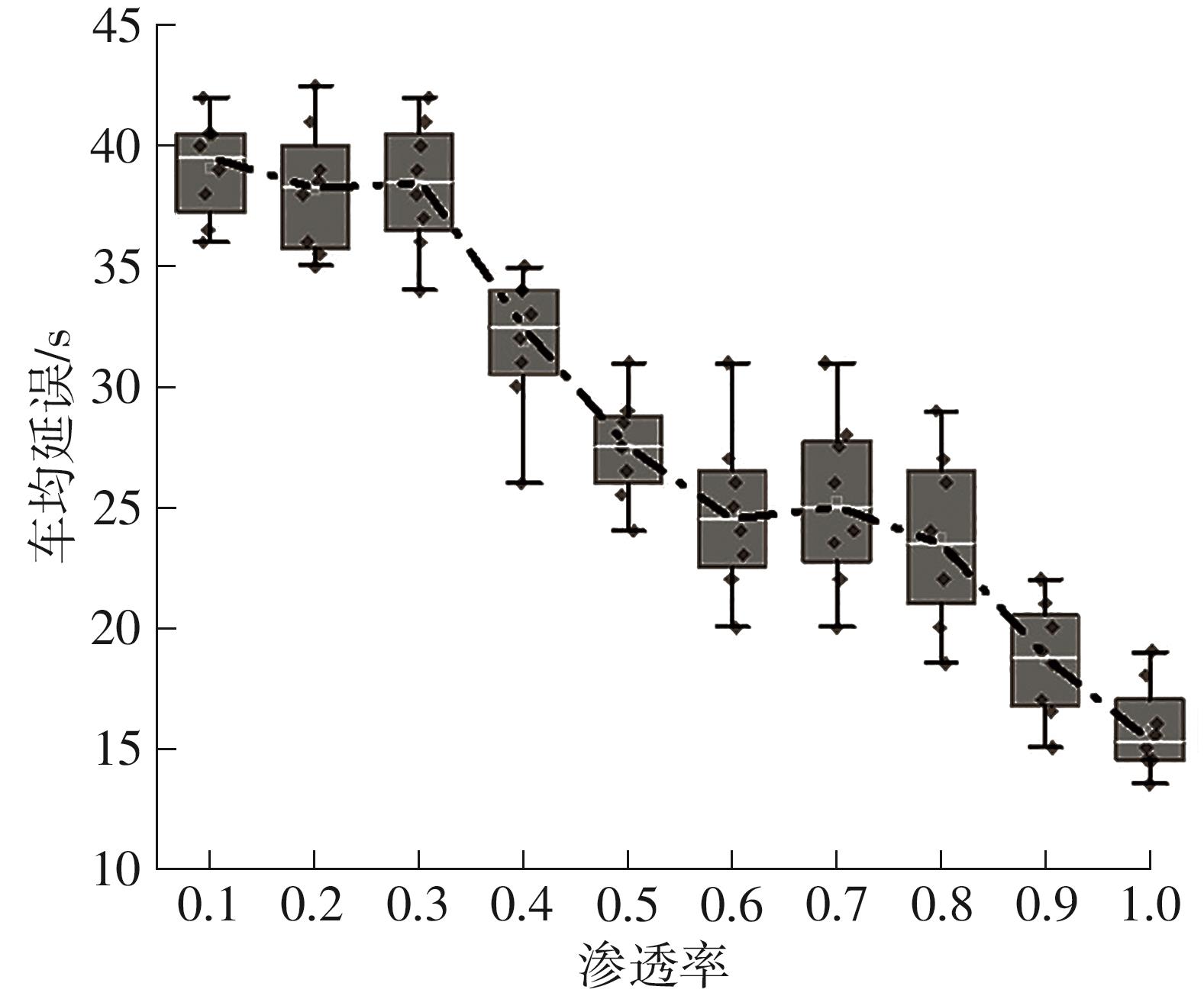
Fig.10
Average travel time under different CAV permeabilities"
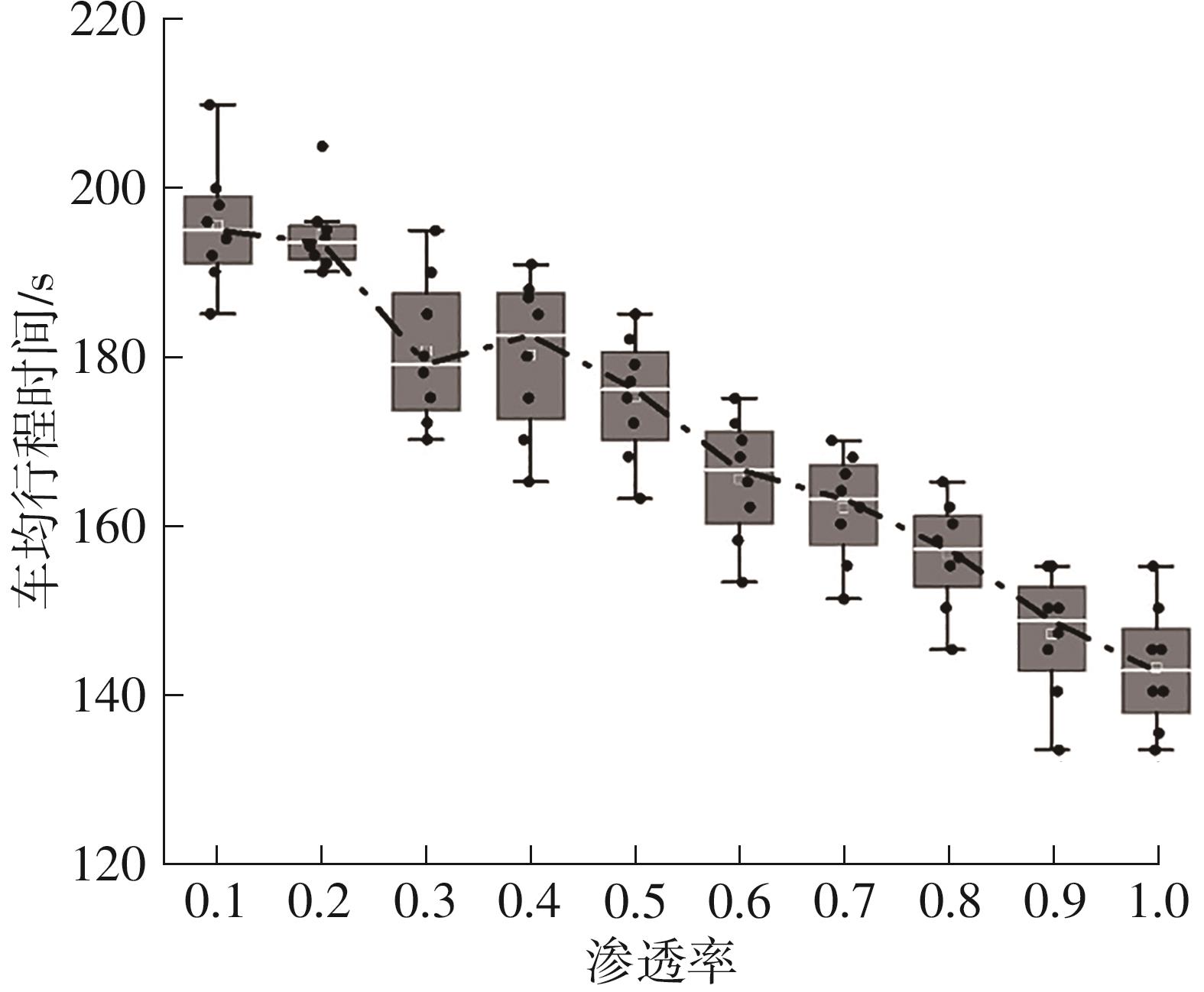
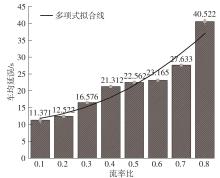
Fig.11
Average delay under different flow rate ratios"
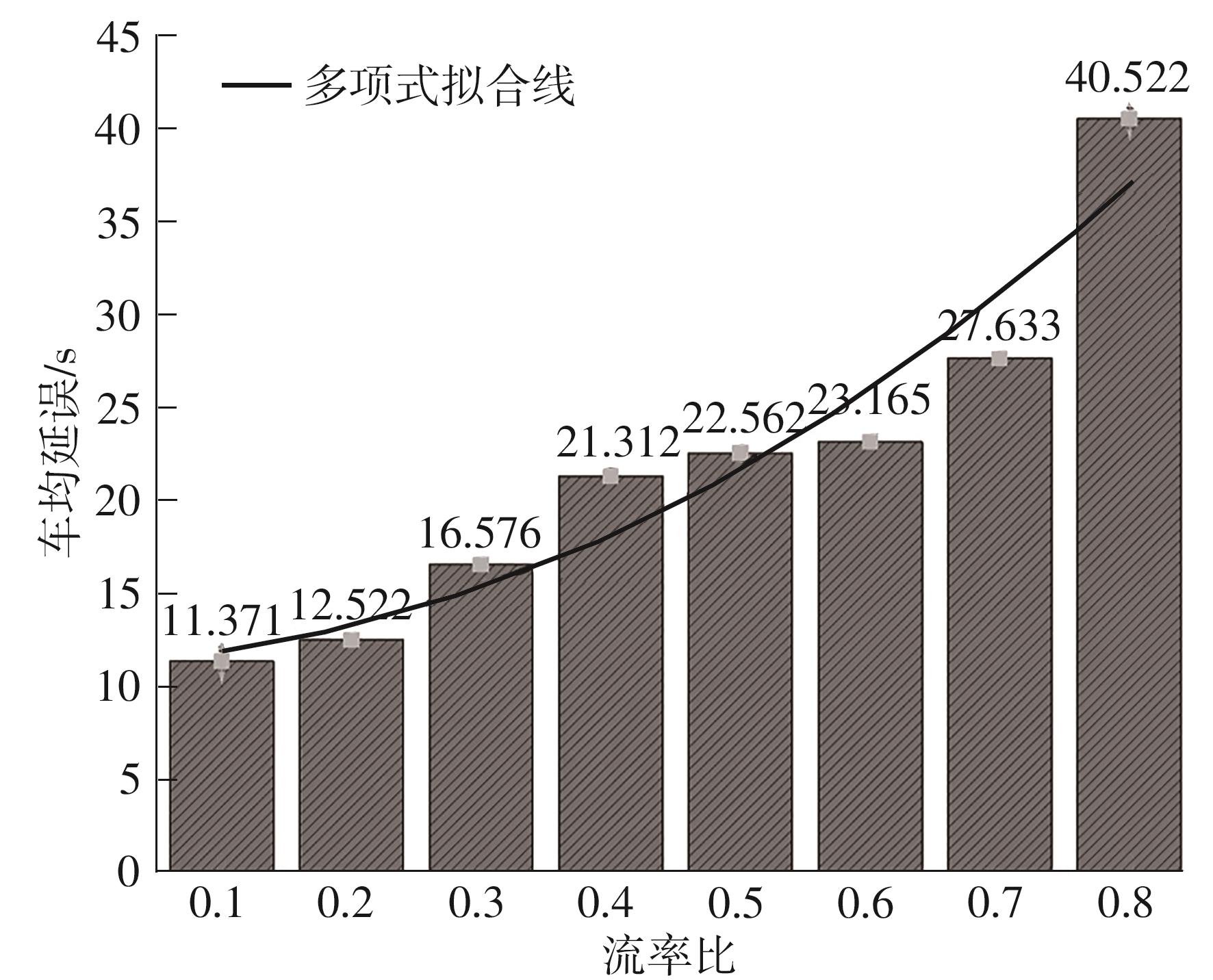
Fig.12
Average travel time under different flow rate ratios"
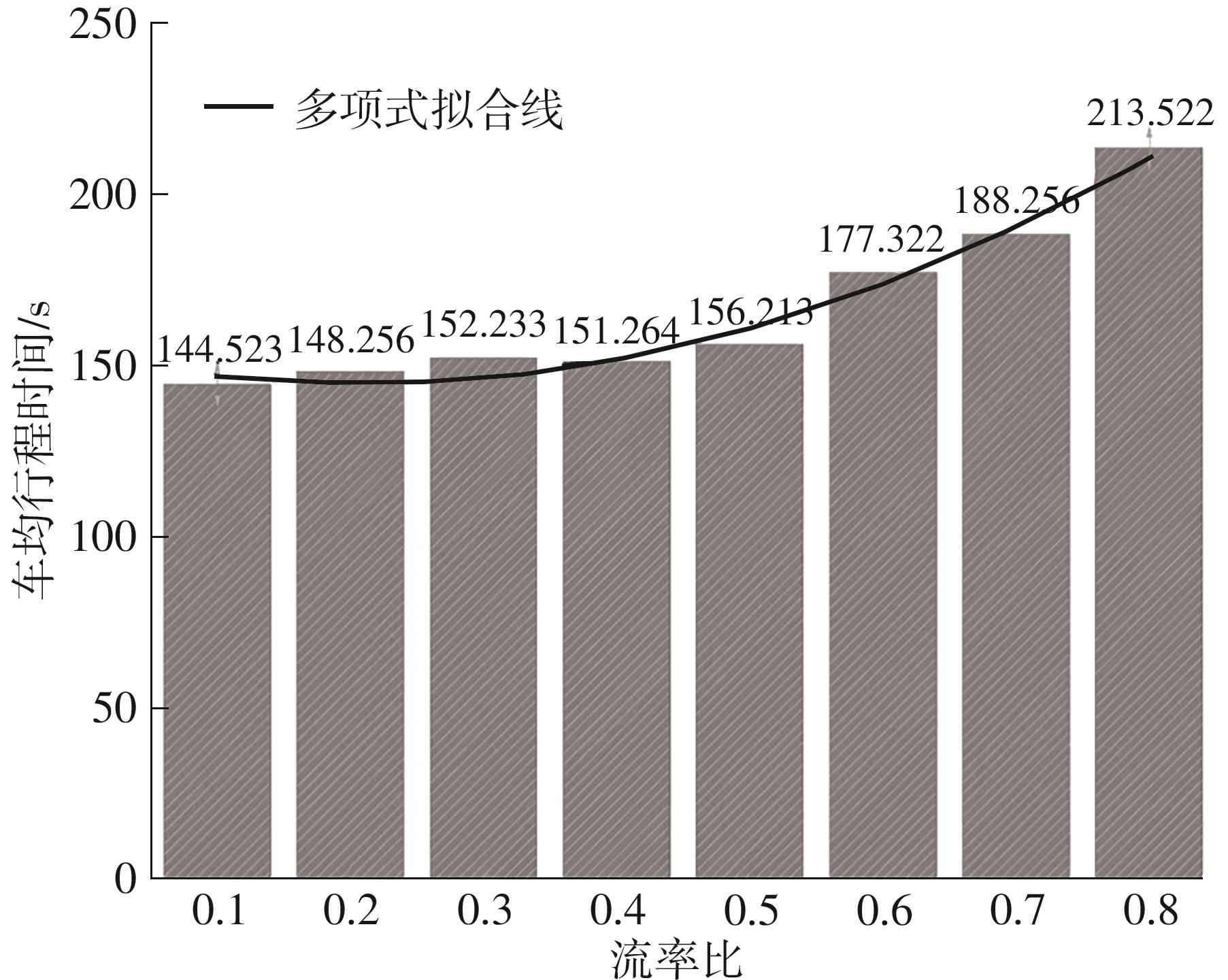
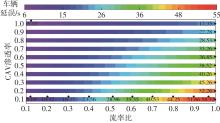
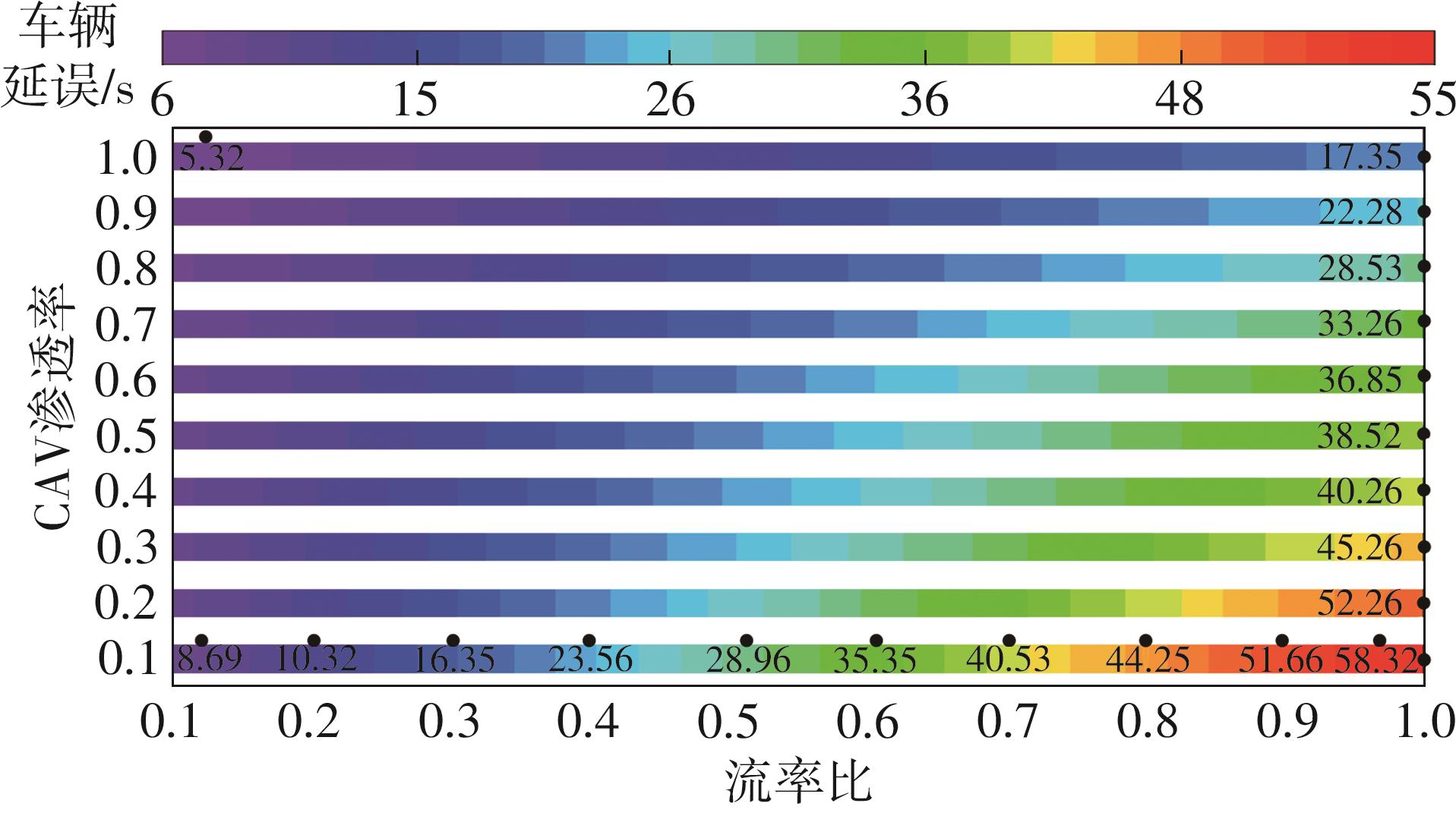
Fig.13
Slitted heatmap of vehicle delay"
| [1] | THANH T, DAN H, JIWON K,et al .MSGNN:a multi-structured graph neural network model for real-time incident prediction in large traffic networks[J].Transportation Research Part C:Emerging Technologies,2023,156:104354/1-24. |
| [2] | WANG Z L, QI X, JIANG H .Estimating the spatiotemporal impact of traffic incidents:an integer programming approach consistent with the propagation of shockwaves[J].Transportation Research Part B:Metho-dological,2018,111:356-369. |
| [3] | WANG Z, ZHENG Z, CHEN X,et al .Modeling the evolution of incident impact in urban road networks by leveraging the spatiotemporal propagation of shockwaves[J].Transportation Research Part C:Emerging Technologies,2024,164:104668/1-18. |
| [4] | ZHENG Z, WANG Z, CHEN X,et al .Spatiotemporal clustering for the impact region caused by a traffic incident:an improved fuzzy C-means approach with gua-ranteed consistency[J].Transportmetrica A:Transport Science,2025,21:1-30. |
| [5] | 何雅琴,容煜伦,柳祖鹏,等 .基于水波原理的城市突发事件交通影响程度研究[J].交通运输系统工程与信息,2017,17(5):151-156,172. |
| HE Ya-qin, RONG Yu-lun, LIU Zu-peng,et al .Traffic influence degree of urban traffic emergency based on water wave principle[J].Journal of Transportation Systems Engineering and Information Technology,2017,17(5):151-156,172. | |
| [6] | ALBERTO F, DANIELA G .Algorithms to find shortest and alternative paths in free flow and congested traffic regimes[J].Transportation Research Part C:Emerging Technologies,2016,73:1-29. |
| [7] | DING H, GUO F, ZHENG X Y,et al .Traffic guidance-perimeter control coupled method for the congestion in a macro network[J].Transportation Research Part C:Emerging Technologies,2017,81,300-316. |
| [8] | 胡立伟,赵雪亭,杨锦青,等 .基于双层规划的城市交通拥塞疏导优化研究[J].交通运输系统工程与信息,2021,21(5):222-227. |
| HU Li-wei, ZHAO Xue-ting, YANG Jin-qing,et al .Urban traffic congestion mitigation and optimization study based on two-level programming[J].Journal of Transportation Systems Engineering and Information Techno-logy,2021,21(5):222-227. | |
| [9] | 王嘉文,孙晨晨,赵靖,等 .交通事件下路段通行能力多层模糊估计方法[J].交通运输系统工程与信息,2023,23(6):100-110. |
| WANG Jia-wen, SUN Chen-chen, ZHAO Jing,et al .Multilayer fuzzy estimation method for road traffic capa-city affected by traffic incidents[J].Journal of Transportation Systems Engineering and Information Technology,2023,23(6):100-110. | |
| [10] | 龙雪琴,王瑞璇,王晗 .考虑出行者不同理性程度的拥堵交通流分配方法[J].交通运输系统工程与信息,2023,23(1):216-223. |
| LONG Xue-qin, WANG Rui-xuan, WANG Han .Traffic flow assignment method considering travelers’ different rational degree under congestions[J].Journal of Transportation Systems Engineering and Information Technology,2023,23(1):216-223. | |
| [11] | YU C, FENG Y, LIU H,et al .Integrated optimization of traffic signals and vehicle trajectories at isolated urban intersections[J].Transportation Research Part B:Methodological,2018,112:89-112. |
| [12] | LIU M, ZHAO J, HOOGENDOORN S,et al .A single-layer approach for joint optimization of traffic signals and cooperative vehicle trajectories at isolated intersections[J].Transportation Research Part C:Emer-ging Technologies,2022,134:103459/1-19. |
| [13] | XU T, SIMANTA B, MICHAEL W .Smoothing-MP:a novel max-pressure signal control considering signal coordination to smooth traffic in urban networks[J].Transportation Research Part C:Emerging Technologies,2024,166:104760/1-25. |
| [14] | WANG Y, CAI P, LU G .Cooperative autonomous traffic organization method for connected automated vehicles in multi-intersection road networks[J].Transportation Research Part C:Emerging Technologies,2020,111:458-476. |
| [15] | 张焕炯 .城市主要道路交叉口拥堵分析与改善措施[C]∥ 2018世界交通运输大会论文集.北京:[s.n.],2018:912-917. |
| [16] | JIANG X, SSHANG Q .A dynamic CAV-dedicated lane allocation method with the joint optimization of signal timing parameters and smooth trajectory in a mixed traffic environment[J].IEEE Transactions on Intelligent Transportation Systems,2023,24(6):6436-6449. |
| [17] | MILANES V, SHLADOVER S E .Modeling cooperative and autonomous adaptive cruise control dynamic responses using experimental data[J].Transportation Research Part C:Emerging Technologies,2014,48:285-300. |
| [18] | 蒋阳升,胡蓉,姚志洪,等 .智能网联车环境下异质交通流稳定性及安全性分析[J].北京交通大学学报,2020,44(1):27-33. |
| JIANG Yangsheng, HU Rong, YAO Zhihong,et al .Stability and safety analysis for heterogeneous traffic flow composed of intelligent and connected vehicles[J].Journal of Beijing Jiaotong University,2020,44(1):27-33. | |
| [19] | PANWAI S, DIA H .Comparative evaluation of microscopic car-following behavior[J].IEEE Transactions on Intelligent Transportation Systems,2005,6(3):314-325. |
| [20] | 蒋贤才,徐慧智 .混合驾驶环境下交叉口空间资源动态控制方法[J].交通运输系统工程与信息,2023,23(6):63-73. |
| JIANG Xian-cai, XU Hui-zhi .Dynamic control method for intersection space resources in mixed traffic environment[J].Journal of Transportation Systems Enginee-ring and Information Technology,2023,23(6):63-73. |
| [1] | PEI Mingyang, SHAO Kangshun, LI Linqing, XU Fengjuan. Modeling Methodologies for Unmanned Aerial Vehicle Path Planning in Emergency Rescue: A Comprehensive Review and Prospect [J]. Journal of South China University of Technology(Natural Science Edition), 2025, 53(12): 17-33. |
| [2] | CHENG Guozhu, SHI Zeyu. Speed Secondary Guidance Strategy for Signalized Intersection Considering Driver Acceptance Level [J]. Journal of South China University of Technology(Natural Science Edition), 2025, 53(12): 34-45. |
| [3] | DENG Yajuan, SONG Siliang, CUI Liangbin, LI Yu, NIU Xiaolu, WU Qi. Research on the Mechanism Influencing the Coupling Coordination Between Road Significance and Traffic State [J]. Journal of South China University of Technology(Natural Science Edition), 2025, 53(11): 62-76. |
| [4] | YANG Miaoyan, DONG Chunjiao, XIONG Zhihua, ZHUANG Yan, XU Bo. Hotspot Segments Identification of Collisions Between Electric Vehicles and Pedestrians/Non-Motor Vehicles [J]. Journal of South China University of Technology(Natural Science Edition), 2025, 53(11): 112-121. |
| [5] | YE Yichen, WEN Huiying, ZHANG Lin. Evaluation of Multi-Dimension Accessibility of Intercity Road Networks from the Perspective of Regional Coordinated Development [J]. Journal of South China University of Technology(Natural Science Edition), 2025, 53(11): 101-111. |
| [6] | CHENG Guozhu, XUE Daoan, GU Shuang. Path Planning Method Integrating Curve Combination and Numerical Optimization for Parallel Parking on Narrow Road [J]. Journal of South China University of Technology(Natural Science Edition), 2025, 53(11): 77-89. |
| [7] | HE Yongming, ZHANG Longlong, SUI Shengchun, WAN Yiming. Numerical Simulation of Wind Field at Bridge-Tunnel Connection Section in Complex Mountainous Areas [J]. Journal of South China University of Technology(Natural Science Edition), 2025, 53(10): 40-51. |
| [8] | WEN Huiying, HUANG Junda, HUANG Kunhuo, ZHAO Sheng, CHEN Zhe, HU Yuqing. Analysis of Freeway Accident Factors Integrating Short-Term Traffic Flow [J]. Journal of South China University of Technology(Natural Science Edition), 2025, 53(10): 1-13. |
| [9] | ZHANG Zhiqing, YU Xiaozheng, ZHU Leipeng, SUN Yufeng, LI Yixin. Identifying Key Causes of Accidents for Autonomous Vehicles Based on CTGAN [J]. Journal of South China University of Technology(Natural Science Edition), 2025, 53(10): 14-28. |
| [10] | WEN Huiying, HUANG Kunhuo, CHEN Zhe, ZHAO Sheng, HU Yuqing, HUANG Junda. An Investigation into Expressway Merging Behavior and Safety Based on ExiD Data [J]. Journal of South China University of Technology(Natural Science Edition), 2025, 53(8): 50-60. |
| [11] | WU Haodu, SHI Yang, ZHAO Junteng, SUN Jian. Collaborative Control for Urban Expressway Mainline and On-Ramp Metering in Connected-Vehicle Environment [J]. Journal of South China University of Technology(Natural Science Edition), 2025, 53(8): 73-86. |
| [12] | ZHANG Jiyu, TANG Chunyan. A Study on the Optimization of Modular Autonomous Public Transit Services [J]. Journal of South China University of Technology(Natural Science Edition), 2025, 53(8): 42-49. |
| [13] | WEN Huiying, MA Zhaoliang, ZHAO Sheng, WU Liming, HUANG Kunhuo. Analysis of Factors Affecting Truck Accidents on Mountainous Freeways [J]. Journal of South China University of Technology(Natural Science Edition), 2025, 53(7): 93-103. |
| [14] | XIE Kun, XING Xinyuan, DONG Honghui, DONG Chunjiao, CHEN Yuanduo. Method for Workplace and Residence Identification and Travel Activity Classification Driven by Trajectory Data [J]. Journal of South China University of Technology(Natural Science Edition), 2025, 53(6): 131-139. |
| [15] | JIN Wenzhou, ZHANG Yong, SUN Jie. Dynamic Scheduling of Demand Responsive Transit Based on Model Predictive Control [J]. Journal of South China University of Technology(Natural Science Edition), 2025, 53(6): 77-90. |
| Viewed | ||||||
|
Full text |
|
|||||
|
Abstract |
|
|||||