Journal of South China University of Technology(Natural Science Edition) ›› 2026, Vol. 54 ›› Issue (1): 149-160.doi: 10.12141/j.issn.1000-565X.250044
• Mechanical Engineering • Previous Articles
Characteristics and High-Precision Positioning Analysis of Fluid-Solid Noise Sources in Inclined Axis Piston Motor
CHEN Fulong1, HUANG Hui1, DU Heng1, SU Junshou2,3, LI Yuzheng1, LI Fuqi1
- 1.School of Mechanical Engineering and Automation/Key Laboratory of Fluid Power and Intelligent Electro-Hydraulic Control Fujian Province University,Fuzhou University,Fuzhou 350108,Fujian,China
2.Jiangsu XCMG State Key Laboratory;Technology Co. ,Ltd. ,Xuzhou 221004,Jiangsu,China
3.School of Mechanical Engineering,University of Science and Technology Beijing,Beijing 100083,China
-
Received:2025-02-06Online:2026-01-25Published:2025-07-01 -
Contact:黄惠(1986 —),男,博士,副教授,主要从事液压元件振动噪声控制和声振源定位研究。 E-mail:huihuang@fzu.edu.cn -
About author:陈福龙(1993—),男,博士生,主要从事流体传动控制和振动噪声分析等研究。E-mail: 200210011@fzu.edu.cn -
Supported by:the National Natural Science Foundation of China(52105053);the Sub Project of 2022 Fujian Provincial Higher Education Collaborative Science and Technology Program(2022H6017);the 2022 Fujian Provincial Central Guiding Local Science and Technology Development Fund(2022L3070)

CLC Number:
Cite this article
CHEN Fulong, HUANG Hui, DU Heng, SU Junshou, LI Yuzheng, LI Fuqi. Characteristics and High-Precision Positioning Analysis of Fluid-Solid Noise Sources in Inclined Axis Piston Motor[J]. Journal of South China University of Technology(Natural Science Edition), 2026, 54(1): 149-160.
share this article

Fig.1
Structural diagram of inclined axis motor"
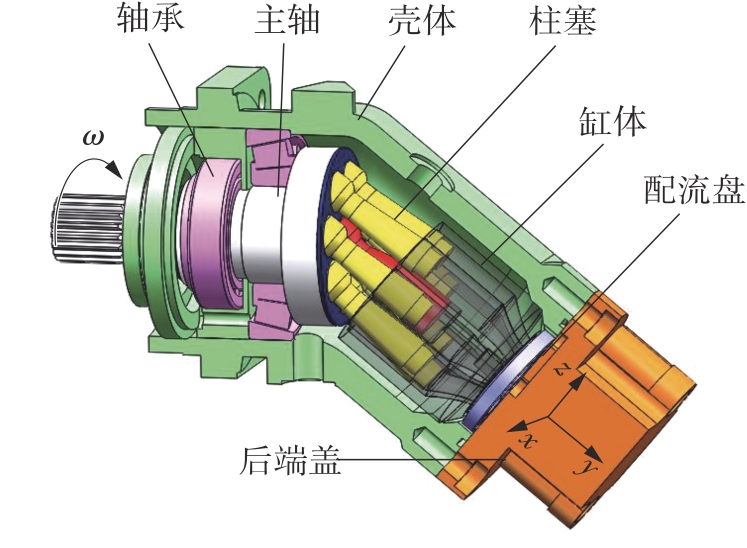
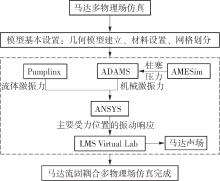
Fig.2
Multiphysics simulation roadmap for motors"
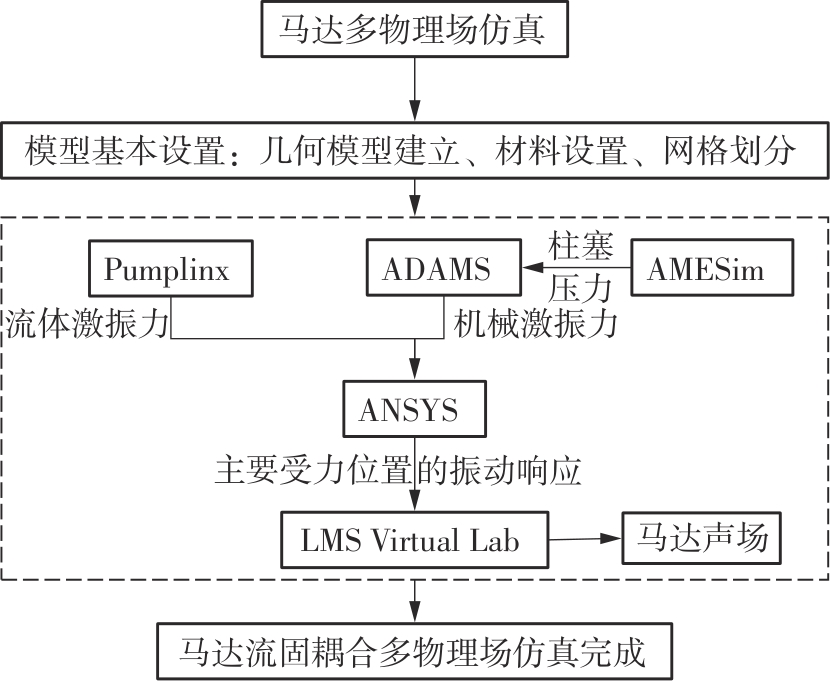

Table 1
Mesh independence verification"
| 网格尺寸/ mm | 压力误差/% | 计算时间/h |
|---|---|---|
| 0.080 | 3.5 | 0.3 |
| 0.050 | 2.0 | 1.5 |
| 0.020 | 1.5 | 4.0 |
| 0.010 | 1.3 | 10.0 |
| 0.008 | 1.2 | 20.0 |
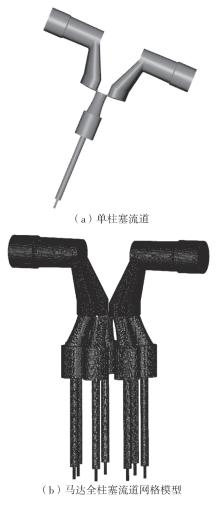
Fig.3
Fluid domain simulation model of inclined axis motor"
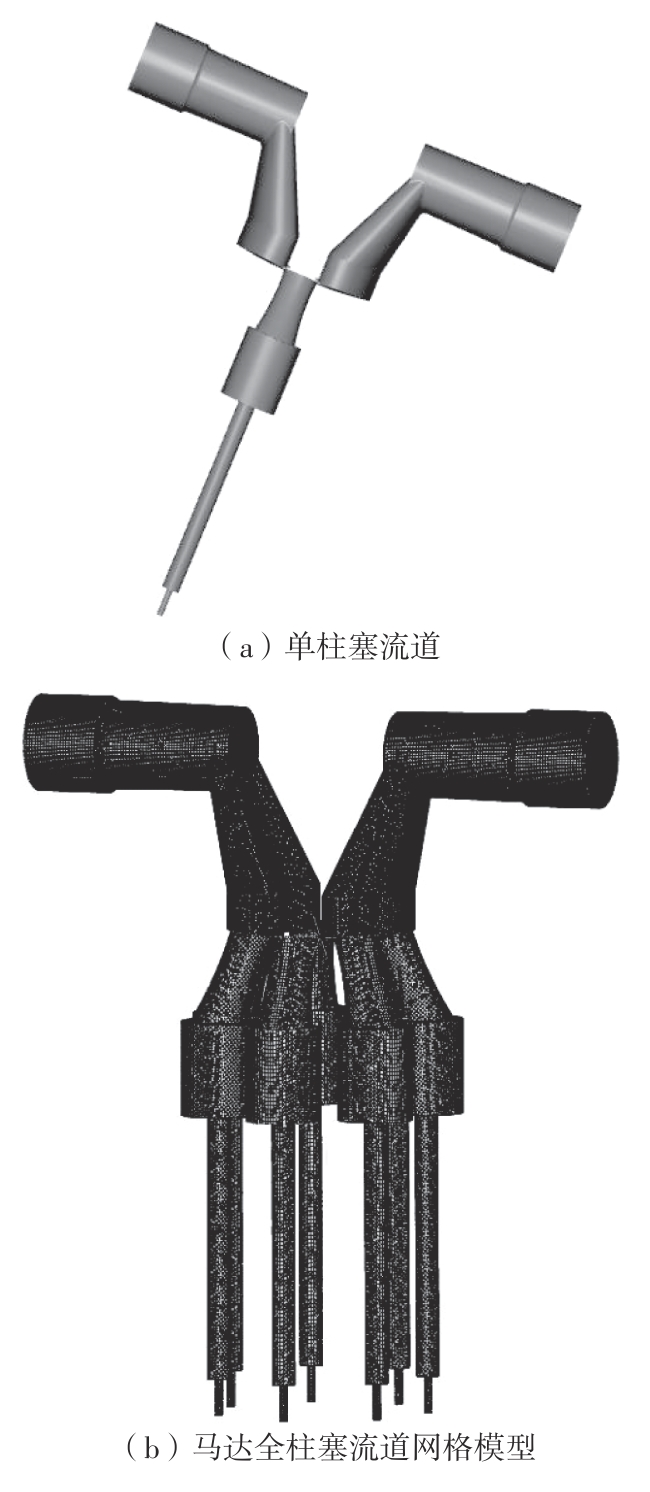
Table 2
Hydraulic oil simulation parameter settings"
| 设置项目 | 参数 |
|---|---|
| 动力黏度/(Pa·s) | 0.007 |
| 油液密度/(kg·m-3) | 870 |
| 弹性模量/MPa | 1 500 |
| 饱和压力/Pa | 400 |
| 环境温度/K | 333 |
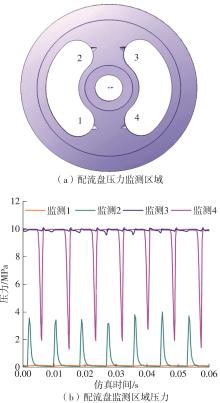
Fig.4
Pressure simulation of valve plate in swashplate axial piston motor"
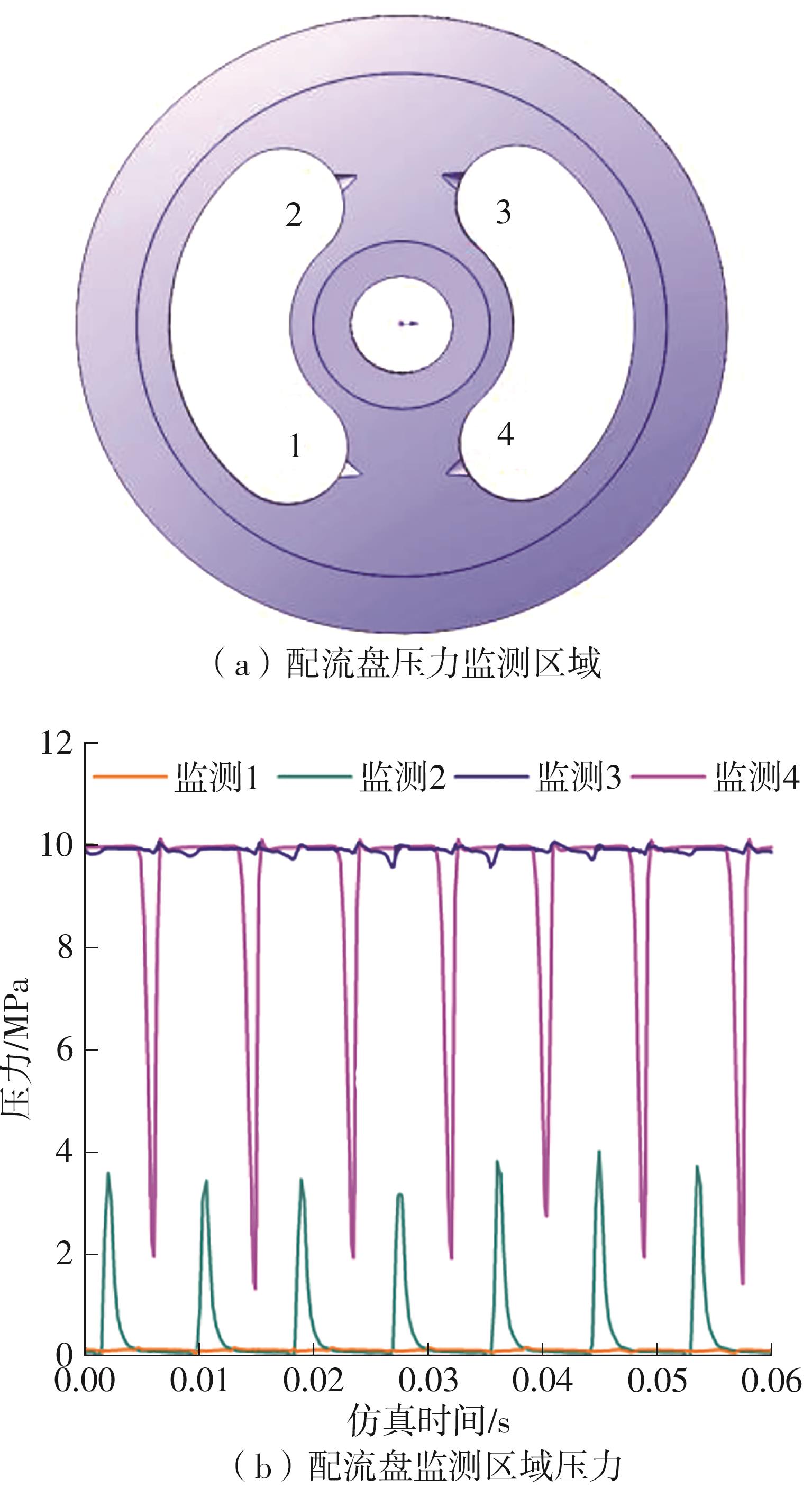
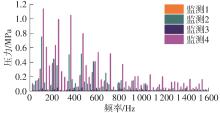
Fig.5
Pressure spectrum diagram of the valve plate monitoring area"
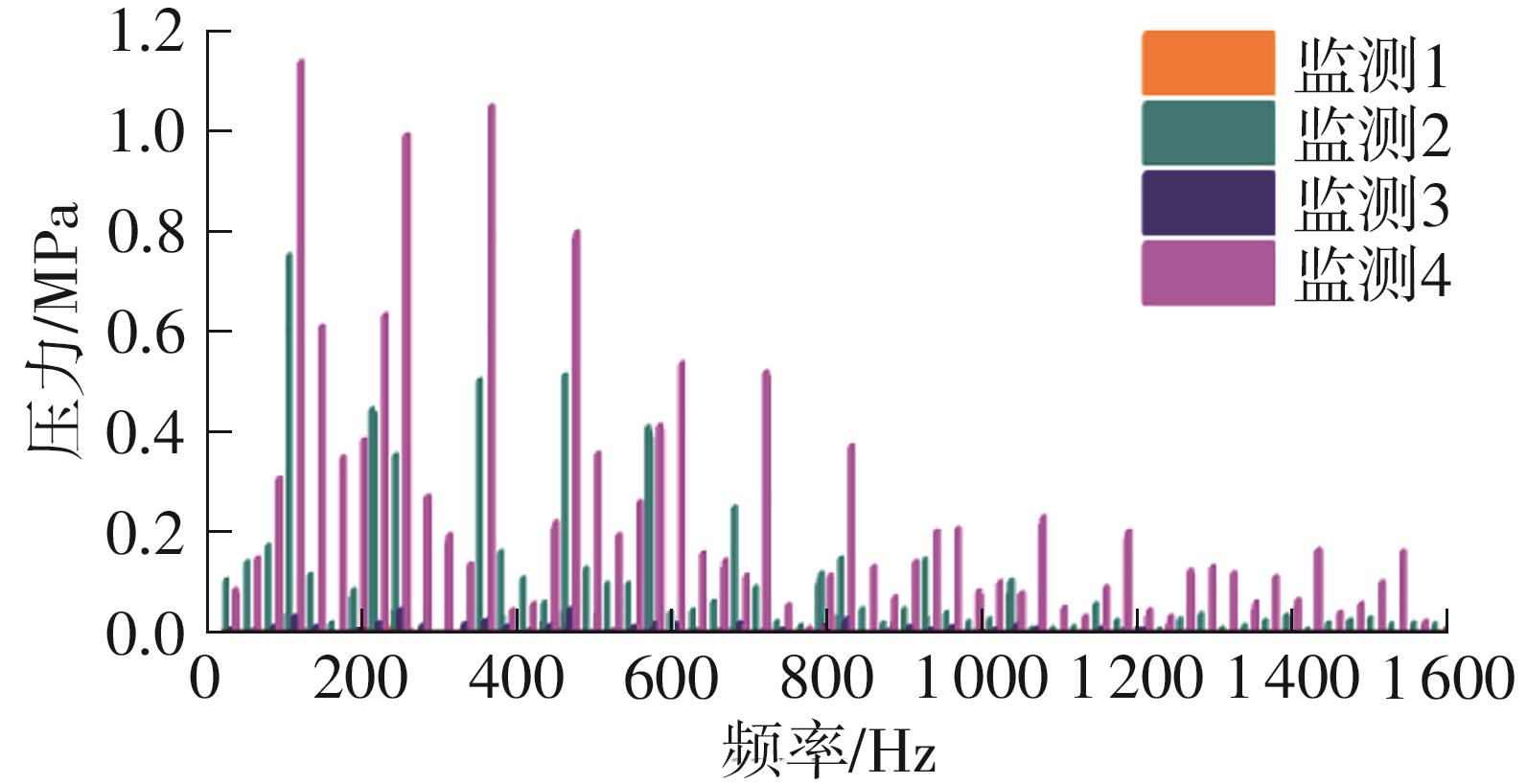
Fig.6
ADAMS model of inclined axis motor"
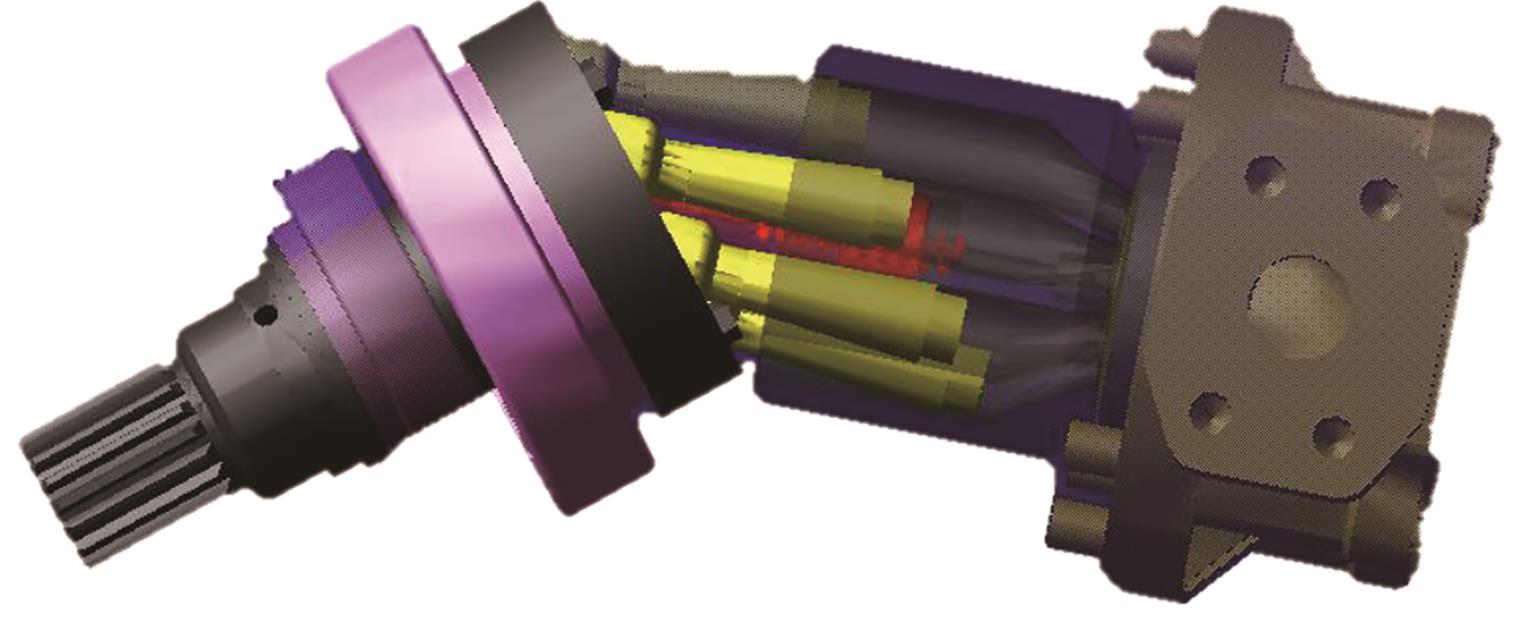
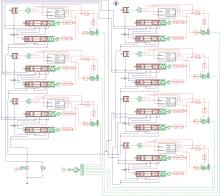
Fig.7
Force model of motor piston"
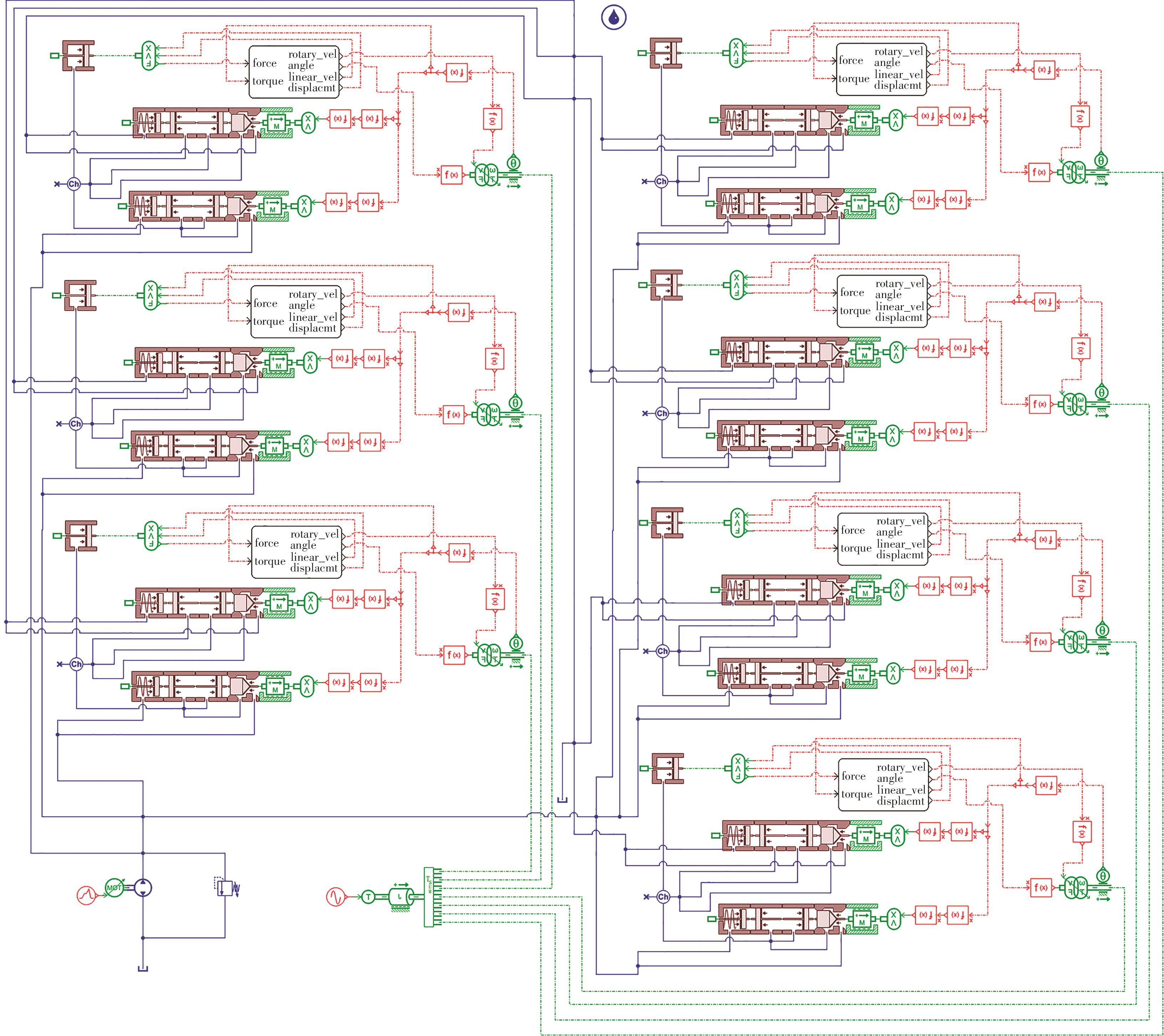
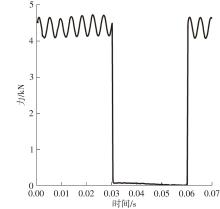
Fig.8
Force situation of a single piston"
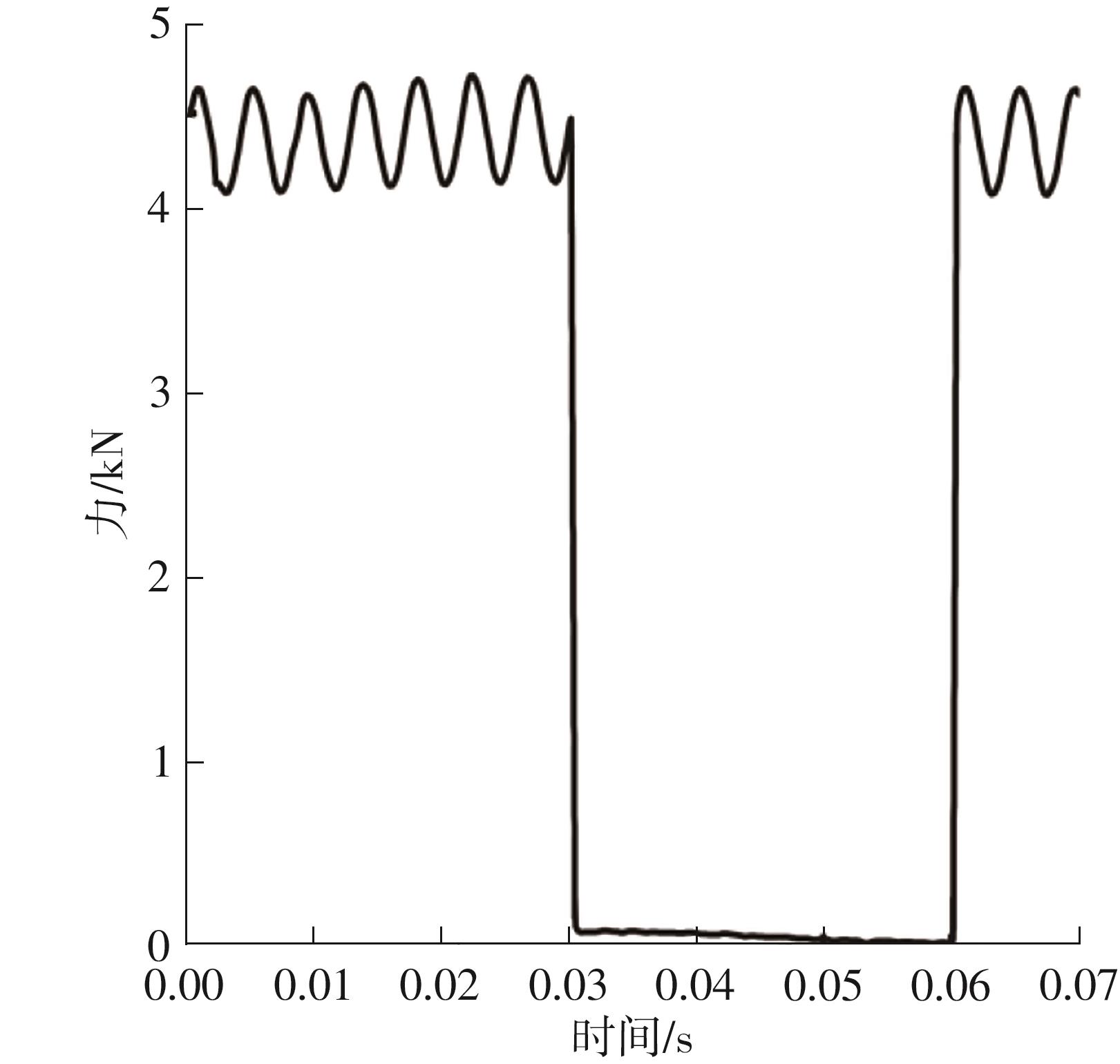
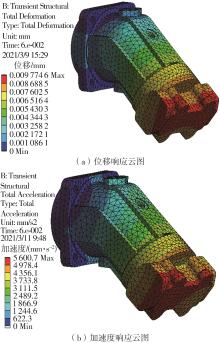
Fig.9
Transient analysis response cloud map"
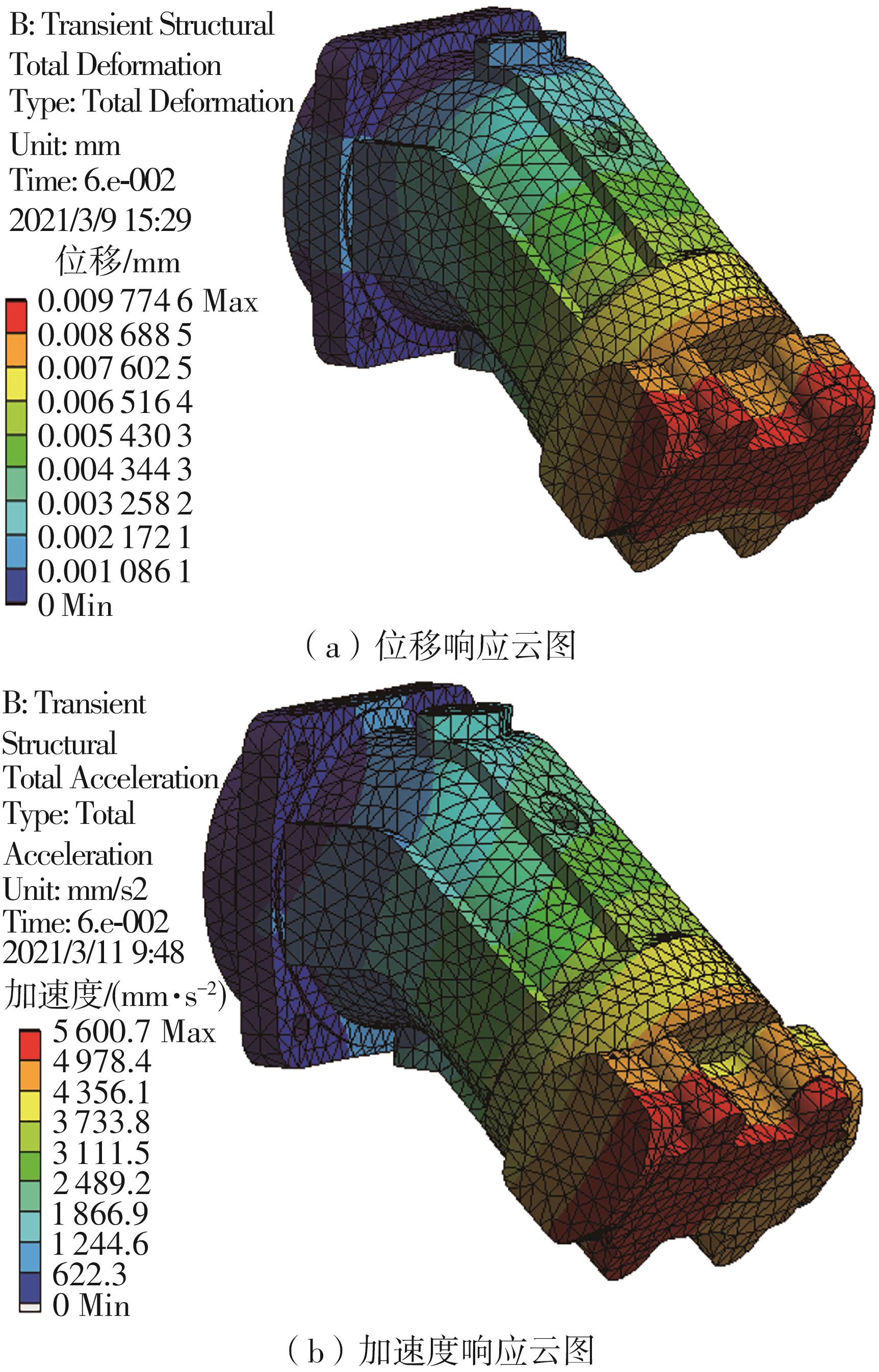
Fig.10
Simulated sound field cloud map"
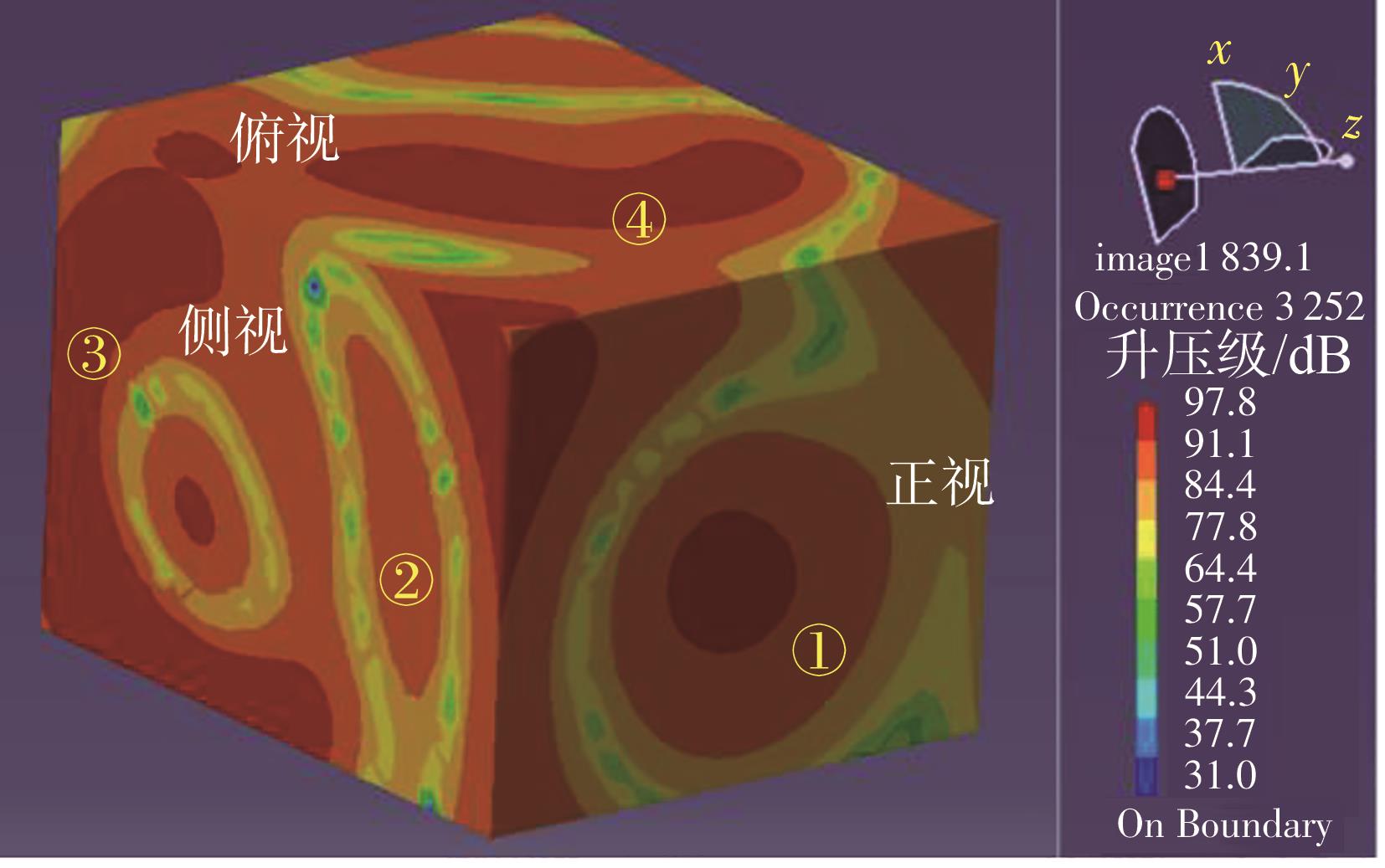
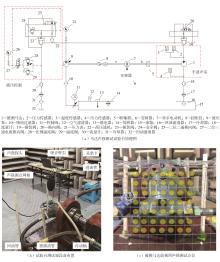
Fig.11
Motor sound intensity test bench"
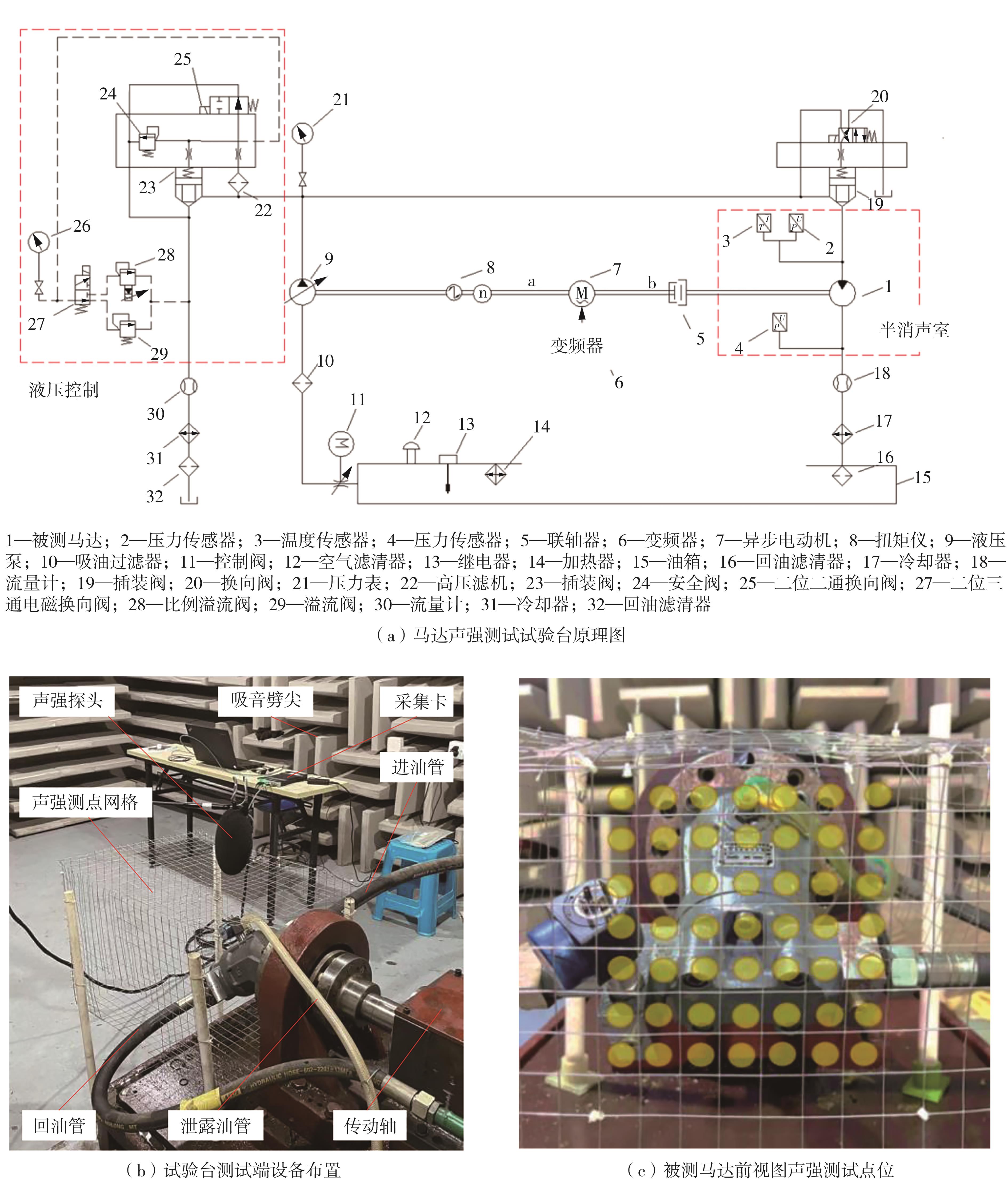
Table 3
Key parameters of test bench equipment"
| 设备 | 类型 | 参数 |
|---|---|---|
| 电机 | 功率/kW | 200 |
| 最大转速/(r·min-1) | 2 980 | |
| 液压泵 | 最大排量/(cm3·r-1) | 160 |
| 最高转速/(r·min-1) | 2 000 | |
| 斜轴式马达 | 最大排量/(cm3·r-1) | 80 |
| 额定压力/MPa | 35 | |
| 压力传感器 | 测量范围/MPa | 0~40 |
| 精度 | ±0.25%FS | |
| 数据采集卡 | 最大采样频率/kHz | 204.8 |
| 高精度通道数 | 6 | |
| 声强探头 | 灵敏度/(mV·Pa-1) | 11.2 |
| 幅值响应偏差/dB | 0.2 | |
| 声强校准器 | 校准频率/Hz | 251.2 |
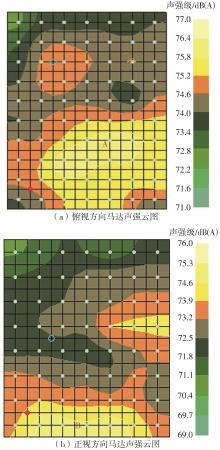
Fig.12
Cloud map of motor sound intensity"
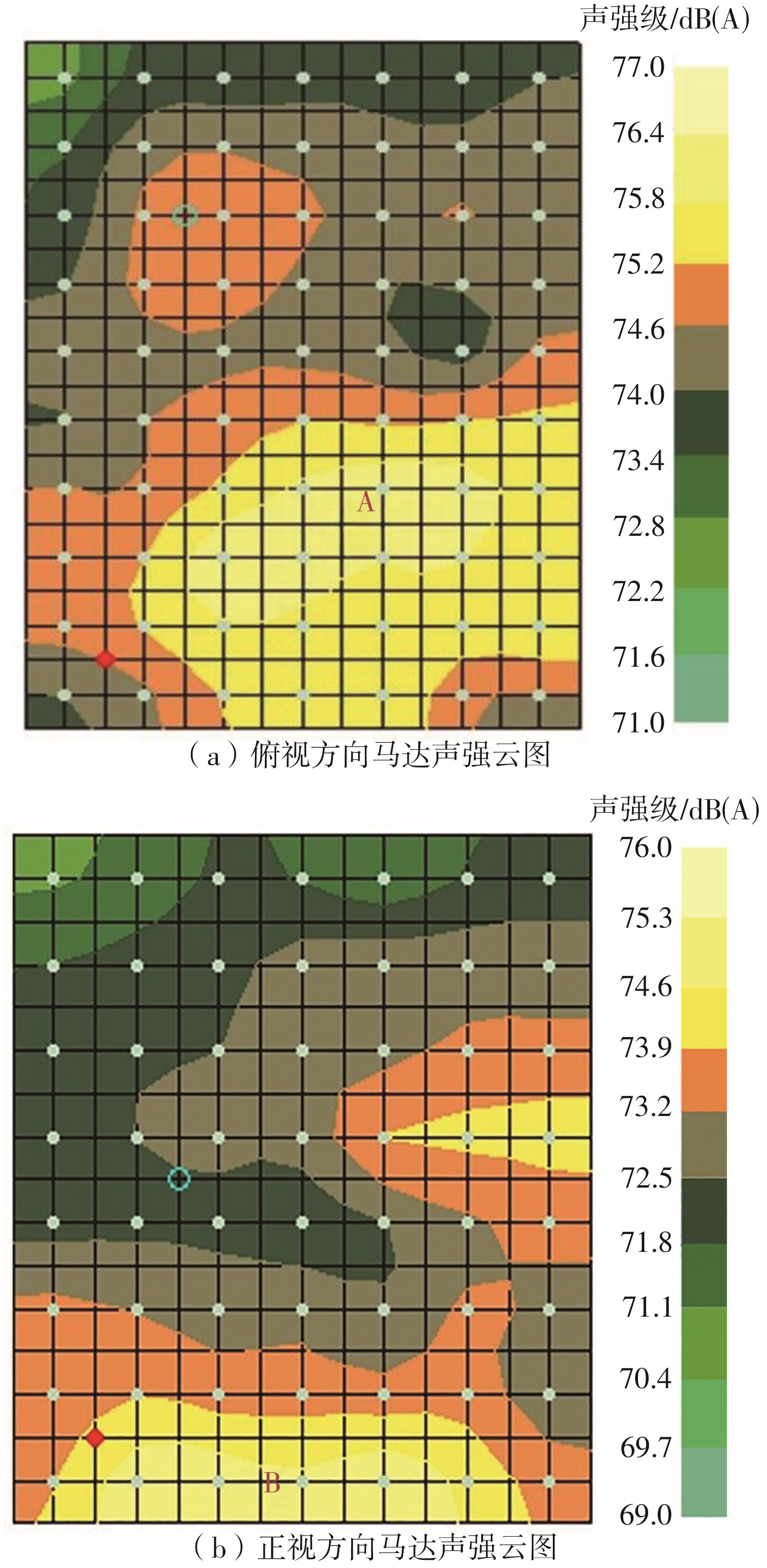
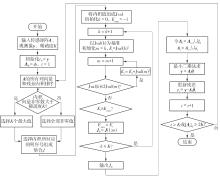
Fig.13
ROMP algorithm flow"
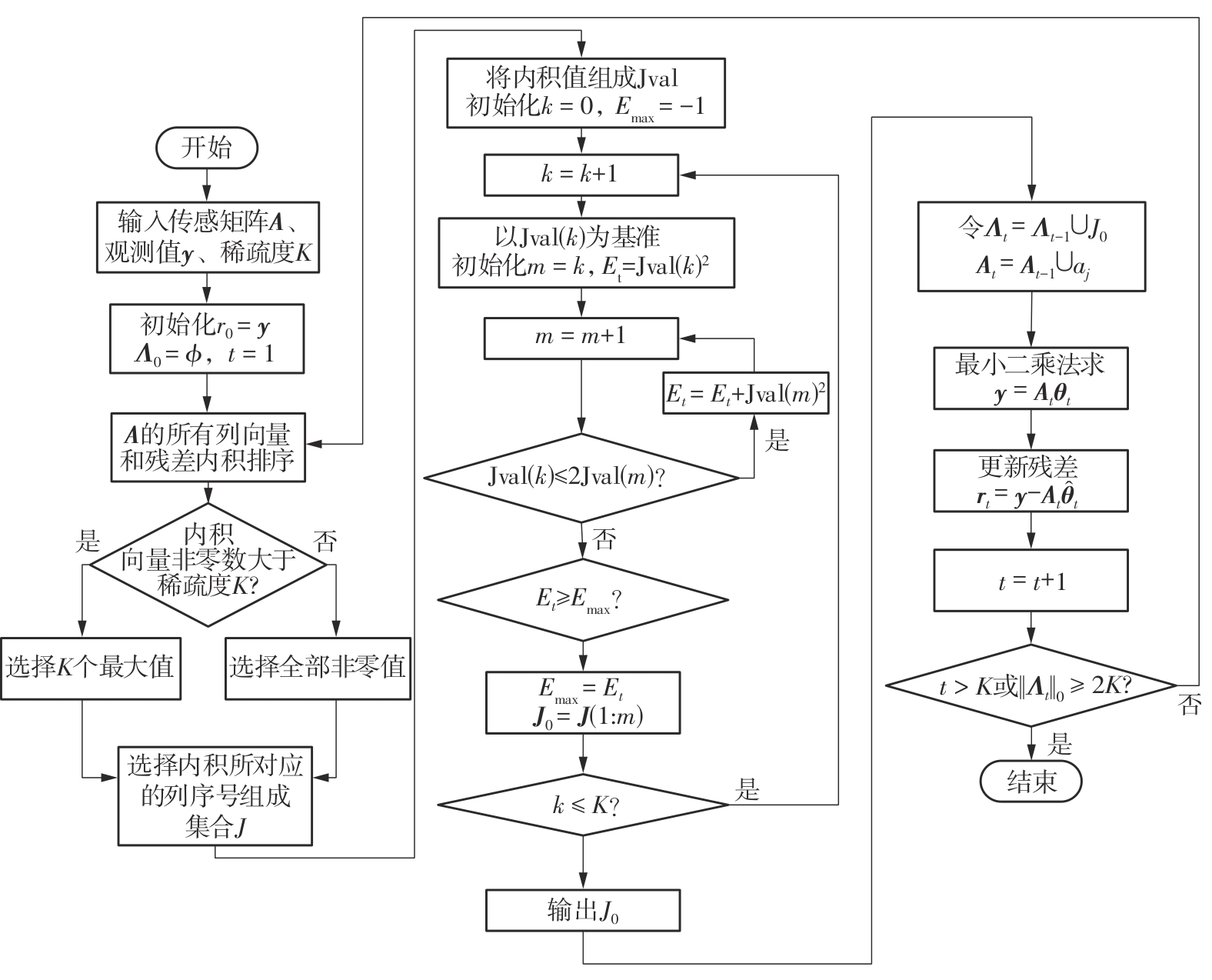
Fig.14
Reconstructed motor sound intensity cloud map"
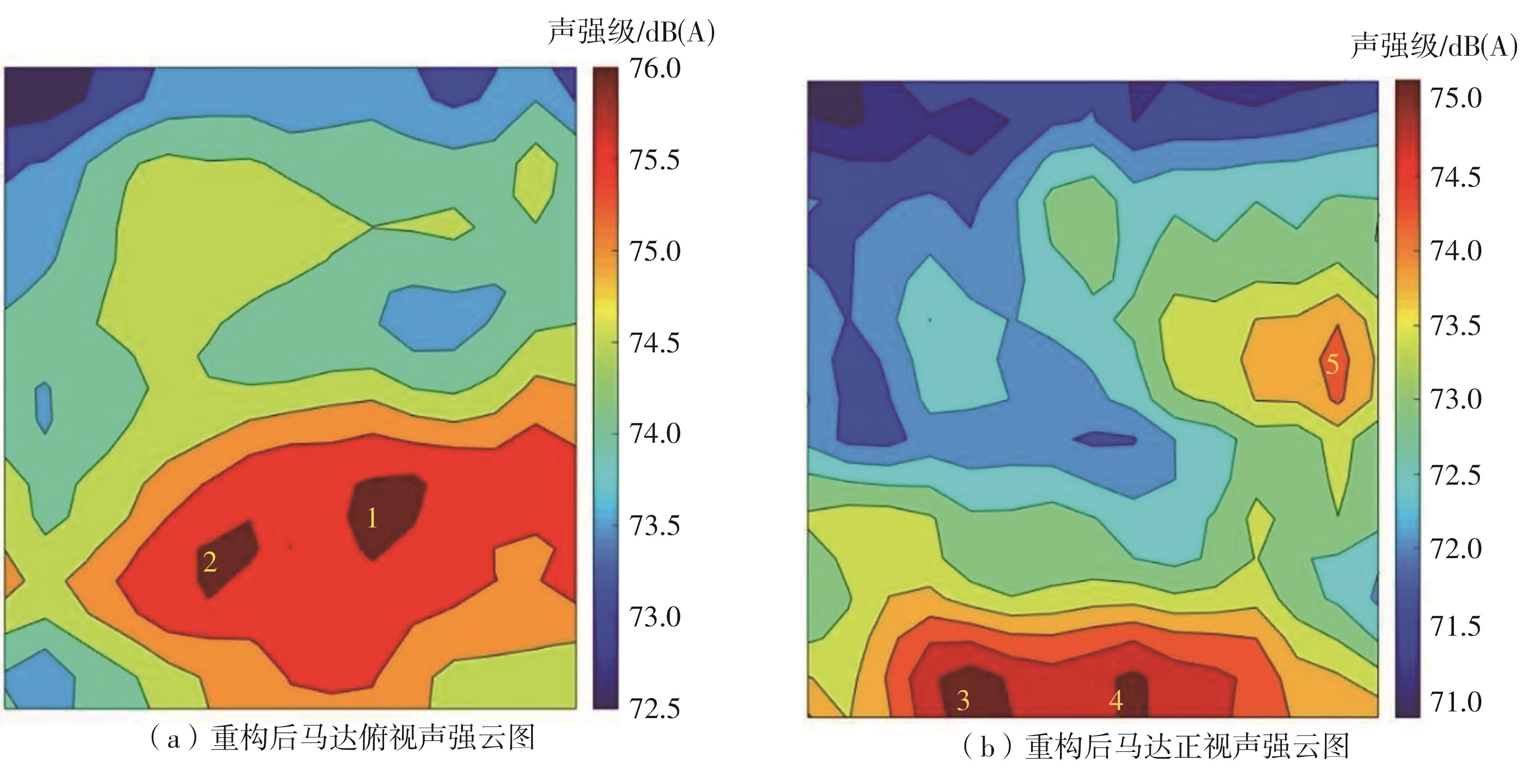
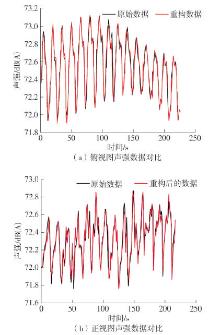
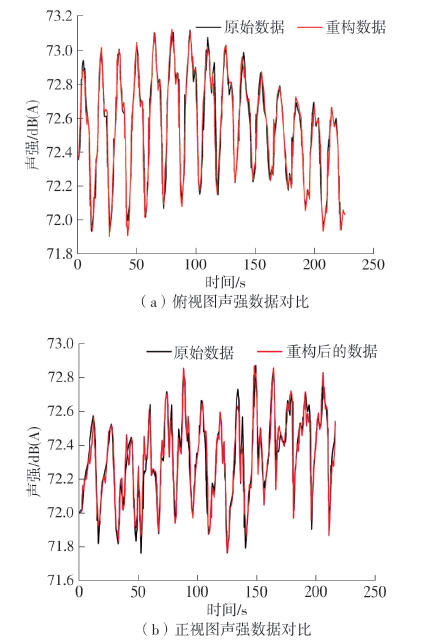
Fig.15
Sound intensity comparison between reconstructed data and original data"
| [1] | WU B, QIAO M .A review of the research progress of motor vibration and noise[J].International Transactions on Electrical Energy Systems,2022,2022(1):5897198/1-10. |
| [2] | HOU J, SUN H, XU A,et al .Fault diagnosis of synchronous hydraulic motor based on acoustic signals[J].Advances in Mechanical Engineering,2020,12(4):1687814020916107/1-11. |
| [3] | LIU B Q, ZHANG T Z, ZHANG H X,et al .Simulation analysis on electromagnetic vibration and noise of novel mechatronic-electro-gydraulic coupler[J].Machines,2022,10(9):762/1-14. |
| [4] | ZHANG Z, LIANG Y, ZHAO K,et al .Research on the vibration characteristic of a seawater hydraulic piston pump system and vibration reduction approach[J].IEEE Access,2021,9:90212-90230. |
| [5] | HUANG H, WU G Y, WU Y Y,et al .Identification of acoustic sources for bent-axis axial piston motor under variable loads[J].Journal of Sound and Vibration.2020,468:115063/1-5. |
| [6] | PAN M, YUAN C, DING B,et al .Novel integrated active and passive control of fluid-borne noise in hydraulic systems[J].Journal of Dynamic Systems,Measurement,and Control,2021,143(9):091006/1-9. |
| [7] | PAN Y, LI Y, HUANG M,et al .Noise source identification and transmission path optimisation for noise reduction of an axial piston pump[J].Applied Acoustics,2018,130:283-292. |
| [8] | 吴永源,黄惠,陈金兰,等 .斜轴式柱塞马达振动和噪声特性试验分析[J].机床与液压,2024,52(22):143-148. |
| WU Yongyuan, HUANG Hui, CHEN Jinlan,et al .Experimental analysis of vibration and noise characteristics of bent-axis piston motor[J].Machine Tool & Hydraulics,2024,52(22):143-148. | |
| [9] | 郑恒,张艳锋,王景祥 .活塞式气动马达噪声特性分析[J].冶金丛刊,2016(4):61,63. |
| ZHENG Heng, ZHANG Yanfeng, WANG Jingxiang .Analysis of noise characteristics of piston pneumatic motor[J].Metallurgical Collections,2016(4):61,63. | |
| [10] | 常容川 .轴向柱塞马达控制回路流道与启闭特性研究及优化[D].烟台:烟台大学,2022. |
| [11] | WU T, ZHANG J, LI R,et al .Analysis and optimization of flow field characteristics of axial piston motor based on CFD[J].Flow Measurement and Instrumentation,2024,99:102669/1-5. |
| [12] | JOHNSTON N, DUMNOV D, MELLING J .Modelling of pumps and motors as dource flow ripple and source impedance[C]∥ Proceedings of the ASME/BATH 2023 Symposium on Fluid Power and Motion Control.Sarasota:American Society of Mechanical Engineers,2023:V001T01A008/1-10. |
| [13] | 白国军,李军,纪红刚,等 .声阵列测试技术在微型泵降噪中的应用研究[J].噪声与振动控制,2019,39(3):235-240,249. |
| BAI Guojun, LI Jun, JI Honggang,et al .Application of acoustic array testing technique in miniature pump noise reduction[J].Noise and Vibration Control,2019,39(3):235-240,249. | |
| [14] | BALLESTEROS J A, FERNANDEZ M D, SARRADJ E,et al .Identification and analysis of the noise sources of an engine settled in a car using array-based techniques[J].International Journal of Vehicle Noise and Vibration,2018,14(2):171-190. |
| [15] | HE Y, CHEN L, XU Z,et al .A compressed equivalent source method based on equivalent redundant dictionary for sound field reconstruction[J].Applied Sciences,2019,9(4):808/1-19. |
| [16] | WEN P F, DUAN C L, TANG L G,et al .Study on noise characteristics of a novel equal-thickness screen [J].Noise Control Engineering Journal,2020,68(2):168-178. |
| [17] | HU D Y, LIU X Y, XIAO Y,et al .Fast sparse reconstruction of sound field via Bayesian compressive sensing[J].Journal of Vibration and Acoustics,2019,141(4):1-9. |
| [18] | ZAN M, XU Z, HUANG Z H Y .A block bayesian compressive sensing method based on the equivalent source method for near-field acoustic holography[J].Journal of Vibration and Control,2023,29(5/6):1016-1030. |
| [19] | SHEN Y, BI C X, ZHANG X Z,et al .Sound field reconstruction using compressed separable projection-based equivalent source method[J].Journal of Theoretical & Computational Acoustics,2024,32(1):2340003. |
| [20] | 陈淑梅,罗远明,黄惠,等 .压缩感知在斜轴式马达声强成像中的应用研究[J].华南理工大学学报(自然科学版),2024,52(4):68-76. |
| CHEN Shumei, LUO Yuanming, HUANG Hui,et al .Application of compressed sensing in sound intensity imaging of bent-axis motor[J].Journal of South China University of Technology(Natural Science Edition),2024,52(4):68-76. | |
| [21] | LI L, FANG Y, LIU L,et al .Overview of compressed sensing:sensing model,reconstruction algorithm,and its applications[J].Applied Sciences,2020,10(17):5909/1-19. |
| [22] | 贡青鸿 .基于压缩感知的斜轴式马达流固噪声识别研究[D].福州:福州大学,2021. |
| [23] | 孟凡森,张小正 .基于流固耦合的压缩机吸气阀组气动噪声研究[J].合肥工业大学学报(自然科学版),2024,47(1):33-40. |
| MENG Fansen, ZHANG Xiaozheng .Investigation on aerodynamic noise of suction valve group in compressor with fluid-structure interaction modeling[J].Journal of Hefei University of Technology(Natural Science),2024,47(1):33-40. | |
| [24] | 刘琦 .轴向柱塞泵输出流量特性及效率特性研究[D].济南:齐鲁工业大学,2023. |
| [25] | 曹衍闯 .快速定向压缩边界元法理论及其应用 [D].西安:西北工业大学,2015. |
| [26] | 刘哲,张鹤妮,张永亮,等 .基于弱选择正则化正交匹配追踪的图像重构算法[J].光子学报,2012,41(10):1217-1221. |
| LIU Zhe, ZHANG He-ni, ZHANG Yong-liang,et al .Image reconstruction based on weak selected regula-rized orthogonal match pursuit algorithm[J].Acta Photonica Sinica,2012,41(10):1217-1221. |
| [1] | CHEN Shumei, LUO Yuanming, HUANG Hui, et al. Application of Compressed Sensing in Sound Intensity Imaging of Bent-Axis Motor [J]. Journal of South China University of Technology(Natural Science Edition), 2024, 52(4): 68-76. |
| [2] | ZHU Zhipeng, TANG Yong, SUN Yunwei, et al. Flow Characteristics Analysis of Swash Plate Piston Pump Based on One-Dimensional Computational Model [J]. Journal of South China University of Technology(Natural Science Edition), 2024, 52(2): 62-73. |
| [3] | YU Mingquan, ZHAO Jiyun, MAN Jiaxiang, et al.. Study on Flow Distribution Mechanism of Low Speed High Torque Hydraulic Motor [J]. Journal of South China University of Technology(Natural Science Edition), 2023, 51(11): 101-109. |
| [4] | YU Mingquan, ZHAO Jiyun, MAN Jiaxiang, et al.. Study of Distribution Structure for High Water-Based Hydraulic Motor [J]. Journal of South China University of Technology(Natural Science Edition), 2023, 51(9): 19-29. |
| [5] | JIANG Jihai DU Boran ZHANG Jian. Application and Technology Prospects of Hydrodynamic-Magnetic Compound Support for Axial Piston Pump [J]. Journal of South China University of Technology(Natural Science Edition), 2021, 49(2): 88-98,109. |
| [6] | DING Wen-si TIAN Li LIU Kun. Analysis of Dynamic Characteristic of Transient Impact from Hydraulic Hammer [J]. Journal of South China University of Technology (Natural Science Edition), 2016, 44(11): 63-70. |
| [7] | SUN Ze-gang XIAO Shi-de XU Ming-heng WEI Wei . Optimization of Plunger Cavity Cavitation Based on Cylinder Block Kidney Shape Hole [J]. Journal of South China University of Technology (Natural Science Edition), 2016, 44(10): 36-42. |
| [8] | Tang He-sheng Yin Yao-bao Li Jing. Characteristics of Clearance Leakage and Friction Torque of Slipper Pair in Axial Piston Pump [J]. Journal of South China University of Technology (Natural Science Edition), 2014, 42(7): 74-79. |
| [9] | Wen De- sheng Zhou Rui- bin Lü Jian- sen Chen Gong Du Yong- shuai Yang Xiao- yong. Analysis of Rotational Torque and Speed of Double- Rotor Cam Motor [J]. Journal of South China University of Technology (Natural Science Edition), 2014, 42(4): 105-110,117. |
| Viewed | ||||||
|
Full text |
|
|||||
|
Abstract |
|
|||||