华南理工大学学报(自然科学版) ›› 2025, Vol. 53 ›› Issue (8): 42-49.doi: 10.12141/j.issn.1000-565X.240355

• 智慧交通系统 • 上一篇    下一篇

自动驾驶模块化公交服务优化研究

张积昱1, 唐春艳2   

  1. 1.长安大学 运输工程学院,陕西 西安 710064
    2.大连海事大学 交通运输工程学院,辽宁 大连 116026
  • 收稿日期:2024-12-24 出版日期:2025-08-25 发布日期:2024-12-27
  • 通信作者: 唐春艳(1984—),女,副教授,主要从事公共交通优化研究。 E-mail:cytang@dlmu.edu.cn
  • 作者简介:张积昱(1990—),男,博士生,主要从事公共交通优化研究。E-mail: michaelzhangjiyu@163.com
  • 基金资助:
    辽宁省社会科学规划基金重点项目(L22AGL005)

A Study on the Optimization of Modular Autonomous Public Transit Services

ZHANG Jiyu1, TANG Chunyan2   

  1. 1.School of Transportation Engineering,Chang’an University,Xi’an 710064,Shaanxi,China
    2.College of Transportation Engineering,Dalian Maritime University,Dalian 116026,Liaoning,China
  • Received:2024-12-24 Online:2025-08-25 Published:2024-12-27
  • Contact: 唐春艳(1984—),女,副教授,主要从事公共交通优化研究。 E-mail:cytang@dlmu.edu.cn
  • About author:张积昱(1990—),男,博士生,主要从事公共交通优化研究。E-mail: michaelzhangjiyu@163.com
  • Supported by:
    the Humanities and Social Science Major Project of Liaoning Province(L22AGL005)

摘要:

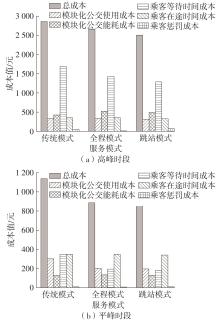
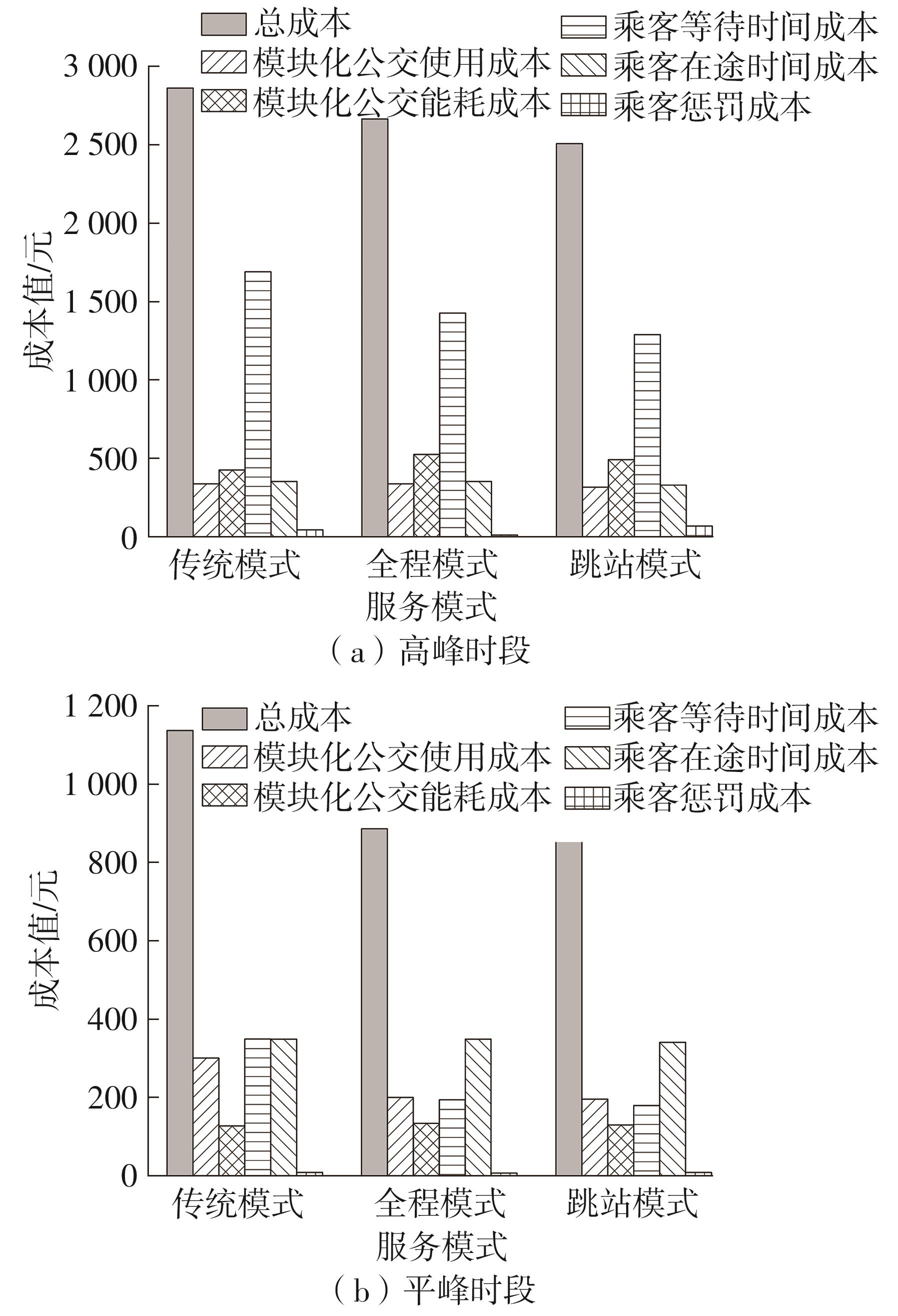
随着智能网联技术和自动驾驶技术的快速发展,新兴的自动驾驶模块化公交在公共交通领域受到极大的关注。它可通过车辆间的自由组合/分离操作,实现公交容量的灵活设计,以适应客流时空分布不均的需求。然而既有的全程式服务模式,难以充分发挥模块化公交的灵活运营特性以高效满足乘客的差异化需求。因此,提出一种面向自动驾驶模块化公交的新服务模式,该模式充分结合模块化公交车的自由组合/分离特性以及跳站策略的差异化服务优势,实现公交线路供给的高效化、差异化服务设计。首先采用离散时间建模方法和拓展的Newell理论,以乘客出行成本和企业运营成本最小为优化目标,构建自动驾驶模块化公交跳站服务优化模型,实现发车间隔、发车编组及跳站计划的同时优化;其中,通过对Newell理论进行拓展,使其由计算单个站点的乘客等待时间和在途时间,拓展为从整个系统角度高效计算乘客等待时间和在途时间,极大地降低了建模的复杂度。其次,以丹东市公交110路线路为例,给出优化后的运营方案,并在平峰和高峰时段与传统固定容量公交服务模式和模块化公交全程式服务模式进行比较。结果表明:该研究提出的模块化公交跳站服务模式极大地降低系统总成本,节约3.34%~24.65%,其中,乘客等待时间成本和在途时间成本分别节约7.49%~48.52%和2.31%~6.28%;此外,在高峰时段,模块化公交发车频率较平峰时段更加密集,且倾向于采用低容量编组和跳站服务策略。

关键词: 运输工程, 模块化公交, 跳站策略, 时变客流, 容量设计

Abstract:

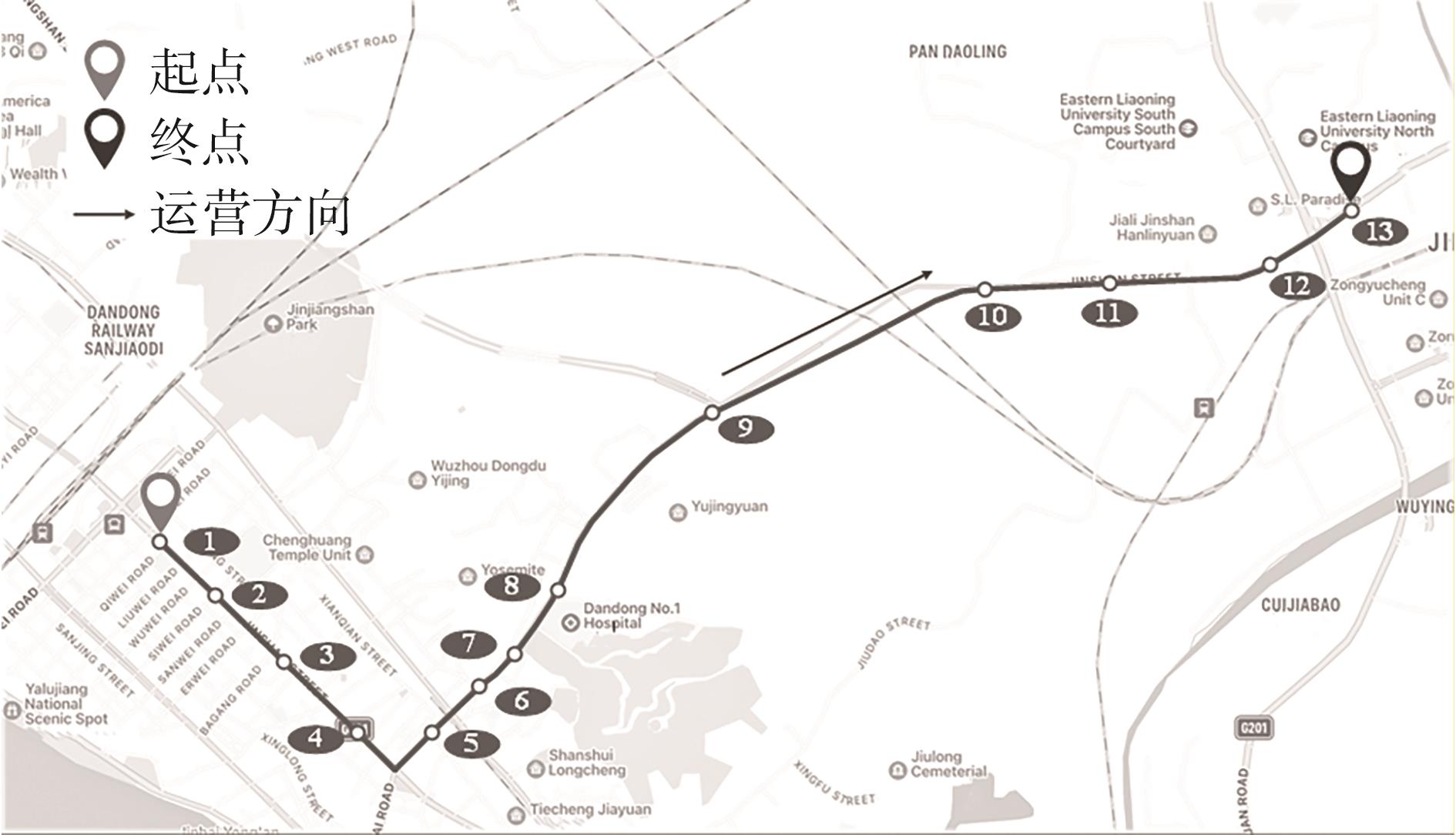
With the rapid development of intelligent connected technologies and autonomous driving, the emerging autonomous modular buses have attracted significant attention in the public transportation field. The autonomous modular buses can achieve flexible design of bus capacity through freely coupling/decoupling vehicles adapting to the uneven distribution of passenger demand in terms of space and time. However, the existing full-route service mode fails to fully leverage the flexible operational characteristics of modular buses to efficiently meet passengers' differentiated needs. Therefore, this study proposed a new service mode for autonomous modular buses, which combined the coupling/decoupling characteristics of modular buses with the differentiated service advantages of the skip-stop strategy to realize efficient and differentiated bus line supply. This paper first employed a discrete-time modeling approach combined with the extended Newell’s theory to develop an optimization model for autonomous modular bus skip-stop services, aiming to minimize passenger travel costs and operator costs. The model simultaneously optimized departure intervals, vehicle groupings, and skip-stop schedules.Firstly, this study adopts a discrete-time modeling method and an extended Newell theory to develop an optimization model for autonomous modular bus skip-stop service mode, with the optimization objectives of minimizing passenger travel costs and operational costs for the agency. It can simultaneously optimize bus headways, vehicle formulation, and skip-stop plans. By extending the Newell theory, the model expands from calculating passenger waiting and travel times at individual bus stops to efficiently calculating these times from the entire bus line system perspective, significantly reducing the modeling complexity. Secondly, taking Bus Route 110 in Dandong as a case study, an optimized operational scheme was proposed and compared under both off-peak and peak periods with the traditional fixed-capacity bus service model and the full-route modular bus service model. The results show that the proposed modular bus skip-stop service mode can greatly reduces the total system cost, saving 3.34% to 24.65%. Specifically, passenger waiting time costs and travel time costs are reduced by 7.49% to 48.52% and 2.31% to 6.28%, respectively. Moreover, during peak hours, modular bus dispatching is more frequent than during off-peak periods, with a tendency to adopt low-capacity vehicle groupings and skip-stop service strategies.

Key words: transportation engineering, modular bus, skip-stop strategy, time-varying passenger demand, capacity design

中图分类号: