华南理工大学学报(自然科学版) ›› 2026, Vol. 54 ›› Issue (2): 145-151.doi: 10.12141/j.issn.1000-565X.250091

• 土木建筑工程 • 上一篇    下一篇

大学实验教学课室声环境研究

彭健新1,2(), 吴威振1   

  1. 1.华南理工大学 物理与光电学院,广东 广州 510640
    2.安徽省建筑声环境重点实验室,安徽 合肥 230601
  • 收稿日期:2025-04-01 出版日期:2026-02-25 发布日期:2025-06-05
  • 作者简介:彭健新(1968—),男,博士,教授,主要从事建筑声学与环境声学、声信号处理研究。E-mail: phjxpeng@163.com
  • 基金资助:
    国家自然科学基金项目(12574518);安徽省建筑声环境重点实验室开放基金项目(AAE2023K01)

Investigation on Acoustic Environment of Experimental Teaching Rooms in Universities

PENG Jianxin1,2(), WU Weizhen1   

  1. 1.School of Physics and Optoelectronics,South China University of Technology,Guangzhou 510640,Guangdong,China
    2.Key Laboratory of Architectural Acoustic Environment of Anhui Higher Education Institutes,Hefei 230601,Anhui,China
  • Received:2025-04-01 Online:2026-02-25 Published:2025-06-05
  • Supported by:
    the National Natural Science Foundation of China(12574518);the Open Project of Key Laboratory of Architectural Acoustic Environment of Anhui Higher Education Institutes(AAE2023K01)

摘要:

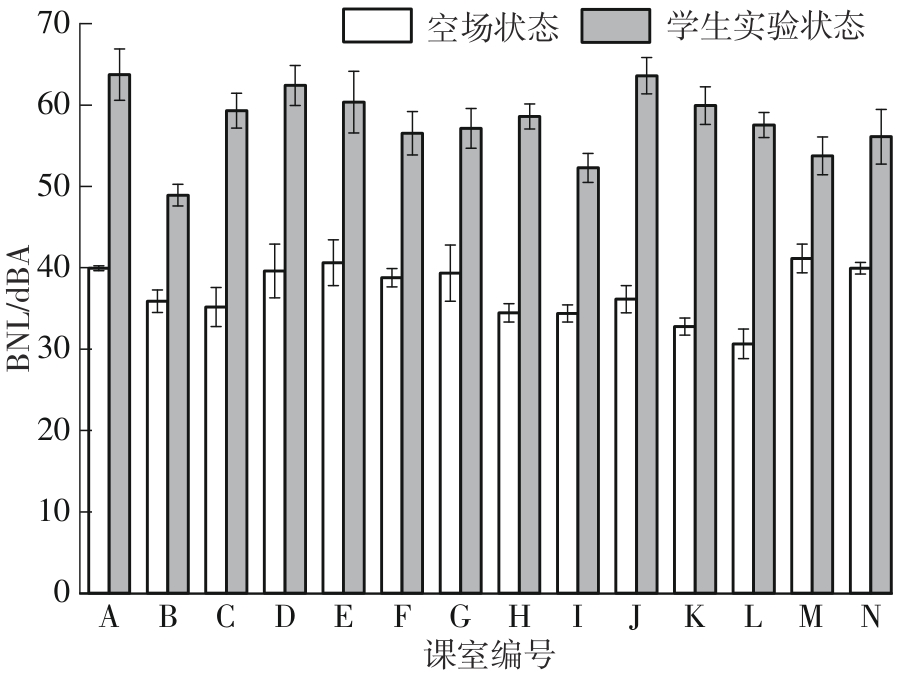
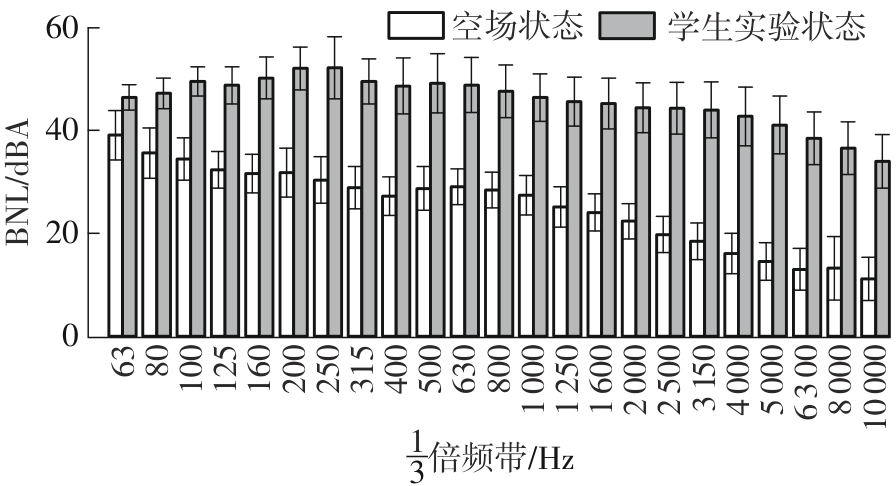
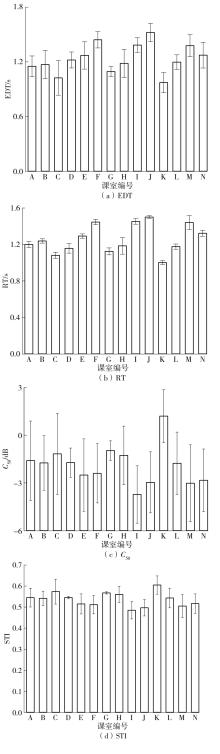
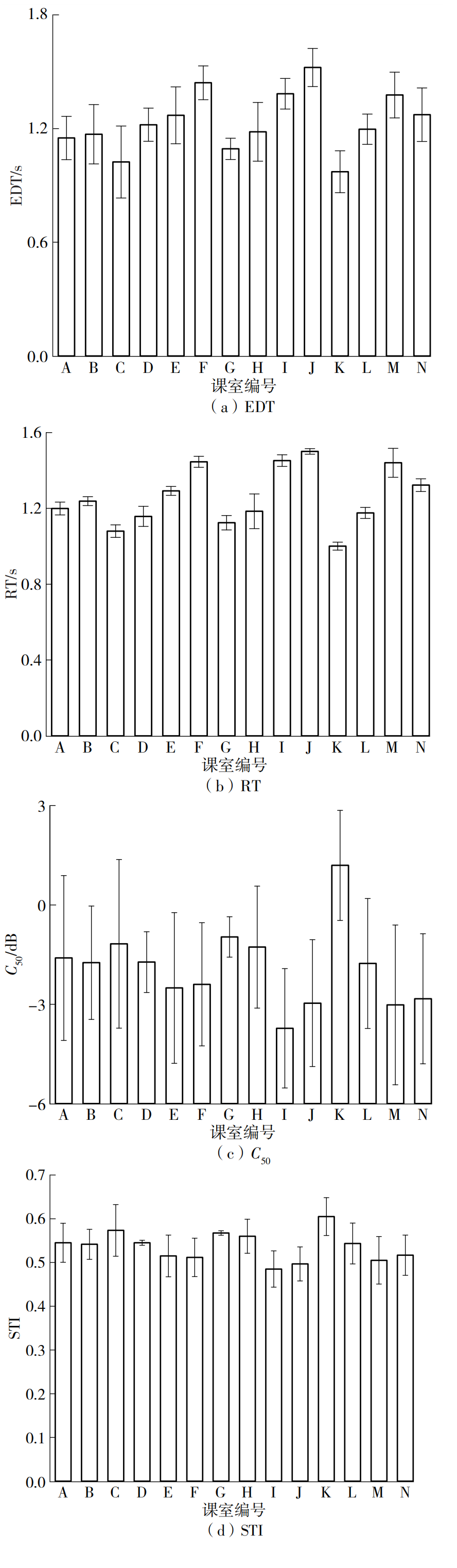
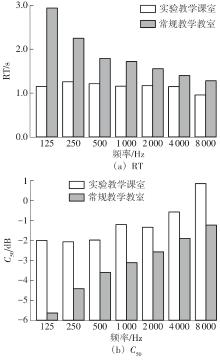
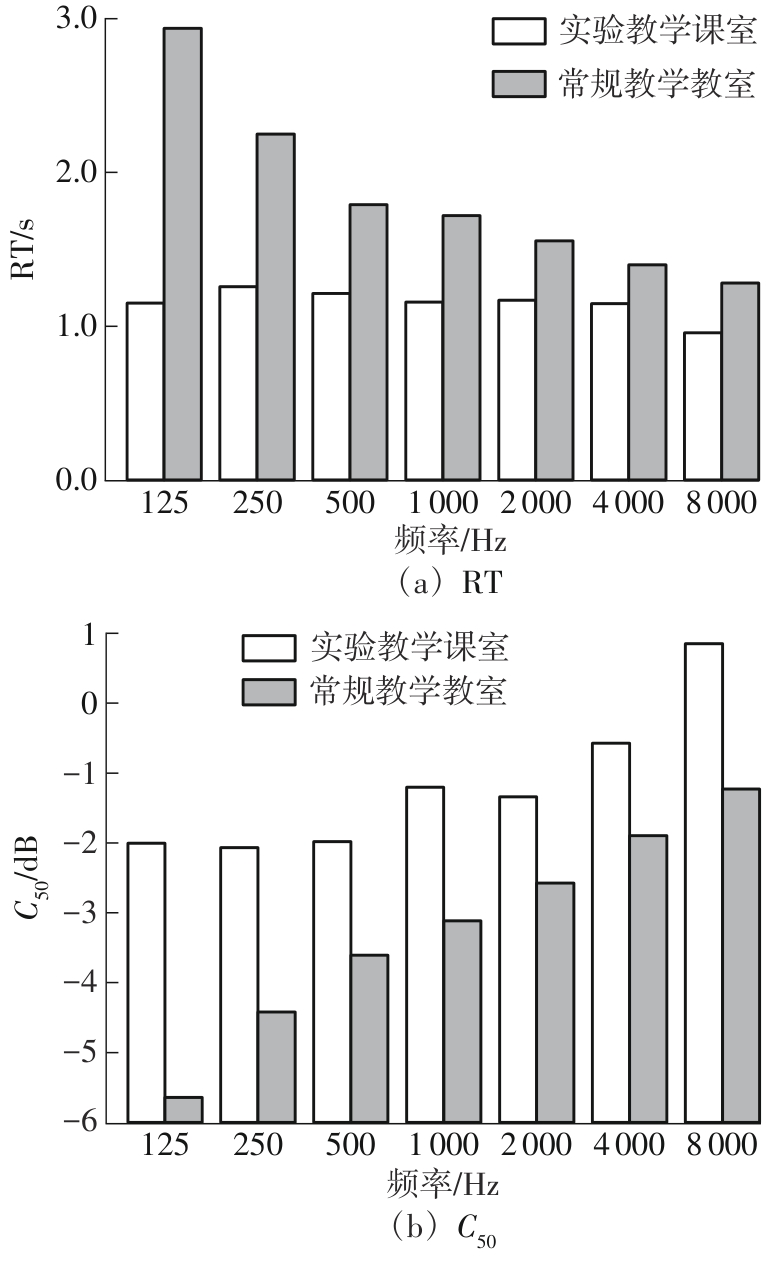
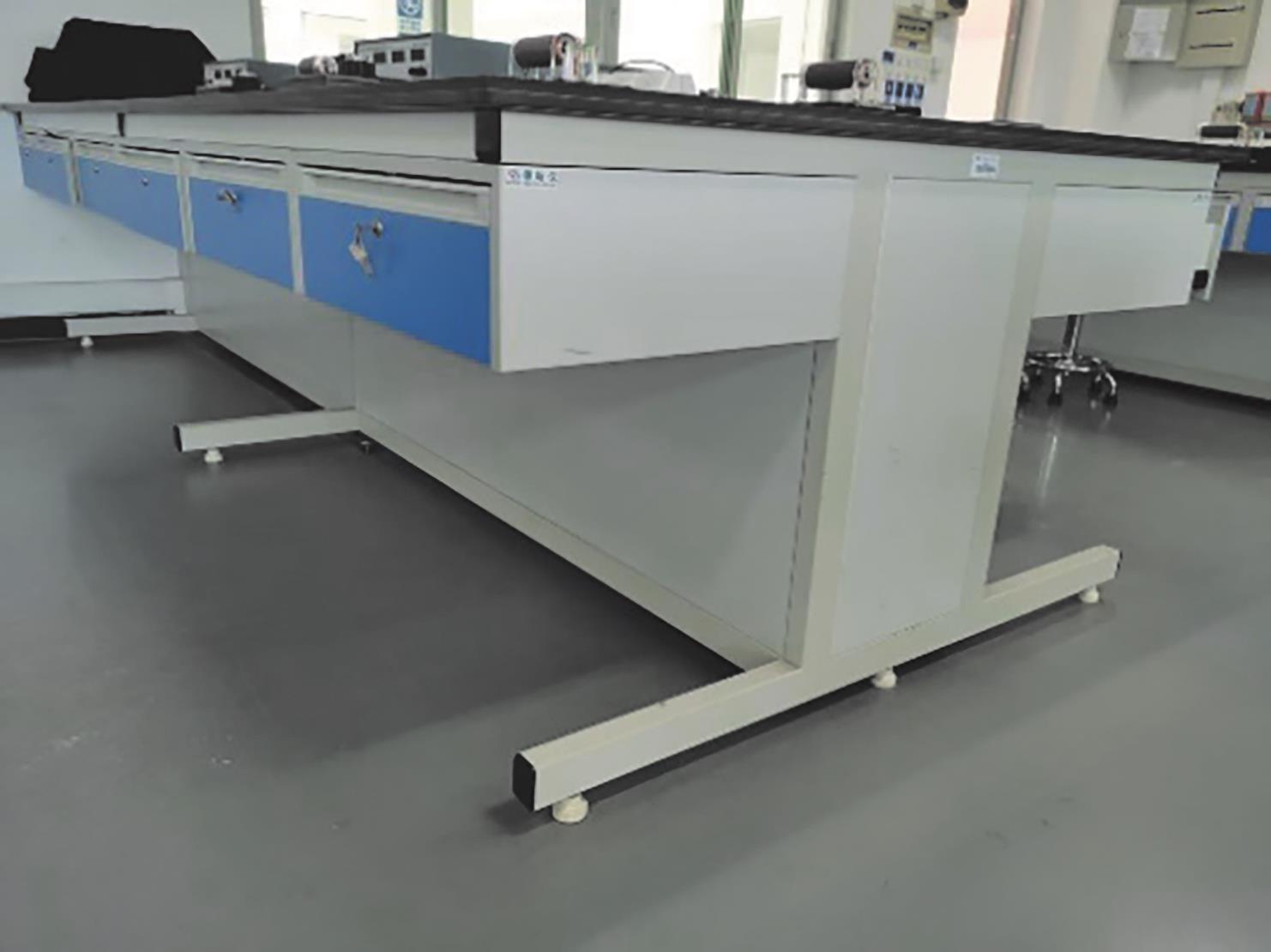
语音清晰度是语言类厅堂声环境质量的重要声学参数。较长的混响时间(RT)和过高的背景噪声级(BNL)会降低室内语音清晰度。目前针对大学教室声环境的研究已有大量报道,但针对大学实验教学课室声环境的研究相对匮乏。该文对广州市某大学14间物理类实验教学课室进行客观声学测量,获取了BNL、早期衰变时间(EDT)、RT、早迟声能比(C50)和语音传输指数(STI)等室内客观声学参数,以分析这类实验教学课室的声环境特性。结果表明:实验教学课室空场状态下的平均BNL为37.1 dBA,学生进行实验时平均BNL提升至57.9 dBA;被测课室的EDT、RT、C50和STI平均值分别为1.23 s、1.26 s、-1.89 dB和0.54。对比测试显示,在空间尺寸相同的条件下,实验教学课室的RT短于常规教室,且其频率特性变化相对平缓;研究发现,带有空腔的大型实验桌有助于缩短实验教学课室的RT,并改善其RT的频率特性。进一步分析表明,14间被测实验教学课室中,有13间的客观声学参数结果未达到现有相关规范的推荐值。建议对这些课室采取适当的声学处理措施,降低RT和BNL,改善室内声环境和语音清晰度,使其声环境满足大学实验教学需求,保障师生间良好的语音交流。

关键词: 实验教学课室, 声环境, 背景噪声级, 混响时间, 语音清晰度

Abstract:

Speech intelligibility is an important acoustic index for the acoustic environment quality in speech-oriented halls. Excessive reverberation time (RT) and high background noise levels (BNL) can significantly degrade speech intelligibility in rooms. While numerous studies have investigated the acoustic environments of university classrooms, research focusing on experimental teaching spaces remains relatively scarce. This study conducted objective acoustic measurements in 14 physics experimental teaching rooms at a university in Guangzhou, collecting room acoustic parameters including BNL, early decay time (EDT), RT, early-to-late sound energy ratio (C50), and speech transmission index (STI) to analyze the acoustic characteristics of such rooms. The results show that the average BNL in unoccupied experimental teaching rooms was 37.1 dBA, which increased to 57.9 dBA during student experiments. The average values of EDT, RT, C50, and STI across the measured rooms were 1.23 s, 1.26 s, -1.89 dB, and 0.54, respectively. Comparative test shows that under the same spatial dimension conditions, experimental teaching rooms exhibit shorter RT than conventional classrooms, with relatively flatter frequency characteristics. This study also found that large lab tables with cavities can help reduce RT in experimental teaching rooms and improve their RT frequency response. Further analyzed results show that 13 out of the 14 measured experimental teaching rooms failed to meet the recommended values specified in current relevant standards. It is recommended to implement appropriate acoustic treatments in these rooms to reduce RT and BNL, enhance room acoustic conditions and speech intelligibility, ensure compliance with the acoustic requirements for university experiment teaching, and facilitate effective verbal communication between instructors and students.

Key words: experimental teaching room, acoustic environment, background noise level, reverberation time, speech intelligibility

中图分类号: