华南理工大学学报(自然科学版) ›› 2026, Vol. 54 ›› Issue (1): 94-103.doi: 10.12141/j.issn.1000-565X.250084

• 机械工程 • 上一篇    下一篇

一种电子增材制造喷墨打印精度协同控制方法

刘清涛1  于攀宇1  郭炯棋1  尹恩怀2  杨鹏涛1  吕景祥1   

  1. 1.长安大学道路施工技术与装备教育部重点实验室 陕西 西安 710064;

    2.西安瑞特三维科技有限公司,陕西 西安710068

  • 出版日期:2026-01-25 发布日期:2025-08-15

A Coordinated Control Method for Inkjet Printing Accuracy in Electronic Additive Manufacturing

LIU Qingtao1  YU Panyu1   GUO Jiongqi1   YIN Enhuai2   YANG Pengtao1  LÜ Jingxiang1   

  1. 1. Key Laboratory of Road Construction Technology and Equipment of MoE, Chang’an University, Xi’an 710064, China;

    2. Xi'an Ruite 3D Technology Co., Ltd, 710061 Xi’an, China

  • Online:2026-01-25 Published:2025-08-15

摘要:

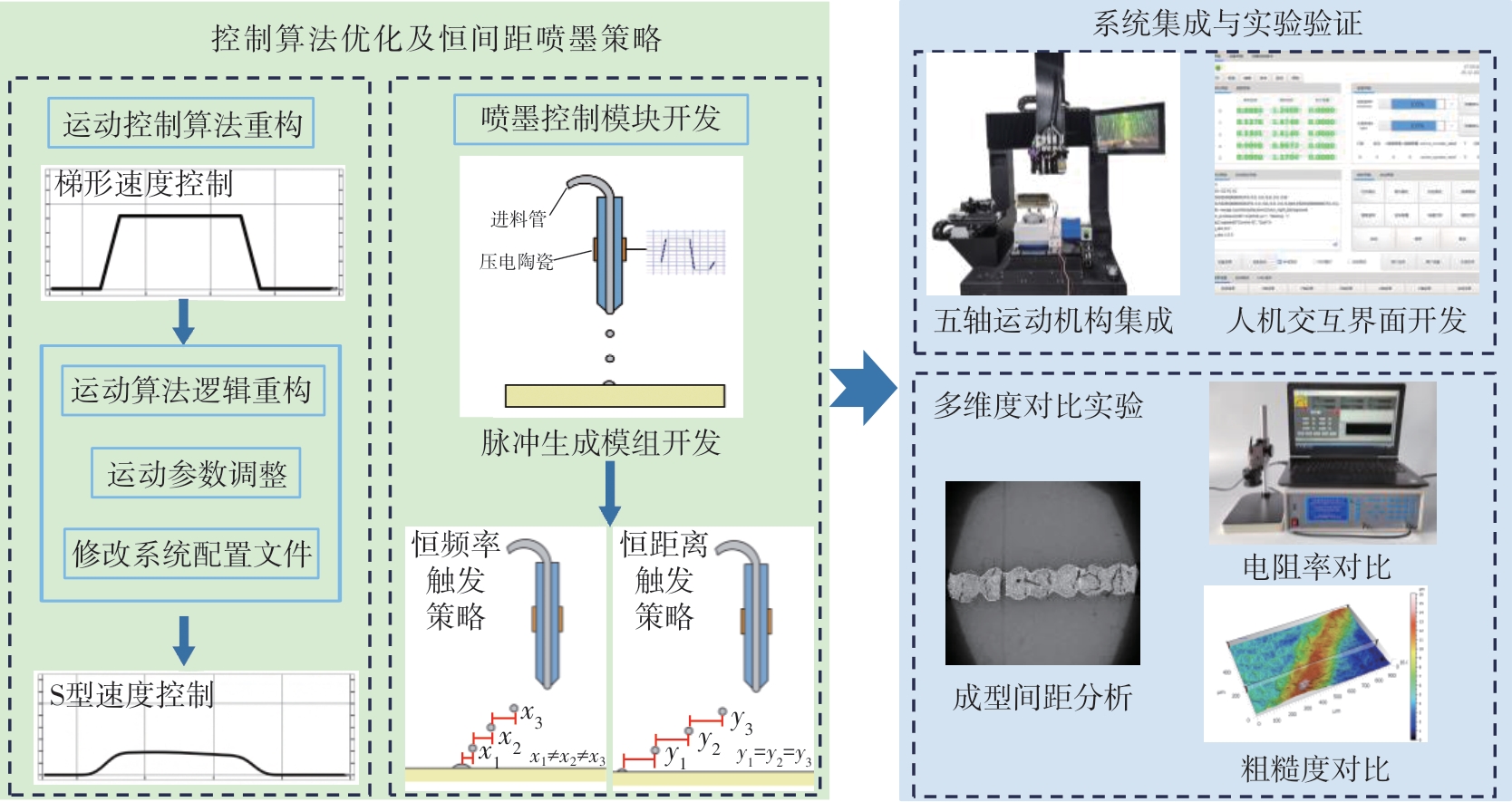
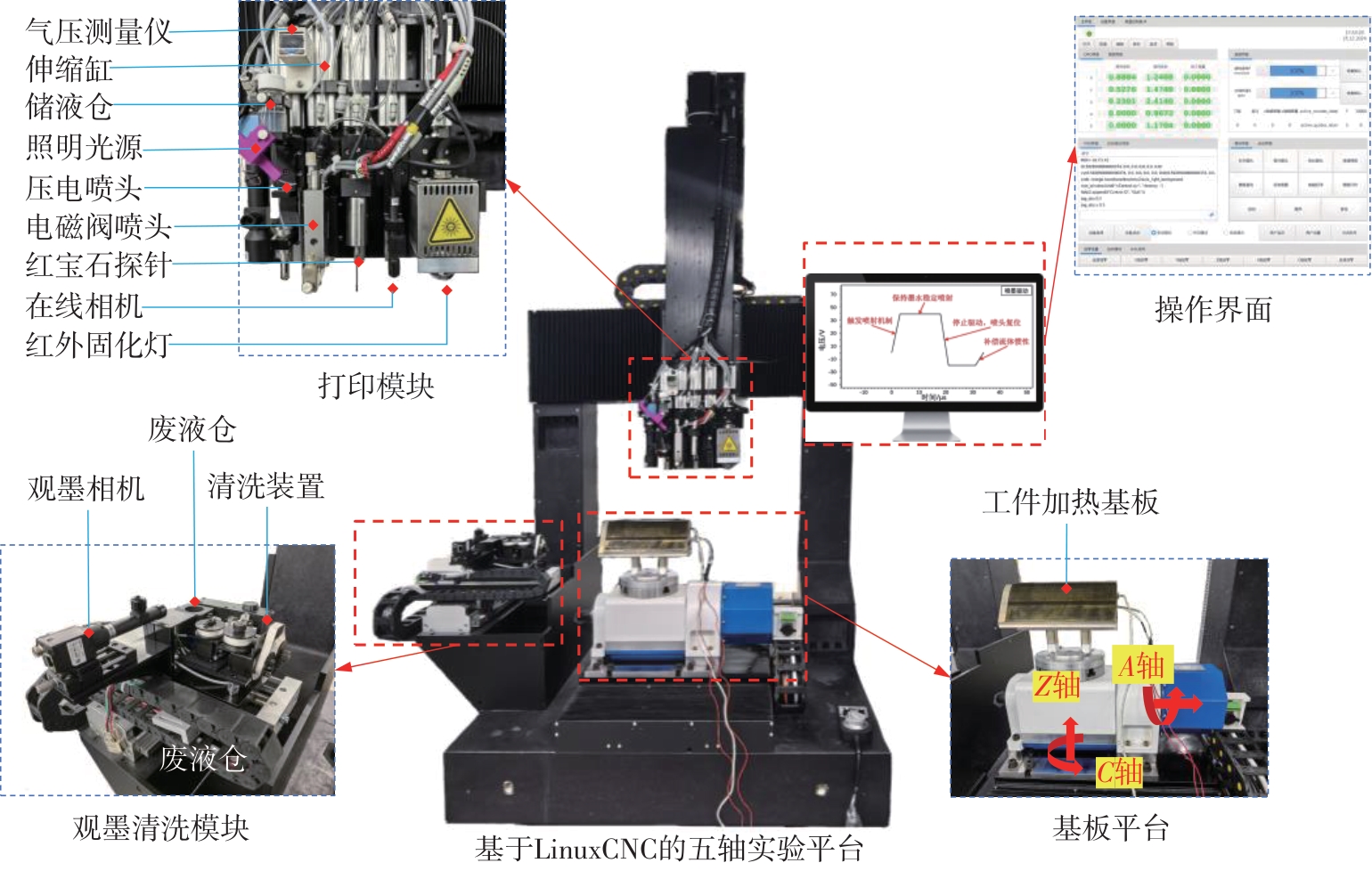
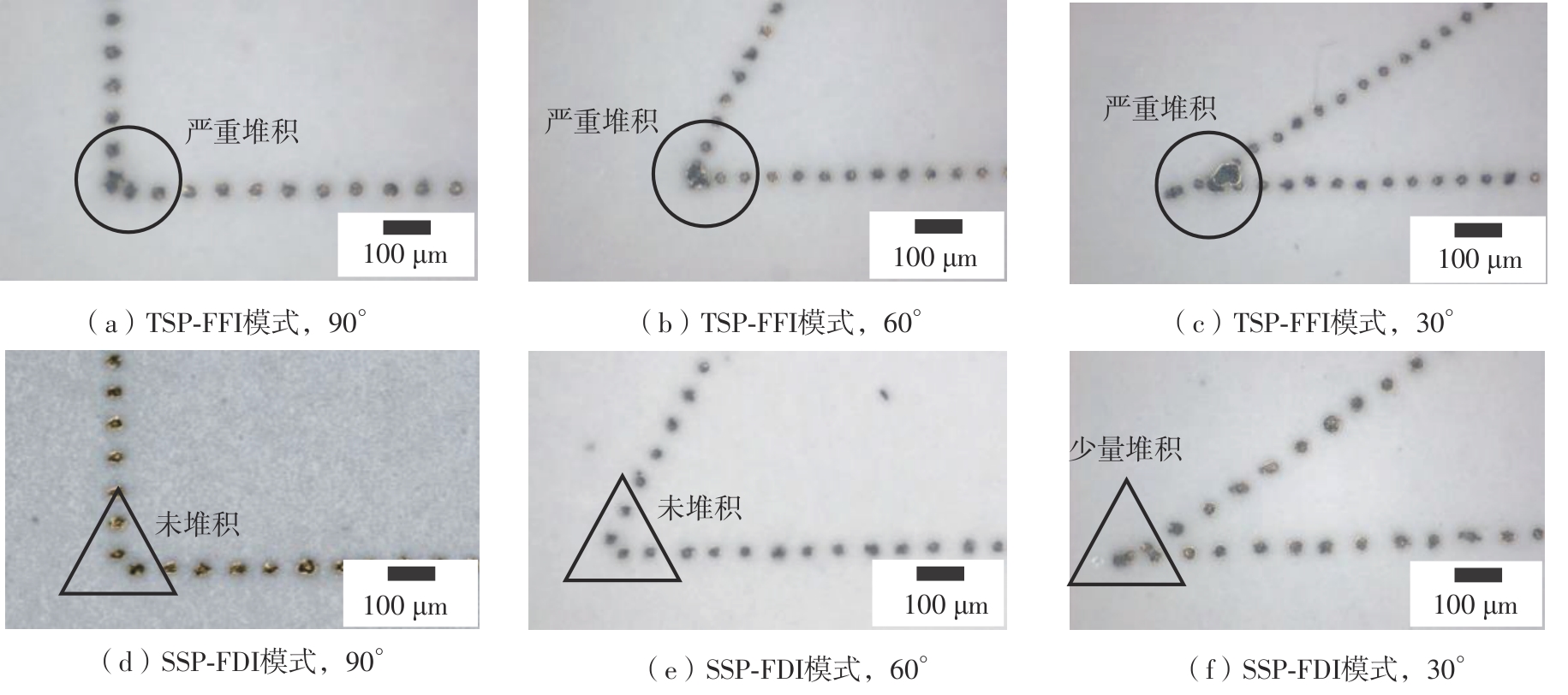
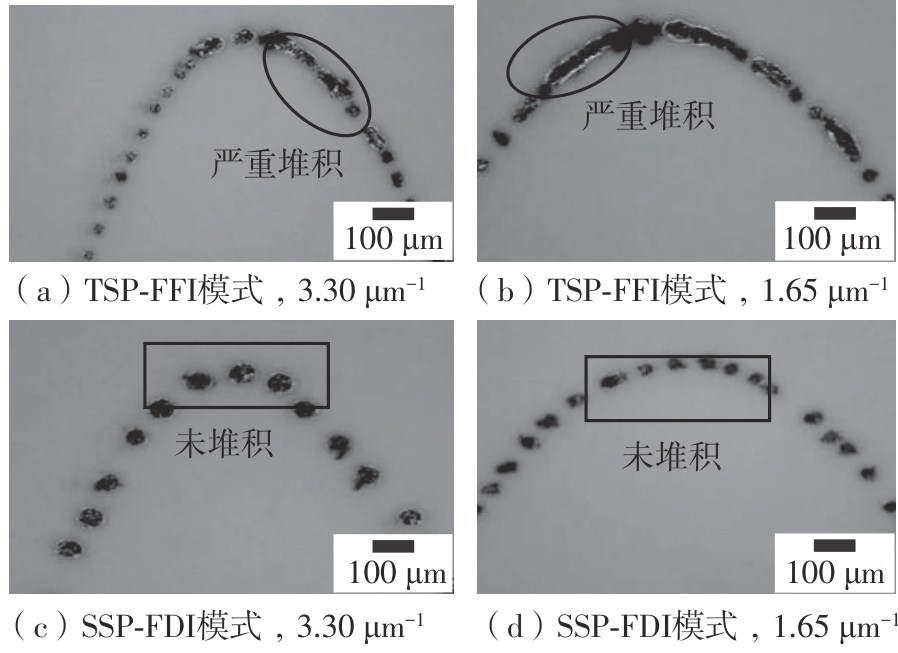
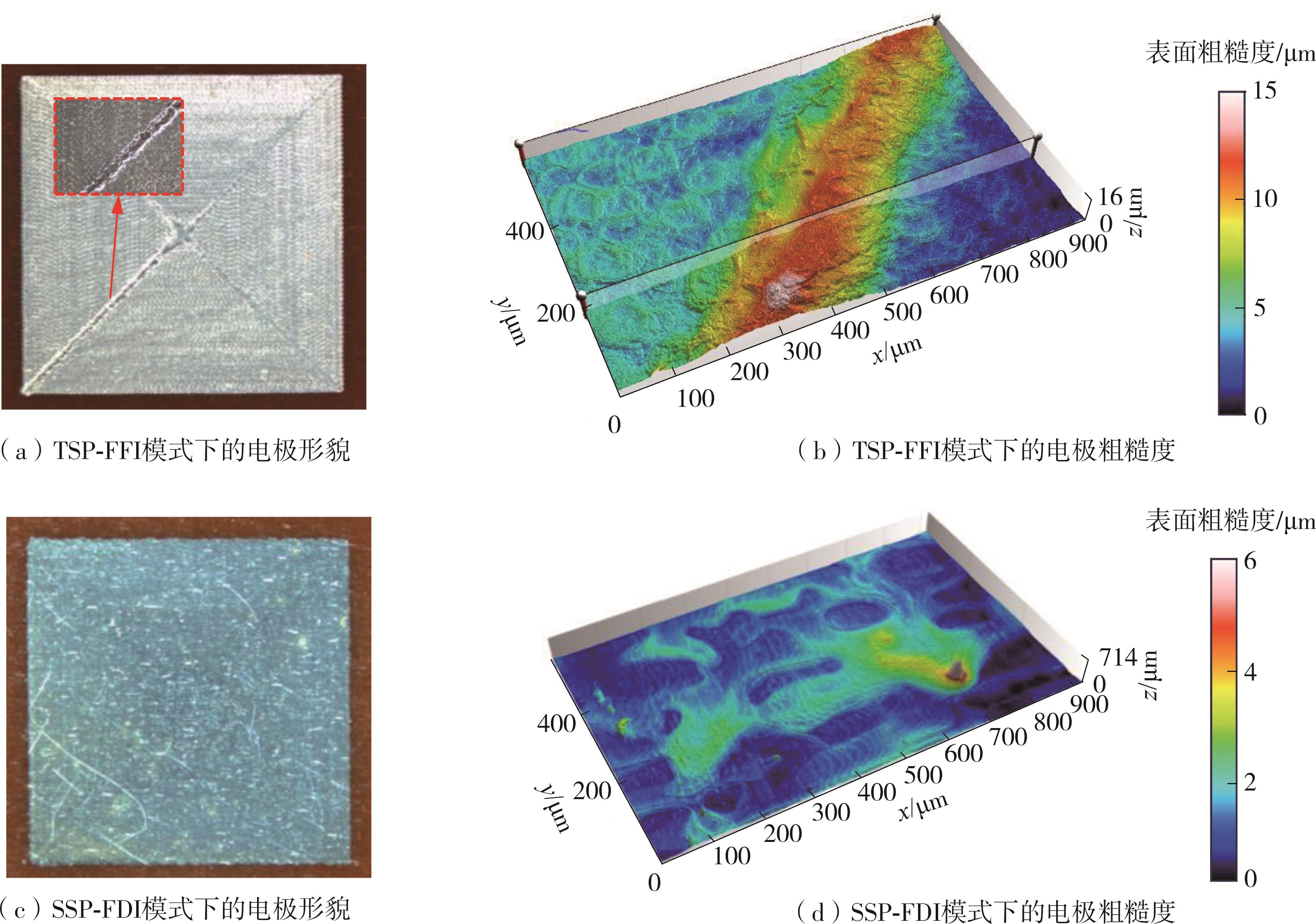
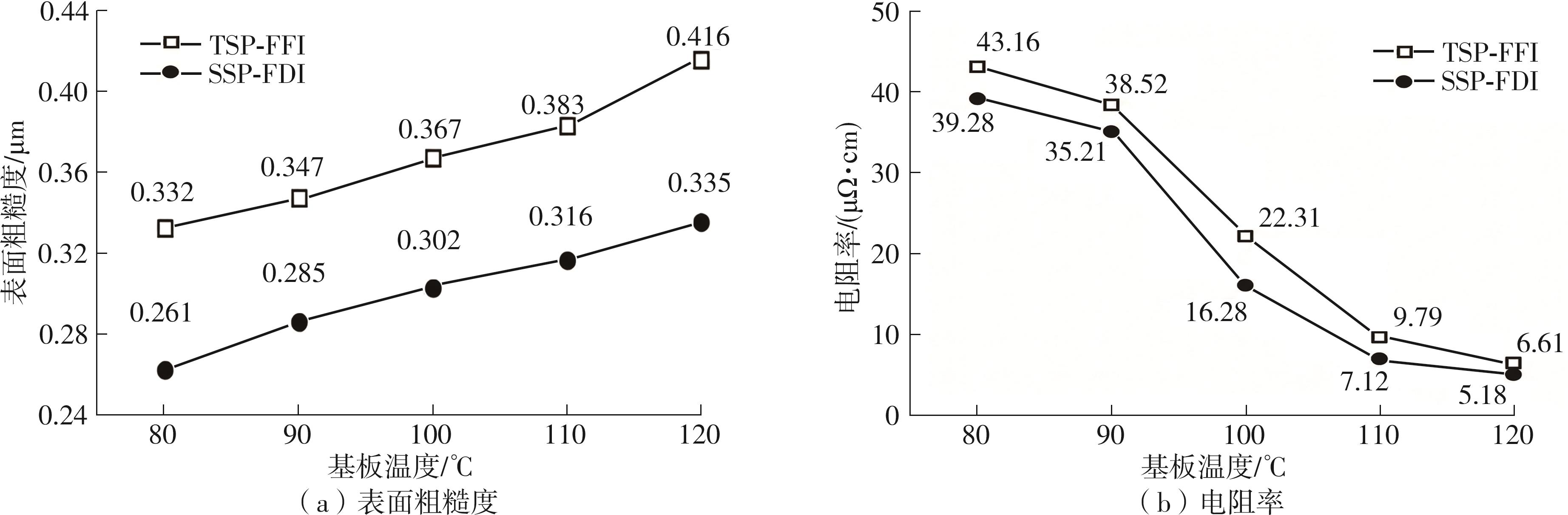
电子增材制造技术在高精度微电子制造中具有重要应用价值,然而,在打印过程中存在速度波动导致墨滴落点精度低的难题,一直制约着电子增材制造打印质量的提升。为此,提出了基于LinuxCNC的“S型速度规划+恒间距喷射(S-shaped speed planning+fixed distance injection,SSP-FDI)”的协同控制策略。通过将传统数控系统速度算法优化为S型速度算法,有效降低运动冲击;采用恒间距触发模式实现墨滴间距控制,削弱速度波动对落点精度的影响。自主搭建了一套集成五轴运动控制与电子喷墨打印的实验平台,开发了相应的控制系统,设计了多角度折线以及电极对比实验。结果表明,相较传统的“梯形速度规划+固定频率喷射(Trapezoidal Speed Planning+Fixed Frequency Injection,TSP-FFI)”模式,SSP-FDI模式可显著降低墨滴落点精度误差;在基板温度为100℃时,20mm×20mm矩形电极打印实验中,补偿后的电极表面最大粗糙度降低至Ra 6 μm。在5组不同基板温度下,样件表面粗糙度平均下降幅度达18.79%,电阻率平均下降幅度达18.70%。可见,所提出的基于LinuxCNC的协同控制策略能有效提升复杂轨迹下的打印质量,为高精度电子器件增材制造提供了新的解决方案。

关键词: 电子增材制造, 打印精度, LinuxCNC数控系统, 速度控制算法

Abstract:

Electronic additive manufacturing technology holds significant application value in high-precision microelectronics manufacturing. However, the current printing modes suffer from droplet placement inaccuracies caused by speed fluctuations, which have long constrained the quality improvement of additive manufacturing for electronic components. To address this challenge, a collaborative control strategy based on LinuxCNC, termed "S-shaped speed planning + fixed-distance injection (SSP-FDI)," is proposed. By optimizing the traditional trapezoidal speed algorithm in numerical control systems into an S-shaped speed algorithm, mechanical shock is effectively reduced. Simultaneously, a fixed-distance triggering mode is adopted to control droplet spacing, mitigating the impact of speed fluctuations on placement accuracy. An experimental platform integrating five-axis motion control and electronic inkjet printing technology was independently developed, along with a corresponding control system. Comparative experiments involving multi-angle polylines and electrode printing were designed. Results demonstrate that compared to the "Trapezoidal Speed Planning + Fixed Frequency Injection (TSP-FFI)" mode, the SSP-FDI mode significantly reduces droplet placement errors. In a 20mm×20mm rectangular electrode printing experiment with a substrate temperature of 100°C, the maximum surface roughness of compensated electrodes decreased to Ra 6 μm. Across five substrate temperature groups, the roughness of printed samples showed an average reduction of 18.7%, and resistivity decreased by 14.4%. These findings indicate that the proposed LinuxCNC-based collaborative control strategy effectively enhances printing quality for complex trajectories, offering a novel technical solution for high-precision additive manufacturing of electronic devices.

Key words: electronic additive manufacturing, printing accuracy, LinuxCNC system, speed control algorithm