收稿日期: 2024-04-02
网络出版日期: 2024-04-29
基金资助
住房和城乡建设部科技计划项目(2021-K-064);广东省住房和城乡建设厅科技创新计划项目(2021-K20-512247)
Iron Occurrence State of Steel Slag Under Different Treatment Processes and Its Influence on the Yield of Magnetic Separation Powder and the Cementitious Activity of Tailings
Received date: 2024-04-02
Online published: 2024-04-29
Supported by
the Science and Technology Planning Program of Ministry of Housing and Urban-Rural Development(2021-K-064);the Science and Technology Innovation Planning Program of Guangdong Provincial Department of Housing and Urban-Rural Development(2021-K20-512247)
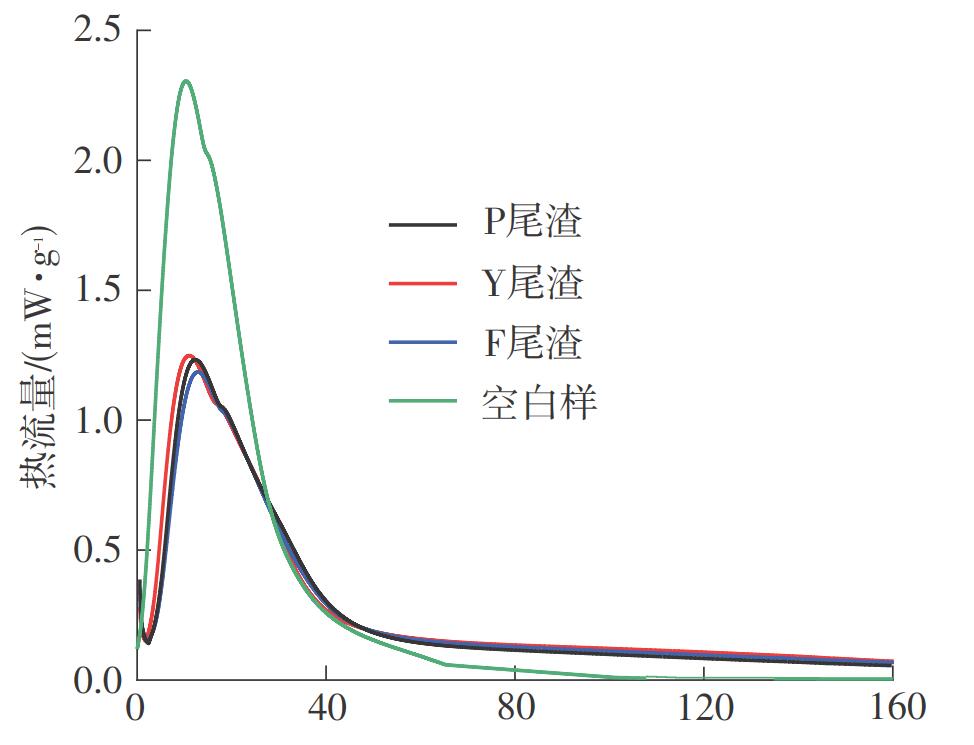
钢渣中含有的金属铁及其氧化物是一种高附加值的可再生资源,同时钢渣又可以作为矿物掺合料用在建材行业中。钢渣经不同冷却处理工艺,物相发生演变,从而影响钢渣中铁的回收及尾渣的胶凝活性。为了提高钢渣中铁资源的回收和尾渣的有效利用,文中针对热泼、辊压破碎-有压热闷和辊压破碎-热泼3种不同处理工艺下的钢渣,利用岩相分析、X射线衍射分析仪(XRD)、扫描电子显微镜-能量色散谱仪(SEM-EDS)、化学物相选择溶解等手段对不同处理工艺下钢渣的铁相分布及富集状态进行研究,并测定其磁选粉收得率和铁品位,以及尾渣的胶凝活性。结果表明:热泼工艺下钢渣中金属铁更易富集沉积,铁相主要以FeO均匀分布在RO相和铁酸盐相中,相中Fe占比较少,磁选粉收得率较高,但铁品位较差,分别为32.22%和33.43%;辊压破碎-有压热闷渣中未见明显金属铁粒,但含铁相中Fe占比较多,磁选粉收得率低,但铁品位较高,分别为28.37%和37.12%;辊压破碎-热泼渣中,铁相主要以Fe2O3形式存在于铁酸钙相和硅酸盐相,相中Fe占比较多,且含有磁性铁Fe3O4,磁选粉收得率高,铁品位也高,分别为37.60%和39.69%。辊压破碎-有压热闷渣中C2S含量相对更多且发育较好,胶凝活性高,7 d及28 d活性指数分别为78%和92%;辊压破碎-热泼渣的7 d活性指数较低,为66%,但28 d活性指数增长到92%;热泼渣的胶凝活性居中。
殷素红 , 曾丽莎 , 梁康 , 刘上月 , 吕子洋 , 吕奇龙 . 不同处理工艺下钢渣的铁相赋存状态及其对磁选粉收得率和尾渣胶凝活性的影响[J]. 华南理工大学学报(自然科学版), 2024 , 52(10) : 76 -86 . DOI: 10.12141/j.issn.1000-565X.240151
Steel slag contains metallic iron and its oxide, which are high value‐added renewable resources, and it can be utilized as a mineral admixture in the building materials industry. After different cooling treatment processes, the phase of steel slag evolves, thus affecting the recovery of iron in steel slag and the cementitious activity of tailings. In order to improve the recycling of iron resources in steel slag and the effective utilization of tailings, this paper studied the steel slag of three different treatment processes, namely, hot splash, roller crushing‐pressurized hot stewing and roller crushing‐hot splash. It used petrography analysis, XRD, SEM‐EDS, and chemical phase‐selective dissolution, and other methods to analyze the distribution of the iron phases and the state of enrichment of steel slags, and to determine the rate of magnetic separation powder and iron grade, and the cementitious activity of tailings. The results show that: the metal iron is easier to be enriched and deposited under the hot splash process, and the iron phase is mainly in the form of FeO uniformly distributed in the RO phase and the ferrite phase, with less Fe in the phase, and the yield of magnetic separation powder is higher, but the grade is poorer, which is 32.22% and 33.43%, respectively. After roll crushing‐pressurized hot stewing, no obvious metal iron particles can be seen in the slag; Fe in the phase accounts for more, and the yield of the magnetic separation powder is low but the grade is higher, which is 28.37% and 37.12%, respectively; after roll crushing‐hot splashing, the iron phase mainly exists in calcium ferrite phase and silicate phase in the form of Fe2O3, Fe in the phase accounts for more and contains Fe3O4, and the magnetic separation powder has high yield and high iron grade, which is 37.60% and 39.69%, respectively. Under roll crushing‐pressurized hot stewing, the C2S content in steel slag is relatively more and better developed, and has high cementitious activity, 7 d and 28 d activity index of tailings is 78% and 92%, respectively; the 7 d activity index of the roll crushed‐hot splash slag is low at 66%, but the 28 d activity index grows to 92%; the cementitious activity of the hot splash slag is in the middle.
| 1 | GUO J, BAO Y, WANG M.Steel slag in China:treatment,recycling,and management[J].Waste Management,2018,78:318-330. |
| 2 | ZHAO J, YAN P, WANG D .Research on mineral characteristics of converter steel slag and its comprehensive utilization of internal and external recycle[J].Journal of Cleaner Production,2017,156:50-61. |
| 3 | DRISSEN P, EHRENBERG A, KüHN M,et al .Recent development in slag treatment and dust recycling[J]?.Steel Research International,2009,80(10):737-745. |
| 4 | SHI C .Steel slag:its production,processing,characteristics,and cementitious properties[J].Journal of Materials in Civil Engineering,2004,16(3):230-236. |
| 5 | WALIGORA J, BULTEEL D, DEGRUGILLIERS P,et al .Chemical and mineralogical characterizations of LD converter steel slags:a multi-analytical techniques approach[J].Mater Charact,2010,61(1):39-48. |
| 6 | ALANYALI H, C?L M, YILMAZ M,et al .Application of magnetic separation to steelmaking slags for reclamation[J].Waste Management,2006,26(10)?:1133-1139. |
| 7 | LAN Y P, LIU Q C, MENG F,et al .Optimization of magnetic separation process for iron recovery from steel slag[J].Journal of Iron and Steel Research,2017,24(2):165-170. |
| 8 | MENAD N, KANARI N, SAVE M .Recovery of high grade iron compounds from LD slag by enhanced magnetic separation techniques[J].International Journal of Mineral Processing,2014,126:1-9. |
| 9 | LIU S, LI L .Influence of fineness on the cementitious properties of steel slag[J].Journal of Thermal Analysis and Calorimetry,2014,117:629-634. |
| 10 | JIANG Y, LING T-C, SHI C,et al .Characteristics of steel slags and their use in cement and concrete:a review[J].Resources,Conservation and Recycling,2018,136(9):187-197. |
| 11 | MONSHI A, ASGARANI M K .Producing Portland cement from iron and steel slags and limestone[J].Cement and Concrete Research,1999,29:1373-1377. |
| 12 | WANG D, JIANG M, LIU C,et al .Enrichment of Fe-containing phases and recovery of iron and its oxides by magnetic separation from BOF slags[J].Steel Research International,2012,83(2):189-196. |
| 13 | 高本恒,郝以党,张淑苓,等 .转炉钢渣资源化处理及热闷生产工艺应用实例研究[J].环境工程,2016,34(11):99-101,79. |
| GAO Ben-heng, HAO Yi-dang, ZHANG Shu-ling,et al .The application of converte steel slag resource utilization and the hot stuffy process[J].Environmental Engineering,2016,34(11):99-101,79. | |
| 14 | 李云云,倪文,李佳,等 .滚筒渣与热闷渣基础性能研究[J].哈尔滨工业大学学报,2020,52(12):132-139. |
| LI Yunyun, NI Wen, LI Jia,et al .Study on basic performance of roller steel slag and hot smoldering steel slag[J].Journal of Harbin Institute of Technology,2020,52(12):132-139. | |
| 15 | 北京矿冶研究院 .化学物相分析[M].北京:冶金工业出版社,1979:1-97. |
| 16 | 李光辉,邬斌,张元波,等 .转炉钢渣工艺矿物学及其综合利用技术[J].中南大学学报(自然科学版),2010,41(6):2065-2071. |
| LI Guang-hui, WU Bin, ZHANG Yuan-bo,et al .Mineralogical characteristics and comprehensive utilization of converter steel slag[J].Journal of Central South University(Science and Technology),2010,41(6):2065-2071. | |
| 17 | 周乐光 .工艺矿物学[M].北京:冶金工业出版社,1990:56-63. |
| 18 | 徐文派 .转炉炼钢学[M].北京:冶金工业出版社,1988:124-130. |
| 19 | 贺宁,侯新凯,赵正富,等 .分选出钢渣中惰性矿物改善其胶凝性[J].硅酸盐通报,2016,35(2):437-442. |
| HE Ning, HOU Xin-kai, ZHAO Zheng-fu,et al .Inert mineral separation lmprove steel slag cementing performance[J].Bulletin of the Chinese Ceramic Society,2016,35(2):437-442. | |
| 20 | 赵海晋,余其俊,韦江雄,等 .钢渣矿物组成、形貌及胶凝活性的影响因素[J].武汉理工大学学报,2010,32(15):22-26,38. |
| ZHAO Hai-jin, YU Qi-jun, WEI Jiang-xiong,et al .Influence on composition and morphology of mineral of steel slag and cementitious property[J].Journal of Wuhan University of Technology,2010,32(15):22-26,38. |
/
| 〈 |
|
〉 |
地址:广州 五山 华南理工大学17号楼 邮政编码:510640
电话: 020-87111794 邮箱:journal@scut.edu.cn