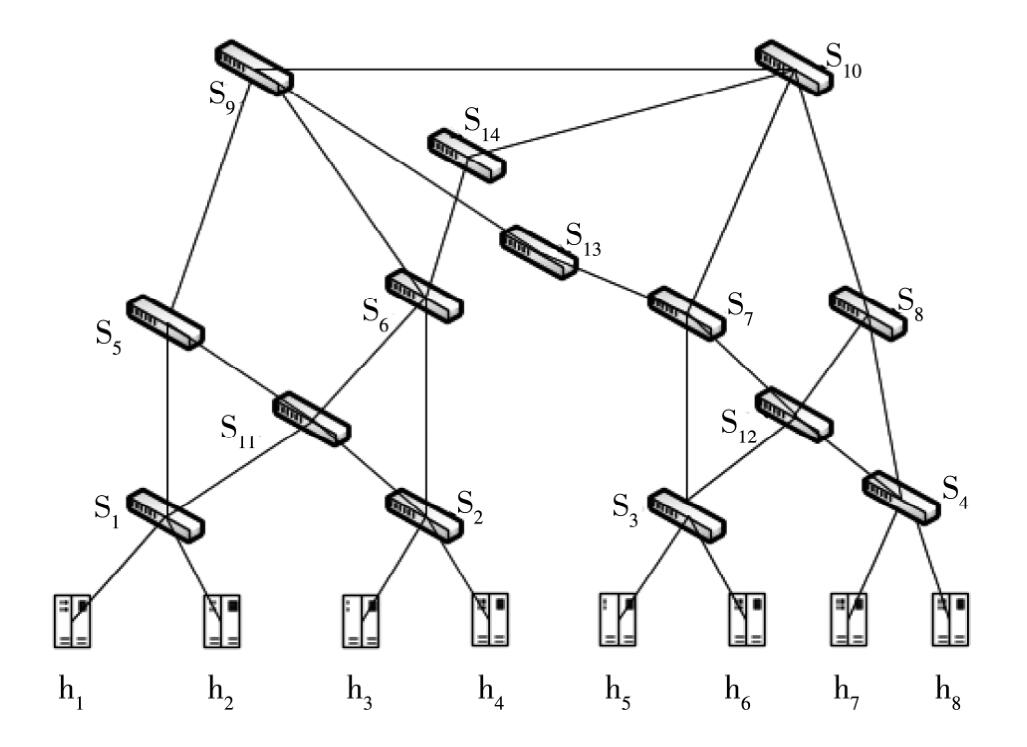
针对软件定义网络的链路抗毁问题,为使数据传输具有更好的稳健性,设计了一个基于Q学习算法的抗毁策略,该策略选择以网络中每条链路的中断概率作为衡量指标,通过Q学习算法,根据网络情况寻找一条中断概率低的路径作为备份路径,从而在网络传输出现故障时,能够自动的切换备份路径,实现抗毁性能的改善。采取Q学习算法与现有的算法进行对比,并分析了各自优劣性。实验仿真结果表明,相比于蚁群算法,Q学习算法平均吞吐量可提高15%,平均网络传输的中断概率可降低38%;相比于最短路径算法(有备份),平均吞吐量要提高16.5%,网络传输的中断概率平均降低43%。由此可见,本文所提基于Q学习的抗毁技术可大大提升SDN网络的抗毁性能
Aiming at the link invulnerability problem of software-defined networks, in order to make data transmission more robust, a destructive strategy based on Q learning algorithm is designed. This strategy chooses to use the interruption probability of each link in the network as a measure The indicator, through the Q learning algorithm, finds a path with low interruption probability as the backup path according to the network situation, so that when the network transmission fails, the backup path can be automatically switched to improve the anti-destructive performance. The Q learning algorithm is compared with the existing algorithm, and the advantages and disadvantages of each are analyzed. The experimental simulation results show that compared with the ant colony algorithm, the average throughput of the Q learning algorithm can be increased by 15%, and the average network transmission interruption probability can be reduced by 38%; compared with the shortest path algorithm (with backup), the average throughput should be improved 16.5%, the interruption probability of network transmission is reduced by 43% on average. It can be seen that the survivability technology based on Q-learning proposed in this article can greatly improve the survivability of SDN networks.