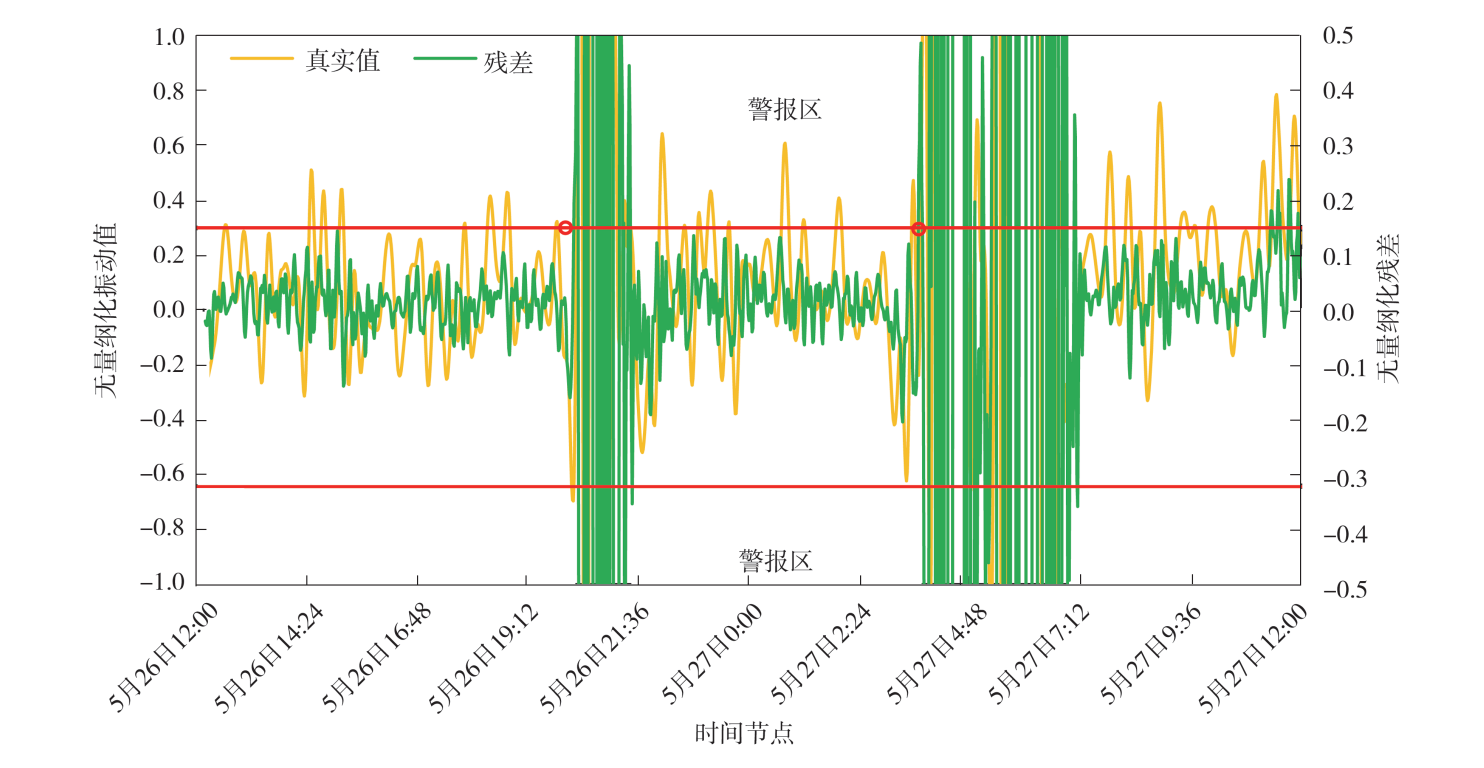
The research on fault early warning method of large-scale nuclear power equipment has far-reaching significance for timely troubleshooting, reducing safety risks, cutting unnecessary costs and improving power generation efficiency. However, most of the traditional fault early warning systems of nuclear power equipment are real-time monitoring and alarm systems and havent made full use of the data value, so their early warning effects need to be improved. This paper proposed a fault early warning method based on Bayesian LSTM. The theoretical health value of time node was predicted by neural network and was compared with the actual value to find out the abnormal value. Firstly, the healthy historical operation data was extracted from the real-time database, and then a series of preprocessing were carried out on these data. Finally, the processed data was used as training set to establish the LSTM prediction model. The cross validation method was used to reserve the test set, and the goodness of fit, mean square error and Bayesian hypothesis test method proposed in this paper were used to comprehensively verify the accuracy of the model. After the generalization ability of the model was guaranteed, the data in the real-time database was predicted in real time, and the abnormal signals during fault creep were identified by threshold method. The experimental results show that the Bayesian-BiLSTM prediction model has better prediction accuracy than the LSTM model in the case of high time delay. In case 1, for the three time series outliers, the model proposed in this paper finds the abnormal signal and gives an alarm at least 15 hours in advance compared with the existing real-time monitoring systems, and its reliability is further verified by case 2.