材料科学与技术

基于特征选择和机器学习的材料弹性性能预测

展开
  • 1. 贵州大学 机械工程学院,贵州 贵阳 550025; 2. 南卡罗来纳大学 计算机科学与工程系,美国 南卡罗莱纳 哥伦比亚 29208; 3. 贵州大学 现代制造技术教育部重点实验室,贵州 贵阳 550025
胡建军( 1973-) ,男,博士,教授,主要从事机器学习、深度学习、材料信息学研究

收稿日期: 2018-05-07

  修回日期: 2019-01-25

  网络出版日期: 2019-04-01

基金资助

国家自然科学基金资助项目( 51741101)

Elastic Property Prediction of Materials Based on Machine Learning and Feature Selection

Expand
  •  1. School of Mechanical Engineering,Guizhou University,Guiyang 550025,Guizhou,China; 2. Department of Computer Science and Engineering,University of South Carolina,Columbia 29208,America; 3. Key Laboratory of Advanced Manufacturing Technology of the Ministry of Education,Guizhou University,Guiyang 550025,Guizhou,China
胡建军( 1973-) ,男,博士,教授,主要从事机器学习、深度学习、材料信息学研究

Received date: 2018-05-07

  Revised date: 2019-01-25

  Online published: 2019-04-01

Supported by

 Supported by the National Natural Science Foundation of China( 51741101)
摘要

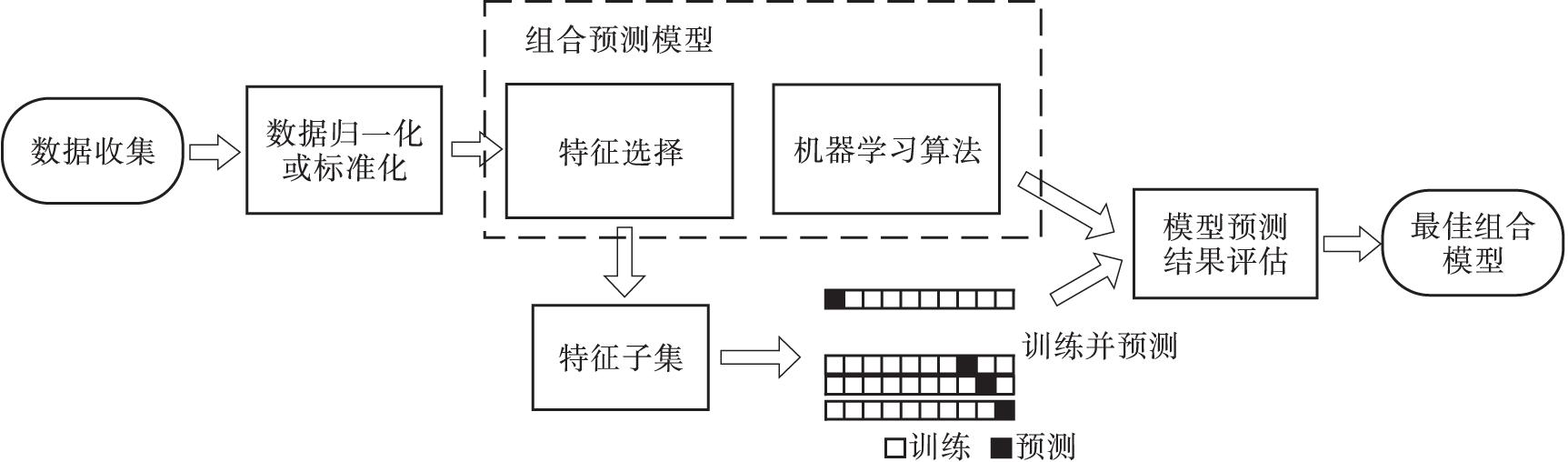
利用机器学习方法进行材料性能预测研究,通过运用 3 种特征选择方法( Filter、 RFE、LASSO) 和 3 种机器学习模型( 线性回归、岭回归、支持向量回归) ,从众多多尺度特 征集中选择最佳的特征子集来预测无机化合物的弹性性能,归纳了预测材料弹性性能的 最有效的、组合了特征选择与机器学习的预测模型,比较了特征选择方法在不同机器学习 模型上的表现,分析了利用特征选择方法得到的特征子集. 实验结果表明,Filter 和 SVR 组合模型的预测结果最好,机器学习模型比特征选择方法对预测结果的影响更大,特征选 择方法选出的特征子集中主要包括熔点、晶体结构、门捷列夫序号等材料特性. 文中研究 成果可为获得无机化合物弹性性能描述符和进一步开发更有效的材料性能预测方法提供 参考.

本文引用格式

胡建军 曹卓 但雅波 牛程程 李想 钱松荣 . 基于特征选择和机器学习的材料弹性性能预测[J]. 华南理工大学学报(自然科学版), 2019 , 47(5) : 48 -55 . DOI: 10.12141/j.issn.1000-565X.180214

Abstract

This paper deals with the elastic property prediction of inorganic materials by using three feature selection methods ( Filter,RFE and LASSO) and three machine learning algorithms ( linear regression,ridge regression and support vector regression) . In the investigation,first,the best feature subset is selected to predict the elastic properties of inorganic compounds from a large number of multi-scale feature sets. Next,the most effective model that combines both feature selection and machine learning is identified for predicting the elastic properties of materials. Then,the performances of different combinations of feature selection methods and machine learning models are compared by anlyzing the feature subset obtained via different feature selection methods. Experimental results indicate that ( 1) Filter + SVR method helps to achieve the best prediction performance; ( 2) the machine learning model has greater influence on the prediction results than the feature selection method; and ( 3) the feature subset selected by the feature selection method mainly includes the material characteristics such as melting point,crystal structure and Mendeleev number. This research provides a way to finding predictive descriptors for elastic property of inorganic compounds and developing more effective prediction methods.

参考文献

 
文章导航

/