华南理工大学学报(自然科学版) ›› 2026, Vol. 54 ›› Issue (1): 53-59.doi: 10.12141/j.issn.1000-565X.240594

• 电子、通信与自动控制 • 上一篇    下一篇

基于增强型残差递归门控网络的信道估计方法

刘娇蛟(), 王若尘, 马碧云()   

  1. 华南理工大学 电子与信息学院,广东 广州 510640
  • 收稿日期:2025-03-24 出版日期:2026-01-10 发布日期:2025-03-24
  • 通信作者: 马碧云 E-mail:jjliu@scut.edu.cn;eebyma@scut.edu.cn
  • 作者简介:刘娇蛟(1976—),女,博士,副教授,主要从事无线通信研究。E-mail: jjliu@scut.edu.cn
  • 基金资助:
    广东省基础与应用基础研究基金项目(2022A1515011830);广东省基础与应用基础研究基金项目(2023A1515011420);国家重点研发计划项目(2024YFE0105400);国家外国专家项目(H20241005)

Channel Estimation Method Based on Channel Enhanced Deep Horblock Network

LIU Jiaojiao(), WANG Ruochen, MA Biyun()   

  1. School of Electronics and Information Engineering,South China University of Technology,Guangzhou 510640,Guangdong,China
  • Received:2025-03-24 Online:2026-01-10 Published:2025-03-24
  • Contact: MA Biyun E-mail:jjliu@scut.edu.cn;eebyma@scut.edu.cn
  • Supported by:
    the Guangdong Basic and Applied Basic Research Foundation(2022A1515011830);the National Key Research and Development Program of China(2024YFE0105400);the National Foreign Expert Project(H20241005)

摘要:

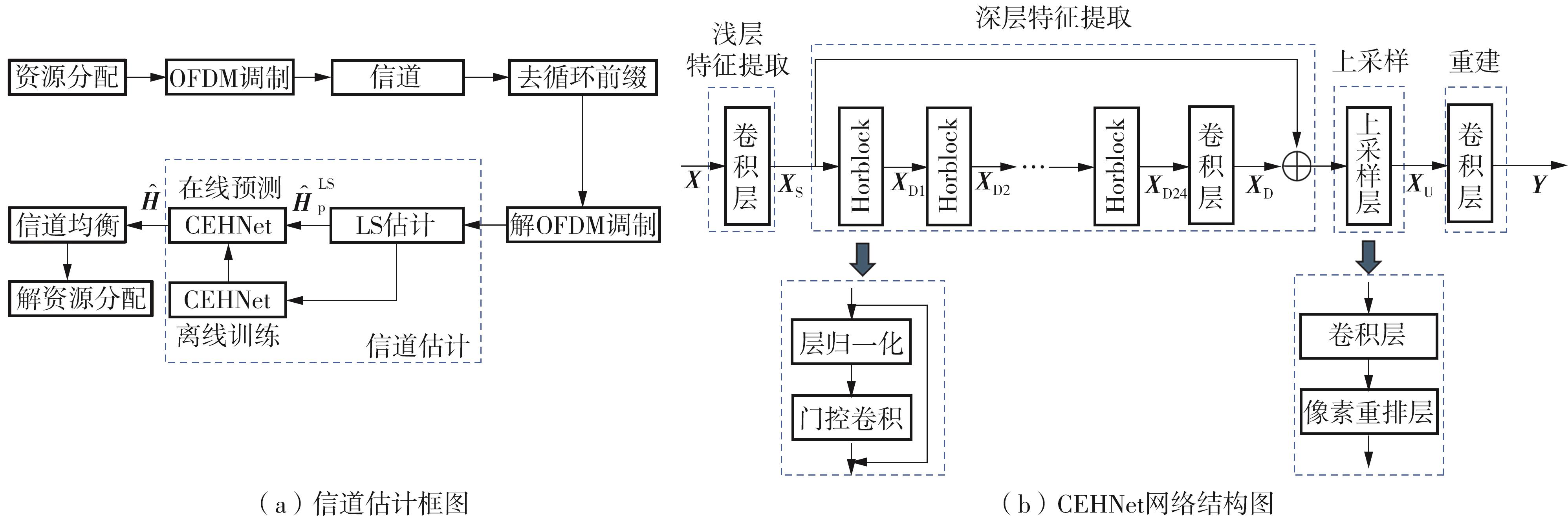
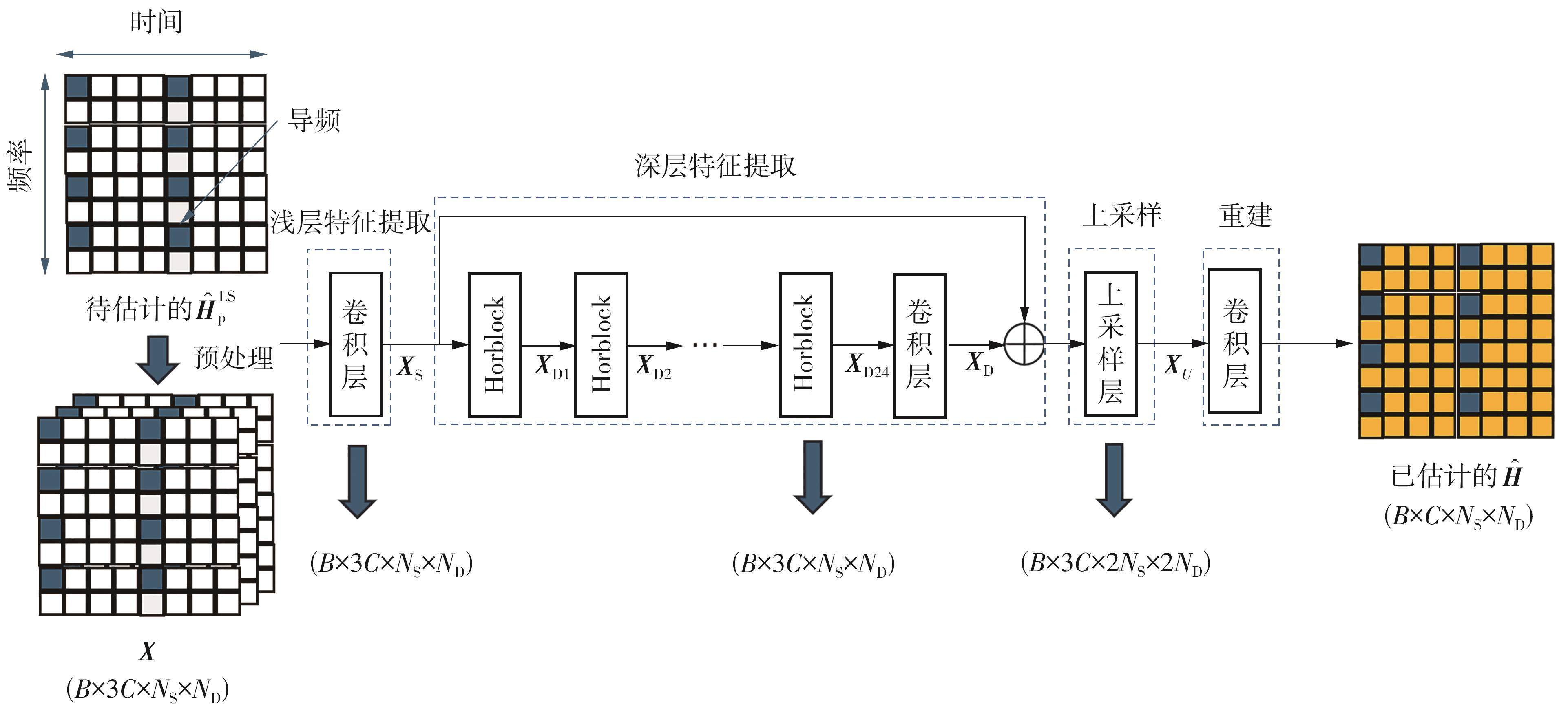
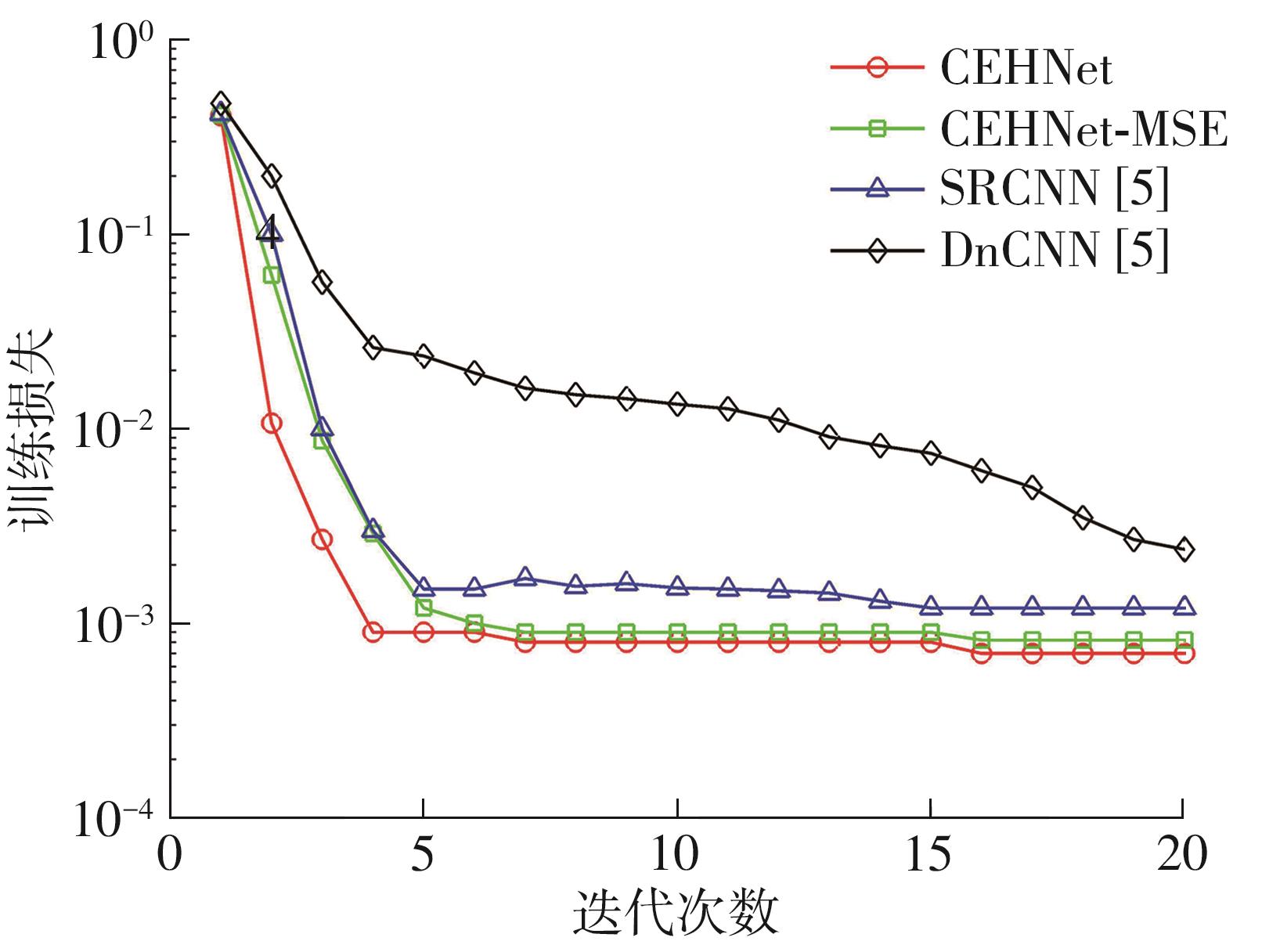
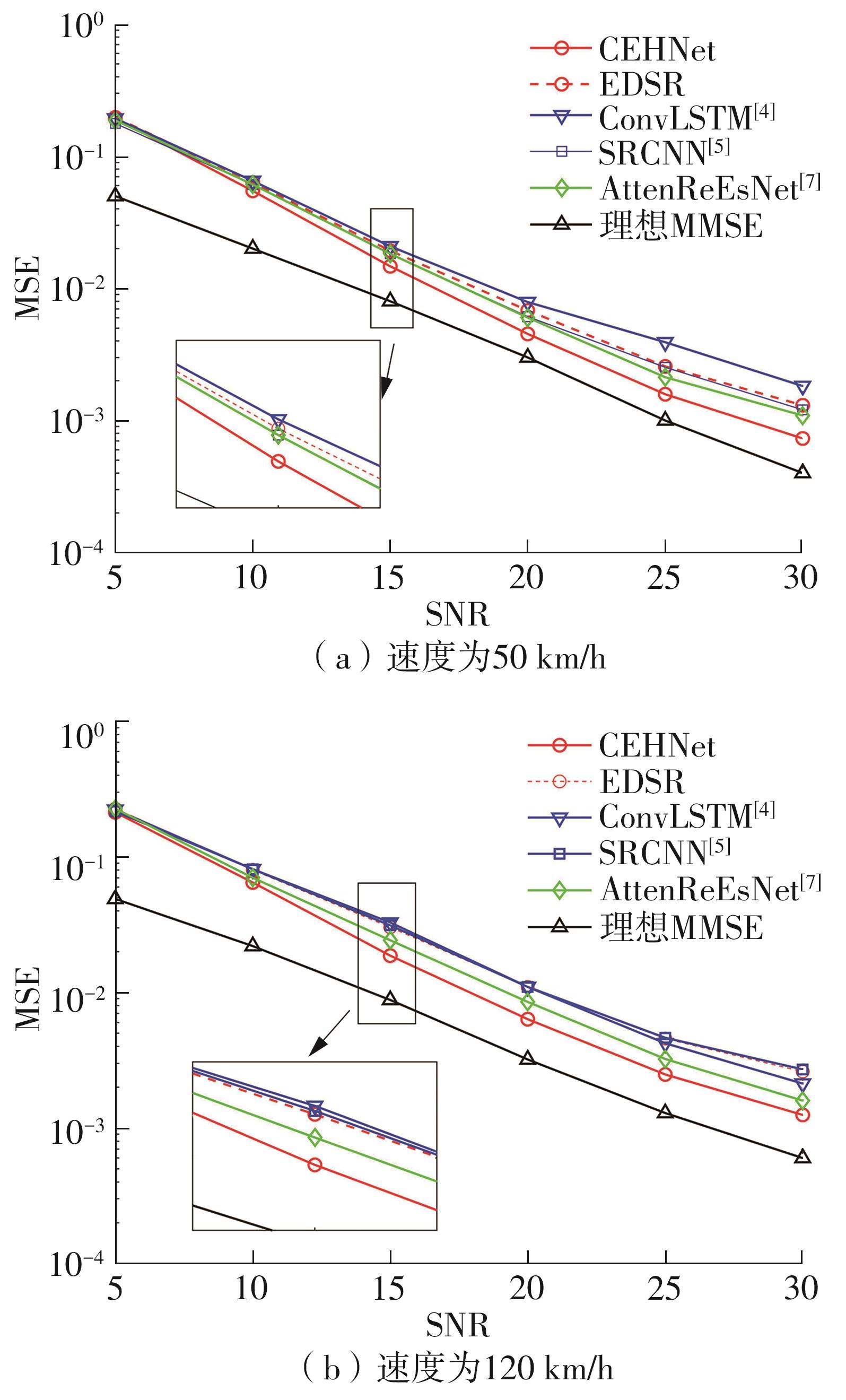
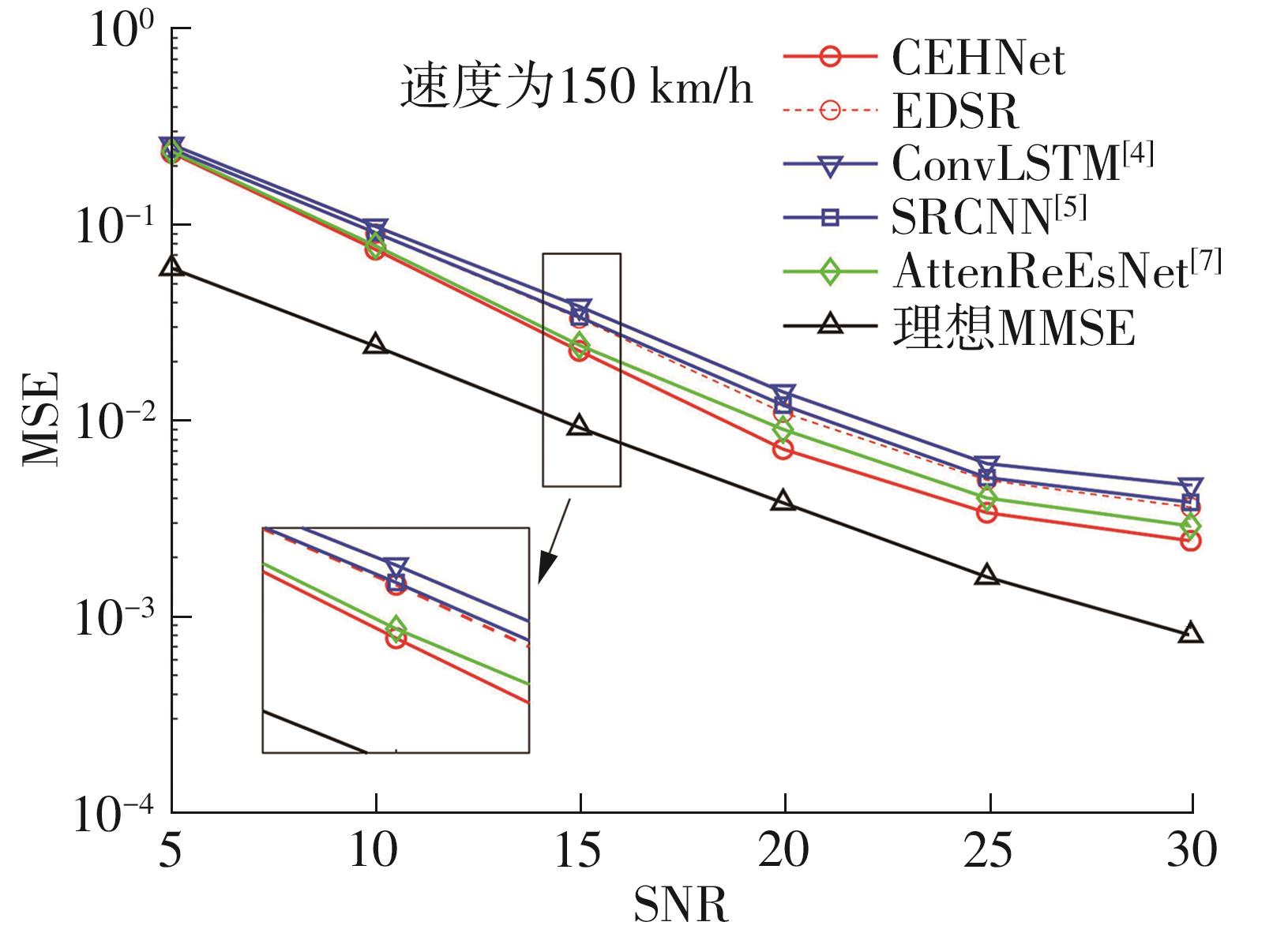
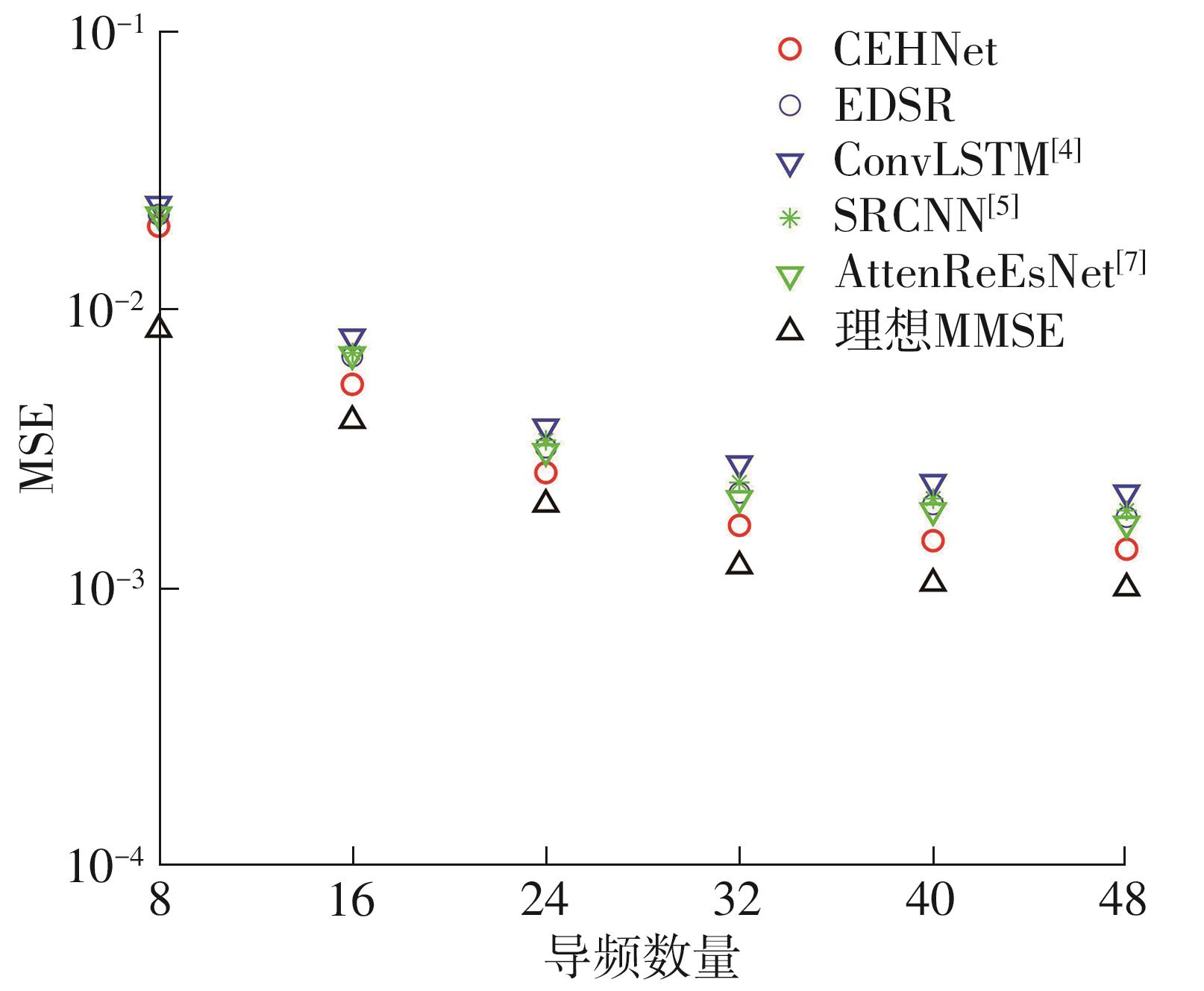
在高速移动场景下,无线通信要经历时间和频率双选择性衰落,信道估计用于准确获取信道状态信息,其结果有助于提高通信性能。时频双选信道是一个描述信号在时间和频率维度上都具有选择性衰落特性的信道模型。针对时频双选信道估计问题,近年来深度学习方法被广泛应用,原本在计算机视觉和自然语言处理领域表现优秀的卷积神经网络(CNN)和长短期记忆网络(LSTM)等被应用于信道估计,但是它们专注于时序相关性及局部时频特征的捕捉,直接用于时频双选信道估计还存在着诸多挑战。该研究提出了一种基于增强型深度残差递归门控网络(CEHNet)的信道估计算法。该算法将时频双选信道的时频网格视为二维图像,使用超分辨率网络(SR)重建信道状态信息,并且使用增加幅度特征的预处理方法扩充数据集,引入Lasso回归作为约束加快网络收敛速度。实验结果表明:针对不同信道模型,该算法在导频数量较少时的估计性能优于超分辨率网络(SRCNN)等现有方法,其收敛速度明显加快,在信噪比为22 dB时比SRCNN方法提升了4倍。

关键词: 信道估计, 超分网络, 时频双选信道, 递归门控卷积

Abstract:

In high-mobility scenarios, wireless communications undergo time and frequency doubly selective fa-ding, making channel estimation essential for accurately obtaining channel state information (CSI), which in turn enhances the perfor-mance of communication systems. The Time-Frequency Doubly Selective Channel is a channel model that characterizes signal fading with selective properties in both time and frequency dimensions. To address the challenges of channel estimation in such environments, deep learning methods have been widely adopted in recent years. Networks that originally excelled in computer vision and natural language processing, such as Convolutional Neural Networks (CNN) and Long Short-Term Memory networks (LSTM), have been applied to channel estimation techniques. However, due to significant differences in data characteristics and task objectives between channel estimation and image processing, these approaches still face numerous challenges. This study introduced a novel channel estimation deep learning algorithm based on a Channel Enhanced Deep Horblock Network (CEHNet). The proposed algorithm treats the time-frequency grid of the doubly selective channel as a two-dimensional image and employs a Super-Resolution (SR) network to reconstruct the CSI. Additionally, a preprocessing method that increases amplitude features is utilized to expand the dataset, and Lasso regression is incorporated as a constraint to accelerate the network convergence speed. Experimental results demonstrate that, across various channel models, the proposed CEHNet algorithm outperforms traditional channel estimation methods such as Super-Resolution Convolutional Neural Networks (SRCNN) when the number of pilots is limited. Furthermore, CEHNet exhibits significantly faster convergence rates, achieving a fourfold performance improvement over SRCNN at a signal-to-noise ratio (SNR) of 22 dB.

Key words: channel estimation, super-resolution network, dual-selection channel, recursive gated convolution

中图分类号: